



Mail ID: contact@vedavarsity.com

Contact: +91 9634998911

Google search engineGoogle search engine
Home Blog Page 150

Srimad Bhagavad-Gita | Chapter 1 | Observing The Armies On The Battlefield Of Kurukṣetra

0

Dhṛtarāṣṭra said: O Sañjaya, after my sons and the sons of Pāṇḍu assembled in the place of pilgrimage at Kurukṣetra, desiring to fight, what did they do? Sañjaya said: O King, after looking over the army arranged in military formation by the sons of Pāṇḍu, King Duryodhana went to his teacher and spoke the following words. O my teacher, behold the great army of the sons of Pāṇḍu, so expertly arranged by your intelligent disciple the son of Drupada. Here in this army are many heroic bowmen equal in fighting to Bhīma and Arjuna: great fighters like Yuyudhāna, Virāṭa, and Drupada. There are also great heroic, powerful fighters like Dhṛṣṭaketu, Cekitāna, Kāśirāja, Purujit, Kuntibhoja, and Śaibya. There are the mighty Yudhāmanyu, the very powerful Uttamaujā, the son of Subhadrā, and the sons of Draupadī. All these warriors are great chariot fighters.

But for your information, O best of the brāhmaṇas, let me tell you about the captains who are especially qualified to lead my military force. There are personalities like you, Bhīṣma, Karṇa, Kṛpa, Aśvatthāmā, Vikarṇa, and the son of Somadatta called Bhūriśravā, who are always victorious in battle. There are many other heroes who are prepared to lay down their lives for my sake. All of them are well equipped with different kinds of weapons, and all are experienced in military science. Our strength is immeasurable, and we are perfectly protected by Grandfather Bhīṣma, whereas the strength of the Pāṇḍavas, carefully protected by Bhīma, is limited.

All of you must now give full support to Grandfather Bhīṣma, as you stand at your respective strategic points of entrance into the phalanx of the army. Then Bhīṣma, the great valiant grandsire of the Kuru dynasty, the grandfather of the fighters, blew his conchshell very loudly, making a sound like the roar of a lion, giving Duryodhana joy. After that, the conchshells, drums, bugles, trumpets, and horns were all suddenly sounded, and the combined sound was tumultuous. On the other side, both Lord Kṛṣṇa and Arjuna, stationed on a great chariot drawn by white horses, sounded their transcendental conchshells. Lord Kṛṣṇa blew His conchshell, called Pāñcajanya; Arjuna blew his, the Devadatta; and Bhīma, the voracious eater and performer of herculean tasks, blew his terrific conchshell, called Pauṇḍra. King Yudhiṣṭhira, the son of Kuntī, blew his conchshell, the Ananta-vijaya, and Nakula and Sahadeva blew the Sughoṣa and Maṇipuṣpaka.

That great archer the King of Kāśī, the great fighter Śikhaṇḍī, Dhṛṣṭadyumna, Virāṭa, the unconquerable Sātyaki, Drupada, the sons of Draupadī, and others, O King, such as the mighty-armed son of Subhadrā, all blew their respective conchshells. The blowing of these different conchshells became uproarious. Vibrating both in the sky and on the earth, it shattered the hearts of the sons of Dhṛtarāṣṭra. At that time Arjuna, the son of Pāṇḍu, seated in the chariot bearing the flag marked with Hanumān, took up his bow and prepared to shoot his arrows. O King, after looking at the sons of Dhṛtarāṣṭra drawn in military array, Arjuna then spoke to Lord Kṛṣṇa these words: O infallible one, please draw my chariot between the two armies so that I may see those present here, who desire to fight, and with whom I must contend in this great trial of arms. Let me see those who have come here to fight, wishing to please the evil-minded son of Dhṛtarāṣṭra.

Sañjaya said: O descendant of Bharata, having thus been addressed by Arjuna, Lord Kṛṣṇa drew up the fine chariot in the midst of the armies of both parties. In the presence of Bhīṣma, Droṇa, and all the other chieftains of the world, the Lord said, “Just behold, Pārtha, all the Kurus assembled here.” There Arjuna could see, within the midst of the armies of both parties, his fathers, grandfathers, teachers, maternal uncles, brothers, sons, grandsons, friends, and also his fathers-in-law and well-wishers. When the son of Kuntī, Arjuna, saw all these different grades of friends and relatives, he became overwhelmed with compassion and spoke thus.

Arjuna said: My dear Kṛṣṇa, seeing my friends and relatives present before me in such a fighting spirit, I feel the limbs of my body quivering and my mouth drying up. My whole body is trembling, my hair is standing on end, my bow Gāṇḍīva is slipping from my hand, and my skin is burning. I am now unable to stand here any longer. I am forgetting myself, and my mind is reeling. I see only causes of misfortune, O Kṛṣṇa, killer of the Keśī demon. I do not see how any good can come from killing my own kinsmen in this battle, nor can I, my dear Kṛṣṇa, desire any subsequent victory, kingdom, or happiness.

O Govinda, of what avail to us are a kingdom, happiness, or even life itself when all those for whom we may desire them are now arrayed on this battlefield? O Madhusūdana, when teachers, fathers, sons, grandfathers, maternal uncles, fathers-in-law, grandsons, brothers-in-law, and other relatives are ready to give up their lives and properties and are standing before me, why should I wish to kill them, even though they might otherwise kill me? O maintainer of all living entities, I am not prepared to fight with them even in exchange for the three worlds, let alone this earth. What pleasure will we derive from killing the sons of Dhṛtarāṣṭra? Sin will overcome us if we slay such aggressors. Therefore it is not proper for us to kill the sons of Dhṛtarāṣṭra and our friends. What should we gain, O Kṛṣṇa, husband of the goddess of fortune, and how could we be happy by killing our own kinsmen?

O Janārdana, although these men, their hearts overtaken by greed, see no fault in killing one’s family or quarreling with friends, why should we, who can see the crime in destroying a family, engage in these acts of sin? With the destruction of the dynasty, the eternal family tradition is vanquished, and thus the rest of the family becomes involved in irreligion. When irreligion is prominent in the family, O Kṛṣṇa, the women of the family become polluted, and from the degradation of womanhood, O descendant of Vṛṣṇi, comes unwanted progeny. An increase of unwanted population certainly causes hellish life both for the family and for those who destroy the family tradition. The ancestors of such corrupt families fall down because the performances for offering them food and water are entirely stopped.

By the evil deeds of those who destroy the family tradition and thus give rise to unwanted children, all kinds of community projects and family welfare activities are devastated. O Kṛṣṇa, maintainer of the people, I have heard by disciplic succession that those whose family traditions are destroyed dwell always in hell. Alas, how strange it is that we are preparing to commit greatly sinful acts. Driven by the desire to enjoy royal happiness, we are intent on killing our own kinsmen. Better for me if the sons of Dhṛtarāṣṭra, weapons in hand, were to kill me unarmed and unresisting on the battlefield.

Sañjaya said: Arjuna, having thus spoken on the battlefield, cast aside his bow and arrows and sat down on the chariot, his mind overwhelmed with grief.

Preserving Srila Prabhupada’s Legacy: The Bhaktivedanta Archives and the TOVP Museum

0

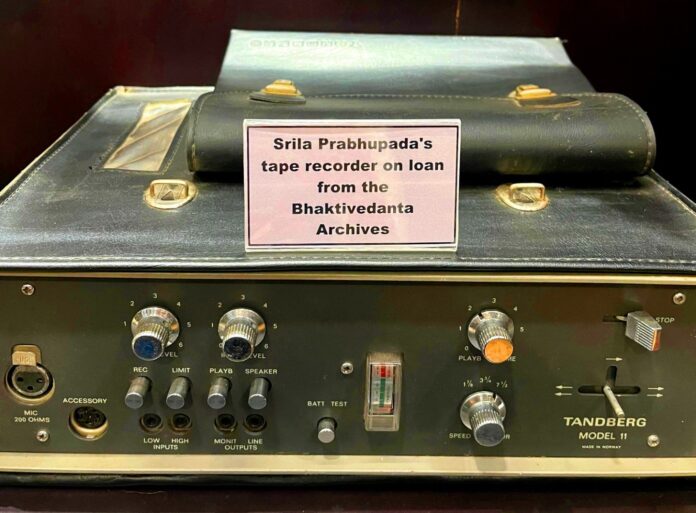
One of the two original tape recorders used by Srila Prabhupada, on loan from the Bhaktivedanta Archives for the museum display.

On February 18, 2025, the Temple of the Vedic Planetarium (TOVP) in Mayapur opened the A.C. Bhaktivedanta Swami Legacy Museum, a project years in the making and grounded in devotion. Hundreds of visitors flowed through its doors that morning. Soft light fell across the first wall of photographs tracing Srila Prabhupada’s life from Calcutta to New York and beyond. The sound of kirtan carried faintly from the temple courtyard. Among those who helped make the moment possible was Parama-rupa Das, founder, president, and director of preservation at the Bhaktivedanta Archives.

For Parama-rupa Das, who began safeguarding Srila Prabhupada’s recordings and correspondence in the late 1970s, the museum’s opening was a visible expression of nearly five decades of work. In the Bhaktivedanta Archives’ ninth volume of Archival Spirit, released this September, he and his team shared how the collaboration with the TOVP unfolded, and how their service turned preservation into pilgrimage.

From the Archives to Mayapur

“The invitation came from Daivi Shakti Mata,” Parama-rupa recalled. “She was coordinating the museum setup in Mayapur and asked me to come for conservation and preservation support. She knew we had the images and experience.”

He arrived in Mayapur to find the project already underway. “We sat together and planned what would go in each room, what I would supply, and what the team on site would do,” he said. The museum occupies what was once cited as the residence of two senior pujaris, including two bedrooms and a small living area. “Those spaces became the three museum rooms,” he explained. “The outer wall became part of the display, too. It was a practical beginning for something with enormous potential.”

Designing the Experience

The team agreed that the museum should feel like a journey through Srila Prabhupada’s life. The outer wall tells that story in two parts: the first depicts his early years and spiritual preparation; the second captures the Jaladuta voyage and the first years of preaching in the West. “We wanted people to pause there before stepping inside,” Parama-rupa said. “That wall introduces what they’re about to experience, a visual and emotional history.”

Inside the first room, visitors move through a timeline of Back to Godhead covers, legal documents, personal correspondence, and global book displays. Every page and photograph came through the Bhaktivedanta Archives. “Nothing original is on display,” Parama-rupa emphasized. “Everything you see is a facsimile. Light destroys paper over time, so we protect the originals in our vaults. Even the cabinets were built to lock behind glass. We learned long ago that if it’s sacred, you guard it.”

A Room from the Past

The second room, modeled after Srila Prabhupada’s Bhajan Kutir, holds a special place in Parama-rupa’s heart. “We used the same type of straw and bamboo they still use locally today,” he said. “When you walk in, it feels like stepping back in time. The photograph on the wall represents the window from which Srila Prabhupada watched prasadam being served. It isn’t just decoration, it’s perspective.”

The murti of Srila Prabhupada in that room receives daily worship, giving the exhibit a living rhythm. “You come from the outside world and step into his space,” he said. “It’s quiet, intimate. The bed, the window, the scent of straw, it draws you in. That’s my favorite part.”

Objects That Speak

Among the museum’s most striking pieces are Srila Prabhupada’s personal items, his cooking utensils, clothing, and walking sticks, many unseen for decades. Two historically important artifacts came directly from the Bhaktivedanta Archives: the Sony TC-150 recorder used during morning walks and lectures, and the dictaphone on which he dictated manuscripts. “Both are on loan,” Parama-rupa said. “We wanted people to see the very tools that captured his voice and words.”

Each object bears a small label identifying its origin. Near the entrance, a plaque expresses gratitude to the Archives for the materials, photographs, and guidance. “Originally, there wasn’t going to be a plaque,” he said. “During the opening rush, the Archives weren’t mentioned, and it was an oversight. Later, they added it right at the door. It means a lot to our team. Without those images and documents, the museum couldn’t exist.”The Legacy Museum placard at the TOVP honors the Bhaktivedanta Archives for its vital role in preserving Srila Prabhupada’s legacy.The ISKCON Worldwide Kiosk highlights Srila Prabhupada’s global mission.A chronological display showcases Srila Prabhupada’s early writings, photographs, and the many objects he used to produce his books.

Behind the Scenes

The project drew on the skills of many devotees. Daivi Shakti Devi Dasi coordinated the overall concept and spiritual tone. Radha Ballabha Das designed the interiors and cabinetry, sourcing local materials to mirror the textures of Mayapur’s early years. Balaram Das handled graphic design, and Thakur Saranga Das handled large-format printing. Sunanda Das served as liaison, while Acyutasevini Indulekha Devi Dasi managed the careful handling of collections. Artist Nitya-trpta Devi Dasi contributed the signature “Ever Well Wisher” design displayed near the Archives’ exhibit.

“Each person brought a piece of their heart,” Parama-rupa said. “That’s what visitors see on the walls, devotees’ hearts translated into history.”

A Legacy of Preservation

The Bhaktivedanta Archives itself began in the late 1970s, soon after Srila Prabhupada’s disappearance. Parama-rupa, then a young devotee in Los Angeles, started collecting tapes and letters that might otherwise have been lost. “We didn’t know the term ‘archival science’ then,” he said. “We just knew these were sacred recordings and they had to be protected.”

From that small beginning grew an organized preservation facility in Sandy Ridge, North Carolina, housing thousands of audio reels, photographs, and manuscripts. The Archives pioneered digital restoration of Srila Prabhupada’s lectures and produced reference editions used in ISKCON centers worldwide. “Every project we’ve done has led to this point,” he said. “The museum is a physical reflection of everything the Archives has been doing quietly for decades.”Some of Srila Prabhupada’s personal effects preserved in remarkable condition.Inside the recreated Bhajan Kutir, Srila Prabhupada sits peacefully before the Deities.A recreated view from Srila Prabhupada’s Bhajan Kutir window, depicting the daily prasadam distribution outside.

The Museum’s Future

The current installation occupies about 1,000 square feet, representing only the first phase of what will expand to 21,000 square feet, making it one of the largest museums ever devoted to a single person. Future phases will include interactive displays, research rooms, and seminar spaces on Srila Prabhupada’s teachings. The TOVP website describes it as “a living record of the Gaudiya Vaishnava succession from Sri Caitanya Mahaprabhu to Srila Prabhupada.”

Parama-rupa hopes the Archives will continue supporting the expansion. “There will be updates and more images needed,” he said. “It’s an ongoing service. Preservation never ends.”

A Living Archive

Even as the museum grows, Parama-rupa continues his traveling outreach. “In three weeks, I’ll be in Alachua giving a presentation on preservation,” he said. “We collect original devotee documents and teach them how to protect what they have. People think an archive is just boxes on a shelf. It’s not. It’s a living thing.”

Behind him, two safes symbolize that work: one marked “Fort Knox” for documents, another climate-controlled for photographs and negatives. “That’s how we protect Srila Prabhupada’s words,” he said, smiling. “It’s not glamorous, but it’s sacred.”

Why It Matters

For ISKCON’s global community, the Legacy Museum represents continuity. It links Srila Prabhupada’s personal journey with the movement’s modern expression in art, scholarship, and service. “It’s a pilgrimage within a pilgrimage,” Parama-rupa said. “When devotees visit Mayapur, they can walk through this museum and feel his presence. That’s what we wanted, to give form to remembrance.”

Younger devotees, in particular, find inspiration there. Standing before the Jaladuta exhibit or the recreation of the Bhajan Kutir, they encounter a living history that might otherwise feel distant. The museum invites them to participate, not just observe.

Continuing the Spirit

Looking ahead, the Archives plan to expand public access through digital exhibitions and traveling displays. “We’d like to bring aspects of the Legacy Museum to temples worldwide,” Parama-rupa said. “The more people connect with Srila Prabhupada’s life, the stronger their own service becomes.” Before our conversation ended, he returned to what drives his work. “We’re caretakers,” he said. “Our duty is to ensure that future generations can see, hear, and feel Srila

Prabhupada’s presence as vividly as we did. If someone walks into that museum and feels a spark of connection, then the Archives have done their job.”

From tapes and letters in the 1970s to a world-class museum in 2025, the Bhaktivedanta Archives initiative reflects the same principle Srila Prabhupada taught his followers: sincere service, offered steadily, bears eternal fruit. The Legacy Museum now stands as a testament to that truth, a place where devotion, art, and preservation meet in service of remembrance.

Cinematic Project to Bring Chaitanya Mahaprabhu to the World

0

Nitay Mangala Das and his dedicated team are embarking on an extraordinary cinematic offering titled Chaitanya—a feature film centered on the life and mission of Sri Chaitanya Mahaprabhu. This project seeks to move beyond a simple biographical narrative to instead directly connect the audience to the Lord: “This is not just a movie about Him — this movie is Him,” emphasized Nitay Mangala.

The Inspirations

At the heart of this endeavor is a powerful inspiration drawn from Srila Prabhupada’s words: “I came here to make a spiritual revolution against materialistic civilization.” Nitay Mangala explained that these words define the film’s very purpose. Every creative decision and effort is guided by the desire to contribute to that spiritual revolution, offering a medium through which people can encounter Sri Chaitanya Mahaprabhu’s mercy and transformative power, just as Srila Prabhupada envisioned.

Another important inspiration comes from Nitay Mangala Das’s deep spiritual connection with his own spiritual master, Chaitanya Chandra Charan Das, a disciple of Jayapataka Swami. His guidance has influenced the film from its earliest conception. “My inspiration is the mercy of my Guru Maharaj. Every idea came from the desire to please him,” he shared. He recalled reading portions of the script to his spiritual master, using the feedback to guide the creative process. “If it makes him feel inspired—if he becomes very active and starts telling different stories about Mahaprabhu—it means this is a good point, and we keep it in the script. But if a part evokes no emotion from him, we simply cut it out.”

As the project developed, Nitay Mangala emphasized the need for a film that reaches beyond a single community. “I was thinking of doing something universal—something for the whole world,” he said. This aspiration shaped Chaitanya into a cinematic offering meant to resonate globally, inviting audiences everywhere to experience the divine mercy of Sri Chaitanya Mahaprabhu.

To bring this vision to reality, a committed team of devotees and professionals has come together,  each contributing their expertise. “Aishwarya Sundaralal is directing the film, with Dharmaraj handling operations and finances. Production is headed by Rasa Gauranga, and distribution and marketing are managed by Bhakta Roman,” explained Nitay Mangala, the film’s General Producer.

The project is further enriched by the guidance of Yadubara Das (ACBSP), who serves as the consulting producer, and strengthened by the valuable insights of Ashwin Kumar, director of the successful Mahavatar Narsimha film.A forest shot with actor Salman Shaikh.A large team staging a scene for the trailer.Nitay Mangala Das and his team preparing for a scene.

The Challenges

However, the team faced several challenges. One of the most difficult was finding an actor to portray Sri Chaitanya Mahaprabhu. “At first, I looked among basketball players because Mahaprabhu is very tall, but I didn’t find anyone,” Nitay Mangala recalled. He then searched among ballet dancers around the world—drawing inspiration from Mahaprabhu’s dancing pastimes—but none were suitable. Even within the devotee community, the team was unable to find someone who met the requirements for the role.

Following his spiritual master’s advice, Nitay Mangala turned to professional Indian actors. This led him to a casting website with over 700,000 profiles. “I searched for six hours per day, but still couldn’t find anything,” he said. With the help of a casting manager, they finally discovered several promising options, including Salman Shaikh, who now portrays Sri Chaitanya Mahaprabhu.

The confirmation came when Nitay Mangala’s spiritual master was presented with the shortlisted candidates. After rejecting the first three, he paused at Salman’s photo. “He was very interested and said, ‘With him, you can do this role.’ So we immediately called Salman. He agreed to everything right away, and we began working.”

Regarding the choice of a professional actor, Nitay Mangala offered a thoughtful perspective, saying, “We needed a high-level professional actor who understood the task and was confident in front of the camera. When we go to a dentist, we’re not looking for a devotee dentist—we’re looking for someone who can fix our teeth. It’s wonderful if he is a devotee, but the priority is professionalism.” Salman, the actor chosen for the role, is spiritually inclined and approached the character with deep sincerity, contributing to the auspicious atmosphere on set that reflected the transcendental energy of Sri Chaitanya Mahaprabhu throughout the filming process.

As the project progresses, the team remains grounded in spiritual understanding. “It’s impossible to portray Chaitanya Mahaprabhu unless He, as the Deity, enters the actor,” Nitay Mangala reflected. “We will work professionally—we will do what depends on us. Whether it becomes transcendental depends on God, on His will and mercy.”

Various scenes of the crew filming the trailer. 

The Early Responses from Leaders and Devotees

The initial footage of the film is already inspiring devotees. Nitay Mangala shared, “One devotee told us he showed the trailer to someone while distributing books and then said, ‘This is Chaitanya Mahaprabhu, and here is a book about Him.’ The person was inspired and immediately took the books.” Such responses demonstrate the movie’s potential as a powerful medium through which countless souls may encounter Sri Chaitanya Mahaprabhu for the first time.

Jayapataka Swami has also offered immense encouragement to the project. When Nitay Mangala wrote to him, he responded the same day: “This is a great project. Please tell me how I can help—how can I serve you to make this successful?” He even offered to connect the team with disciples who could support the project financially and shared about it on Facebook. “We feel great support from him,” Nitay Mangala said gratefully. He noted that Jayapataka Swami has expressed that once released, “It will be the phenomenon of Chaitanya Mahaprabhu.”

Artistically, the film embraces an innovative approach, combining AI technology with live acting to create a unique visual experience. The team is currently completing the 120-page script and aims to finalize it by December 2025. Production begins in January, with shooting planned in Mumbai, Jagannath Puri, and possibly Vrindavan. The goal is to release the film by Janmashtami or Radhastami 2026.

The Need for Support

To help the film fulfill its global mission, the team is requesting community support. “We want everyone to spread our trailer on WhatsApp, Telegram, Instagram, and Facebook. We need strong numbers on YouTube and Instagram before approaching distributors,” Nitay Mangala emphasized. The goal is to build what he affectionately calls “the army of Chaitanya Mahaprabhu spreading across the world,” sharing the trailer daily with new people and new groups.

The response so far has been overwhelming. “The most popular word in the comments is ‘goosebumps,’” he noted. This is fitting, considering the ecstatic symptoms Sri Chaitanya Mahaprabhu Himself displayed. “We want the whole world to be covered with goosebumps—with Lord Chaitanya dancing with raised arms, giving goosebumps to everyone!”

ISKCON St. Louis Achieves Major Fundraising Victory after Purchase of New Temple Property

0

The recently acquired Temple in St. Louis, and a rendition of what is envisaged for the future temple.

Recently, ISKCON hosted a high-profile gala on November 16th, drawing over 350 attendees. It is with immense gratitude and heartfelt joy that we announce the successful completion of the fundraising event. By the divine mercy of Sri Krsna Balarama, the blessings of Srila Prabhupada, and the loving support of our dedicated devotees, donors, and well-wishers, we achieved the goal of the 1st phase. This success is not merely a financial accomplishment; rather, it is a testament to the unity, sincerity, and spiritual strength of our community.

After acquiring a 4.13-acre property in Overland, Missouri, a fundraising event was organized, culminating a month of community-driven endeavors.  The funds raised will be directed toward temple construction, renovation, and to facilitate deity services, prasadam distribution, outreach programs, youth preaching, festivals, kirtans, retreats, the Sunday feast, and educational initiatives. These efforts will enable us to expand our services to the community, reaching more hearts with the message of Krishna consciousness, and fostering a spiritually uplifting environment where people can cultivate devotion, peace, and joy.Local devotees, well-wishers, donors, and temple leaders attending the fundraising event.A visionary masterplan includes a temple main hall as well as educational and residential wings.

This is a transformational moment for our community, as we have been praying, working, and giving selflessly for this vision. Temple leadership expressed “deep gratitude” to everyone who participated. These expansions reflect the growing needs of the St. Louis congregation and represent the most significant milestone.

Srimad Bhagavatam | Canto 4 | Chapter 31 | Verses

0

Nārada Instructs the Pracetās

Text 1

मैत्रेय उवाच
तत उत्पन्नविज्ञाना आश्वधोक्षजभाषितम् ।
स्मरन्त आत्मजे भार्यां विसृज्य प्राव्रजन् गृहात् ॥ १ ॥

Text 2

दीक्षिता ब्रह्मसत्रेण सर्वभूतात्ममेधसा ।
प्रतीच्यां दिशि वेलायां सिद्धोऽभूद्यत्र जाजलि: ॥ २ ॥

Text 3

तान्निर्जितप्राणमनोवचोद‍ृशो
जितासनान् शान्तसमानविग्रहान् ।
परेऽमले ब्रह्मणि योजितात्मन:
सुरासुरेड्यो दद‍ृशे स्म नारद: ॥ ३ ॥

Text 4

तमागतं त उत्थाय प्रणिपत्याभिनन्द्य च ।
पूजयित्वा यथादेशं सुखासीनमथाब्रुवन् ॥ ४ ॥

Text 5

प्रचेतस ऊचु:
स्वागतं ते सुरर्षेऽद्य दिष्ट्या नो दर्शनं गत: ।
तव चङ्‌क्रमणं ब्रह्मन्नभयाय यथा रवे: ॥ ५ ॥

Text 6

यदादिष्टं भगवता शिवेनाधोक्षजेन च ।
तद् गृहेषु प्रसक्तानां प्रायश: क्षपितं प्रभो ॥ ६ ॥

Text 7

तन्न: प्रद्योतयाध्यात्मज्ञानं तत्त्वार्थदर्शनम् ।
येनाञ्जसा तरिष्यामो दुस्तरं भवसागरम् ॥ ७ ॥

Text 8

मैत्रेय उवाच
इति प्रचेतसां पृष्टो भगवान्नारदो मुनि: ।
भगवत्युत्तमश्लोक आविष्टात्माब्रवीन्नृपान् ॥ ८ ॥

Text 9

नारद उवाच
तज्जन्म तानि कर्माणि तदायुस्तन्मनो वच: ।
नृणां येन हि विश्वात्मा सेव्यते हरिरीश्वर: ॥ ९ ॥

Text 10

किं जन्मभिस्त्रिभिर्वेह शौक्रसावित्रयाज्ञिकै: ।
कर्मभिर्वा त्रयीप्रोक्तै: पुंसोऽपि विबुधायुषा ॥ १० ॥

Text 11

श्रुतेन तपसा वा किं वचोभिश्चित्तवृत्तिभि: ।
बुद्ध्या वा किं निपुणया बलेनेन्द्रियराधसा ॥ ११ ॥

Text 12

किं वा योगेन साङ्ख्येन न्यासस्वाध्याययोरपि ।
किं वा श्रेयोभिरन्यैश्च न यत्रात्मप्रदो हरि: ॥ १२ ॥

Text 13

श्रेयसामपि सर्वेषामात्मा ह्यवधिरर्थत: ।
सर्वेषामपि भूतानां हरिरात्मात्मद: प्रिय: ॥ १३ ॥

Text 14

यथा तरोर्मूलनिषेचनेन
तृप्यन्ति तत्स्कन्धभुजोपशाखा: ।
प्राणोपहाराच्च यथेन्द्रियाणां
तथैव सर्वार्हणमच्युतेज्या ॥ १४ ॥

Text 15

यथैव सूर्यात्प्रभवन्ति वार:
पुनश्च तस्मिन्प्रविशन्ति काले ।
भूतानि भूमौ स्थिरजङ्गमानि
तथा हरावेव गुणप्रवाह: ॥ १५ ॥

Text 16

एतत्पदं तज्जगदात्मन: परं
सकृद्विभातं सवितुर्यथा प्रभा ।
यथासवो जाग्रति सुप्तशक्तयो
द्रव्यक्रियाज्ञानभिदाभ्रमात्यय: ॥ १६ ॥

Text 17

यथा नभस्यभ्रतम:प्रकाशा
भवन्ति भूपा न भवन्त्यनुक्रमात् ।
एवं परे ब्रह्मणि शक्तयस्त्वमू
रजस्तम:सत्त्वमिति प्रवाह: ॥ १७ ॥

Text 18

तेनैकमात्मानमशेषदेहिनां
कालं प्रधानं पुरुषं परेशम् ।
स्वतेजसा ध्वस्तगुणप्रवाह-
मात्मैकभावेन भजध्वमद्धा ॥ १८ ॥

Text 19

दयया सर्वभूतेषु सन्तुष्ट्या येन केन वा ।
सर्वेन्द्रियोपशान्त्या च तुष्यत्याशु जनार्दन: ॥ १९ ॥

Text 20

अपहतसकलैषणामलात्म-
न्यविरतमेधितभावनोपहूत: ।
निजजनवशगत्वमात्मनोऽय-
न्न सरति छिद्रवदक्षर: सतां हि ॥ २० ॥

Text 21

न भजति कुमनीषिणां स इज्यां
हरिरधनात्मधनप्रियो रसज्ञ: ।
श्रुतधनकुलकर्मणां मदैर्ये
विदधति पापमकिञ्चनेषु सत्सु ॥ २१ ॥

Text 22

श्रियमनुचरतीं तदर्थिनश्च
द्विपदपतीन् विबुधांश्च यत्स्वपूर्ण: ।
न भजति निजभृत्यवर्गतन्त्र:
कथममुमुद्विसृजेत्पुमान् कृतज्ञ: ॥ २२ ॥

Text 23

मैत्रेय उवाच
इति प्रचेतसो राजन्नन्याश्च भगवत्कथा: ।
श्रावयित्वा ब्रह्मलोकं ययौ स्वायम्भुवो मुनि: ॥ २३ ॥

Text 24

तेऽपि तन्मुखनिर्यातं यशो लोकमलापहम् ।
हरेर्निशम्य तत्पादं ध्यायन्तस्तद्गतिं ययु: ॥ २४ ॥

Text 25

एतत्तेऽभिहितं क्षत्तर्यन्मां त्वं परिपृष्टवान् ।
प्रचेतसां नारदस्य संवादं हरिकीर्तनम् ॥ २५ ॥

Text 26

श्रीशुक उवाच
य एष उत्तानपदो मानवस्यानुवर्णित: ।
वंश: प्रियव्रतस्यापि निबोध नृपसत्तम ॥ २६ ॥

Text 27

यो नारदादात्मविद्यामधिगम्य पुनर्महीम् ।
भुक्त्वा विभज्य पुत्रेभ्य ऐश्वरं समगात्पदम् ॥ २७ ॥

Text 28

इमां तु कौषारविणोपवर्णितां
क्षत्ता निशम्याजितवादसत्कथाम् ।
प्रवृद्धभावोऽश्रुकलाकुलो मुने-
र्दधार मूर्ध्ना चरणं हृदा हरे: ॥ २८ ॥

Text 29

विदुर उवाच
सोऽयमद्य महायोगिन् भवता करुणात्मना ।
दर्शितस्तमस: पारो यत्राकिञ्चनगो हरि: ॥ २९ ॥

Text 30

श्रीशुक उवाच
इत्यानम्य तमामन्‍त्र्य विदुरो गजसाह्वयम् ।
स्वानां दिद‍ृक्षु: प्रययौ ज्ञातीनां निर्वृताशय: ॥ ३० ॥

Text 31

एतद्य: श‍ृणुयाद्राजन् राज्ञां हर्यर्पितात्मनाम् ।
आयुर्धनं यश: स्वस्ति गतिमैश्वर्यमाप्नुयात् ॥ ३१ ॥
ऋषभ उवाच
नायं देहो देहभाजां नृलोके
कष्टान् कामानर्हते विड्भुजां ये ।
तपो दिव्यं पुत्रका येन सत्त्वं
शुद्ध्येद्यस्माद् ब्रह्मसौख्यं त्वनन्तम् ॥ १ ॥

Srimad Bhagavatam | Canto 4 | Chapter 30 | Verses

0

The Activities of the Pracetās

Text 1

विदुर उवाच
ये त्वयाभिहिता ब्रह्मन् सुता: प्राचीनबर्हिष: ।
ते रुद्रगीतेन हरिं सिद्धिमापु: प्रतोष्य काम् ॥ १ ॥

Text 2

किं बार्हस्पत्येह परत्र वाथ
कैवल्यनाथप्रियपार्श्ववर्तिन: ।
आसाद्य देवं गिरिशं यद‍ृच्छया
प्रापु: परं नूनमथ प्रचेतस: ॥ २ ॥

Text 3

मैत्रेय उवाच
प्रचेतसोऽन्तरुदधौ पितुरादेशकारिण: ।
जपयज्ञेन तपसा पुरञ्जनमतोषयन् ॥ ३ ॥

Text 4

दशवर्षसहस्रान्ते पुरुषस्तु सनातन: ।
तेषामाविरभूत्कृच्छ्रं शान्तेन शमयन् रुचा ॥ ४ ॥

Text 5

सुपर्णस्कन्धमारूढो मेरुश‍ृङ्गमिवाम्बुद: ।
पीतवासा मणिग्रीव: कुर्वन्वितिमिरा दिश: ॥ ५ ॥

Text 6

काशिष्णुना कनकवर्णविभूषणेन
भ्राजत्कपोलवदनो विलसत्किरीट: ।
अष्टायुधैरनुचरैर्मुनिभि: सुरेन्द्रै-
रासेवितो गरुडकिन्नरगीतकीर्ति: ॥ ६ ॥

Text 7

पीनायताष्टभुजमण्डलमध्यलक्ष्म्या
स्पर्धच्छ्रिया परिवृतो वनमालयाद्य: ।
बर्हिष्मत: पुरुष आह सुतान् प्रपन्नान्
पर्जन्यनादरुतया सघृणावलोक: ॥ ७ ॥

Text 8

श्रीभगवानुवाच
वरं वृणीध्वं भद्रं वो यूयं मे नृपनन्दना: ।
सौहार्देनापृथग्धर्मास्तुष्टोऽहं सौहृदेन व: ॥ ८ ॥

Text 9

योऽनुस्मरति सन्ध्यायां युष्माननुदिनं नर: ।
तस्य भ्रातृष्वात्मसाम्यं तथा भूतेषु सौहृदम् ॥ ९ ॥

Text 10

ये तु मां रुद्रगीतेन सायं प्रात: समाहिता: ।
स्तुवन्त्यहं कामवरान्दास्ये प्रज्ञां च शोभनाम् ॥ १० ॥

Text 11

यद्यूयं पितुरादेशमग्रहीष्ट मुदान्विता: ।
अथो व उशती कीर्तिर्लोकाननु भविष्यति ॥ ११ ॥

Text 12

भविता विश्रुत: पुत्रोऽनवमो ब्रह्मणो गुणै: ।
य एतामात्मवीर्येण त्रिलोकीं पूरयिष्यति ॥ १२ ॥

Text 13

कण्डो: प्रम्‍लोचया लब्धा कन्या कमललोचना ।
तां चापविद्धां जगृहुर्भूरुहा नृपनन्दना: ॥ १३ ॥

Text 14

क्षुत्क्षामाया मुखे राजा सोम: पीयूषवर्षिणीम् ।
देशिनीं रोदमानाया निदधे स दयान्वित: ॥ १४ ॥

Text 15

प्रजाविसर्ग आदिष्टा: पित्रा मामनुवर्तता ।
तत्र कन्यां वरारोहां तामुद्वहत मा चिरम् ॥ १५ ॥

Text 16

अपृथग्धर्मशीलानां सर्वेषां व: सुमध्यमा ।
अपृथग्धर्मशीलेयं भूयात्पत्‍न्यर्पिताशया ॥ १६ ॥

Text 17

दिव्यवर्षसहस्राणां सहस्रमहतौजस: ।
भौमान् भोक्ष्यथ भोगान् वै दिव्यांश्चानुग्रहान्मम ॥ १७ ॥

Text 18

अथ मय्यनपायिन्या भक्त्या पक्‍वगुणाशया: ।
उपयास्यथ मद्धाम निर्विद्य निरयादत: ॥ १८ ॥

Text 19

गृहेष्वाविशतां चापि पुंसां कुशलकर्मणाम् ।
मद्वार्तायातयामानां न बन्धाय गृहा मता: ॥ १९ ॥

Text 20

नव्यवद्धृदये यज्ज्ञो ब्रह्मैतद्ब्रह्मवादिभि: ।
न मुह्यन्ति न शोचन्ति न हृष्यन्ति यतो गता: ॥ २० ॥

Text 21

मैत्रेय उवाच
एवं ब्रुवाणं पुरुषार्थभाजनं
जनार्दनं प्राञ्जलय: प्रचेतस: ।
तद्दर्शनध्वस्ततमोरजोमला
गिरागृणन् गद्गदया सुहृत्तमम् ॥ २१ ॥

Text 22

Text 23

शुद्धाय शान्ताय नम: स्वनिष्ठया
मनस्यपार्थं विलसद्‌द्वयाय ।
नमो जगत्स्थानलयोदयेषु
गृहीतमायागुणविग्रहाय ॥ २३ ॥

Text 24

नमो विशुद्धसत्त्वाय हरये हरिमेधसे ।
वासुदेवाय कृष्णाय प्रभवे सर्वसात्वताम् ॥ २४ ॥

Text 25

नम: कमलनाभाय नम: कमलमालिने ।
नम: कमलपादाय नमस्ते कमलेक्षण ॥ २५ ॥

Text 26

नम: कमलकिञ्जल्कपिशङ्गामलवाससे ।
सर्वभूतनिवासाय नमोऽयुङ्‌क्ष्महि साक्षिणे ॥ २६ ॥

Text 27

रूपं भगवता त्वेतदशेषक्लेशसङ्‌क्षयम् ।
आविष्कृतं न: क्लिष्टानां किमन्यदनुकम्पितम् ॥ २७ ॥

Text 28

एतावत्त्वं हि विभुभिर्भाव्यं दीनेषु वत्सलै: ।
यदनुस्मर्यते काले स्वबुद्ध्याभद्ररन्धन ॥ २८ ॥

Text 29

येनोपशान्तिर्भूतानां क्षुल्लकानामपीहताम् । अन्तर्हितोऽन्तर्हृदये कस्मान्नो वेद नाशिष: ॥ २९ ॥

Text 30

असावेव वरोऽस्माकमीप्सितो जगत: पते ।
प्रसन्नो भगवान् येषामपवर्गगुरुर्गति: ॥ ३० ॥

Text 31

वरं वृणीमहेऽथापि नाथ त्वत्परत: परात् ।
न ह्यन्तस्त्वद्विभूतीनां सोऽनन्त इति गीयसे ॥ ३१ ॥

Text 32

पारिजातेऽञ्जसा लब्धे सारङ्गोऽन्यन्न सेवते ।
त्वदङ्‌घ्रिमूलमासाद्य साक्षात्किं किं वृणीमहि ॥ ३२ ॥

Text 33

यावत्ते मायया स्पृष्टा भ्रमाम इह कर्मभि: ।
तावद्भवत्प्रसङ्गानां सङ्ग: स्यान्नो भवे भवे ॥ ३३ ॥

Text 34

तुलयाम लवेनापि न स्वर्गं नापुनर्भवम् ।
भगवत्सङ्गिसङ्गस्य मर्त्यानां किमुताशिष: ॥ ३४ ॥

Text 35

यत्रेड्यन्ते कथा मृष्टास्तृष्णाया: प्रशमो यत: ।
निर्वैरं यत्र भूतेषु नोद्वेगो यत्र कश्चन ॥ ३५ ॥

Text 36

यत्र नारायण: साक्षाद्भगवान्न्यासिनां गति: ।
संस्तूयते सत्कथासु मुक्तसङ्गै: पुन: पुन: ॥ ३६ ॥

Text 37

तेषां विचरतां पद्‌भ्यां तीर्थानां पावनेच्छया ।
भीतस्य किं न रोचेत तावकानां समागम: ॥ ३७ ॥

Text 38

वयं तु साक्षाद्भगवन् भवस्य
प्रियस्य सख्यु: क्षणसङ्गमेन ।
सुदुश्चिकित्स्यस्य भवस्य मृत्यो-
र्भिषक्तमं त्वाद्य गतिं गता: स्म ॥ ३८ ॥

Texts 39-40

यन्न: स्वधीतं गुरव: प्रसादिता
विप्राश्च वृद्धाश्च सदानुवृत्त्या ।
आर्या नता: सुहृदो भ्रातरश्च
सर्वाणि भूतान्यनसूययैव ॥ ३९ ॥
यन्न: सुतप्तं तप एतदीश
निरन्धसां कालमदभ्रमप्सु ।
सर्वं तदेतत्पुरुषस्य भूम्नो
वृणीमहे ते परितोषणाय ॥ ४० ॥

Text 41

मनु: स्वयम्भूर्भगवान् भवश्च
येऽन्ये तपोज्ञानविशुद्धसत्त्वा: ।
अद‍ृष्टपारा अपि यन्महिम्न:
स्तुवन्त्यथो त्वात्मसमं गृणीम: ॥ ४१ ॥

Text 42

नम: समाय शुद्धाय पुरुषाय पराय च ।
वासुदेवाय सत्त्वाय तुभ्यं भगवते नम: ॥ ४२ ॥

Text 43

मैत्रेय उवाच
इति प्रचेतोभिरभिष्टुतो हरि:
प्रीतस्तथेत्याह शरण्यवत्सल: ।
अनिच्छतां यानमतृप्तचक्षुषां
ययौ स्वधामानपवर्गवीर्य: ॥ ४३ ॥

Text 44

अथ निर्याय सलिलात्प्रचेतस उदन्वत: ।
वीक्ष्याकुप्यन्द्रुमैश्छन्नां गां गां रोद्धुमिवोच्छ्रितै: ॥ ४४ ॥

Text 45

ततोऽग्निमारुतौ राजन्नमुञ्चन्मुखतो रुषा ।
महीं निर्वीरुधं कर्तुं संवर्तक इवात्यये ॥ ४५ ॥

Text 46

भस्मसात्क्रियमाणांस्तान् द्रुमान्वीक्ष्य पितामह: ।
आगत: शमयामास पुत्रान् बर्हिष्मतो नयै: ॥ ४६ ॥

Text 47

तत्रावशिष्टा ये वृक्षा भीता दुहितरं तदा ।
उज्जह्रुस्ते प्रचेतोभ्य उपदिष्टा: स्वयम्भुवा ॥ ४७ ॥

Text 48

ते च ब्रह्मण आदेशान्मारिषामुपयेमिरे ।
यस्यां महदवज्ञानादजन्यजनयोनिज: ॥ ४८ ॥

Text 49

चाक्षुषे त्वन्तरे प्राप्ते प्राक्सर्गे कालविद्रुते ।
य: ससर्ज प्रजा इष्टा: स दक्षो दैवचोदित: ॥ ४९ ॥

Texts 50-51

यो जायमान: सर्वेषां तेजस्तेजस्विनां रुचा ।
स्वयोपादत्त दाक्ष्याच्च कर्मणां दक्षमब्रुवन् ॥ ५० ॥
तं प्रजासर्गरक्षायामनादिरभिषिच्य च ।
युयोज युयुजेऽन्यांश्च स वै सर्वप्रजापतीन् ॥ ५१ ॥

Srimad Bhagavatam | Canto 4 | Chapter 29 | Verses

0

Talks Between Nārada and King Prācīnabarhi

Text 1

प्राचीनबर्हिरुवाच
भगवंस्ते वचोऽस्माभिर्न सम्यगवगम्यते ।
कवयस्तद्विजानन्ति न वयं कर्ममोहिता: ॥ १ ॥

Text 2

नारद उवाच
पुरुषं पुरञ्जनं विद्याद्यद् व्यनक्त्यात्मन: पुरम् ।
एकद्वित्रिचतुष्पादं बहुपादमपादकम् ॥ २ ॥

Text 3

योऽविज्ञाताहृतस्तस्य पुरुषस्य सखेश्वर: ।
यन्न विज्ञायते पुम्भिर्नामभिर्वा क्रियागुणै: ॥ ३ ॥

Text 4

यदा जिघृक्षन् पुरुष: कार्त्स्‍न्येन प्रकृतेर्गुणान् ।
नवद्वारं द्विहस्ताङ्‌घ्रि तत्रामनुत साध्विति ॥ ४ ॥

Text 5

बुद्धिं तु प्रमदां विद्यान्ममाहमिति यत्कृतम् ।
यामधिष्ठाय देहेऽस्मिन् पुमान् भुङ्क्तेऽक्षभिर्गुणान् ॥ ५ ॥

Text 6

सखाय इन्द्रियगणा ज्ञानं कर्म च यत्कृतम् ।
सख्यस्तद्वृत्तय: प्राण: पञ्चवृत्तिर्यथोरग: ॥ ६ ॥

Text 7

बृहद्बलं मनो विद्यादुभयेन्द्रियनायकम् ।
पञ्चाला: पञ्च विषया यन्मध्ये नवखं पुरम् ॥ ७ ॥

Text 8

अक्षिणी नासिके कर्णौ मुखं शिश्नगुदाविति ।
द्वे द्वे द्वारौ बहिर्याति यस्तदिन्द्रियसंयुत: ॥ ८ ॥

Text 9

अक्षिणी नासिके आस्यमिति पञ्चपुर: कृता: ।
दक्षिणा दक्षिण: कर्ण उत्तरा चोत्तर: स्मृत: ।
पश्चिमे इत्यधोद्वारौ गुदं शिश्नमिहोच्यते ॥ ९ ॥

Text 10

खद्योताविर्मुखी चात्र नेत्रे एकत्र निर्मिते ।
रूपं विभ्राजितं ताभ्यां विचष्टे चक्षुषेश्वर: ॥ १० ॥

Text 11

नलिनी नालिनी नासे गन्ध: सौरभ उच्यते ।
घ्राणोऽवधूतो मुख्यास्यं विपणो वाग्रसविद्रस: ॥ ११ ॥

Text 12

आपणो व्यवहारोऽत्र चित्रमन्धो बहूदनम् ।
पितृहूर्दक्षिण: कर्ण उत्तरो देवहू: स्मृत: ॥ १२ ॥

Text 13

प्रवृत्तं च निवृत्तं च शास्त्रं पञ्चालसंज्ञितम् ।
पितृयानं देवयानं श्रोत्राच्छ्रुतधराद्‌व्रजेत् ॥ १३ ॥

Text 14

आसुरी मेढ्रमर्वाग्द्वार्व्यवायो ग्रामिणां रति: ।
उपस्थो दुर्मद: प्रोक्तो निऋर्तिर्गुद उच्यते ॥ १४ ॥

Text 15

वैशसं नरकं पायुर्लुब्धकोऽन्धौ तु मे श‍ृणु ।
हस्तपादौ पुमांस्ताभ्यां युक्तो याति करोति च ॥ १५ ॥

Text 16

अन्त:पुरं च हृदयं विषूचिर्मन उच्यते ।
तत्र मोहं प्रसादं वा हर्षं प्राप्नोति तद्गुणै: ॥ १६ ॥

Text 17

यथा यथा विक्रियते गुणाक्तो विकरोति वा ।
तथा तथोपद्रष्टात्मा तद्वृत्तीरनुकार्यते ॥ १७ ॥

Texts 18-20

देहो रथस्त्विन्द्रियाश्व: संवत्सररयोऽगति: ।
द्विकर्मचक्रस्त्रिगुणध्वज: पञ्चासुबन्धुर: ॥ १८ ॥
मनोरश्मिर्बुद्धिसूतो हृन्नीडो द्वन्द्वकूबर: ।
पञ्चेन्द्रियार्थप्रक्षेप: सप्तधातुवरूथक: ॥ १९ ॥
आकूतिर्विक्रमो बाह्यो मृगतृष्णां प्रधावति ।
एकादशेन्द्रियचमू: पञ्चसूनाविनोदकृत् ॥ २० ॥

Text 21

संवत्सरश्चण्डवेग: कालो येनोपलक्षित: ।
तस्याहानीह गन्धर्वा गन्धर्व्यो रात्रय: स्मृता: ।
हरन्त्यायु: परिक्रान्त्या षष्ट्युत्तरशतत्रयम् ॥ २१ ॥

Text 22

कालकन्या जरा साक्षाल्लोकस्तां नाभिनन्दति ।
स्वसारं जगृहे मृत्यु: क्षयाय यवनेश्वर: ॥ २२ ॥

Texts 23-25

आधयो व्याधयस्तस्य सैनिका यवनाश्चरा: ।
भूतोपसर्गाशुरय: प्रज्वारो द्विविधो ज्वर: ॥ २३ ॥
एवं बहुविधैर्दु:खैर्दैवभूतात्मसम्भवै: ।
क्लिश्यमान: शतं वर्षं देहे देही तमोवृत: ॥ २४ ॥
प्राणेन्द्रियमनोधर्मानात्मन्यध्यस्य निर्गुण: ।
शेते कामलवान्ध्यायन्ममाहमिति कर्मकृत् ॥ २५ ॥

Texts 26-27

यदात्मानमविज्ञाय भगवन्तं परं गुरुम् ।
पुरुषस्तु विषज्जेत गुणेषु प्रकृते: स्वद‍ृक् ॥ २६ ॥
गुणाभिमानी स तदा कर्माणि कुरुतेऽवश: ।
शुक्लं कृष्णं लोहितं वा यथाकर्माभिजायते ॥ २७ ॥

Text 28

शुक्लात्प्रकाशभूयिष्ठाँल्लोकानाप्नोति कर्हिचित् ।
दु:खोदर्कान् क्रियायासांस्तम:शोकोत्कटान् क्‍वचित् ॥ २८ ॥

Text 29

क्‍वचित्पुमान् क्‍वचिच्च स्त्री क्‍वचिन्नोभयमन्धधी: ।
देवो मनुष्यस्तिर्यग्वा यथाकर्मगुणं भव: ॥ २९ ॥

Texts 30-31

क्षुत्परीतो यथा दीन: सारमेयो गृहं गृहम् ।
चरन्विन्दति यद्दिष्टं दण्डमोदनमेव वा ॥ ३० ॥
तथा कामाशयो जीव उच्चावचपथा भ्रमन् ।
उपर्यधो वा मध्ये वा याति दिष्टं प्रियाप्रियम् ॥ ३१ ॥

Text 32

दु:खेष्वेकतरेणापि दैवभूतात्महेतुषु ।
जीवस्य न व्यवच्छेद: स्याच्चेत्तत्तत्प्रतिक्रिया ॥ ३२ ॥

Text 33

यथा हि पुरुषो भारं शिरसा गुरुमुद्वहन् ।
तं स्कन्धेन स आधत्ते तथा सर्वा: प्रतिक्रिया: ॥ ३३ ॥

Text 34

नैकान्तत: प्रतीकार: कर्मणां कर्म केवलम् ।
द्वयं ह्यविद्योपसृतं स्वप्ने स्वप्न इवानघ ॥ ३४ ॥

Text 35

अर्थे ह्यविद्यमानेऽपि संसृतिर्न निवर्तते ।
मनसा लिङ्गरूपेण स्वप्ने विचरतो यथा ॥ ३५ ॥

Texts 36-37

अथात्मनोऽर्थभूतस्य यतोऽनर्थपरम्परा ।
संसृतिस्तद्वय‍वच्छेदो भक्त्या परमया गुरौ ॥ ३६ ॥
वासुदेवे भगवति भक्तियोग: समाहित: ।
सध्रीचीनेन वैराग्यं ज्ञानं च जनयिष्यति ॥ ३७ ॥

Text 38

सोऽचिरादेव राजर्षे स्यादच्युतकथाश्रय: ।
श‍ृण्वत: श्रद्दधानस्य नित्यदा स्यादधीयत: ॥ ३८ ॥

Texts 39-40

यत्र भागवता राजन् साधवो विशदाशया: ।
भगवद्गुणानुकथनश्रवणव्यग्रचेतस: ॥ ३९ ॥
तस्मिन्महन्मुखरिता मधुभिच्चरित्र-
पीयूषशेषसरित: परित: स्रवन्ति ।
ता ये पिबन्त्यवितृषो नृप गाढकर्णै-
स्तान्न स्पृशन्त्यशनतृड्भयशोकमोहा: ॥ ४० ॥

Text 41

एतैरुपद्रुतो नित्यं जीवलोक: स्वभावजै: ।
न करोति हरेर्नूनं कथामृतनिधौ रतिम् ॥ ४१ ॥

Texts 42-44

प्रजापतिपति: साक्षाद्भगवान् गिरिशो मनु: ।
दक्षादय: प्रजाध्यक्षा नैष्ठिका: सनकादय: ॥ ४२ ॥
मरीचिरत्र्यङ्गिरसौ पुलस्त्य: पुलह: क्रतु: ।
भृगुर्वसिष्ठ इत्येते मदन्ता ब्रह्मवादिन: ॥ ४३ ॥
अद्यापि वाचस्पतयस्तपोविद्यासमाधिभि: ।
पश्यन्तोऽपि न पश्यन्ति पश्यन्तं परमेश्वरम् ॥ ४४ ॥

Text 45

शब्दब्रह्मणि दुष्पारे चरन्त उरुविस्तरे ।
मन्त्रलिङ्गैर्व्यवच्छिन्नं भजन्तो न विदु: परम् ॥ ४५ ॥

Text 46

यदा यस्यानुगृह्णाति भगवानात्मभावित: ।
स जहाति मतिं लोके वेदे च परिनिष्ठिताम् ॥ ४६ ॥

Text 47

तस्मात्कर्मसु बर्हिष्मन्नज्ञानादर्थकाशिषु ।
मार्थद‍ृष्टिं कृथा: श्रोत्रस्पर्शिष्वस्पृष्टवस्तुषु ॥ ४७ ॥

Text 48

स्वं लोकं न विदुस्ते वै यत्र देवो जनार्दन: ।
आहुर्धूम्रधियो वेदं सकर्मकमतद्विद: ॥ ४८ ॥

Text 49

आस्तीर्य दर्भै: प्रागग्रै: कार्त्स्‍न्येन क्षितिमण्डलम् ।
स्तब्धो बृहद्वधान्मानी कर्म नावैषि यत्परम् ।
तत्कर्म हरितोषं यत्सा विद्या तन्मतिर्यया ॥ ४९ ॥

Text 50

हरिर्देहभृतामात्मा स्वयं प्रकृतिरीश्वर: ।
तत्पादमूलं शरणं यत: क्षेमो नृणामिह ॥ ५० ॥

Text 51

स वै प्रियतमश्चात्मा यतो न भयमण्वपि ।
इति वेद स वै विद्वान्यो विद्वान्स गुरुर्हरि: ॥ ५१ ॥

Text 52

नारद उवाच
प्रश्न एवं हि सञ्छिन्नो भवत: पुरुषर्षभ ।
अत्र मे वदतो गुह्यं निशामय सुनिश्चितम् ॥ ५२ ॥

Text 53

क्षुद्रं चरं सुमनसां शरणे मिथित्वा
रक्तं षडङ्‌घ्रिगणसामसु लुब्धकर्णम् ।
अग्रे वृकानसुतृपोऽविगणय्य यान्तं
पृष्ठे मृगं मृगय लुब्धकबाणभिन्नम् ॥ ५३ ॥

Text 54

सुमन:समधर्मणां स्‍त्रीणां शरण आश्रमे पुष्पमधुगन्धवत्क्षुद्रतमं काम्यकर्मविपाकजं कामसुखलवं जैह्व्यौपस्थ्यादि विचिन्वन्तं मिथुनीभूय तदभिनिवेशितमनसंषडङ्‌घ्रिगणसामगीत वदतिमनोहरवनितादिजनालापेष्वतितरामतिप्रलोभितकर्णमग्रे वृकयूथवदात्मन आयुर्हरतोऽहोरात्रान्तान् काललवविशेषानविगणय्य गृहेषु विहरन्तं पृष्ठत एव परोक्षमनुप्रवृत्तो लुब्धक: कृतान्तोऽन्त:शरेण यमिह पराविध्यति तमिममात्मानमहो राजन् भिन्नहृदयं द्रष्टुमर्हसीति ॥ ५४ ॥

Text 55

स त्वं विचक्ष्य मृगचेष्टितमात्मनोऽन्त-
श्चित्तं नियच्छ हृदि कर्णधुनीं च चित्ते ।
जह्यङ्गनाश्रममसत्तमयूथगाथं
प्रीणीहि हंसशरणं विरम क्रमेण ॥ ५५ ॥

Text 56

राजोवाच
श्रुतमन्वीक्षितं ब्रह्मन् भगवान् यदभाषत ।
नैतज्जानन्त्युपाध्याया: किं न ब्रूयुर्विदुर्यदि ॥ ५६ ॥

Text 57

संशयोऽत्र तु मे विप्र सञ्छिन्नस्तत्कृतो महान् ।
ऋषयोऽपि हि मुह्यन्ति यत्र नेन्द्रियवृत्तय: ॥ ५७ ॥

Text 58

कर्माण्यारभते येन पुमानिह विहाय तम् ।
अमुत्रान्येन देहेन जुष्टानि स यदश्नुते ॥ ५८ ॥

Text 59

इति वेदविदां वाद: श्रूयते तत्र तत्र ह ।
कर्म यत्क्रियते प्रोक्तं परोक्षं न प्रकाशते ॥ ५९ ॥

Text 60

नारद उवाच
येनैवारभते कर्म तेनैवामुत्र तत्पुमान् ।
भुङ्क्ते ह्यव्यवधानेन लिङ्गेन मनसा स्वयम् ॥ ६० ॥

Text 61

शयानमिममुत्सृज्य श्वसन्तं पुरुषो यथा ।
कर्मात्मन्याहितं भुङ्क्ते ताद‍ृशेनेतरेण वा ॥ ६१ ॥

Text 62

ममैते मनसा यद्यदसावहमिति ब्रुवन् ।
गृह्णीयात्तत्पुमान् राद्धं कर्म येन पुनर्भव: ॥ ६२ ॥

Text 63

यथानुमीयते चित्तमुभयैरिन्द्रियेहितै: ।
एवं प्राग्देहजं कर्म लक्ष्यते चित्तवृत्तिभि: ॥ ६३ ॥

Text 64

नानुभूतं क्‍व चानेन देहेनाद‍ृष्टमश्रुतम् ।
कदाचिदुपलभ्येत यद्रूपं याद‍ृगात्मनि ॥ ६४ ॥

Text 65

तेनास्य ताद‍ृशं राजँल्लिङ्गिनो देहसम्भवम् ।
श्रद्धत्स्वाननुभूतोऽर्थो न मन: स्प्रष्टुमर्हति ॥ ६५ ॥

Text 66

मन एव मनुष्यस्य पूर्वरूपाणि शंसति ।
भविष्यतश्च भद्रं ते तथैव न भविष्यत: ॥ ६६ ॥

Text 67

अद‍ृष्टमश्रुतं चात्र क्‍वचिन्मनसि द‍ृश्यते ।
यथा तथानुमन्तव्यं देशकालक्रियाश्रयम् ॥ ६७ ॥

Text 68

सर्वे क्रमानुरोधेन मनसीन्द्रियगोचरा: ।
आयान्ति बहुशो यान्ति सर्वे समनसो जना: ॥ ६८ ॥

Text 69

सत्त्वैकनिष्ठे मनसि भगवत्पार्श्ववर्तिनि ।
तमश्चन्द्रमसीवेदमुपरज्यावभासते ॥ ६९ ॥

Text 70

नाहं ममेति भावोऽयं पुरुषे व्यवधीयते ।
यावद् बुद्धिमनोऽक्षार्थगुणव्यूहो ह्यनादिमान् ॥ ७० ॥

Text 71

सुप्तिमूर्च्छोपतापेषु प्राणायनविघातत: ।
नेहतेऽहमिति ज्ञानं मृत्युप्रज्वारयोरपि ॥ ७१ ॥

Text 72

गर्भे बाल्येऽप्यपौष्कल्यादेकादशविधं तदा ।
लिङ्गं न द‍ृश्यते यून: कुह्वां चन्द्रमसो यथा ॥ ७२ ॥

Text 73

अर्थे ह्यविद्यमानेऽपि संसृतिर्न निवर्तते ।
ध्यायतो विषयानस्य स्वप्नेऽनर्थागमो यथा ॥ ७३ ॥

Text 74

एवं पञ्चविधं लिङ्गं त्रिवृत् षोडश विस्तृतम् ।
एष चेतनया युक्तो जीव इत्यभिधीयते ॥ ७४ ॥

Text 75

अनेन पुरुषो देहानुपादत्ते विमुञ्चति ।
हर्षं शोकं भयं दु:खं सुखं चानेन विन्दति ॥ ७५ ॥

Texts 76-77

यथा तृणजलूकेयं नापयात्यपयाति च ।
न त्यजेन्म्रियमाणोऽपि प्राग्देहाभिमतिं जन: ॥ ७६ ॥
यावदन्यं न विन्देत व्यवधानेन कर्मणाम् ।
मन एव मनुष्येन्द्र भूतानां भवभावनम् ॥ ७७ ॥

Text 78

यदाक्षैश्चरितान् ध्यायन् कर्माण्याचिनुतेऽसकृत् ।
सति कर्मण्यविद्यायां बन्ध: कर्मण्यनात्मन: ॥ ७८ ॥

Text 79

अतस्तदपवादार्थं भज सर्वात्मना हरिम् ।
पश्यंस्तदात्मकं विश्वं स्थित्युत्पत्त्यप्यया यत: ॥ ७९ ॥

Text 80

मैत्रेय उवाच
भागवतमुख्यो भगवान्नारदो हंसयोर्गतिम् ।
प्रदर्श्य ह्यमुमामन्‍त्र्य सिद्धलोकं ततोऽगमत् ॥ ८० ॥

Text 81

प्राचीनबर्ही राजर्षि: प्रजासर्गाभिरक्षणे ।
आदिश्य पुत्रानगमत्तपसे कपिलाश्रमम् ॥ ८१ ॥

Text 82

तत्रैकाग्रमना धीरो गोविन्दचरणाम्बुजम् ।
विमुक्तसङ्गोऽनुभजन् भक्त्या तत्साम्यतामगात् ॥ ८२ ॥

Text 83

एतदध्यात्मपारोक्ष्यं गीतं देवर्षिणानघ ।
य: श्रावयेद्य: श‍ृणुयात्स लिङ्गेन विमुच्यते ॥ ८३ ॥

Text 84

एतन्मुकुन्दयशसा भुवनं पुनानं
देवर्षिवर्यमुखनि:सृतमात्मशौचम् ।
य: कीर्त्यमानमधिगच्छति पारमेष्ठ्यं
नास्मिन् भवे भ्रमति मुक्तसमस्तबन्ध: ॥ ८४ ॥

Text 85

अध्यात्मपारोक्ष्यमिदं मयाधिगतमद्भुतम् ।
एवं स्त्रियाश्रम: पुंसश्छिन्नोऽमुत्र च संशय: ॥ ८५ ॥

Texts 29.1a-2a

सर्वेषामेव जन्तूनां सततं देहपोषणे ।
अस्ति प्रज्ञा समायत्ता को विशेषस्तदा नृणाम् ॥ १अ ॥
लब्ध्वेहान्ते मनुष्यत्वं हित्वा देहाद्यसद्ग्रहम् ।
आत्मसृत्या विहायेदं जीवात्मा स विशिष्यते ॥ २अ ॥

Text 29.1b

भक्ति: कृष्णे दया जीवेष्वकुण्ठज्ञानमात्मनि ।
यदि स्यादात्मनो भूयादपवर्गस्तु संसृते: ॥ १ब ॥

Text 29.2b

श्लोक २ब
अद‍ृष्टं द‍ृष्टवन्नङ्‌क्षेद्भूतं स्वप्नवदन्यथा ।
भूतं भवद्भविष्यच्च सुप्तं सर्वरहोरह: ॥ २ब ॥

Srimad Bhagavatam | Canto 4 | Chapter 28 | Verses

0

Purañjana Becomes a Woman in the Next Life

Text 1

नारद उवाच
सैनिका भयनाम्नो ये बर्हिष्मन् दिष्टकारिण: ।
प्रज्वारकालकन्याभ्यां
विचेरुरवनीमिमाम् ॥ १ ॥

Text 2

त एकदा तु रभसा पुरञ्जनपुरीं नृप ।
रुरुधुर्भौमभोगाढ्यां
जरत्पन्नगपालिताम् ॥ २ ॥

Text 3

कालकन्यापि बुभुजे पुरञ्जनपुरं बलात् ।
ययाभिभूत: पुरुष: सद्यो नि:सारतामियात् ॥ ३ ॥

Text 4

तयोपभुज्यमानां वै यवना: सर्वतोदिशम् ।
द्वार्भि: प्रविश्य सुभृशं प्रार्दयन् सकलां पुरीम् ॥ ४ ॥

Text 5

तस्यां प्रपीड्यमानायामभिमानी पुरञ्जन: ।
अवापोरुविधांस्तापान् कुटुम्बी ममताकुल: ॥ ५ ॥

Text 6

कन्योपगूढो नष्टश्री: कृपणो विषयात्मक: ।
नष्टप्रज्ञो हृतैश्वर्यो गन्धर्वयवनैर्बलात् ॥ ६ ॥

Text 7

विशीर्णां स्वपुरीं वीक्ष्य प्रतिकूलाननाद‍ृतान् ।
पुत्रान् पौत्रानुगामात्याञ्जायां च गतसौहृदाम् ॥ ७ ॥

Text 8

आत्मानं कन्यया ग्रस्तं पञ्चालानरिदूषितान् ।
दुरन्तचिन्तामापन्नो न लेभे तत्प्रतिक्रियाम् ॥ ८ ॥

Text 9

कामानभिलषन्दीनो यातयामांश्च कन्यया ।
विगतात्मगतिस्‍नेह: पुत्रदारांश्च लालयन् ॥ ९ ॥

Text 10

गन्धर्वयवनाक्रान्तां कालकन्योपमर्दिताम् ।
हातुं प्रचक्रमे राजा तां पुरीमनिकामत: ॥ १० ॥

Text 11

भयनाम्नोऽग्रजो भ्राता प्रज्वार: प्रत्युपस्थित: ।
ददाह तां पुरीं कृत्‍स्‍नां भ्रातु: प्रियचिकीर्षया ॥ ११ ॥

Text 12

तस्यां सन्दह्यमानायां सपौर: सपरिच्छद: ।
कौटुम्बिक: कुटुम्बिन्या उपातप्यत सान्वय: ॥ १२ ॥

Text 13

यवनोपरुद्धायतनो ग्रस्तायां कालकन्यया ।
पुर्यां प्रज्वारसंसृष्ट:
पुरपालोऽन्वतप्यत ॥ १३ ॥

Text 14

न शेके सोऽवितुं तत्र पुरुकृच्छ्रोरुवेपथु: ।
गन्तुमैच्छत्ततो वृक्षकोटरादिव सानलात् ॥ १४ ॥

Text 15

शिथिलावयवो यर्हि गन्धर्वैर्हृतपौरुष: ।
यवनैररिभी राजन्नुपरुद्धो रुरोद ह ॥ १५ ॥

Text 16

दुहितृ: पुत्रपौत्रांश्च जामिजामातृपार्षदान् ।
स्वत्वावशिष्टं यत्किञ्चिद् गृहकोशपरिच्छदम् ॥ १६ ॥

Text 17

अहं ममेति स्वीकृत्य गृहेषु कुमतिर्गृही ।
दध्यौ प्रमदया दीनो विप्रयोग उपस्थिते ॥ १७ ॥

Text 18

लोकान्तरं गतवति मय्यनाथा कुटुम्बिनी ।
वर्तिष्यते कथं त्वेषा बालकाननुशोचती ॥ १८ ॥

Text 19

न मय्यनाशिते भुङ्क्ते नास्‍नाते स्‍नाति मत्परा ।
मयि रुष्टे सुसन्त्रस्ता भर्त्सिते यतवाग्भयात् ॥ १९ ॥

Text 20

प्रबोधयति माविज्ञं व्युषिते शोककर्शिता ।
वर्त्मैतद् गृहमेधीयं वीरसूरपि नेष्यति ॥ २० ॥

Text 21

कथं नु दारका दीना दारकीर्वापरायणा: ।
वर्तिष्यन्ते मयि गते भिन्ननाव इवोदधौ ॥ २१ ॥

Text 22

एवं कृपणया बुद्ध्या शोचन्तमतदर्हणम् ।
ग्रहीतुं कृतधीरेनं भयनामाभ्यपद्यत ॥ २२ ॥

Text 23

पशुवद्यवनैरेष नीयमान: स्वकं क्षयम् ।
अन्वद्रवन्ननुपथा: शोचन्तो भृशमातुरा: ॥ २३ ॥

Text 24

पुरीं विहायोपगत उपरुद्धो भुजङ्गम: ।
यदा तमेवानु पुरी विशीर्णा प्रकृतिं गता ॥ २४ ॥

Text 25

विकृष्यमाण: प्रसभं यवनेन बलीयसा ।
नाविन्दत्तमसाविष्ट: सखायं सुहृदं पुर: ॥ २५ ॥

Text 26

तं यज्ञपशवोऽनेन संज्ञप्ता येऽदयालुना ।
कुठारैश्चिच्छिदु: क्रुद्धा: स्मरन्तोऽमीवमस्य तत् ॥ २६ ॥

Text 27

अनन्तपारे तमसि मग्नो नष्टस्मृति: समा: ।
शाश्वतीरनुभूयार्तिं प्रमदासङ्गदूषित: ॥ २७ ॥

Text 28

तामेव मनसा गृह्णन् बभूव प्रमदोत्तमा ।
अनन्तरं विदर्भस्य राजसिंहस्य वेश्मनि ॥ २८ ॥

Text 29

उपयेमे वीर्यपणां वैदर्भीं मलयध्वज: ।
युधि निर्जित्य राजन्यान् पाण्ड्य: परपुरञ्जय: ॥ २९ ॥

Text 30

तस्यां स जनयां चक्र आत्मजामसितेक्षणाम् ।
यवीयस: सप्त सुतान् सप्त द्रविडभूभृत: ॥ ३० ॥

Text 31

एकैकस्याभवत्तेषां राजन्नर्बुदमर्बुदम् ।
भोक्ष्यते यद्वंशधरैर्मही मन्वन्तरं परम् ॥ ३१ ॥

Text 32

अगस्त्य: प्राग्दुहितरमुपयेमे धृतव्रताम् ।
यस्यां द‍ृढच्युतो जात इध्मवाहात्मजो मुनि: ॥ ३२ ॥

Text 33

विभज्य तनयेभ्य: क्ष्मां राजर्षिर्मलयध्वज: ।
आरिराधयिषु: कृष्णं स जगाम कुलाचलम् ॥ ३३ ॥

Text 34

हित्वा गृहान् सुतान् भोगान् वैदर्भी मदिरेक्षणा ।
अन्वधावत पाण्ड्येशं ज्योत्‍स्‍नेव रजनीकरम् ॥ ३४ ॥

Texts 35-36

तत्र चन्द्रवसा नाम ताम्रपर्णी वटोदका ।
तत्पुण्यसलिलैर्नित्यमुभयत्रात्मनो मृजन् ॥ ३५ ॥
कन्दाष्टिभिर्मूलफलै: पुष्पपर्णैस्तृणोदकै: ।
वर्तमान: शनैर्गात्रकर्शनं तप आस्थित: ॥ ३६ ॥

Text 37

शीतोष्णवातवर्षाणि क्षुत्पिपासे प्रियाप्रिये ।
सुखदु:खे इति द्वन्द्वान्यजयत्समदर्शन: ॥ ३७ ॥

Text 38

तपसा विद्यया पक्‍वकषायो नियमैर्यमै: ।
युयुजे ब्रह्मण्यात्मानं विजिताक्षानिलाशय: ॥ ३८ ॥

Text 39

आस्ते स्थाणुरिवैकत्र दिव्यं वर्षशतं स्थिर: ।
वासुदेवे भगवति नान्यद्वेदोद्वहन् रतिम् ॥ ३९ ॥

Text 40

स व्यापकतयात्मानं व्यतिरिक्ततयात्मनि ।
विद्वान् स्वप्न इवामर्शसाक्षिणं विरराम ह ॥ ४० ॥

Text 41

साक्षाद्भगवतोक्तेन गुरुणा हरिणा नृप ।
विशुद्धज्ञानदीपेन स्फुरता विश्वतोमुखम् ॥ ४१ ॥

Text 42

परे ब्रह्मणि चात्मानं परं ब्रह्म तथात्मनि ।
वीक्षमाणो
विहायेक्षामस्मादुपरराम ह ॥ ४२ ॥

Text 43

पतिं परमधर्मज्ञं वैदर्भी मलयध्वजम् ।
प्रेम्णा पर्यचरद्धित्वा भोगान् सा
पतिदेवता ॥ ४३ ॥

Text 44

चीरवासा व्रतक्षामा वेणीभूतशिरोरुहा ।
बभावुप पतिं शान्ता शिखा शान्तमिवानलम् ॥ ४४ ॥

Text 45

अजानती प्रियतमं यदोपरतमङ्गना ।
सुस्थिरासनमासाद्य यथापूर्वमुपाचरत् ॥ ४५ ॥

Text 46

यदा नोपलभेताङ्‌घ्रावूष्माणं पत्युरर्चती ।
आसीत्संविग्नहृदया यूथभ्रष्टा मृगी यथा ॥ ४६ ॥

Text 47

आत्मानं शोचती दीनमबन्धुं विक्लवाश्रुभि: ।
स्तनावासिच्य विपिने सुस्वरं प्ररुरोद सा ॥ ४७ ॥

Text 48

उत्तिष्ठोत्तिष्ठ राजर्षे इमामुदधिमेखलाम् ।
दस्युभ्य: क्षत्रबन्धुभ्यो बिभ्यतीं पातुमर्हसि ॥ ४८ ॥

Text 49

एवं विलपन्ती बाला विपिनेऽनुगता पतिम् ।
पतिता पादयोर्भर्तू रुदत्यश्रूण्यवर्तयत् ॥ ४९ ॥

Text 50

चितिं दारुमयीं चित्वा तस्यां पत्यु: कलेवरम् ।
आदीप्य चानुमरणे विलपन्ती मनो दधे ॥ ५० ॥

Text 51

तत्र पूर्वतर: कश्चित्सखा ब्राह्मण आत्मवान् ।
सान्‍त्वयन् वल्गुना साम्ना तामाह रुदतीं प्रभो ॥ ५१ ॥

Text 52

ब्राह्मण उवाच
का त्वं कस्यासि को वायं शयानो यस्य शोचसि ।
जानासि किं सखायं मां येनाग्रे विचचर्थ ह ॥ ५२ ॥

Text 53

अपि स्मरसि चात्मानमविज्ञातसखं सखे ।
हित्वा मां पदमन्विच्छन् भौमभोगरतो गत: ॥ ५३ ॥

Text 54

हंसावहं च त्वं चार्य सखायौ मानसायनौ ।
अभूतामन्तरा वौक: सहस्रपरिवत्सरान् ॥ ५४ ॥

Text 55

स त्वं विहाय मां बन्धो गतो ग्राम्यमतिर्महीम् ।
विचरन् पदमद्राक्षी: कयाचिन्निर्मितं स्त्रिया ॥ ५५ ॥

Text 56

पञ्चारामं नवद्वारमेकपालं त्रिकोष्ठकम् ।
षट्कुलं पञ्चविपणं पञ्चप्रकृति स्त्रीधवम् ॥ ५६ ॥

Text 57

पञ्चेन्द्रियार्था आरामा द्वार: प्राणा नव प्रभो ।
तेजोऽबन्नानि कोष्ठानि कुलमिन्द्रियसङ्ग्रह: ॥ ५७ ॥

Text 58

विपणस्तु क्रियाशक्तिर्भूतप्रकृतिरव्यया ।
शक्त्यधीश: पुमांस्त्वत्र प्रविष्टो नावबुध्यते ॥ ५८ ॥

Text 59

तस्मिंस्त्वं रामया स्पृष्टो रममाणोऽश्रुतस्मृति: ।
तत्सङ्गादीद‍ृशीं प्राप्तो दशां पापीयसीं प्रभो ॥ ५९ ॥

Text 60

न त्वं विदर्भदुहिता नायं वीर: सुहृत्तव ।
न पतिस्त्वं पुरञ्जन्या रुद्धो नवमुखे यया ॥ ६० ॥

Text 61

माया ह्येषा मया सृष्टा यत्पुमांसं स्त्रियं सतीम् ।
मन्यसे नोभयं यद्वै हंसौ पश्यावयोर्गतिम् ॥ ६१ ॥

Text 62

अहं भवान्न चान्यस्त्वं त्वमेवाहं विचक्ष्व भो: ।
न नौ पश्यन्ति कवयश्छिद्रं जातु मनागपि ॥ ६२ ॥

Text 63

यथा पुरुष आत्मानमेकमादर्शचक्षुषो: ।
द्विधाभूतमवेक्षेत तथैवान्तरमावयो: ॥ ६३ ॥

Text 64

एवं स मानसो हंसो हंसेन प्रतिबोधित: ।
स्वस्थस्तद्वय‍‌भिचारेण नष्टामाप पुन: स्मृतिम् ॥ ६४ ॥

Text 65

बर्हिष्मन्नेतदध्यात्मं पारोक्ष्येण प्रदर्शितम् ।
यत्परोक्षप्रियो देवो भगवान् विश्वभावन: ॥ ६५ ॥

Srimad Bhagavatam | Canto 4 | Chapter 27 | Verses

0

Attack by Caṇḍavega on the City of King Purañjana; the Character of Kālakanyā

Text 1

नारद उवाच
इत्थं पुरञ्जनं सध्र्यग्वशमानीय विभ्रमै: ।
पुरञ्जनी महाराज रेमे रमयती पतिम् ॥ १ ॥

Text 2

स राजा महिषीं राजन् सुस्‍नातां
रुचिराननाम् ।
कृतस्वस्त्ययनां तृप्तामभ्यनन्ददुपागताम् ॥ २ ॥

Text 3

तयोपगूढ: परिरब्धकन्धरो
रहोऽनुमन्त्रैरपकृष्टचेतन: ।
न
कालरंहो बुबुधे दुरत्ययं
दिवा निशेति प्रमदापरिग्रह: ॥ ३ ॥

Text 4

शयान उन्नद्धमदो महामना
महार्हतल्पे महिषीभुजोपधि: ।
तामेव वीरो मनुते परं यत-
स्तमोऽभिभूतो न निजं परं च यत् ॥ ४ ॥

Text 5

तयैवं रममाणस्य कामकश्मलचेतस: ।
क्षणार्धमिव राजेन्द्र व्यतिक्रान्तं नवं वय: ॥ ५ ॥

Text 6

तस्यामजनयत्पुत्रान् पुरञ्जन्यां पुरञ्जन: ।
शतान्येकादश विराडायुषोऽर्धमथात्यगात् ॥ ६ ॥

Text 7

दुहितृर्दशोत्तरशतं पितृमातृयशस्करी: ।
शीलौदार्यगुणोपेता: पौरञ्जन्य: प्रजापते ॥ ७ ॥

Text 8

स पञ्चालपति: पुत्रान् पितृवंशविवर्धनान् ।
दारै: संयोजयामास दुहितृ: सद‍ृशैर्वरै: ॥ ८ ॥

Text 9

पुत्राणां चाभवन्पुत्रा एकैकस्य शतं शतम् ।
यैर्वै पौरञ्जनो वंश: पञ्चालेषु समेधित: ॥ ९ ॥

Text 10

तेषु तद्रिक्थहारेषु गृहकोशानुजीविषु ।
निरूढेन ममत्वेन विषयेष्वन्वबध्यत ॥ १० ॥

Text 11

ईजे च क्रतुभिर्घोरैर्दीक्षित: पशुमारकै: ।
देवान् पितृन् भूतपतीन्नानाकामो यथा भवान् ॥ ११ ॥

Text 12

युक्तेष्वेवं प्रमत्तस्य कुटुम्बासक्तचेतस: ।
आससाद स वै कालो योऽप्रिय: प्रिययोषिताम् ॥ १२ ॥

Text 13

चण्डवेग इति ख्यातो गन्धर्वाधिपतिर्नृप ।
गन्धर्वास्तस्य बलिन: षष्ट्युत्तरशतत्रयम् ॥ १३ ॥

Text 14

गन्धर्व्यस्ताद‍ृशीरस्य मैथुन्यश्च सितासिता: ।
परिवृत्त्या विलुम्पन्ति सर्वकामविनिर्मिताम् ॥ १४ ॥

Text 15

ते चण्डवेगानुचरा: पुरञ्जनपुरं यदा ।
हर्तुमारेभिरे तत्र प्रत्यषेधत्प्रजागर: ॥ १५ ॥

Text 16

स सप्तभि: शतैरेको विंशत्या च शतं समा: ।
पुरञ्जनपुराध्यक्षो गन्धर्वैर्युयुधे बली ॥ १६ ॥

Text 17

क्षीयमाणे स्वसम्बन्धे एकस्मिन् बहुभिर्युधा ।
चिन्तां परां जगामार्त: सराष्ट्रपुरबान्धव: ॥ १७ ॥

Text 18

स एव पुर्यां मधुभुक्पञ्चालेषु स्वपार्षदै: ।
उपनीतं बलिं गृह्णन् स्त्रीजितो नाविदद्भयम् ॥ १८ ॥

Text 19

कालस्य दुहिता काचित्‍त्रिलोकीं वरमिच्छती ।
पर्यटन्ती न बर्हिष्मन् प्रत्यनन्दत कश्चन ॥ १९ ॥

Text 20

दौर्भाग्येनात्मनो लोके विश्रुता दुर्भगेति सा ।
या तुष्टा राजर्षये तु वृतादात्पूरवे वरम् ॥ २० ॥

Text 21

कदाचिदटमाना सा ब्रह्मलोकान्महीं गतम् ।
वव्रे बृहद्‌व्रतं मां तु जानती काममोहिता ॥ २१ ॥

Text 22

मयि संरभ्य विपुलमदाच्छापं सुदु:सहम् ।
स्थातुमर्हसि नैकत्र मद्याच्ञाविमुखो मुने ॥ २२ ॥

Text 23

ततो विहतसङ्कल्पा कन्यका यवनेश्वरम् ।
मयोपदिष्टमासाद्य वव्रे नाम्ना भयं पतिम् ॥ २३ ॥

Text 24

ऋषभं यवनानां त्वां वृणे वीरेप्सितं पतिम् ।
सङ्कल्पस्त्वयि भूतानां कृत: किल न रिष्यति ॥ २४ ॥

Text 25

द्वाविमावनुशोचन्ति बालावसदवग्रहौ ।
यल्लोकशास्त्रोपनतं न राति न तदिच्छति ॥ २५ ॥

Text 26

अथो भजस्व मां भद्र भजन्तीं मे दयां कुरु ।
एतावान् पौरुषो धर्मो यदार्ताननुकम्पते ॥ २६ ॥

Text 27

कालकन्योदितवचो निशम्य यवनेश्वर: ।
चिकीर्षुर्देवगुह्यं स सस्मितं तामभाषत ॥ २७ ॥

Text 28

मया निरूपितस्तुभ्यं पतिरात्मसमाधिना ।
नाभिनन्दति लोकोऽयं त्वामभद्रामसम्मताम् ॥ २८ ॥

Text 29

त्वमव्यक्तगतिर्भुङ्‌क्ष्व लोकं कर्मविनिर्मितम् ।
या हि मे पृतनायुक्ता प्रजानाशं प्रणेष्यसि ॥ २९ ॥

Text 30

प्रज्वारोऽयं मम भ्राता त्वं च मे भगिनी भव ।
चराम्युभाभ्यां लोकेऽस्मिन्नव्यक्तो भीमसैनिक: ॥ ३० ॥

Srimad Bhagavatam | Canto 4 | Chapter 26 | Verses

0

King Purañjana Goes to the Forest to Hunt, and His Queen Becomes Angry

Texts 1-3

नारद उवाच
स एकदा महेष्वासो रथं पञ्चाश्वमाशुगम् ।
द्वीषं द्विचक्रमेकाक्षं त्रिवेणुं पञ्चबन्धुरम् ॥ १ ॥
एकरश्म्येकदमनमेकनीडं द्विकूबरम् ।
पञ्चप्रहरणं सप्तवरूथं पञ्चविक्रमम् ॥ २ ॥
हैमोपस्करमारुह्य स्वर्णवर्माक्षयेषुधि: ।
एकादशचमूनाथ: पञ्चप्रस्थमगाद्वनम् ॥ ३ ॥

Text 4

चचार मृगयां तत्र द‍ृप्त आत्तेषुकार्मुक: ।
विहाय जायामतदर्हां मृगव्यसनलालस: ॥ ४ ॥

Text 5

आसुरीं वृत्तिमाश्रित्य घोरात्मा निरनुग्रह: ।
न्यहनन्निशितैर्बाणैर्वनेषु वनगोचरान् ॥ ५ ॥

Text 6

तीर्थेषु प्रतिद‍ृष्टेषु राजा मेध्यान् पशून् वने ।
यावदर्थमलं लुब्धो हन्यादिति नियम्यते ॥ ६ ॥

Text 7

य एवं कर्म नियतं विद्वान् कुर्वीत मानव: ।
कर्मणा तेन राजेन्द्र ज्ञानेन न स लिप्यते ॥ ७ ॥

Text 8

अन्यथा कर्म कुर्वाणो मानारूढो निबध्यते ।
गुणप्रवाहपतितो नष्टप्रज्ञो व्रजत्यध: ॥ ८ ॥

Text 9

तत्र निर्भिन्नगात्राणां चित्रवाजै: शिलीमुखै: ।
विप्लवोऽभूद्दु:खितानां दु:सह: करुणात्मनाम् ॥ ९ ॥

Text 10

शशान् वराहान् महिषान् गवयान् रुरुशल्यकान् ।
मेध्यानन्यांश्च विविधान् विनिघ्नन् श्रममध्यगात् ॥ १० ॥

Text 11

तत: क्षुत्तृट्परिश्रान्तो निवृत्तो गृहमेयिवान् ।
कृतस्‍नानोचिताहार: संविवेश गतक्लम: ॥ ११ ॥

Text 12

आत्मानमर्हयां चक्रे धूपालेपस्रगादिभि: ।
साध्वलङ्कृतसर्वाङ्गो महिष्यामादधे मन: ॥ १२ ॥

Text 13

तृप्तो हृष्ट: सुद‍ृप्तश्च कन्दर्पाकृष्टमानस: ।
न व्यचष्ट वरारोहां गृहिणीं गृहमेधिनीम् ॥ १३ ॥

Text 14

अन्त:पुरस्त्रियोऽपृच्छद्विमना इव वेदिषत् ।
अपि व: कुशलं रामा: सेश्वरीणां यथा पुरा ॥ १४ ॥

Text 15

न तथैतर्हि रोचन्ते गृहेषु गृहसम्पद: ।
यदि न स्याद्गृहे माता पत्नी वा पतिदेवता ।
व्यङ्गे रथ इव प्राज्ञ: को नामासीत दीनवत् ॥ १५ ॥

Text 16

क्‍व वर्तते सा ललना मज्जन्तं व्यसनार्णवे ।
या मामुद्धरते प्रज्ञां दीपयन्ती पदे पदे ॥ १६ ॥

Text 17

रामा ऊचु:
नरनाथ न जानीमस्त्वत्प्रिया यद्वय‍वस्यति ।
भूतले निरवस्तारे शयानां पश्य शत्रुहन् ॥ १७ ॥

Text 18

नारद उवाच
पुरञ्जन: स्वमहिषीं निरीक्ष्यावधुतां भुवि ।
तत्सङ्गोन्मथितज्ञानो वैक्लव्यं परमं ययौ ॥ १८ ॥

Text 19

सान्‍त्वयन् श्लक्ष्णया वाचा हृदयेन विदूयता ।
प्रेयस्या: स्‍नेहसंरम्भलिङ्गमात्मनि नाभ्यगात् ॥ १९ ॥

Text 20

अनुनिन्येऽथ शनकैर्वीरोऽनुनयकोविद: ।
पस्पर्श पादयुगलमाह चोत्सङ्गलालिताम् ॥ २० ॥

Text 21

पुरञ्जन उवाच
नूनं त्वकृतपुण्यास्ते भृत्या येष्वीश्वरा: शुभे ।
कृताग:स्वात्मसात्कृत्वा शिक्षादण्डं न युञ्जते ॥ २१ ॥

Text 22

परमोऽनुग्रहो दण्डो भृत्येषु प्रभुणार्पित: ।
बालो न वेद तत्तन्वि बन्धुकृत्यममर्षण: ॥ २२ ॥

Text 23

सा त्वं मुखं सुदति सुभ्र्‌वनुरागभार
व्रीडाविलम्बविलसद्धसितावलोकम् ।
नीलालकालिभिरुपस्कृतमुन्नसं न:
स्वानां प्रदर्शय मनस्विनि वल्गुवाक्यम् ॥ २३ ॥

Text 24

तस्मिन्दधे दममहं तव वीरपत्नि
योऽन्यत्र भूसुरकुलात्कृतकिल्बिषस्तम् ।
पश्ये न वीतभयमुन्मुदितं त्रिलोक्या-
मन्यत्र वै मुररिपोरितरत्र दासात् ॥ २४ ॥

Text 25

वक्त्रं न ते वितिलकं मलिनं विहर्षं
संरम्भभीममविमृष्टमपेतरागम् ।
पश्ये स्तनावपि शुचोपहतौ सुजातौ
बिम्बाधरं विगतकुङ्कुमपङ्करागम् ॥ २५ ॥

Text 26

तन्मे प्रसीद सुहृद: कृतकिल्बिषस्य
स्वैरं गतस्य मृगयां व्यसनातुरस्य ।
का देवरं वशगतं कुसुमास्त्रवेग
विस्रस्तपौंस्‍नमुशती न भजेत कृत्ये ॥ २६ ॥

Stay Connected

16,985FansLike
12,500FollowersFollow
61,453SubscribersSubscribe
Have a question?Send us an enquiry. We usually reply within a day.