



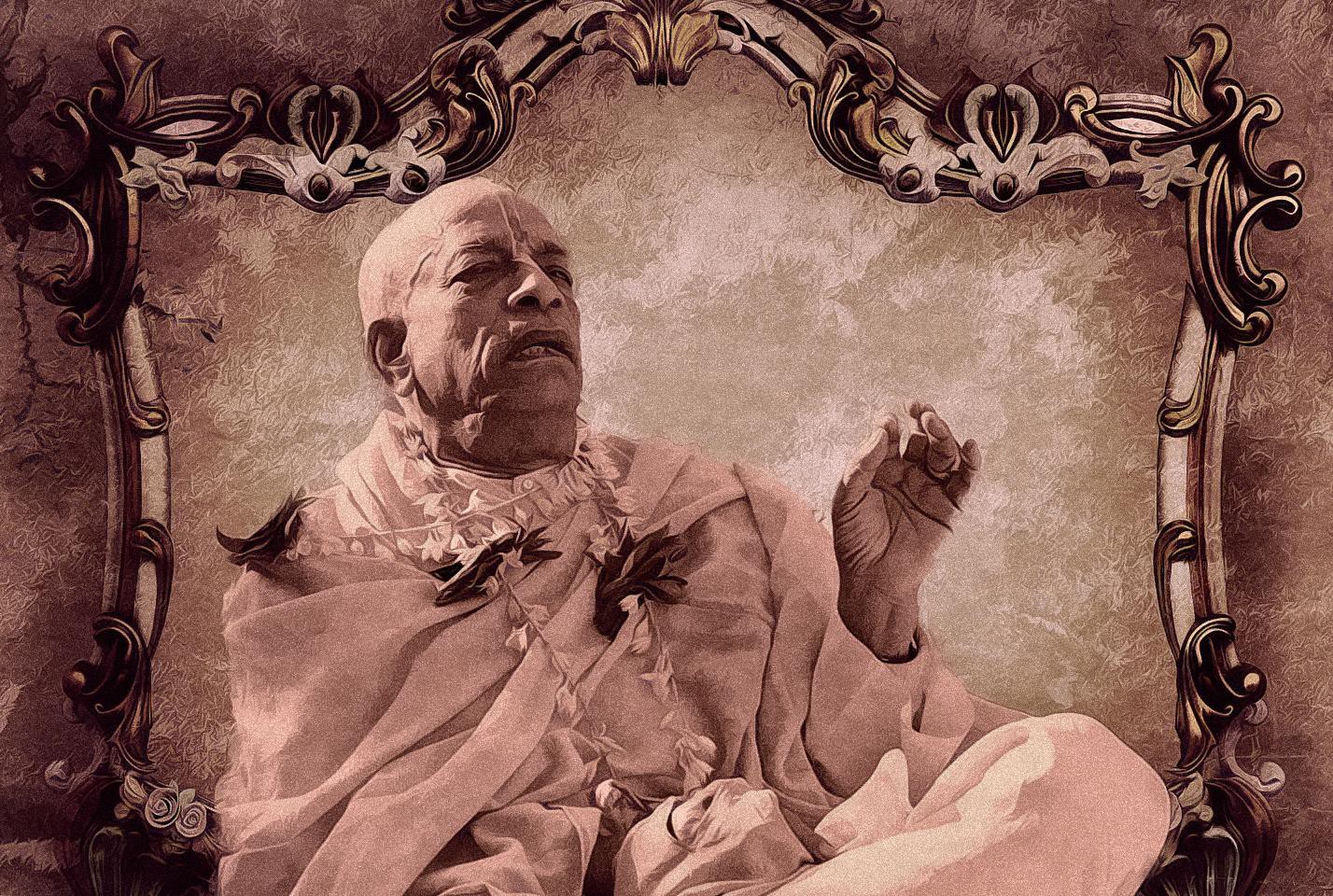
The revealed scriptures, as presented by His Divine Grace A.C. Bhaktivedanta Swami Prabhupāda, repeatedly draw the attention of thoughtful readers to the true nature of political leadership within material existence. Through the Bhagavad-gītā, Śrīmad-Bhāgavatam, Śrī Caitanya-caritāmṛta, and other authoritative works, Śrīla Prabhupāda consistently exposes the illusory foundations, limitations, and inherent dangers of leadership divorced from Kṛṣṇa consciousness, while simultaneously describing the exalted standard of genuinely God-centered rule.
In the Bhagavad-gītā As It Is (4.12, purport), Śrīla Prabhupāda explains that human society is generally enamored by temporary boons. Men worship demigods or influential personalities in the hope of gaining material advantages such as wealth, position, or power. If one attains a ministerial post by flattering or worshiping a political leader, he imagines that he has achieved a great benediction. Such achievements, however, are no more than fleeting bubbles in the cosmic ocean. Absorbed in the pursuit of sense enjoyment, such persons have little or no interest in Kṛṣṇa consciousness, which alone offers a permanent solution to the miseries of material life.
In Śrīmad-Bhāgavatam (1.2.10, purport), Śrīla Prabhupāda further describes that modern civilization is thoroughly misdirected, for in every sphere—politics, social service, philanthropy, religion, and even the quest for salvation—the underlying motive remains sense gratification. Political leaders struggle among themselves for the satisfaction of their own senses, and voters support them only so long as they promise similar gratification. When such promises remain unfulfilled, the leaders are swiftly rejected. Thus both leaders and followers remain trapped in a cycle of disappointment, never seriously addressing the real problems of life.
The Bhāgavatam (1.2.14, purport) highlights the power of glorification and propaganda in modern society. By constant praise—true or false—an insignificant man may quickly be elevated to prominence, particularly through newspapers and other media. Political leaders are often manufactured in this way. Yet such false glorification of unqualified persons brings no lasting benefit either to the individual or to society. The scriptures affirm that glorification must ultimately be directed toward the Supreme Personality of Godhead, for only such glorification yields genuine and permanent welfare.
Contrasting modern politics with ancient standards, Śrīla Prabhupāda explains (SB 1.7.36, purport) that in former times war was conducted according to religious principles, never at the whim of selfish leaders. Violence performed under divine regulation was considered superior to so-called nonviolence devoid of spiritual understanding. Leaders of that era were bound by strict moral codes, unlike modern politicians motivated by personal ambition.
Mahārāja Yudhiṣṭhira stands as the ideal example of enlightened kingship. As described in Śrīmad-Bhāgavatam (1.10.3, purport), he was not an unenlightened political leader of modern democracy but a representative of Lord Kṛṣṇa, fully instructed by Bhīṣmadeva and the Supreme Lord Himself. His rule exemplified harmony, cooperation, and complete God consciousness, establishing the standard for true leadership.
Śrīla Prabhupāda also explains (SB 2.3.14, purport) that the Supreme Lord sometimes performs roles resembling those of social, political, or religious leaders. Because such pastimes ultimately lead to glorification of the Lord, they are transcendental. When civic activities are connected to the Lord in this way, human society becomes spiritualized.
The illusion of political independence is addressed in Śrīmad-Bhāgavatam (4.9.35, purport), where Śrīla Prabhupāda explains that real independence means to act in one’s constitutional position as an eternal servant of the Lord. So-called independence promoted by political leaders only increases people’s dependence on material arrangements. True freedom lies in surrender to Kṛṣṇa, not in defying the laws of material nature.
A genuinely qualified ruler, Śrīla Prabhupāda states (SB 4.21.50, purport), must be merciful and compassionate, guiding citizens toward their ultimate welfare—devotional service to the Supreme Personality of Godhead. In contrast, so-called leaders merely seek exalted positions for themselves (SB 4.24.66, purport), manipulating public sentiment while remaining fully under the control of material nature.
Political leaders, deeply attached to their posts, are described as unwilling to relinquish power even at death (SB 4.29.76–77, purport). Imagining themselves indispensable, they remain bound by bodily identification, unaware of the inevitable laws of time.
Although many political and military heroes have conquered formidable enemies, Śrīmad-Bhāgavatam (5.13.15) explains that they fail to conquer their own uncontrolled senses. Thus, despite worldly success, they cannot advance spiritually. Similarly, those who aspire to positions of guardianship or leadership without understanding their true meaning are swiftly removed by the will of the Supreme Lord (SB 5.18.20, purport).
Śrīla Prabhupāda emphasizes that no political leader can provide genuine protection, for all are subordinate to material nature. Only the Supreme Personality of Godhead is the actual maintainer and protector of all beings (SB 5.18.27). Therefore, rather than deceiving themselves and others, leaders should help society learn surrender to Kṛṣṇa.
In Śrīmad-Bhāgavatam Canto 7, it is explained that even highly educated scholars and widely worshiped political leaders cannot understand the goal of life without accepting a bona fide spiritual master (SB 7.5.32, purport). History repeatedly demonstrates the fragility of political power, for even slight discrepancies have led to the violent deaths of prominent leaders (SB 7.6.19, purport).
Despite tireless efforts toward economic development, political leaders invariably meet frustration (SB 7.7.41, purport). Such failure is the inescapable law of material nature. Similarly, in the age of Kali, scriptures foretell that political leaders will fight over land, exploit citizens, and reduce society to chaos (SB 12.3.8; 12.3.32).
Śrīla Prabhupāda observes in Śrī Caitanya-caritāmṛta (Madhya 7.109, purport) that excessive absorption in politics often obstructs spiritual advancement. Even philosophers, historians, and political figures are sometimes mistakenly accepted as mahājanas, despite lacking true devotion to the Supreme Lord (Madhya 17.185, purport).
In his other writings, Śrīla Prabhupāda reiterates that political leaders generally fail to understand the personal nature of the Absolute Truth (Renunciation Through Wisdom 4.4). In Message of Godhead, he laments that under materialistic leadership, society neglects transcendental realization, reducing religion to a secondary concern beneath bodily demands.
Thus, throughout his teachings, Śrīla Prabhupāda consistently presents a clear conclusion: political leadership devoid of Kṛṣṇa consciousness is inherently flawed, temporary, and ultimately frustrating. Only when leaders and citizens alike recognize the Supreme Personality of Godhead as the true proprietor, protector, and enjoyer can human society attain real peace, prosperity, and spiritual fulfillment.
Deepen your Bhakti-yoga practice, harmonize relationships, and receive guided coaching — all at Vedavarsity.com