The question of who can be considered a brahmana and who is qualified to become a spiritual master has been discussed throughout Vedic history. While many people assume that spiritual authority is inherited through birth, the scriptures repeatedly emphasize that genuine qualification is determined by character, knowledge, conduct, and devotion to the Supreme Lord.
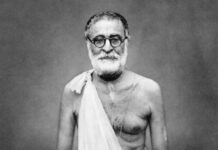
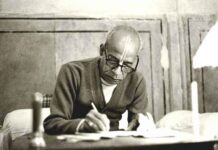
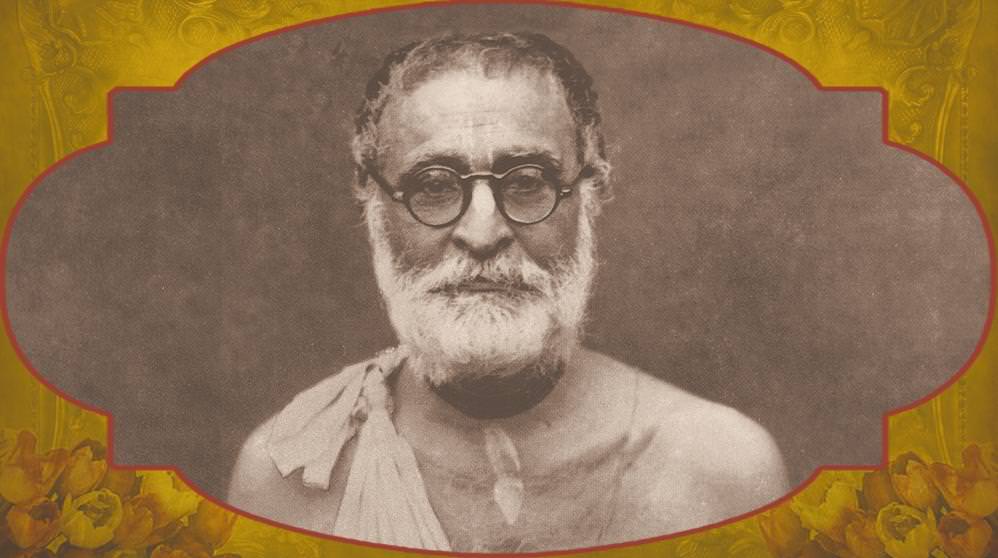
This principle was strongly upheld by Srila Bhaktisiddhanta Saraswati Thakura, who challenged the widespread misconception that only those born in brahmana families could receive brahminical initiation or serve as spiritual leaders. By carefully citing authoritative Vedic scriptures, he demonstrated that spiritual qualification is based on qualities and actions, not merely family lineage.
Srila Bhaktisiddhanta Saraswati Thakura and the Question of Brahminical Qualification
During one of his Braja Mandala parikramas, Srila Bhaktisiddhanta Saraswati Thakura encountered opposition from certain temple priests in Vrindavan. They objected to his practice of awarding sacred brahminical threads to disciples who were not born in traditional brahmana families.
In response, he presented clear scriptural evidence establishing that the Vedic system recognizes qualification according to qualities and activities rather than birth alone.
One of his principal references was the instruction of Sage Narada to Maharaja Yudhishthira in the Srimad-Bhagavatam:
“If one shows the symptoms of being a brāhmaṇa, kṣatriya, vaiśya or śūdra, as described above, even if he has appeared in a different class, he should be accepted according to those symptoms of classification.” (Srimad-Bhagavatam 7.11.35)
This verse establishes an important Vedic principle: social and spiritual classification should be determined by observable qualities and conduct.
The Vedic Definition of a Brahmana
The Sanskrit word brahmana does not merely indicate a birth category. It refers to a person whose life is dedicated to truthfulness, self-control, purity, wisdom, scriptural learning, and spiritual realization.
The Bhagavad-gita explains that the four divisions of human society were created according to qualities (guna) and activities (karma):
“The four divisions of human society were created by Me according to quality and work.” (Bhagavad-gita 4.13)
Significantly, Lord Krishna does not define social classification by birth. Rather, He emphasizes qualities and responsibilities.
A simple example helps illustrate this principle. A child born into a family of physicians does not automatically become a doctor. He must undergo education, training, discipline, and examination before receiving professional recognition.
Similarly, one becomes a brahmana through cultivation of brahminical qualities under proper spiritual guidance, not merely through family inheritance.
Can Anyone Become a Brahmana?
Qualification Through Training and Practice
The Vedic tradition teaches that spiritual advancement is available to all sincere souls.
When a person studies sacred scriptures under a bona fide guru, follows spiritual discipline, develops saintly qualities, and dedicates his life to the service of the Lord, he acquires genuine brahminical qualifications.
This understanding was upheld by the great acharyas of the Gaudiya Vaishnava tradition.
Many of the most influential spiritual teachers were not born in orthodox brahmana families, yet their spiritual realization transformed countless lives.
Examples include:
- Srila Bhaktivinoda Thakura
- Srila Bhaktisiddhanta Saraswati Thakura
- His Divine Grace A. C. Bhaktivedanta Swami Prabhupada
Their lives demonstrated that devotion, realization, and service to Krishna transcend considerations of birth.
Lord Chaitanya’s Standard for a Spiritual Master
The teachings of Sri Chaitanya Mahaprabhu provide one of the clearest statements regarding spiritual qualification.
He declared:
kiba vipra, kiba nyasi, sudra kene naya
yei krsna-tattva-vetta, sei guru haya
“It does not matter whether a person is a learned brahmana, a renunciant, or born in a lower family. One who understands the science of Krishna is qualified to become a spiritual master.” (Caitanya-caritamrta, Madhya-lila 8.128)
This statement shifts the focus from external designation to spiritual realization.
The qualification of a guru rests upon genuine understanding of Krishna and the ability to guide others toward devotional service.
A Vaishnava Is Superior to Mere Birth Prestige
The Padma Purana further reinforces this principle:
sat-karma-nipuno vipro
mantra-tantra-visaradah
avaisnavo gurur na syad
vaisnavah sva-paco guruh
“A scholarly brahmana expert in all branches of Vedic knowledge cannot become a spiritual master if he is not a Vaishnava. But a Vaishnava, even if born in a lower family, is qualified to become a guru.”
This verse highlights a central teaching of bhakti-yoga: devotion to the Supreme Lord is the highest qualification.
Without devotion, scholarship alone is insufficient. With genuine devotion, even a person from a humble background can become spiritually exalted.
Srila Prabhupada on Spiritual Qualification
In his commentary on Caitanya-caritamrta Madhya 8.128, Srila Prabhupada explains:
“If a person is born in a sudra family but has all the qualities of a spiritual master, he should be accepted not only as a brahmana but as a qualified spiritual master also.”
He further notes that Srila Bhaktisiddhanta Saraswati Thakura introduced sacred thread initiation for qualified Vaishnavas according to scriptural standards.
This reform was not an innovation but a restoration of authentic Vedic principles.
Guru Should Be Decorated With Saintly Qualities
The Characteristics of a Genuine Spiritual Master
The scriptures teach that a guru must be recognized by saintly qualities rather than social prestige.
The Srimad-Bhagavatam (3.25.21) describes the qualities of a sadhu:
- Tolerance
- Compassion
- Friendship toward all living beings
- Freedom from envy
- Peacefulness
- Faithfulness to scripture
- Exemplary conduct
These qualities naturally arise in one who has dedicated his life to devotional service.
A spiritual teacher must not simply possess theoretical knowledge. His life should reflect the truths he teaches.
The Example of Haridasa Thakura
Haridasa Thakura provides a powerful example of saintly character.
Although not born within the Hindu social structure, he became one of the greatest devotees in the history of Gaudiya Vaishnavism. Because of his extraordinary devotion to the holy name, Sri Chaitanya Mahaprabhu honored him as Namacharya, the teacher of chanting the holy names.
When Haridasa Thakura was publicly beaten in twenty-two marketplaces, he did not respond with hatred or revenge. Instead, he prayed for the welfare and forgiveness of those who persecuted him.
Such compassion demonstrates the true qualities of spiritual greatness.
How to Identify a Bona Fide Guru
In an age where spiritual claims are easily made, sincere seekers must exercise discrimination.
A genuine guru should:
- Strictly follow scriptural teachings
- Practice what he teaches
- Live a life of purity and devotion
- Represent the disciplic succession faithfully
- Inspire others toward service to Krishna
- Exhibit humility and compassion
- Remain free from selfish motives
External appearance, social status, nationality, or birth cannot substitute for these essential qualifications.
The Vedic tradition consistently teaches that genuine spiritual authority arises from realization and service, not hereditary privilege.
Conclusion
The Vedic scriptures present a clear and consistent conclusion: a brahmana is recognized by qualities and conduct, and a guru is recognized by spiritual realization and devotion to the Supreme Lord.
The teachings of Srila Bhaktisiddhanta Saraswati Thakura, Sri Chaitanya Mahaprabhu, Srila Prabhupada, and the Vedic scriptures all affirm that spiritual qualification transcends birth.
A sincere seeker should therefore evaluate a spiritual teacher according to scriptural standards rather than external designations. The ultimate purpose of human life is to revive our forgotten relationship with Krishna, and this journey is best undertaken under the guidance of a bona fide spiritual master. Understanding who is genuinely qualified to guide others is therefore essential for success in spiritual life.
In this way, the principle that anyone can become a brahmana through genuine qualification remains one of the most profound and inclusive teachings of Vedic wisdom.
library.vedavarsity.com || www.vedavarsity.com
Deepen your Bhakti-yoga practice, harmonize relationships, and receive guided coaching — all at Vedavarsity.com