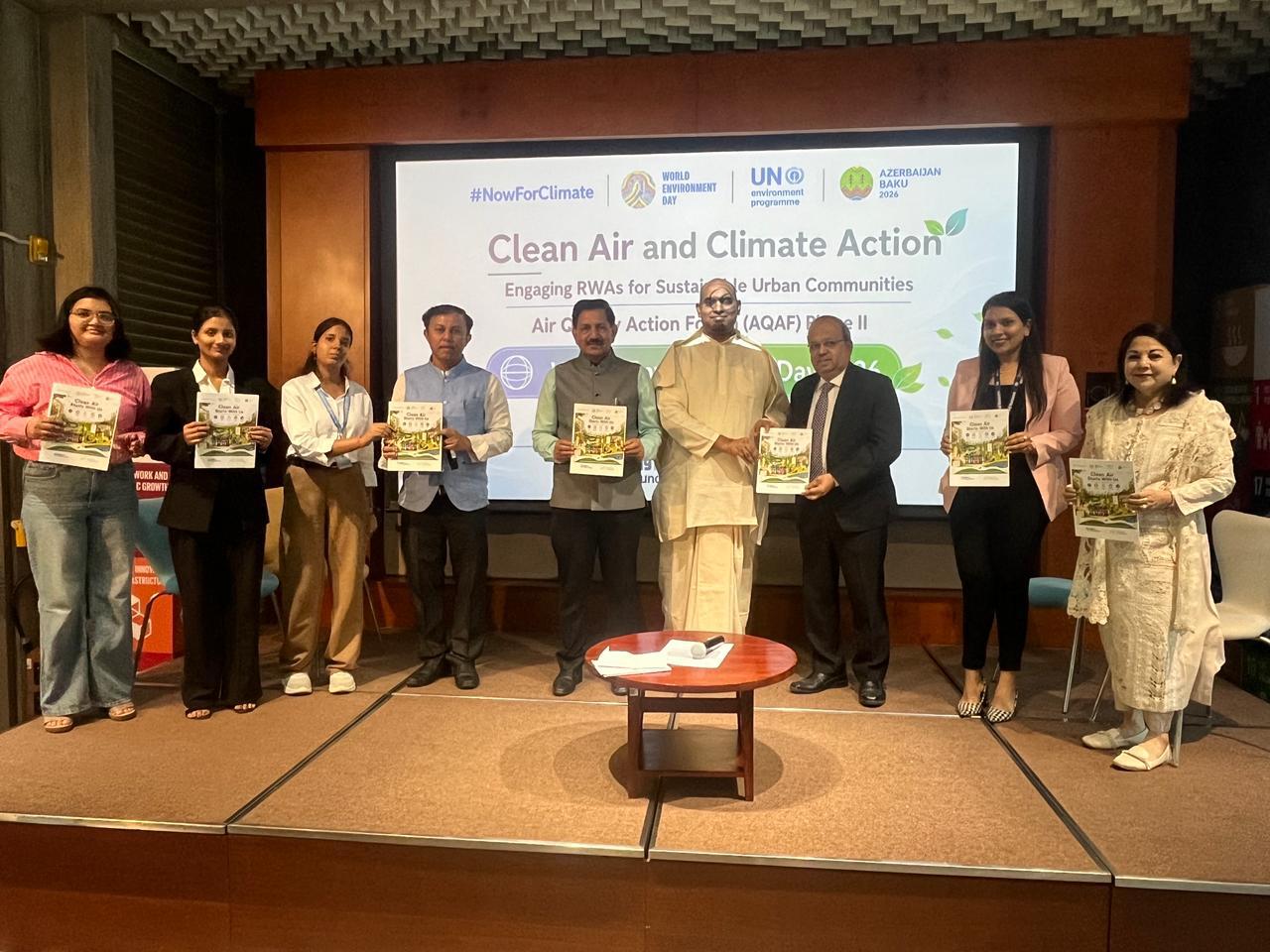
As India continues to confront the challenge of deteriorating air quality, meaningful solutions increasingly require the participation of communities alongside government institutions and scientific bodies. In the lead-up to World Environment Day, the United Nations Environment Programme (UNEP) convened the Air Quality Action Forum (AQAF) Phase II at the UN House in New Delhi on June 1, 2026, bringing together policymakers, environmental experts, civil society representatives, and community leaders to explore practical approaches for improving air quality across the country.
A significant outcome of the forum was the launch of a new UNEP guidebook designed for Resident Welfare Associations (RWAs), encouraging local communities to actively participate in reducing emissions, adopting cleaner practices, and promoting public awareness regarding air quality management. The initiative reflects a growing recognition that environmental protection is not solely the responsibility of governments but also of citizens acting collectively in their neighborhoods and communities.
Air Quality Action Forum Focuses on Community-Led Environmental Solutions
The Air Quality Action Forum served as a platform for dialogue among stakeholders working to address one of India’s most pressing environmental concerns. Air pollution continues to affect public health, ecosystems, and quality of life in both urban and rural regions.
The newly launched UNEP guidebook aims to empower Resident Welfare Associations with practical guidance on environmental stewardship. By encouraging local action, the initiative seeks to bridge the gap between policy frameworks and everyday practices that influence air quality.
Community participation has increasingly become an important component of environmental governance. Local initiatives such as waste management, tree plantation, sustainable transportation practices, and public awareness campaigns can contribute meaningfully to reducing pollution levels when implemented consistently.
Distinguished Leaders Address the Air Quality Action Forum
The event featured several notable dignitaries and experts working in environmental policy and public engagement.
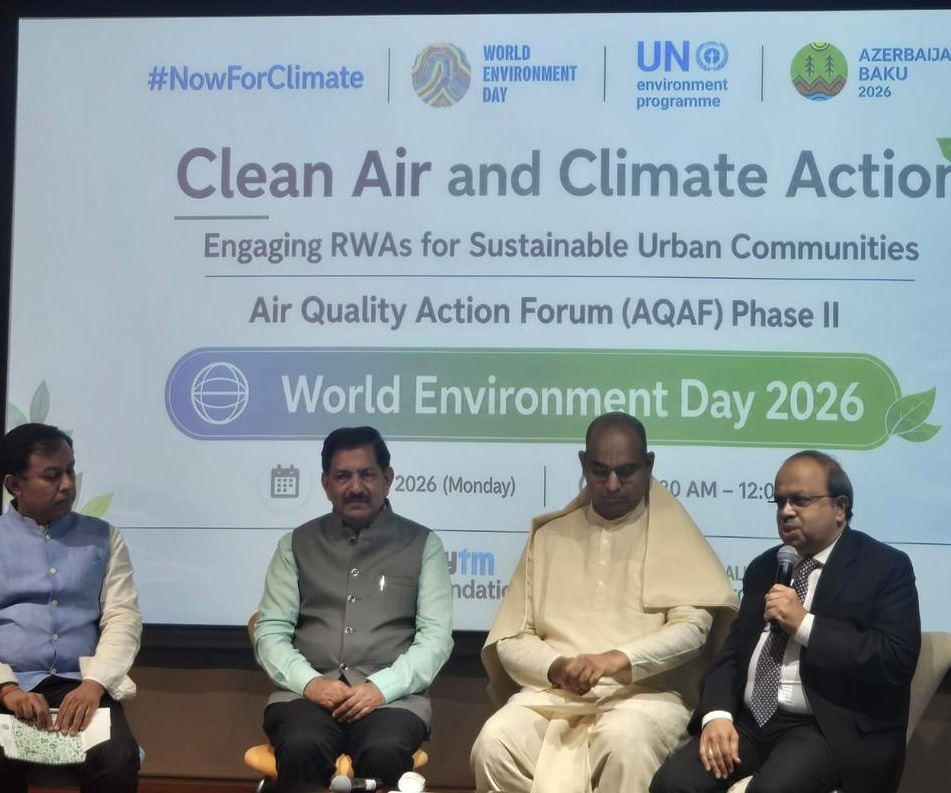
Among those present on the dais were:
- Yudhistir Govinda Das, Trustee and Country Director of Communications for ISKCON India
- Dr. Balakrishna Pispupati, Head of UNEP India
- Dr. S.D. Attri, Technical Member of the Commission for Air Quality Management (CAQM) under India’s Ministry of Environment, Forests and Climate Change
The discussions emphasized the importance of coordinated action involving government agencies, scientific institutions, civil society organizations, and local communities.
Participants explored strategies for increasing public participation in environmental initiatives while strengthening awareness of sustainable practices that can improve air quality at the grassroots level.
ISKCON India Emphasizes Values-Based Environmental Stewardship
During the forum, Yudhistir Govinda Das highlighted dimensions of environmental responsibility that extend beyond technology and policy. His remarks focused on the spiritual, cultural, and psychological foundations of sustainable living.
Drawing from ISKCON India’s longstanding engagement in environmental and community welfare initiatives, he emphasized that lasting environmental progress often depends upon individual and collective values. Programs such as tree-planting campaigns, natural farming initiatives, and sustainable lifestyle education demonstrate practical ways communities can contribute to environmental protection.
He noted that behavioral change plays a crucial role in addressing environmental challenges. While regulations and scientific interventions remain essential, long-term success often requires individuals to develop a sense of responsibility toward nature and future generations.
This perspective aligns with the broader understanding that environmental stewardship begins with personal choices and expands through community cooperation.
A Vedic Perspective on Responsibility Toward Nature
The Vedic tradition teaches that human beings are not independent proprietors of nature but caretakers entrusted with its responsible use. The principle of dharma—acting according to duty and righteousness—encourages individuals to live in harmony with natural laws rather than exploit resources irresponsibly.
Environmental degradation can be understood through the lens of karma, the principle that actions produce corresponding consequences. When societies disregard ecological balance, the resulting environmental challenges often affect public health, agriculture, and overall well-being.
Such reflections complement modern environmental science by encouraging a culture of responsibility, restraint, and respect for all forms of life.
Faith-Based Organizations as Partners in Environmental Action
One of the notable themes emerging from the Air Quality Action Forum was the growing recognition of faith-based and civil society organizations as valuable partners in environmental initiatives.
Organizations with extensive community networks possess a unique capacity to influence public behavior and encourage sustainable practices. Through education, outreach programs, and value-based messaging, they can help translate environmental awareness into everyday action.
ISKCON India has consistently promoted practices that support ecological sustainability while encouraging respect for all living beings. Its outreach efforts emphasize responsible consumption, natural living, and community service as practical expressions of environmental responsibility.
The participation of spiritual organizations in environmental discussions reflects an evolving understanding that complex challenges often require cooperation across multiple sectors of society.
Building Public Awareness for Long-Term Air Quality Improvement
Experts at the forum underscored that improving air quality requires sustained public engagement. Technological solutions and regulatory measures remain important, but lasting improvements depend upon widespread awareness and behavioral change.
Resident Welfare Associations can play a particularly significant role by serving as local centers for environmental education and collective action. Initiatives such as reducing waste burning, promoting green spaces, encouraging public transportation, and supporting clean energy practices can contribute positively to air quality outcomes.
The UNEP guidebook seeks to provide communities with practical tools to undertake such initiatives effectively. By empowering local stakeholders, the organization hopes to strengthen public participation in environmental management.
Community Action as a Force for Environmental Change
Environmental challenges often appear large and complex. However, meaningful progress frequently begins with small, consistent actions undertaken by individuals and communities.
When citizens become active participants in environmental stewardship, collective efforts can generate significant positive outcomes. This principle is reflected both in contemporary environmental policy and in traditional wisdom that recognizes the interconnected nature of human actions and their broader consequences.
Conclusion
The Air Quality Action Forum Phase II highlighted the importance of collaboration among policymakers, scientists, community leaders, and civil society organizations in addressing India’s air pollution challenge.
The launch of UNEP’s guidebook for Resident Welfare Associations represents a practical step toward strengthening grassroots participation in environmental protection. At the same time, contributions from organizations such as ISKCON India demonstrated how values-based approaches can complement scientific and policy-driven efforts by encouraging personal responsibility and community engagement.
As environmental concerns continue to shape public discourse, sustainable solutions will increasingly depend upon the combined efforts of institutions and individuals. Beyond regulations and technology, a culture of responsibility, respect for nature, and awareness of our interconnected existence can help foster a cleaner and healthier future for all. In this way, environmental stewardship becomes not merely a policy objective but a shared human duty aligned with both practical wisdom and higher purpose.
library.vedavarsity.com || www.vedavarsity.com
Deepen your Bhakti-yoga practice, harmonize relationships, and receive guided coaching — all at Vedavarsity.com