


The revival of Varnasrama Dharma remains one of the important instructions given by His Divine Grace A. C. Bhaktivedanta Swami Śrīla Prabhupāda for the spiritual and social welfare of humanity. As ISKCON completes 60 years since its establishment, devotees worldwide are being invited to reflect upon the progress made towards fulfilling this vision through the First Annual Online Varnasrama Dharma Festival Week, scheduled from November 9–12, 2026.
Organised by the Institute for Advanced Social Design and SpeakingAboutVarnasrama.com, the free online festival will take place through Zoom under the theme, “60 Years of ISKCON: Re-establishing Varnasrama — Looking Back, Looking Forward.”
The festival will explore practical aspects of establishing a Vedic social structure, including agricultural communities, land for householders, cow protection, children’s education, vocational training, and responsible leadership.
Beyond discussions and philosophical deliberations, the event raises an important question: How can the Kṛṣṇa consciousness movement practically establish the system of daiva-varṇāśrama envisioned by Śrīla Prabhupāda?
Understanding Varnasrama Dharma: The Foundation of Vedic Society
Varnasrama Dharma is the Vedic system of organising human society according to people’s natural qualities, occupational tendencies, and stages of spiritual life.
The system comprises two interconnected divisions:
- Varṇa: The four occupational divisions — brāhmaṇa (intellectual and spiritual guidance), kṣatriya (administration and protection), vaiśya (agriculture, cow protection, and commerce), and śūdra (service and practical assistance).
- Āśrama: The four stages of spiritual life — brahmacarya (student life), gṛhastha (household life), vānaprastha (retired life), and sannyāsa (renounced life).
The purpose of this arrangement is not merely to establish an efficient social structure. Its ultimate objective is to engage every individual according to their nature and qualification in the service of the Supreme Personality of Godhead.
In the Bhagavad-gītā (4.13), Lord Śrī Kṛṣṇa explains:
cātur-varṇyaṁ mayā sṛṣṭaṁ guṇa-karma-vibhāgaśaḥ
“According to the three modes of material nature and the work associated with them, the four divisions of human society are created by Me.”
Thus, the Vedic social system is based upon guṇa (qualities) and karma (activities), rather than merely external designation or hereditary claims.
Śrīla Prabhupāda repeatedly emphasised the need to establish daiva-varṇāśrama, a system in which social and occupational responsibilities are ultimately directed towards spiritual advancement.

First Annual Online Varnasrama Dharma Festival Week: Looking Back and Looking Forward
The First Annual Online Varnasrama Dharma Festival Week seeks to examine the progress made by ISKCON in implementing Śrīla Prabhupāda’s instructions over the past six decades.
The four-day programme, from November 9–12, 2026, will bring devotees, practitioners, and interested participants together to discuss both philosophical principles and practical challenges.
Vaninatha Vasu Dāsa (ACBSP), author of Four Simple Steps to Re-establish Varnasrama and one of the organisers, explained that the festival emerged from efforts to revive meaningful discussion about this important subject.
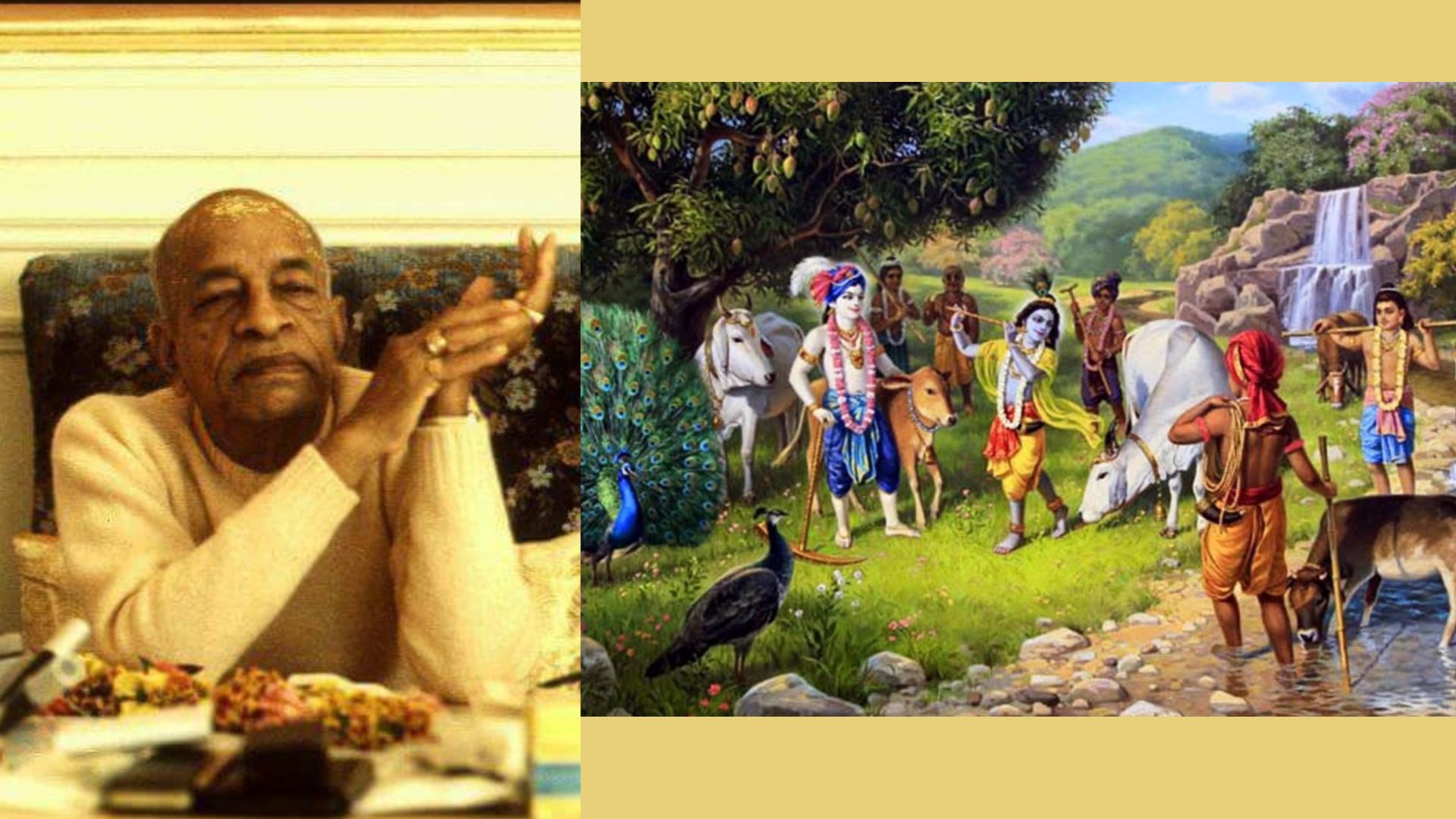
The timing around Govardhana Pūjā is particularly significant. Lord Kṛṣṇa’s pastimes in the cowherd community demonstrate the natural relationship between agriculture, cow protection, family life, community cooperation, and devotional service.
Govardhana Pūjā reminds devotees that human society should recognise its dependence upon the Lord, nature, cows, and the blessings of the Vaiṣṇavas.
The festival will also provide an opportunity to evaluate earlier community development initiatives, including the experiences of New Vrindaban, and learn from both their achievements and difficulties.
Land for Householders: Building Sustainable Kṛṣṇa Conscious Communities
One of the important subjects highlighted by Vaninatha Vasu Dāsa is the need to provide householders with dependable access to land.
In the Vedic social structure, the gṛhastha āśrama plays an essential role in supporting spiritual and social life. Householders maintain families, contribute to community welfare, support spiritual institutions, and help provide the resources necessary for the other āśramas.
However, meaningful community development requires more than simply establishing a temple or acquiring agricultural land.
Families need opportunities to establish homes, develop livelihoods, educate their children, and participate in productive community activities.
Vaninatha observed that many householders developed their lives outside ISKCON’s rural projects because dependable arrangements for long-term land access were not sufficiently established.
He suggested that practical arrangements for secure land access or ownership deserve renewed consideration.
Agriculture and Cow Protection
Agriculture and cow protection are central components of the vaiśya occupational responsibility.
Śrī Kṛṣṇa specifically identifies these activities in the Bhagavad-gītā (18.44):
kṛṣi-go-rakṣya-vāṇijyaṁ vaiśya-karma svabhāva-jam
“Agriculture, cow protection and business are the natural work for the vaiśyas.”
A sustainable Vedic community should therefore encourage agricultural production, protect cows, promote responsible use of natural resources, and develop local economic activities.
Such communities can provide an environment in which families work cooperatively while maintaining their spiritual practices.
The objective is not simply economic self-sufficiency but the cultivation of a lifestyle centred on service to Kṛṣṇa.
Varṇa First, Then Āśrama: The Importance of Qualification and Training
Another significant discussion during the festival concerns the relationship between varṇa and āśrama.
Vaninatha referred to Śrīla Prabhupāda’s March 14, 1974, discussion concerning the Varnasrama college, in which Prabhupāda explained:
“First of all varṇa.”
He further stated:
“And when the varṇa is working perfectly, then we give them āśrama.”
This distinction highlights an important principle: the establishment of a Vedic social structure requires proper assessment, qualification, and practical training.
Simply assigning occupational or social designations without developing the necessary qualities and abilities cannot establish an effective Varnasrama system.
For example, those entrusted with spiritual guidance must develop genuine brahminical qualities, while those responsible for administration must demonstrate leadership, courage, responsibility, and the ability to protect others.
The objective is to develop qualified individuals who can fulfil their responsibilities in harmony with the principles of devotional service.
Śrīla Prabhupāda’s Final Instructions on Varnasrama Dharma
The importance of Varnasrama Dharma becomes particularly evident when we consider Śrīla Prabhupāda’s emphasis on this subject during the final period of his life.
In his purport to Śrīmad-Bhāgavatam 10.13.53, Śrīla Prabhupāda writes:
“Varṇāśrama-dharma, therefore, is essential, for it can bring people to sattva-guṇa.”
The mode of goodness, or sattva-guṇa, provides a favourable foundation for spiritual advancement. By cultivating regulated habits, responsibility, cleanliness, knowledge, and a disciplined lifestyle, human beings can gradually become qualified to understand transcendental knowledge.
Śrīla Prabhupāda also discussed the need to preserve the spiritual movement’s original purpose in his February 7, 1969, lecture in Los Angeles. He warned that even the movement of Lord Caitanya and the Six Gosvāmīs had undergone deterioration over time.
This serves as an important reminder that spiritual institutions must consciously preserve their founding principles and continue working towards their intended objectives.
The revival of Varnasrama should therefore find expression not only in philosophical discussions but also in institutional goals, educational programmes, community planning, and practical initiatives.
Training Leaders for the Next 60 Years of ISKCON
Looking towards the next 60 years, Vaninatha identified systematic training as one of the most important requirements for establishing Varnasrama.
While ISKCON has developed several programmes for brahminical education and spiritual training, he emphasised the need to give greater attention to preparing qualified kṣatriyas and other responsible community leaders.
Developing Qualified Brāhmaṇas
Brāhmaṇas are expected to provide spiritual and intellectual guidance based on śāstra. Their responsibilities include teaching, advising, performing religious activities, and helping society remain connected with transcendental knowledge.
Developing Qualified Kṣatriyas
Kṣatriyas are responsible for leadership, protection, administration, and the maintenance of social order.
A healthy community requires leaders who are trained to make responsible decisions, protect vulnerable members, resolve conflicts, and organise resources for the welfare of society.
Brāhmaṇas and kṣatriyas must cooperate, with spiritual guidance informing responsible administration.
Such training can help transform the idea of Varnasrama from a theoretical concept into a practical social arrangement.
Varnasrama Dharma and the Future of Kṛṣṇa Conscious Communities
The First Annual Online Varnasrama Dharma Festival Week highlights an important opportunity for ISKCON to reflect upon its achievements and challenges.
The movement already possesses many of the essential resources required for community development: spiritually dedicated individuals, scriptural knowledge, agricultural experience, land, educational initiatives, and practical expertise.
The challenge lies in bringing these resources together through cooperation, systematic training, clear responsibilities, and long-term planning.
A successful Vedic community should provide an environment where:
- Children receive spiritual and value-based education.
- Householders can establish stable homes and productive livelihoods.
- Agriculture and cow protection receive appropriate attention.
- Qualified leaders protect and guide the community.
- Spiritual teachers provide guidance based on Guru, Sādhu, and Śāstra.
- Every individual receives opportunities to engage in devotional service according to their qualifications.
Such an arrangement can help people gradually understand that the ultimate purpose of life is not material prosperity alone but the revival of one’s eternal relationship with the Supreme Lord.
How to Participate in the Varnasrama Dharma Festival 2026
Devotees and interested participants worldwide are invited to attend the four-day online festival.
Event details:
- Event: First Annual Online Varnasrama Dharma Festival Week
- Dates: November 9–12, 2026
- Mode: Online via Zoom
- Participation: Free
- Theme: 60 Years of ISKCON: Re-establishing Varnasrama — Looking Back, Looking Forward
- Organisers: Institute for Advanced Social Design and SpeakingAboutVarnasrama.com
Devotees can also follow the initiative through its Facebook, Instagram, and YouTube channels.
Conclusion: Re-establishing Varnasrama Dharma Is a Mission for the Future
The First Annual Online Varnasrama Dharma Festival Week provides an opportunity to revisit one of Śrīla Prabhupāda’s important instructions and consider how it can be fulfilled in practical life.
The re-establishment of Varnasrama Dharma is not simply an attempt to recreate an ancient social arrangement. It is an endeavour to organise human society according to the principles of the Vedic scriptures, enabling every individual to develop their natural abilities and advance towards spiritual perfection.
As ISKCON enters its next six decades, the need for sustainable communities, qualified leadership, systematic education, agricultural development, cow protection, and responsible household life deserves serious attention.
Ultimately, the success of Varnasrama will be measured not by the number of communities established or institutions created, but by how effectively the system helps people become Kṛṣṇa conscious.
By bringing together knowledge, training, cooperation, and practical service, devotees can work towards fulfilling Śrīla Prabhupāda’s vision of a society in which all human activities are ultimately connected with the service of the Supreme Personality of Godhead.
Deepen your Bhakti-yoga practice, harmonize relationships, and receive guided coaching — all at Vedavarsity.com