


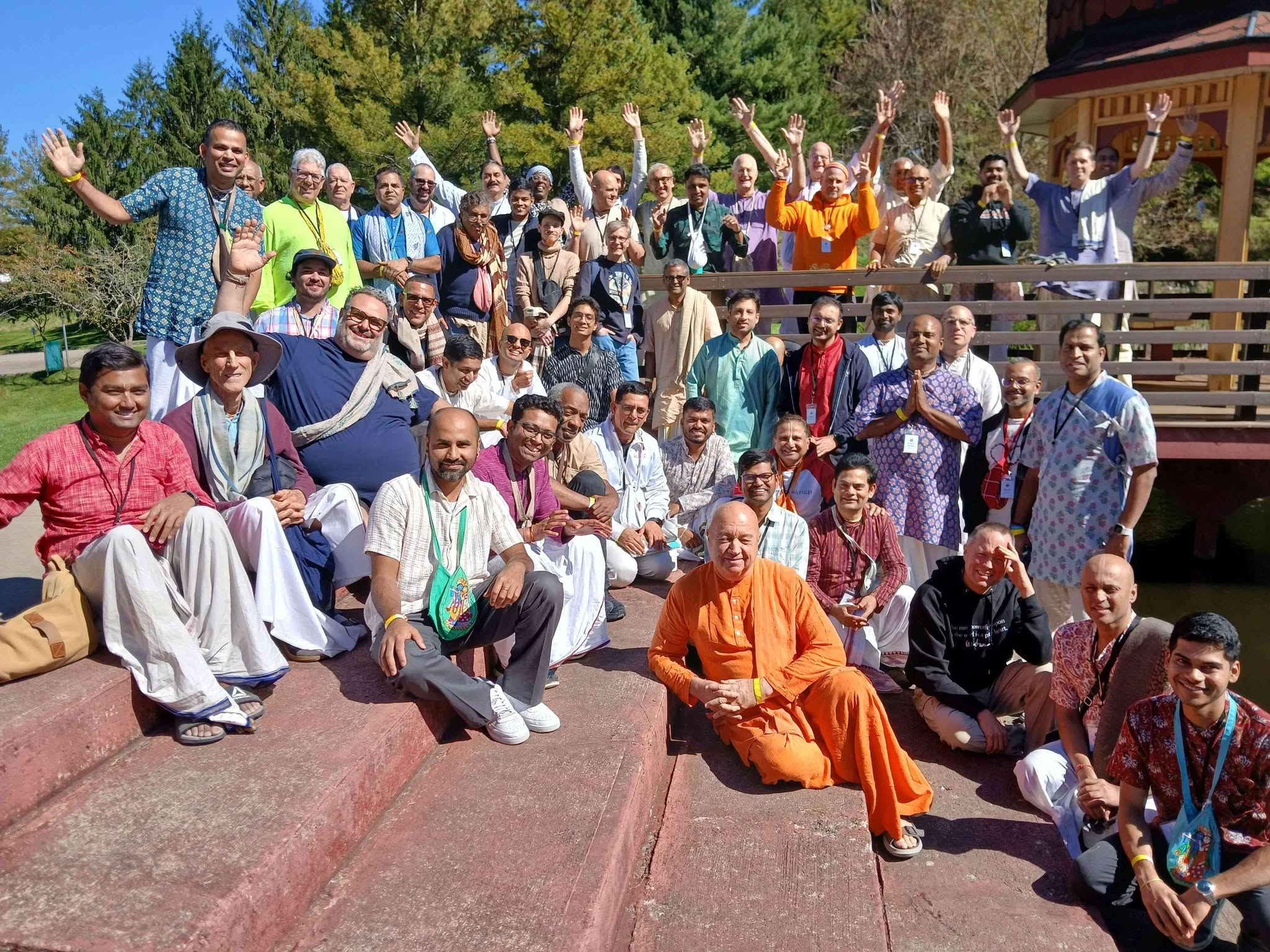
The MAN-tra Retreat at New Vrindaban, West Virginia, brought together men from across North America for a weekend of spiritual inspiration, self-reflection, devotional association, and personal growth. Held in October 2026, the annual gathering offered participants an opportunity to strengthen their spiritual lives while exploring emotions, relationships, responsibility, and service.
Organized by the MAN-tra ministry, the retreat combined enlightening presentations, joyful kirtan, prasadam, and meaningful fellowship. Its activities highlighted an important principle: spiritual advancement is not confined to religious practices alone but should gradually transform our character, relationships, and understanding of our responsibilities toward others.
From the perspective of Vedic wisdom, genuine personal growth begins when a person learns to see life in relationship with the Supreme Personality of Godhead, Śrī Krishna.
MAN-tra Retreat: The Importance of Spiritual Association
The MAN-tra Retreat was hosted by Anuttama Dasa, a member of the Governing Body Commission (GBC) and co-founder of the retreat with Bhaktimarga Swami. Established in 2018, the gathering provides a dedicated environment for men to deepen their spiritual understanding and strengthen their relationships with fellow devotees.
In Vedic culture, the association of spiritually minded persons is known as sadhu-sanga. Such association is considered essential for cultivating devotional qualities and progressing in Krishna consciousness.
When devotees gather to hear about Krishna, chant His holy names, and discuss spiritual subjects, they encourage one another to remain steady in devotional service. This association also creates an atmosphere in which people can reflect honestly on their shortcomings and aspire to become better servants of the Lord.
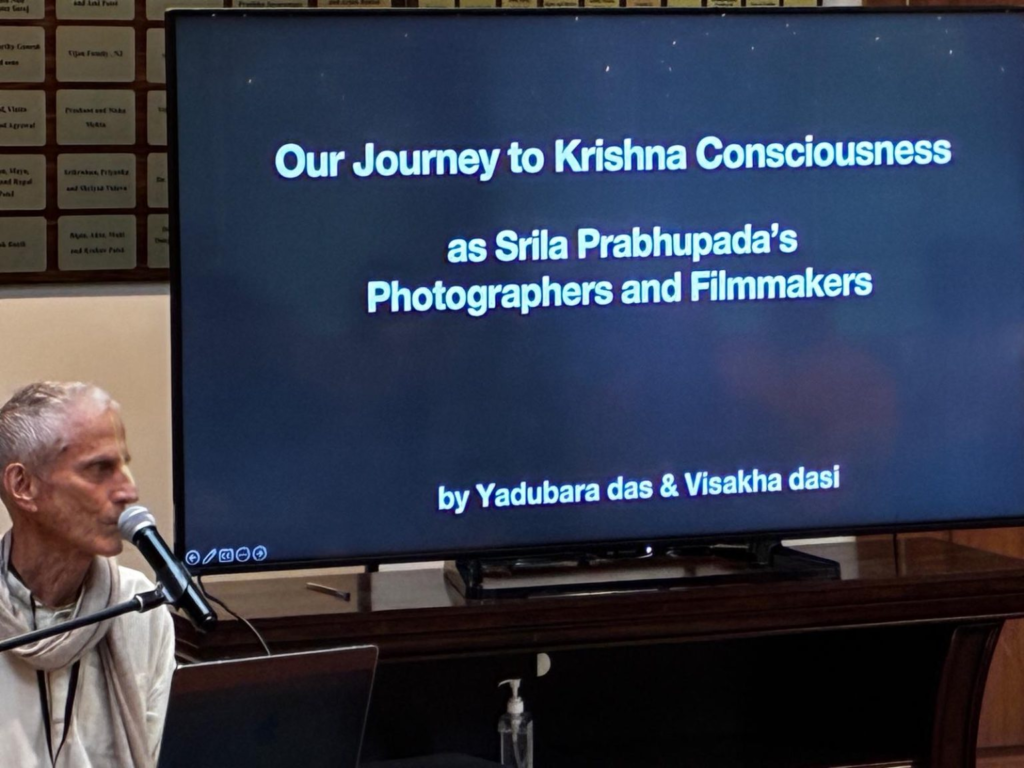
The retreat opened on Friday evening with a presentation by Yadubara Dasa entitled “The Story Behind the Camera: Pastimes of Srila Prabhupada.” Through archival photographs and personal recollections, he shared experiences connected with His Divine Grace A. C. Bhaktivedanta Swami Prabhupada.
The presentation offered participants a glimpse into the life and devotional activities of Srila Prabhupada, whose dedication to spreading Krishna consciousness continues to inspire devotees throughout the world.
The evening concluded with a community dinner and an uplifting kirtan at the Palace of Gold, providing opportunities for participants to strengthen their bonds through devotional fellowship.
Understanding Emotions Through Krishna Consciousness
One of the central themes of the MAN-tra Retreat was emotional awareness and personal development. Spiritual life requires sincerity, humility, and a willingness to understand one’s thoughts, feelings, and conduct.
On Saturday morning, Partha Dasa presented a session entitled “Men, Bhakti Rasa … and Emotions?” The discussion explored how men can recognize and understand their emotions within the context of their spiritual lives.
In the Vedic understanding, a human being is not merely the temporary material body. The living entity is the eternal spirit soul, or atma, whose original constitutional position is to serve Krishna.
However, while living in the material world, the soul identifies with the body and mind and becomes affected by happiness, distress, fear, attachment, and disappointment. Understanding these experiences can help a person respond more thoughtfully rather than allowing temporary emotions to dictate his actions.
Bhakti does not require a person to deny every emotional experience. Rather, the process of devotional service gradually purifies consciousness and directs one’s feelings toward the Supreme Lord.
Through hearing, chanting, prayer, and service, a devotee learns to approach life’s difficulties with greater patience and spiritual understanding.
Addressing Grief with Compassion and Wisdom
Later on Saturday, Ekavira Dasa delivered a presentation entitled “Handling Grief and Its Impact on Men.” The session examined grief, its emotional effects, and the challenges associated with navigating loss.
The Bhagavad-gita offers profound guidance for understanding the temporary nature of material existence. In Bhagavad-gita 2.13, Krishna explains that the embodied soul passes through childhood, youth, and old age and similarly passes into another body at death.
This teaching provides a spiritual framework for understanding that the soul is eternal, even though the material body undergoes inevitable change.
Such knowledge does not mean that one should dismiss another person’s sorrow or respond to grief without compassion. Rather, spiritual understanding can help a person offer meaningful support while remembering the eternal nature of the soul.
A devotee should strive to cultivate both philosophical conviction and a compassionate heart. By hearing from spiritual authorities, seeking appropriate guidance, and maintaining devotional practices, one can gradually learn to face difficult circumstances with greater steadiness.
Personal Growth Through Creativity and Self-Reflection
The retreat also included activities designed to encourage confidence, spontaneity, and self-expression.
Yadunath Dasa led an improvisation workshop entitled “Bring the Inner You to the Interview.” Participants engaged in creative exercises that encouraged them to think quickly, trust their intuition, and express different emotions through spontaneous performance.
The workshop introduced a lighter atmosphere into the programme, allowing participants to step beyond their usual routines and enjoy learning through shared experience.
Personal growth can involve developing practical abilities alongside spiritual understanding. Learning to communicate clearly, listen attentively, and respond appropriately in unfamiliar situations can benefit a person’s family life, professional responsibilities, and service to the Vaishnava community.
The afternoon also included a walk to Old Vrindaban, where participants learned about the early history and development of the community.
Such activities remind us that spiritual communities are shaped by the dedication, sacrifice, and service of those who contribute to their development over time.
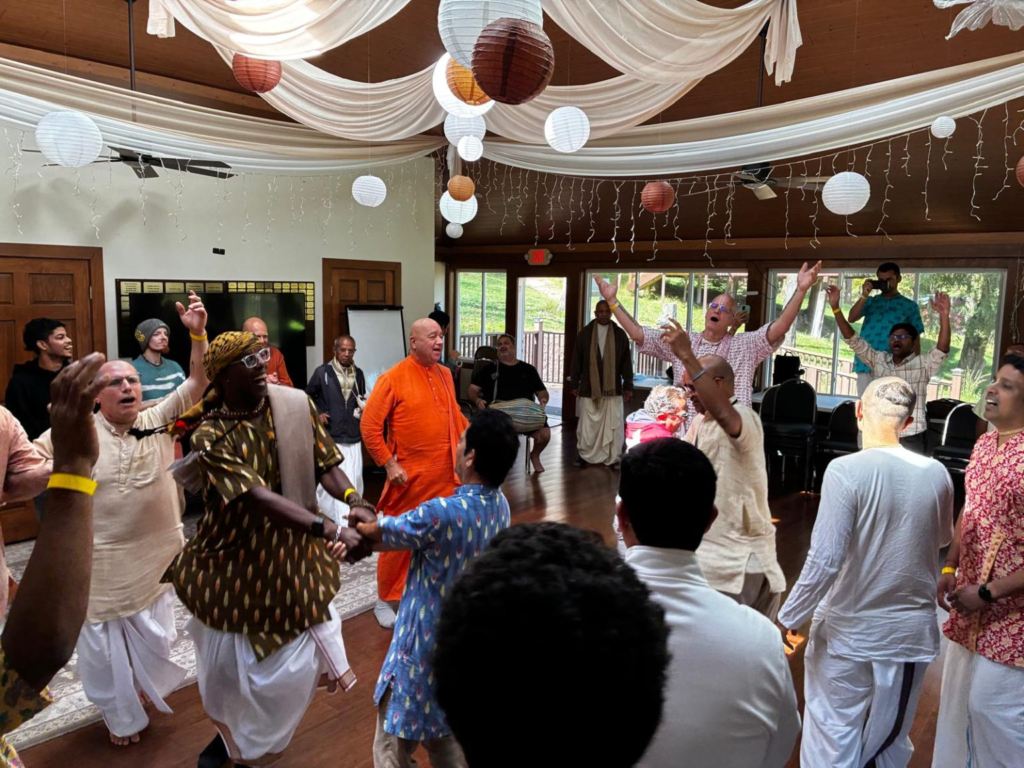
Saturday evening continued with prasadam, a drama presented by Bhaktimarga Swami’s team, and an uplifting kirtan led by Gaura Vani and friends. Bhaktimarga Swami’s performance of “Big Fish, Little Fish” was especially well received.
These shared experiences illustrated how devotional culture can bring together learning, creativity, music, and fellowship in a spirit of service.
The Role of Men in Protecting the Vulnerable
One of the most significant themes of the MAN-tra Retreat was responsibility toward others.
On Sunday morning, Gopal Hari Dasa presented “Men’s Role in Protecting the Vulnerable.” His talk emphasized the responsibility men can undertake in caring for and protecting others within their families and communities.
From a Vedic perspective, strength and responsibility should be exercised in the service of dharma, or righteous conduct. A person’s abilities, influence, and resources become meaningful when they are used for the welfare of others rather than merely for personal satisfaction.
Protection is not limited to physical security. It can also involve offering emotional support, providing guidance, defending those who are mistreated, and creating an environment in which others can grow spiritually.
The principle of daya, or compassion, is central to Vaishnava character. A devotee should strive to become considerate, truthful, humble, and attentive to the needs of others.
Men, in particular, can reflect on how their conduct affects their families, fellow devotees, and wider communities. Responsible leadership requires more than authority; it calls for integrity, self-control, and a willingness to serve.
The presentation also highlighted the different stages of life in which people depend upon the care and support of others. Although the opportunity to protect and support another person may sometimes be brief, the effects of genuine care can be lasting.
When responsibility is understood as service rather than domination, relationships can become more respectful, stable, and spiritually supportive.
Kirtan, Prasadam, and the Power of Devotional Fellowship
Throughout the retreat, devotional practices remained at the heart of the gathering.
Kirtan, the congregational chanting of the holy names of the Lord, is a central practice in the Gaudiya Vaishnava tradition. By chanting the Hare Krishna maha-mantra together, devotees unite their voices and attention in glorifying Krishna.
Prasadam, food offered to the Lord with devotion, also plays an important role in Vaishnava culture. Sharing prasadam encourages hospitality, gratitude, and a spirit of community.
These practices demonstrate that spiritual life is not limited to formal lectures or individual study. Devotional culture encompasses the way people gather, eat, sing, serve, and care for one another.
The MAN-tra Retreat brought these elements together, creating an environment where participants could reflect on philosophical teachings while experiencing the joy of devotional association.
Its programme also encouraged men to consider how the lessons they learned could be carried into their daily lives after the gathering had concluded.
Applying the Lessons of the MAN-tra Retreat in Daily Life
A spiritual retreat becomes especially valuable when its lessons continue to influence a person’s conduct long after the event has ended.
The insights shared at New Vrindaban offer several practical areas for reflection:
- Strengthen spiritual practice: Make time for chanting, hearing, and studying scripture every day.
- Cultivate emotional maturity: Learn to respond to challenging situations with patience, humility, and thoughtful consideration.
- Seek saintly association: Spend time with devotees who encourage sincere spiritual progress.
- Take responsibility: Contribute positively to family life, community welfare, and devotional service.
- Practise compassion: Offer support to those experiencing difficulty and treat others with respect.
- Serve cooperatively: Use personal abilities and experience to assist others rather than seeking recognition.
These practices can help transform spiritual knowledge into lived experience. The objective is not simply to acquire information but to develop qualities that reflect a growing commitment to Krishna consciousness.
Conclusion: The Lasting Value of the MAN-tra Retreat
The MAN-tra Retreat at New Vrindaban demonstrated how spiritual association, thoughtful discussion, joyful kirtan, and shared service can encourage meaningful personal development.
Through presentations on emotional awareness, grief, creativity, and the responsibility to protect the vulnerable, participants were invited to examine their lives from both practical and spiritual perspectives.
The deeper lesson is that genuine strength is expressed through self-control, compassion, integrity, and dedication to service. When these qualities are cultivated under the guidance of spiritual wisdom, they can positively influence families, friendships, and entire communities.
The MAN-tra Retreat once again provided a valuable space for men to reflect on their spiritual journeys and return to their daily responsibilities with renewed inspiration.
As taught in the Bhagavad-gita, the purpose of human life is not merely to pursue temporary material achievements but to understand our eternal relationship with Krishna. By applying this understanding through devotional service, sincere association, and responsible conduct, one can make steady progress toward a life of deeper spiritual purpose.
Deepen your Bhakti-yoga practice, harmonize relationships, and receive guided coaching — all at Vedavarsity.com