


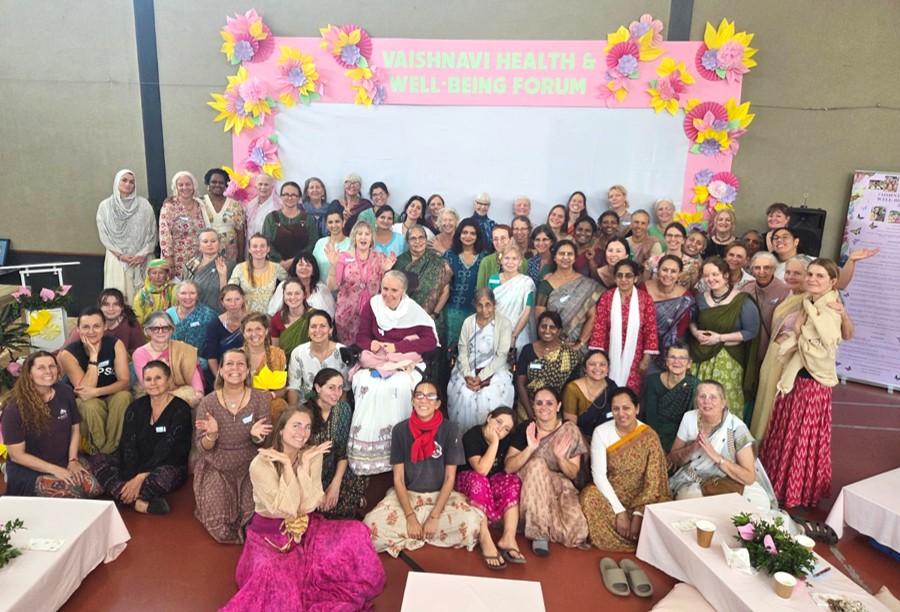
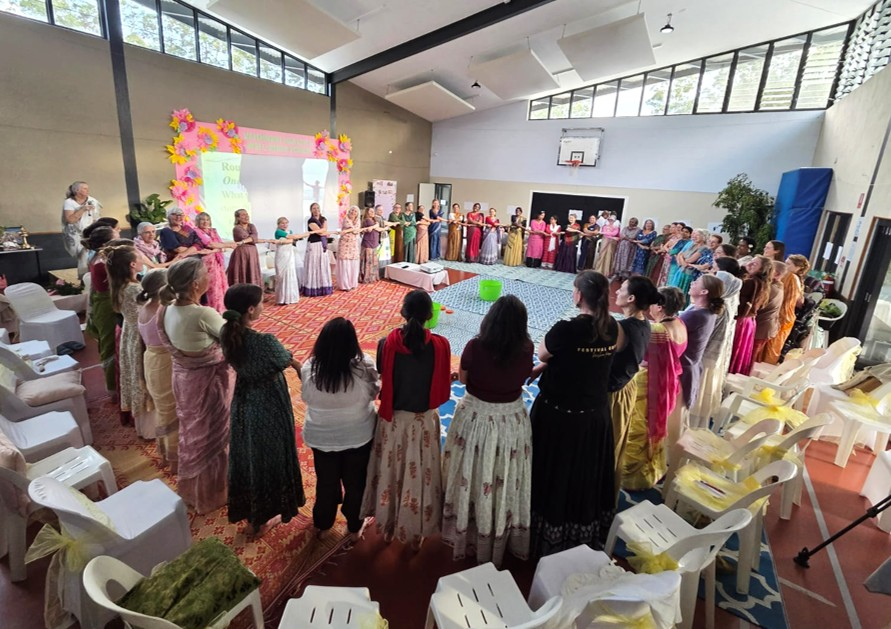
The Australian Vaishnavi Forum brought together approximately 100 women at New Govardhana Farm in New South Wales, Australia, on September 27, 2026, for a day dedicated to health, emotional well-being, spiritual development, and community support. Organized under the auspices of the Australian Vaishnavi Ministry, this gathering highlighted an important principle: caring for the physical and mental well-being of devotees can help create a stronger foundation for spiritual life.
In the association of devotees, genuine care extends beyond formal religious activities. It includes listening with compassion, supporting one another through difficulties, cultivating healthy habits, and creating an environment in which everyone can progress in Krishna consciousness.
The forum demonstrated how practical care and spiritual values can work together to strengthen the Vaishnava community.
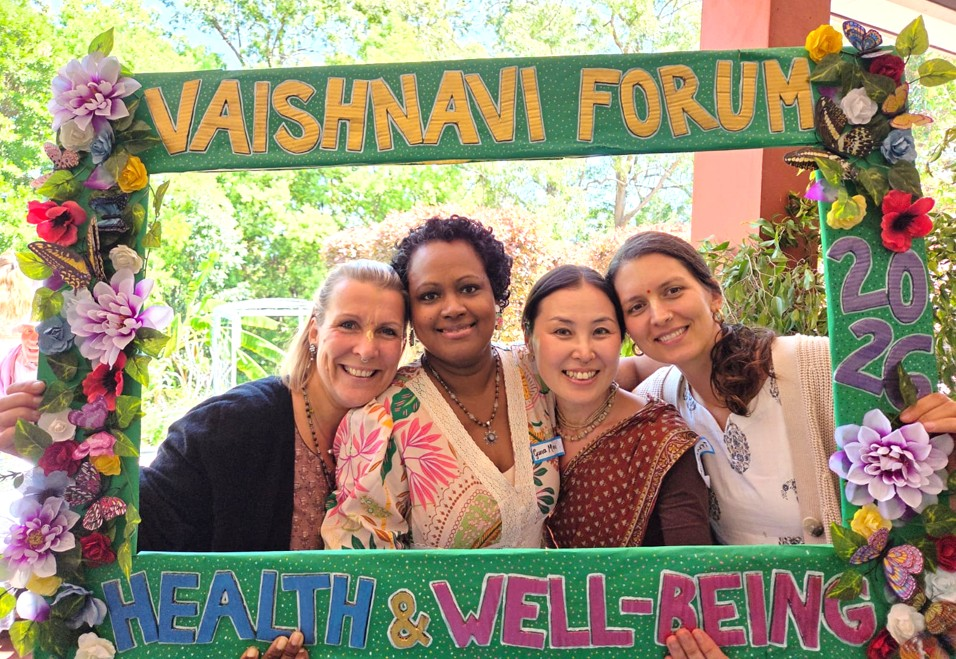
Australian Vaishnavi Forum: Bringing Health and Spirituality Together
Held at the Bhaktivedanta Swami Gurukula School Hall at New Govardhana Farm, the forum welcomed women from several Australian cities and regions, including Melbourne, Sydney, Brisbane, Adelaide, and the Gold Coast.
It was the second national forum of its kind, following the first gathering in 2018, which attracted approximately 200 devotees over four days.
The 2026 event was organized by a three-member steering committee comprising Krishnarupa Devi Dasi, ISKCON Australia’s Women’s Minister; Padma Devi Dasi of New Govardhana; and Malini Devi Dasi of Govinda Valley near Sydney.
After the COVID-19 pandemic interrupted plans for another gathering, renewed interest among the organizers encouraged them to move forward. Following approximately 18 months of preparation, the team organized a one-day program that combined presentations, interactive workshops, personal reflection, and devotional association.
The gathering served as a reminder that a spiritual community flourishes when its members make a conscious effort to understand and care for one another.
Why Health Matters in Krishna Consciousness
One of the central themes of the forum was the relationship between health and spiritual practice.
According to Padma Devi Dasi, the organizers drew inspiration from a handwritten list attributed to Srila Prabhupada that placed health among the important priorities of a devotee, alongside chanting, service, and reading.
The principle invites thoughtful consideration. A devotee’s life involves many responsibilities, including japa, study of śāstra, deity worship, preaching, and service to the community. Maintaining one’s well-being can help support the steady performance of these devotional activities.
However, caring for the body does not mean accepting the bodily conception of life. Bhagavad-gītā teaches that the living entity is not the temporary material body but the eternal soul, or ātmā.
At the same time, the body is an instrument through which devotional service can be performed. Therefore, responsible attention to physical and mental well-being can become part of a balanced life of service.
Padma emphasized that neglecting mental and physical health can make it difficult to concentrate on spiritual life. This observation highlights the importance of approaching well-being with sincerity, wisdom, and appropriate support.
The Role of Vaishnavi Association and Community Care
In Vaishnava culture, association is an important element of spiritual advancement. The Sanskrit term sādhu-saṅga refers to the association of saintly persons and devotees, through which one receives encouragement, guidance, and opportunities to develop devotional qualities.
A supportive community can help devotees navigate personal challenges without feeling isolated. The Australian gathering provided opportunities for women to discuss health, family responsibilities, personal growth, and the challenges of serving others.
Krishnarupa Devi Dasi also shared updates about the ministry’s work, including the establishment of local women’s representatives in ISKCON temples throughout Australia. She discussed efforts to raise awareness about sexual harassment and domestic violence and referred to a National Council goal of increasing female leadership in ISKCON Australia by 40 percent by the following year.
A discussion on Vaishnava care also addressed the responsibility of caring for devotees, particularly elderly members of the community.
Such initiatives demonstrate that community care requires more than good intentions. It also requires accessible support systems, responsible leadership, appropriate safeguarding, and a willingness to hear the concerns of devotees.
Practical Lessons from the Forum’s Presentations
The program brought together practitioners and experienced speakers who addressed different dimensions of women’s health and well-being.
Physical Health and Preventive Care
Kisori Devi Dasi, a general practitioner and emergency medicine consultant, spoke about prevention throughout the different stages of a woman’s life.
Her presentation highlighted the value of understanding health needs, seeking appropriate medical guidance, and taking preventive measures rather than waiting until difficulties become severe.
Vilasa Manjari Devi Dasi, who has taught and consulted in Ayurveda for 26 years, also offered insights into well-being.
These discussions provided practical perspectives on caring for the body while maintaining one’s spiritual commitments.
Emotional Balance and Personal Growth
Rambhoru Devi Dasi explored false narratives that can limit women’s potential, encouraging reflection on beliefs that may restrict personal development.
Madana Sundari, a practitioner with more than 20 years of experience, presented a session titled “Empowered Self-Care for Inner Balance.”
Another speaker shared a personal reflection titled “We Cannot Pour from an Empty Cup,” describing the experience of caring for her elderly mother and learning to prioritize self-care with encouragement from her daughter.
These presentations emphasized that service to others and responsible care for oneself need not be opposing activities.
Overcoming Addictions and Unhealthy Habits
Malini introduced the Bhakti Recovery Group, which addresses addictions ranging from substance use to excessive scrolling.
In a world filled with constant digital stimulation and distractions, developing self-awareness and disciplined habits can be an important part of personal growth.
From the perspective of Krishna consciousness, lasting transformation involves not merely suppressing unwanted habits but gradually redirecting one’s consciousness toward a higher purpose.
Regular spiritual practice, good association, practical support, and professional assistance where needed can all play constructive roles in this process.
Cultivating Goodness in Daily Life
Padma Devi Dasi discussed the importance of cultivating a lifestyle in the mode of goodness, known in Sanskrit as sattva-guṇa.
In Bhagavad-gītā, the three modes of material nature—goodness, passion, and ignorance—influence human behavior, habits, and perception.
A lifestyle characterized by cleanliness, moderation, thoughtful conduct, and disciplined routines can support greater clarity and balance. For a devotee, these habits should ultimately assist the cultivation of remembrance of Krishna and the performance of devotional service.
The Language of Service: Listening Without Judging
One of the notable presentations was delivered by Premavati Devi Dasi, a longtime gurukula teacher. Her session, “The Language of Service,” encouraged participants to make four practical shifts:
- Ask rather than assume.
- Understand rather than judge.
- Encourage rather than compare.
- Serve rather than control.
These principles offer valuable guidance for families, temples, educational institutions, and community leadership.
For example, instead of telling someone, “I know better,” one might ask, “Would you like me to share what I’ve learned?”
Such a change in language can create space for respectful communication. It allows guidance to be offered without unnecessarily diminishing another person’s dignity or independence.
Listening is especially important when someone is experiencing emotional distress or a difficult personal situation. Krishnarupa emphasized that devotees need to feel that someone is genuinely listening to them.
She also highlighted confidentiality, explaining that consultation with temple leadership should generally involve the individual’s permission, while child-safety concerns may require mandatory reporting.
Compassionate listening must therefore be accompanied by sound judgment, appropriate boundaries, and responsible safeguarding.
Workshops, Reflection, and Devotional Association
The afternoon program included creative and reflective activities designed to encourage participation and relaxation.
Taraka Devi Dasi, who holds master’s degrees in social work and art therapy, led art exercises, including an activity in which participants drew simultaneously with a crayon in each hand.
A women’s circle followed, offering a confidential and non-judgmental space for participants to express their experiences and emotions. A guided sound-relaxation session came next, and the day concluded with kirtan at approximately 6:30 p.m.
The combination of workshops, conversation, and devotional singing allowed participants to engage with the theme of well-being through different approaches.
Kirtan, the congregational chanting of the holy names of the Lord, remains a central expression of devotional life in the Vaishnava tradition. Within such gatherings, spiritual practices can bring participants together in a shared atmosphere of remembrance, gratitude, and service.
Resources for Continued Learning and Support
Each participant received a gift bag containing educational resources, including a booklet on the fine qualities of Vaishnavis, material describing 64 fine arts and crafts associated with Srimati Radharani, the 26 qualities of Vaishnavas, and quotations from Srila Prabhupada concerning women’s intelligence and abilities when engaged in Krishna’s service.
The organizers also provided a contact sheet listing key contacts and support services. Additional leaflets covered subjects such as recovery from addictions and interpersonal communication.
These resources extended the value of the forum beyond the event itself. They offered participants material for further reflection and information that could help them seek assistance when needed.
The organizers received positive responses from attendees, many of whom reported feeling especially welcomed and valued. Feedback also indicated that future gatherings would benefit from more time for questions and group discussions.
The organizers subsequently considered a two-day format for future forums, along with shorter finishing times, younger presenters, and dates that avoid major festivals. No date for the next gathering was announced.
Conclusion: Building a Caring Vaishnava Community
The Australian Vaishnavi Forum demonstrated how health, emotional well-being, spiritual practice, and community responsibility can be brought together in a meaningful way.
Its central lesson is that caring for devotees involves more than organizing programs or providing information. It requires patient listening, respectful communication, practical support, and an atmosphere in which people can seek guidance without fear of being judged.
In Krishna consciousness, the ultimate goal remains the revival of our eternal relationship with the Supreme Personality of Godhead. When health, personal discipline, and community relationships are cultivated in harmony with this goal, they can support a more steady and thoughtful practice of devotional service.
The Australian gathering offers an encouraging example for other Vaishnava communities seeking to create supportive environments for women and families. By combining spiritual association with responsible care, communities can help devotees serve with greater steadiness, dignity, and compassion.
May such initiatives inspire devotees everywhere to strengthen their relationships through service, understanding, and remembrance of Sri Krishna.
Deepen your Bhakti-yoga practice, harmonize relationships, and receive guided coaching — all at Vedavarsity.com