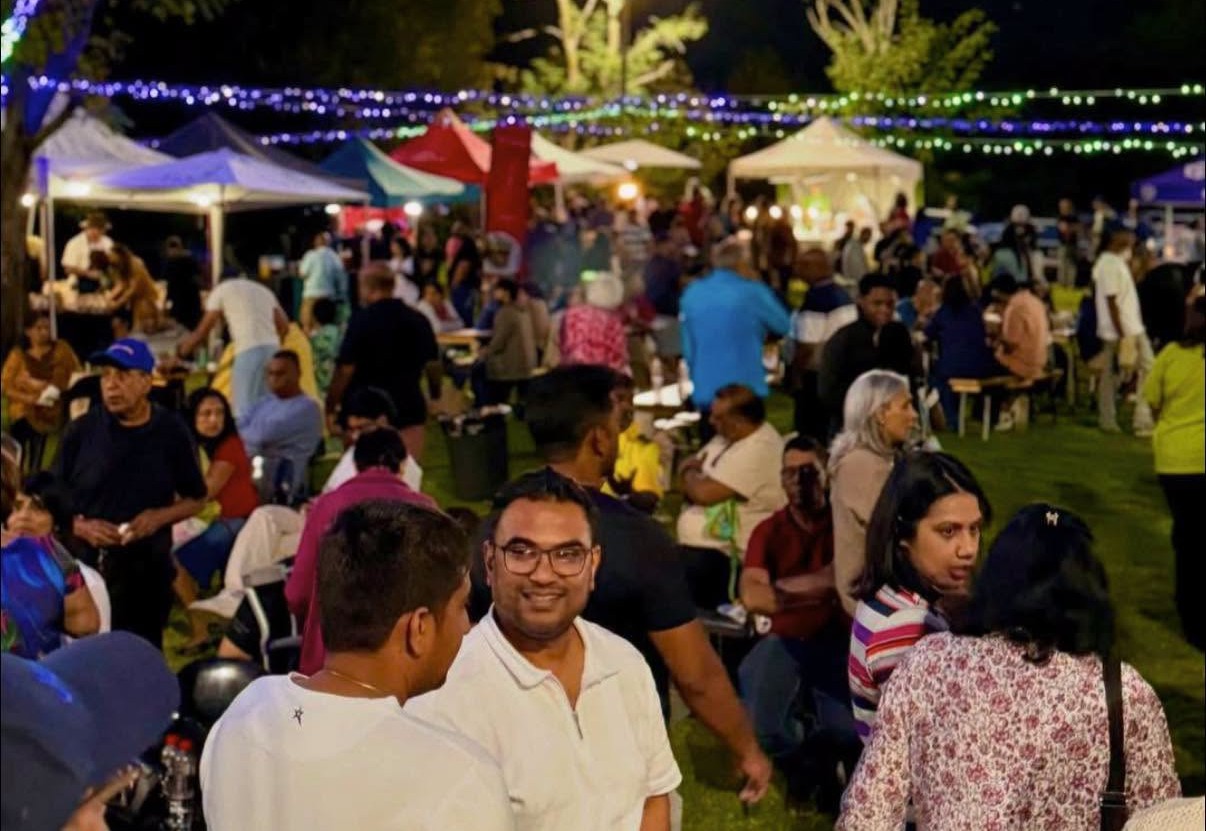
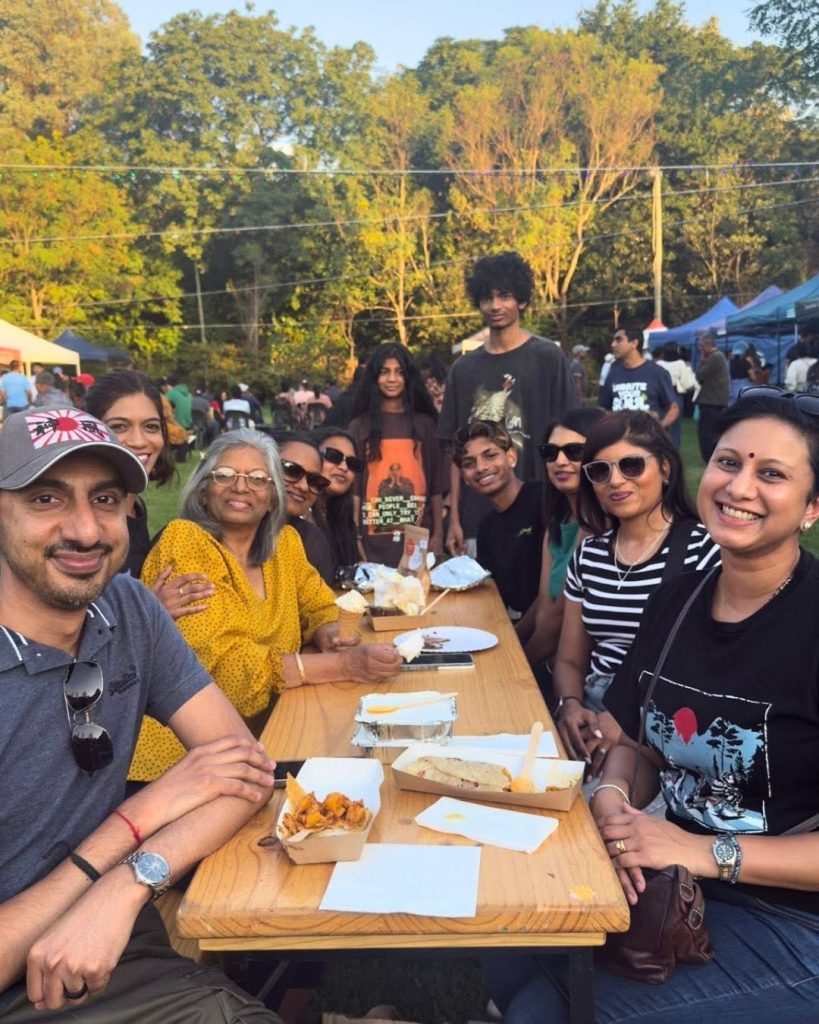
The ISKCON Midrand Market continued to establish itself as an innovative outreach initiative as ISKCON Midrand hosted the second edition of its vegan pop-up market on Saturday, June 27, 2026, at the temple premises on Norfolk Road in Carlswald, Midrand, Johannesburg. Organized in collaboration with The Vegan Chef and associated market organizers, the event welcomed devotees and members of the wider public for an afternoon of prasadam, live kirtan, book distribution, vegan food stalls, music, and community fellowship.
Following the successful inaugural market held on April 11, 2026, the ISKCON Midrand Market is emerging as a meaningful platform where ethical food culture, devotional service, and spiritual outreach come together in an open and accessible environment. Rather than serving solely as a fundraiser or a conventional preaching program, the initiative demonstrates how Krishna consciousness can naturally reach society through hospitality, sacred food, and devotional culture.
ISKCON Midrand Market Creates a Welcoming Atmosphere
The market ran from 2:00 p.m. to 7:00 p.m., transforming the temple grounds into a vibrant gathering place where visitors could experience the peaceful atmosphere of the temple while enjoying wholesome vegetarian cuisine and devotional music.
For Ujjwala Prema Devi Dasi, Vice Temple President of ISKCON Midrand, the event represents an opportunity to welcome both regular congregation members and first-time visitors without compromising the temple’s devotional standards.
“We’re so pleased to be serving everyone here, the congregation and members of society,” she explained. “We have Krishna prasadam, and we have kirtan going on out here and japa steps in the temple room.”
The continuous chanting of the Hare Krishna maha-mantra, together with the distribution of sanctified food, created an atmosphere where spiritual culture could be experienced naturally rather than formally introduced.

A Partnership Rooted in Shared Values
The collaboration began when The Vegan Chef organizers approached ISKCON Midrand in search of a venue after successfully hosting markets in Fourways.
According to Ujjwala Prema, the temple’s spacious grounds and peaceful surroundings offered an environment unlike a commercial shopping center.
“They approached us, and we said, ‘Yes, we have a beautiful facility,'” she recalled. “The ambiance of being in ISKCON Midrand is out of the hustle and bustle of the traffic. They love the atmosphere here.”
While the organizers managed vendor participation, ISKCON Midrand ensured that all food complied with devotional standards. Vendors were required to serve vegetarian products free from onion, garlic, meat, and eggs, maintaining the temple’s spiritual principles while welcoming a diverse public audience.
The event also demonstrated cooperation among ISKCON communities throughout Gauteng. Temples from Sandton, Lenasia, and Pretoria contributed through prasadam offerings and book distribution, reflecting the cooperative spirit of devotional service.
“We’re not overburdened with just our temple doing a whole variety of prasadam,” Ujjwala Prema explained. “Like this, we can all work together.”
Such collaboration reflects the Vedic principle of dharma, where individuals contribute according to their abilities for the benefit of the whole community.
Food Culture Opens the Door to Krishna Consciousness
The growing popularity of vegan and vegetarian lifestyles in South Africa has created new opportunities for spiritual outreach.
Ujjwala Prema observed that increasing public awareness about healthy and ethical eating naturally aligns with ISKCON’s long-standing tradition of offering Krishna prasadam.
Publicity through social media and local radio attracted many visitors who had little or no previous exposure to Krishna consciousness.
“You’re getting a fairly new crowd,” she said. “I don’t think they even know about ISKCON or Krishna consciousness. So I think, in a way, we get to promote in a very subtle way.”
In the Vedic tradition, prasadam is far more than nourishing food. Having first been offered to the Supreme Lord, it is regarded as sanctified mercy that benefits both body and consciousness. Even a simple meal can become an opportunity for spiritual remembrance when offered with devotion.
Kirtan and Books Offer Gentle Spiritual Outreach
For Radhika Kripa Devi Dasi, a disciple of Bhakti Caitanya Swami, the ISKCON Midrand Market succeeds because it introduces Krishna consciousness in a welcoming and familiar setting.
She described the initiative as “a really brilliant concept” where families can enjoy shopping, food, and recreation while naturally hearing devotional chanting.
“You have ongoing kirtan in the background, so people are getting the benefit of that,” she explained. “But they’re still kind of having this Saturday evening, fun time, family time, shopping time, food time.”
Rather than relying on forceful presentation, the market allows visitors to encounter spiritual culture organically through sacred sound, prasadam, and Srila Prabhupada’s books.
“Consciousness also travels through sound,” she reflected. “So it’s sort of penetrating their consciousness in a very subtle way without us as devotees having to be so aggressive, plus there are Prabhupada’s books!”
According to the teachings of bhakti-yoga, hearing transcendental sound gradually awakens the eternal nature of the ātma, the soul, beyond temporary bodily identities.
Building Community Through Hospitality
Beyond outreach, the market also strengthens relationships within the devotee community.
Radhika Kripa observed that while temple programs often follow a formal schedule, the relaxed atmosphere of the market encourages meaningful conversations between devotees and guests.
University student Nitai Maistry, who attended the event, described the gathering as having “a good vibe,” “good food,” and “good entertainment,” adding that it serves as “a good icebreaker” for individuals who may feel hesitant about attending a traditional temple program.
This welcoming environment allows spiritual discussions to arise naturally through genuine friendship and shared experience.
Leadership Sees New Opportunities
Radheshyam Das, Co-Zonal Supervisor for ISKCON South Africa, attended both editions of the market and observed a steady flow of visitors throughout the day.
“It brings them in to have a look at what’s on offer,” he said. “People feel a bit more relaxed and open to come in. And together with that, you listen to the Maha Mantra being sung, and you’re eating prasadam at the stalls.”
Reflecting on the broader implications, he suggested that the market model offers valuable insights for future outreach efforts.
“There’s an opportunity to pivot from where we currently do things,” he remarked, describing the preaching opportunities as “immense.”
For him, successful outreach begins with trust.
“They need to feel comfortable being with us. And when we do that, then we can win trust, and we can win friendships.”
Looking Toward the Future
The success of the ISKCON Midrand Market has encouraged the temple leadership to consider making the event a regular feature, possibly on a quarterly basis, while coordinating with the temple’s festival calendar.
Alongside outreach, the initiative contributes to temple sustainability by encouraging devotional service, book distribution, prasadam offerings, and cooperative fundraising.
“These markets are an in thing nowadays,” Ujjwala Prema said. “We’re serving prasadam, and we’re bringing some Lakshmi into the temple, which helps the temple run.”
She concluded by reaffirming the temple’s mission of serving society through Krishna consciousness.
“We are here for the community. We want to reach out to everyone and offer them a happy space. We know that this Krishna Conscious Movement has a lot to give to society.”
Conclusion
The ISKCON Midrand Market demonstrates how devotional culture can be presented in a welcoming and accessible manner without compromising spiritual principles. Through prasadam, kirtan, devotional literature, and genuine hospitality, the initiative offers visitors an opportunity to experience Krishna consciousness naturally and meaningfully.
As the market continues to grow, it stands as an example of how cooperation, service, and thoughtful outreach can strengthen both the devotee community and its relationship with society. In the spirit of bhakti, even simple acts of sharing sanctified food and sacred sound can become instruments of lasting spiritual benefit, reminding us that sincere service performed for the pleasure of the Supreme Lord uplifts both the individual and the community.
library.vedavarsity.com || www.vedavarsity.com
Deepen your Bhakti-yoga practice, harmonize relationships, and receive guided coaching — all at Vedavarsity.com