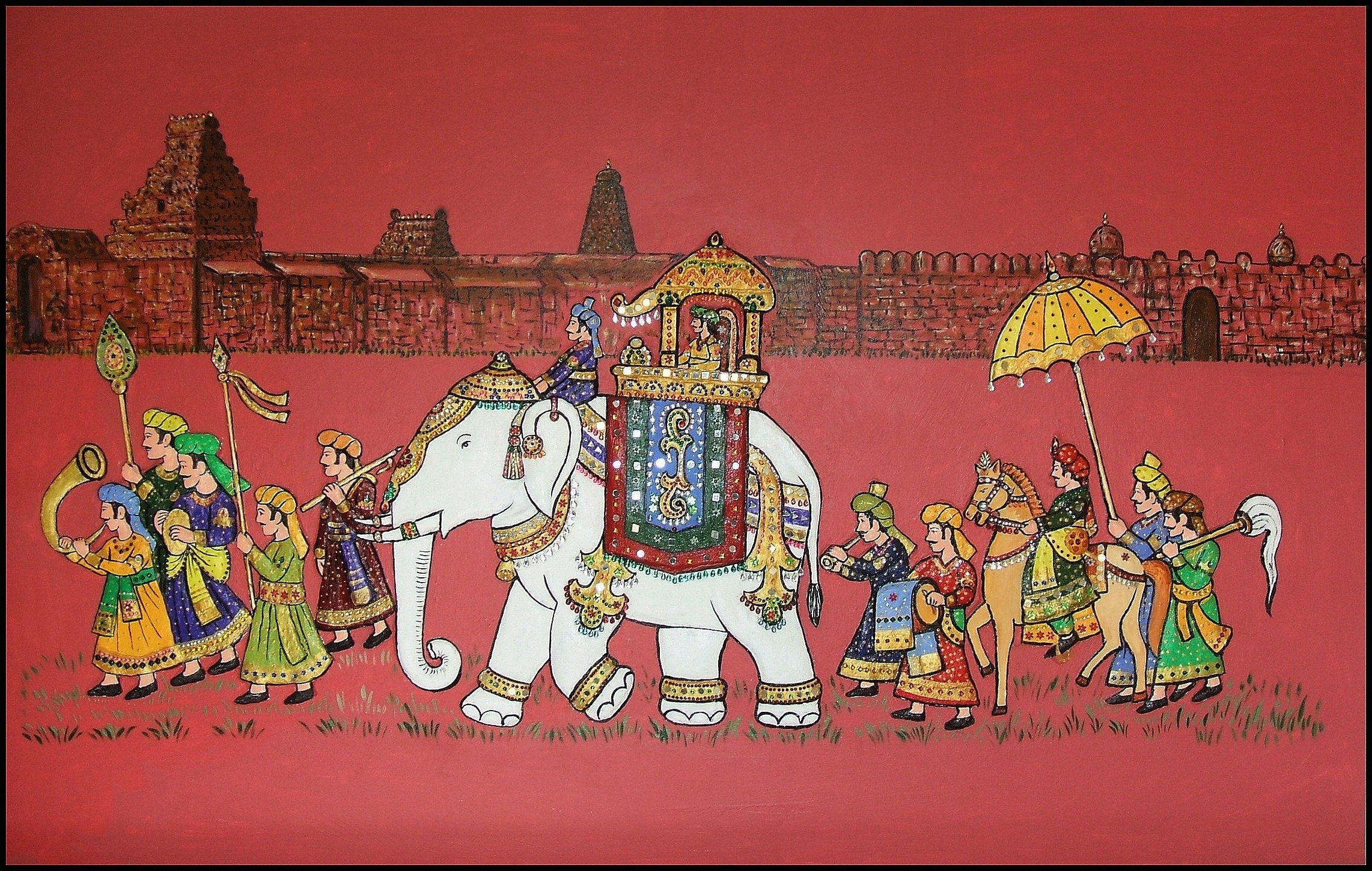
The Four Wives Story is a powerful allegory that reveals an important truth about human life. While people naturally invest much of their energy in maintaining the body, acquiring wealth, and nurturing relationships, there is often little attention given to the deeper question of who we truly are.
This story presents a simple yet profound lesson that aligns with the teachings of the Bhagavad-gītā: everything material is temporary, while the soul (ātma) is eternal. By understanding this distinction, one can live with greater wisdom, purpose, and spiritual awareness.
The King and His Four Wives
Once upon a time, there was a wealthy king who had four wives.
He loved his fourth wife the most. He adorned her with beautiful clothing, expensive ornaments, and the finest luxuries. He constantly provided her with the best of everything.
The king also loved his third wife very much. He proudly displayed her before neighboring kingdoms and took great pleasure in her admiration. Yet deep within, he feared that she might someday leave him for another.
His second wife was his trusted companion. She was patient, wise, and supportive. Whenever difficulties arose, the king turned to her for guidance and comfort.
His first wife, however, received very little attention. Although she was deeply loyal and had contributed significantly to maintaining his kingdom and prosperity, the king scarcely noticed her and neglected her needs.
A Sobering Reality
One day, the king became seriously ill.
Realizing that death was approaching, he reflected upon his life and thought:
“I have four wives, yet when I die, I shall go alone.”
Seeking companionship beyond death, he called his fourth wife and said:
“I have loved you more than anyone else. I have given you the finest things in life. Now that I am dying, will you accompany me and keep me company?”
To his shock, she replied:
“No way.”
Without another word, she walked away.
Her response pierced his heart.
The Third Wife’s Answer
The king then called his third wife.
“I have loved you throughout my life. Will you follow me when I die and remain with me?”
She answered:
“No. Life is too good. When you die, I will remarry.”
The king felt deeply wounded.
Everything he had cherished and proudly displayed would continue without him.
The Second Wife’s Limitation
Next, he turned to his second wife.
“You have always helped me in difficult times. Will you come with me when I die?”
She replied:
“I am sorry. I cannot do that. At most, I can accompany you to your grave.”
Although compassionate, even she could go no further.
The king was devastated.
The Forgotten Companion
Then he heard a gentle voice:
“I will go with you. Wherever you go, I will follow.”
The king looked up and saw his first wife.
She appeared weak and neglected due to years of insufficient care.
Filled with regret, the king said:
“I should have cared for you much better while I had the opportunity.”
At that moment, he realized the grave mistake he had made throughout his life.
The Meaning of the Four Wives Story
The true significance of the Four Wives Story lies in its symbolism.
Each wife represents an important aspect of human existence.
The Fourth Wife: The Body
The fourth wife represents the physical body.
Many people devote tremendous effort to maintaining appearance, comfort, and physical pleasure. While proper care of the body is necessary, the body itself is temporary.
No matter how much attention we give it, it cannot accompany us beyond death.
From a Vedic perspective, the body is a temporary vehicle for the soul, much like a garment worn for a period of time.
The Third Wife: Wealth, Status, and Possessions
The third wife symbolizes wealth, social position, fame, and material possessions.
People often spend decades accumulating assets and building prestige. Yet at death, all possessions remain behind and pass to others.
Material success may provide temporary comfort, but it cannot solve the ultimate challenges of birth, death, old age, and disease.
The Second Wife: Family and Friends
The second wife represents family members, friends, and loved ones.
These relationships are valuable and meaningful. They provide support, affection, and companionship throughout life.
However, even the closest relatives can accompany a person only to the final rites and burial or cremation. Beyond that point, each individual must continue alone according to the laws of karma.
The First Wife: The Soul
The first wife represents the soul—the eternal self.
In the pursuit of bodily comfort, wealth, and social success, people often neglect spiritual development and self-realization.
Yet according to Vedic wisdom, the soul is the only companion that remains with us through every stage of existence.
The soul accompanies the individual beyond death and carries the results of past actions into future experiences.
Bhagavad-gītā on the Eternal Soul
The teachings of the Bhagavad-gītā confirm the lesson illustrated in the Four Wives Story.
Bhagavad-gītā 2.20
“For the soul there is never birth nor death. Nor, having once been, does he ever cease to be. He is unborn, eternal, ever existing, undying and primeval. He is not slain when the body is slain.”
This verse explains that death affects only the body, not the soul. The true self continues to exist beyond physical destruction.
Bhagavad-gītā 2.24
“This individual soul is unbreakable and insoluble, and can be neither burned nor dried. He is everlasting, all-pervading, unchangeable, immovable and eternally the same.”
The soul’s nature is eternal and indestructible. Unlike material objects, it does not deteriorate with time.
The Goal of Self-Realization
The deeper message of this story is not to reject the body, family, or worldly responsibilities. Vedic culture teaches balance through dharma, the principle of righteous duty.
The challenge is to understand priorities correctly.
One should care for the body, responsibly maintain relationships, and perform one’s duties. At the same time, one should cultivate knowledge of the self and one’s relationship with the Supreme Lord.
True self-realization begins when a person understands:
“I am not this temporary body. I am the eternal soul.”
This understanding transforms one’s perspective on success, suffering, and the purpose of life.
Bhagavad-gītā 6.28
“Steady in the Self, being freed from all material contamination, the yogi achieves the highest perfectional stage of happiness in touch with the Supreme Consciousness.”
Śrīla Prabhupāda explains that self-realization means understanding one’s constitutional position in relation to the Supreme. The individual soul is eternally connected with the Supreme Lord and finds fulfillment through loving devotional service.
Conclusion
The Four Wives Story offers a timeless reminder about what truly accompanies us beyond death. The body eventually perishes, wealth passes to others, and even loved ones can accompany us only so far. The eternal soul alone continues its journey.
Therefore, while fulfilling our worldly responsibilities, it is wise to also nourish our spiritual identity. By cultivating self-realization and understanding our relationship with the Supreme, life gains deeper meaning and lasting purpose.
The lesson of the Four Wives Story is simple yet profound: do not neglect the eternal soul while caring for temporary things. In recognizing our spiritual nature, we align ourselves with the higher order of existence and move closer to genuine and lasting happiness.
library.vedavarsity.com || www.vedavarsity.com
Deepen your Bhakti-yoga practice, harmonize relationships, and receive guided coaching — all at Vedavarsity.com