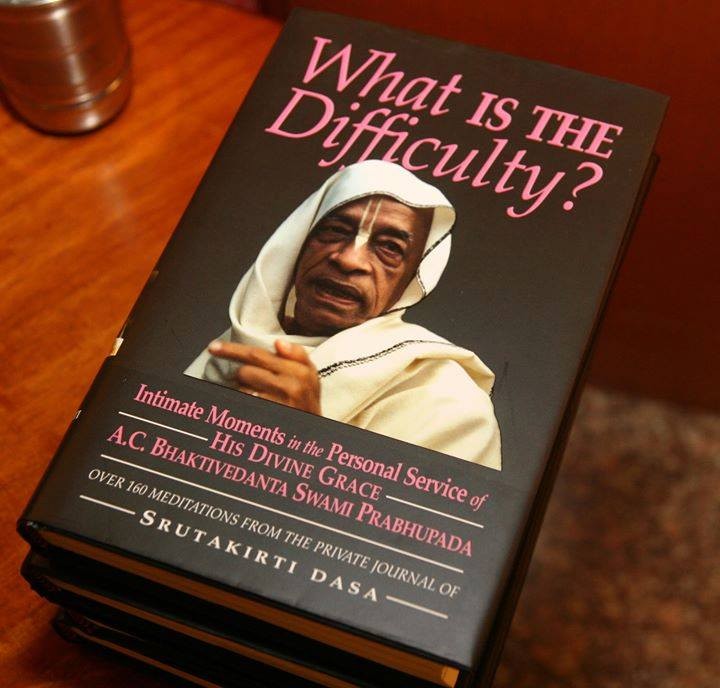
The teachings of His Divine Grace A.C. Bhaktivedanta Swami Prabhupada were often conveyed not only through lectures and books but also through simple personal interactions that revealed profound spiritual truths. One such lesson concerns a topic that affects every human being—sleep.
The subject of sleep may appear ordinary, yet Srila Prabhupada on sleep consistently emphasized an important spiritual principle: human life is valuable, temporary, and meant for self-realization. Every moment should therefore be used thoughtfully in the service of Krishna.
A recollection from one of his personal servants illustrates how Srila Prabhupada viewed time, rest, and the urgency of spiritual life.
A Lesson in Humility
During a visit to the Dallas gurukula, Srila Prabhupada called his servant into his room shortly after taking a brief afternoon rest.
He asked whether the servant had taken a nap after lunch.
When the answer was no, Srila Prabhupada explained simply:
“I am an old man. I cannot sleep very long at one time, so I take a nap after lunch.”
Although seemingly casual, this statement reflected one of Srila Prabhupada’s remarkable qualities—humility.
Despite leading a worldwide spiritual movement, authoring dozens of books, and traveling constantly, he never portrayed himself as extraordinary. He spoke naturally and honestly, acknowledging the practical realities of age while continuing to dedicate every possible moment to Krishna’s service.
His humility attracted the hearts of countless followers and remains one of the defining features of his character.
Srila Prabhupada’s View of Time
On another occasion, while preparing to take rest for the evening, Srila Prabhupada made a striking statement:
“Whenever I go to take rest, I think, ‘Now I am going to waste my time.'”
This remark reveals much about his consciousness.
From an ordinary perspective, sleep is simply a biological necessity. From a spiritual perspective, however, every moment represents an opportunity for service, hearing, chanting, writing, teaching, or remembering Krishna.
Srila Prabhupada understood that human life is limited. The Vedic scriptures repeatedly remind us that time is constantly carrying all embodied beings toward old age, disease, and death. Therefore, the wise use every available moment for activities that have eternal value.
Importantly, Srila Prabhupada did not reject sleep altogether. He rested when necessary. Rather, he demonstrated an attitude of spiritual urgency—a desire not to waste even a single moment unnecessarily.
The Example of Tireless Service
Perhaps the most remarkable aspect of Srila Prabhupada’s life was the consistency between his teachings and his personal example.
At the age of seventy, he crossed the ocean from India to America with little material support and immense faith in the instructions of his spiritual master.
By seventy-five, he was continuously traveling around the world, inspiring disciples, establishing temples, writing books, and guiding a rapidly expanding spiritual movement.
Many younger disciples struggled to keep pace with him.
Even during morning walks, devotees would sometimes become tired while Srila Prabhupada continued walking energetically. His determination arose not from bodily strength alone but from spiritual conviction.
The Bhagavad-gita explains that one who is fixed in a higher purpose can transcend many of the limitations imposed by ordinary material consciousness. Srila Prabhupada’s life vividly demonstrated this principle.
The Flight Lesson
One memorable incident occurred during a short flight departing from New York.
Several devotees had arranged seats close to Srila Prabhupada. As the flight progressed, some of them gradually began falling asleep.
Their heads nodded forward and then jerked upright repeatedly.
Observing this scene, Srila Prabhupada commented:
“Just see. Everyone is wide awake except for the devotees. They are in maya, sleeping. Everyone else is awake. Why they cannot stay awake?”
His observation was direct and pointed.
Those who knew Srila Prabhupada understood that such remarks were not intended merely as criticism. Rather, they were opportunities for instruction.
He consistently challenged his disciples to rise above complacency and cultivate greater determination in devotional service.
What Was Srila Prabhupada Teaching?
At first glance, one might conclude that Srila Prabhupada was simply advocating less sleep.
However, the deeper lesson concerns consciousness rather than merely physical rest.
The Vedic scriptures often use sleep as a metaphor for spiritual forgetfulness.
A person absorbed exclusively in bodily concerns may be described as spiritually asleep, regardless of how physically active they appear. Conversely, one engaged in hearing and chanting about Krishna is spiritually awake, even while performing ordinary duties.
Srila Prabhupada frequently emphasized that Krishna consciousness means awakening from the long sleep of material illusion.
The real challenge, therefore, is not merely staying physically awake but remaining spiritually alert.
The Difference Between Necessity and Indulgence
The Vedic tradition advocates balance.
Bhagavad-gita 6.16–17 teaches that spiritual advancement is difficult for one who eats too much, eats too little, sleeps too much, or sleeps too little. Moderation is essential.
Srila Prabhupada himself followed this principle.
He rested when necessary but refused to become controlled by bodily demands. Sleep served his mission; his mission did not serve sleep.
This distinction is crucial.
The problem is not sleep itself. The problem arises when comfort becomes more important than spiritual growth, service, or self-realization.
The Urgency of Human Life
Underlying Srila Prabhupada’s comments was a profound appreciation for the rare opportunity of human life.
According to Vedic wisdom, the human form offers a unique chance to inquire about the Absolute Truth, understand the nature of the self (atma), and revive one’s forgotten relationship with Krishna.
Such opportunities are temporary.
Time passes quickly, and once a moment is gone, it can never be reclaimed.
This awareness produced a healthy urgency in Srila Prabhupada’s life—not anxiety, but purposeful engagement.
Every lecture, conversation, book, journey, and instruction reflected his desire to use time in the most meaningful way possible.
Applying This Lesson Today
Most practitioners are not expected to imitate Srila Prabhupada’s extraordinary schedule.
Rather, we can follow his example according to our own capacity.
The essential question is not:
“How little can I sleep?”
The more important question is:
“How effectively am I using the time Krishna has given me?”
By examining our daily habits, priorities, and distractions, we can gradually align our lives more closely with spiritual purpose.
Even small improvements in discipline can have a significant impact on devotional growth.
Conclusion
The teachings of Srila Prabhupada on sleep reveal far more than a discussion about rest. They illuminate a deeper principle—the sacred value of time and the urgency of spiritual life.
Srila Prabhupada viewed every moment as an opportunity to serve Krishna and benefit others. His personal example demonstrated that genuine spiritual advancement is not measured merely by external activity but by the sincerity with which one uses the gifts of time, energy, and consciousness.
For sincere practitioners, his words remain a timeless reminder: human life is precious, and every moment used in Krishna’s service becomes eternally meaningful.
library.vedavarsity.com || www.vedavarsity.com
Deepen your Bhakti-yoga practice, harmonize relationships, and receive guided coaching — all at Vedavarsity.com