



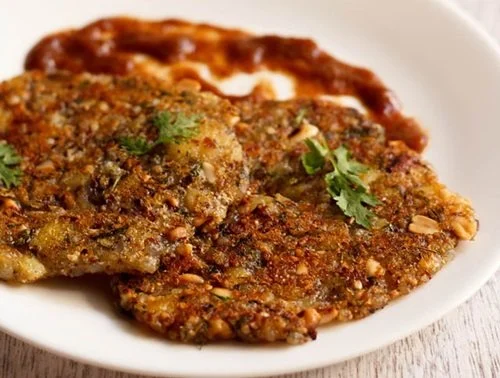
Sabudana Thalipeeth is a traditional Maharashtrian preparation commonly made during fasting (vrata) days. Prepared using soaked tapioca pearls, mashed potatoes, ground peanuts, and mild spices, it offers a nourishing and balanced alternative to deep-fried snacks. Unlike Sabudana Vada, which is fried, this preparation is cooked on a griddle, making it lighter and easier to digest.
In the Vedic understanding, food consumed during fasting should support both physical steadiness and mental clarity. Sabudana Thalipeeth reflects this principle through its simplicity and method of preparation.
The Role of Sabudana Thalipeeth in Fasting Practices
Fasting is not merely a dietary restriction but a conscious discipline aimed at purification. During such observances, the emphasis is on reducing sensory burden while maintaining necessary nourishment.
Sabudana Thalipeeth as a Fasting Food
Sabudana Thalipeeth is well-suited for fasting due to the following qualities:
- It is grain-free and aligns with vrat dietary rules
- It is cooked with minimal oil compared to fried foods
- It provides sustained energy through simple ingredients
- It is light on digestion when properly prepared
Because of these characteristics, it serves as a practical and balanced option for those observing spiritual discipline.
Ingredients and Their Functional Role
The ingredients used in Sabudana Thalipeeth are similar to those used in Sabudana Vada, yet the preparation yields a different result.
Sabudana (Tapioca Pearls)
Sabudana forms the base of the preparation. When soaked correctly, it becomes soft and binds well with other ingredients.
Potatoes
Mashed potatoes help in binding and contribute to the soft texture of the thalipeeth.
Ground Peanuts
Peanuts add a mild crunch and provide essential fats and protein, making the dish more sustaining.
Mild Spices
Ingredients such as cumin seeds and green chilies (optional) enhance flavor without overpowering the natural taste.
These components together create a balanced mixture suitable for shaping and cooking.
Preparation Method: From Mixture to Thalipeeth
The preparation of Sabudana Thalipeeth follows a structured yet simple process.
Step 1: Preparing the Mixture
The soaked sabudana is combined with mashed potatoes, ground peanuts, salt, and mild spices. The mixture should be firm yet pliable.
Step 2: Shaping the Thalipeeth
A portion of the mixture is flattened by hand into a round disc. This can be done directly on a greased surface or using parchment for ease.
Step 3: Cooking on Griddle
The shaped thalipeeth is cooked on a heated griddle with a small amount of oil. It is cooked on both sides until lightly crisp and golden.
This method avoids deep frying, resulting in a preparation that is lighter yet satisfying.
The Principle of Moderation in Cooking
In Vedic teachings, moderation (yukta-āhāra) is essential for maintaining balance. Sabudana Thalipeeth reflects this principle by offering nourishment without excess heaviness.
While it provides energy, it does not burden the digestive system when consumed in appropriate quantity. This balance is particularly important during fasting, where the goal is to support spiritual focus rather than sensory indulgence.
Sattvic Qualities of Sabudana Thalipeeth
Food prepared during fasting is ideally sattvic—pure, balanced, and conducive to clarity of mind.
Sabudana Thalipeeth aligns with sattvic principles when prepared properly:
- It uses fresh and simple ingredients
- It avoids excessive spices and stimulants
- It is cooked with care and attention
- It is consumed in moderation
Such food supports a शांत (peaceful) and steady state of consciousness, which is the aim of fasting practices.
Practical Advantages Over Fried Preparations
Compared to deep-fried options like Sabudana Vada, Sabudana Thalipeeth offers certain practical benefits:
- Lower oil usage: Makes it lighter and more suitable for regular consumption
- Ease of digestion: Especially beneficial during fasting
- Simple preparation: Requires minimal equipment
- Versatility: Can be served with yogurt or simple chutneys
These features make it a preferred choice for those seeking balance between taste and health.
Food and Consciousness: A Subtle Connection
According to Vedic understanding, food influences not only the body but also the mind. The state of consciousness during preparation affects the quality of the food.
When Sabudana Thalipeeth is prepared with attention and calmness, it carries those qualities. Consuming such food supports mental clarity and steadiness.
Fasting is meant to redirect attention toward higher pursuits. Simple and balanced preparations assist in this process.
A Reflection on Traditional Wisdom
Traditional recipes like Sabudana Thalipeeth are not accidental. They are developed over time to meet both practical and spiritual needs.
By using minimal ingredients and simple methods, they demonstrate how nourishment can be aligned with discipline. This approach contrasts with modern tendencies toward excess and complexity.
Such wisdom remains relevant for those seeking a more balanced lifestyle.
Conclusion: A Balanced Path Through Simplicity
Sabudana Thalipeeth stands as a practical example of how food can support both physical and spiritual well-being. It offers nourishment without heaviness and simplicity without compromise.
As a fasting preparation, it aligns with the principles of moderation, clarity, and discipline. Its method of preparation reflects a conscious effort to maintain balance.
In a broader sense, such foods remind us that even daily nourishment can be harmonized with a higher purpose when approached with awareness and understanding.
library.vedavarsity.com | www.vedavarsity.com
Deepen your Bhakti-yoga practice, harmonize relationships, and receive guided coaching — all at Vedavarsity.com