



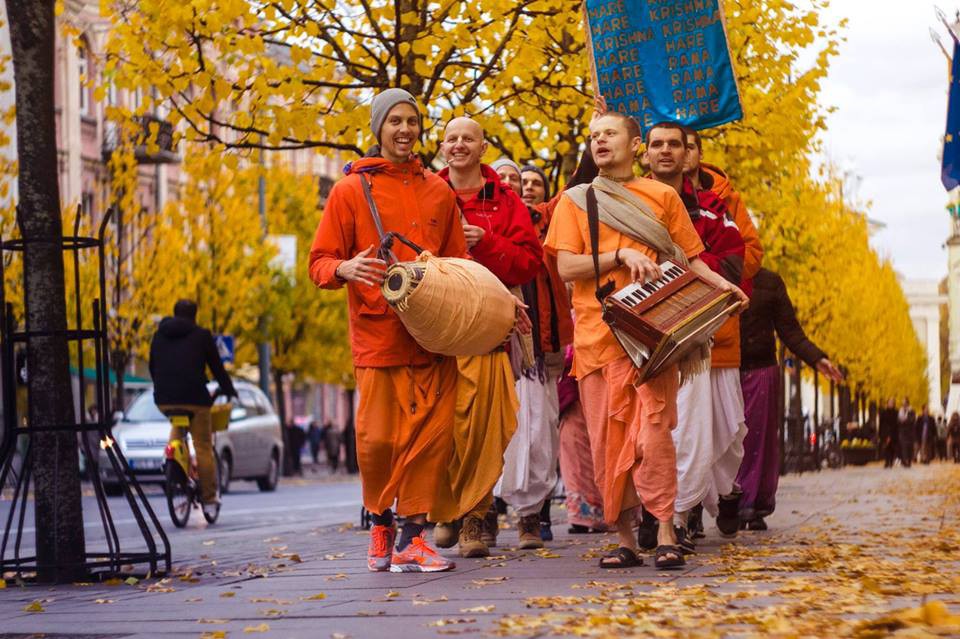
In an age marked by division, conflict, and identity-based differences, the principle of Yuga Dharma offers a unifying solution rooted in spiritual understanding. As presented in the Vedic scriptures, particularly the Srimad Bhagavatam, the prescribed method for harmony in this age is the collective chanting of the holy names of the Lord. This process transcends superficial distinctions and connects individuals at the level of the self (ātma), beyond the temporary body.
The teachings of great ācāryas emphasize that real unity cannot arise from material adjustments alone. It must be grounded in spiritual realization.
The Problem of Division in Modern Society
Human society today is deeply fragmented. People identify themselves based on nationality, race, gender, economic status, education, and ideology. These designations, though relevant in practical dealings, are ultimately external and temporary.
When such bodily identities are given excessive importance, they become sources of conflict. Labels like “rich” and “poor,” “liberal” and “conservative,” or “educated” and “uneducated” create separation rather than cooperation.
From a Vedic perspective, this condition reflects ignorance (avidyā). The self is not the body but the eternal conscious being within it. When this fundamental truth is forgotten, divisions naturally arise.
Yuga Dharma: The Common Platform for Unity
The Vedic scriptures describe that each age (yuga) has a specific spiritual process suited for its people. In the present age, known as Kali-yuga, the recommended process is saṅkīrtana—the congregational chanting of the holy names of the Lord.
Yuga Dharma and the Chanting of the Holy Name
This practice is not sectarian. It does not depend on birth, qualification, or social status. It is a universal method accessible to all.
The chanting of the holy names serves as a common spiritual platform. It aligns individuals with their true identity as servants of the Divine, thereby dissolving artificial distinctions.
Unlike material solutions, which address symptoms, Yuga Dharma addresses the root cause of discord—the misidentification of the self.
The Vision of Lord Chaitanya
The life and mission of Lord Chaitanya illustrate the practical application of Yuga Dharma. He did not recognize divisions based on caste, creed, or social standing. Instead, He freely distributed the chanting of the holy names to all, including those considered socially fallen.
This approach reflects a deeper understanding of dharma—not as a rigid social system, but as the eternal function of the soul. True dharma unites because it is based on the shared spiritual nature of all beings.
In this sense, Yuga Dharma is not merely a ritual practice; it is a transformative process that reorients consciousness.
Beyond Bodily Designations
To accept Yuga Dharma fully, one must gradually reduce attachment to bodily identities. This does not mean neglecting practical responsibilities. Social roles and distinctions may continue for functional purposes.
However, they should not define one’s sense of self or determine one’s value of others.
For example, recognizing differences in culture or lifestyle is natural. But assigning superiority or inferiority based on these differences leads to division.
A spiritually grounded perspective sees all living beings as equal at the level of the soul. This vision fosters respect, compassion, and cooperation.
The Role of Personal Responsibility
Those who follow the teachings of Lord Chaitanya carry a particular responsibility. It is not enough to intellectually accept the principle of unity. One must embody it in daily conduct.
Subtle tendencies toward grouping, exclusion, or judgment can undermine the spirit of Yuga Dharma. Even within spiritual communities, divisions can arise if vigilance is not maintained.
True practice requires internal discipline—aligning thought, speech, and action with spiritual understanding.
This is where the principles of karma (action and consequence) become relevant. Actions rooted in ego and division reinforce material consciousness, while actions rooted in devotion elevate it.
Practical Application in Daily Life
The process of chanting can be integrated into everyday life without difficulty. It does not require complex arrangements or qualifications.
Regular engagement in chanting helps purify the mind and gradually shift one’s identity from the body to the self. As this realization deepens, one naturally becomes less inclined toward divisive thinking.
In addition, associating with like-minded individuals who are committed to spiritual growth can strengthen this practice.
The transformation may be gradual, but its effects are profound and lasting.
A Universal Message for Humanity
The concept of global unity is often discussed in political and social contexts. However, without a spiritual foundation, such efforts remain incomplete.
Yuga Dharma offers a universal and practical solution. It does not seek to erase diversity but to harmonize it under a higher understanding.
When individuals connect through the chanting of the holy names, they experience a shared spiritual identity. This connection transcends all external differences.
In this way, unity is not imposed but realized.
Conclusion: Unity Through Higher Consciousness
The call of Yuga Dharma is both simple and profound. It invites humanity to rise above temporary distinctions and reconnect with its eternal nature.
By embracing the chanting of the holy names, individuals can contribute to a deeper form of unity—one based on truth, consciousness, and spiritual harmony.
In a world searching for peace, this timeless process offers not just an ideal, but a practical path forward.
Ultimately, real unity emerges not from external agreements, but from inner realization aligned with the higher order of existence.
library.vedavarsity.com | www.vedavarsity.com
Deepen your Bhakti-yoga practice, harmonize relationships, and receive guided coaching — all at Vedavarsity.com