


The Kunnakkudi Murugan Temple stands as a revered hill shrine dedicated to Lord Shanmuganathar (Murugan), reflecting the deep devotional traditions of Tamil Nadu. Located near Karaikudi, this temple is not only a place of worship but also a center of historical and spiritual continuity. Known by several names such as Mayuragiri, Arasavanam, and Mayuranagaram, the temple derives its identity from the sacred hill (kunru) on which it is situated.
Within the broader framework of dharma, such sacred spaces serve as reminders of the relationship between human effort and divine grace, guiding individuals toward higher understanding.
Location and Sacred Geography of Kunnakkudi
The Kunnakkudi Murugan Temple is situated approximately 14 kilometers from Karaikudi in Tamil Nadu. The region is spiritually enriched by its proximity to other important temples, including Thiruppattur Temple and Karpaka Vinayakar Temple.
This clustering of sacred sites reflects a longstanding tradition where geography itself becomes an aid to spiritual practice. Pilgrimage through such regions is not merely physical movement but an inward journey aligned with self-discipline and reflection.
Legends Associated with Kunnakkudi Murugan Temple
The Kunnakkudi Murugan Temple is deeply rooted in traditional legends that convey moral and spiritual teachings.
The Legend of the Peacock (Mayuragiri)
According to tradition, Lord Vishnu and Lord Brahma once visited Skanda (Murugan). During their visit, the peacock—Murugan’s mount—displayed arrogance toward the divine guests. In response, Skanda cursed the peacock to become stone.
Realizing its error, the peacock performed penance. As a result of this sincere repentance, it was eventually restored. The hill at Kunnakkudi is believed to be this very manifestation of the peacock, known as Mayuragiri.
This narrative subtly illustrates the principle of karma: actions born of pride lead to consequence, while sincere effort and humility can restore one’s original position.
Architecture and Temple Layout
The Kunnakkudi Murugan Temple is both a hill temple and a rock-cut architectural site, combining natural formation with human craftsmanship.
Ascent to the Temple
At the base of the hill lies the shrine of Togaiyadi Vinayakar. From here, a flight of steps leads devotees upward toward the main sanctum. Along the path is a shrine dedicated to Idumban, a figure closely associated with Murugan worship.
The physical act of climbing the hill serves as a symbolic journey—effort leading toward elevation, both externally and internally.
Rock-Cut Cave Temples
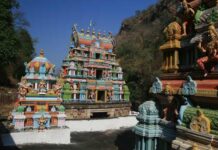
At the foot of the hill is an ancient cave temple dedicated to Lord Shiva, marked by a five-tiered gopuram. This structure is of considerable archaeological importance.
There are three caves in this complex, dating back to the 8th century CE:
- One cave enshrines a Shiva Lingam
- Sculptures include images of Vishnu and Lingapuranadeva being worshipped by Brahma
- Additional carvings depict Durga and Harihara (a combined form of Shiva and Vishnu)
- A notable image of Nataraja is also present
These carvings demonstrate theological unity, showing different aspects of the divine within a single sacred space.
Deities of Kunnakkudi Murugan Temple
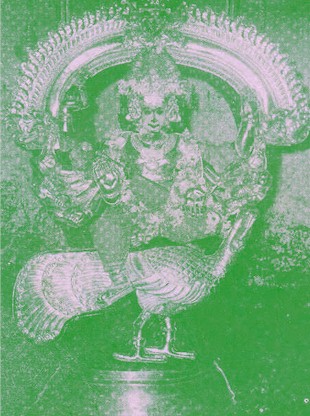
The primary deity at the Kunnakkudi Murugan Temple is Lord Shanmuganathar, depicted in a six-faced form (Shanmukha), seated on his peacock mount. He is accompanied by his consorts, Valli and Deivayanai.
Sanctum and Mandapam
The sanctum faces east, symbolizing spiritual awakening and illumination. To the south lies the Alankara Mandapam, where the festival image of the deity is housed.
Other Shrines
The temple also includes shrines dedicated to:
- Vinayakar (Ganesha)
- Kuzhandai Vadivelar
- Meenakshi Sundareswarar
- Dakshinamurthy
- Natarajar
- Chandeswarar
- Navagrahas (nine planetary deities)
Images of Veerabahu and Idumban are also present, reinforcing the temple’s connection to Murugan’s mythology and tradition.
Historical Patronage and Construction
The Kunnakkudi Murugan Temple was developed significantly under the patronage of the Marudu brothers of the Sivaganga region. These rulers are known for their contributions to temple construction and maintenance in the area.
Their involvement reflects a broader pattern in Indian history, where governance was closely linked with the preservation of dharma. Supporting temples was seen not merely as an act of charity but as a responsibility aligned with righteous leadership.
Worship Practices and Daily Rituals
Six daily worship services are conducted at the Kunnakkudi Murugan Temple, following traditional Agamic procedures. These rituals include offerings, chanting, and ceremonial worship.
Regular worship reinforces discipline and helps focus the mind on higher principles. In Vedic understanding, such regulated practices gradually purify consciousness and align one’s actions with divine will.
Festivals Celebrated at Kunnakkudi Murugan Temple
Festivals play a vital role in sustaining the spiritual life of the community associated with the Kunnakkudi Murugan Temple.
Thaipoosam
Thaipoosam is one of the most important festivals celebrated here. Devotees undertake vows, processions, and acts of devotion, often involving circumambulation of the hill.
Panguni Uttiram
Another major festival, Panguni Uttiram, marks significant divine events associated with Murugan and his consorts. It is observed with devotion and ritual precision.
Karthigai Mondays
Mondays during the Tamil month of Karthigai are considered especially sacred. Many devotees visit the temple during this period, reflecting the continued importance of time-based observances in spiritual life.
Spiritual Significance of Hill Temples
Hill temples like the Kunnakkudi Murugan Temple hold a special place in Indian spiritual tradition. Elevation in physical space often symbolizes elevation in consciousness.
The effort required to ascend the hill mirrors the effort needed to overcome material conditioning. In this sense, the journey itself becomes part of the worship.
Such environments naturally encourage introspection, reminding individuals of the distinction between the temporary body and the eternal self (ātma).
Conclusion: A Living Tradition of Devotion and Discipline
The Kunnakkudi Murugan Temple stands as a significant example of Tamil spiritual heritage, combining ancient architecture, sacred legend, and active worship. Its hilltop presence, rock-cut structures, and vibrant festivals all contribute to its enduring relevance.
More than a historical monument, the temple continues to guide individuals toward disciplined living and higher awareness. In a world of constant change, such sacred spaces quietly affirm the presence of an enduring divine order, accessible through sincere effort and devotion.
library.vedavarsity.com | www.vedavarsity.com
Deepen your Bhakti-yoga practice, harmonize relationships, and receive guided coaching — all at Vedavarsity.com