Devotional Indie Music: A Contemporary Offering in Bhakti Yoga
In the evolving landscape of spiritual expression, Devotional Indie Music emerges as a heartfelt offering rooted in bhakti-yoga yet expressed through modern artistic sensibilities. This form of music is not merely performance; it is seva (service), a sincere attempt to connect with the Supreme Personality of Godhead, Śrī Kṛṣṇa, through sound vibration.
The Vedic scriptures proclaim that in the age of Kali (Kali-yuga), the most effective means of self-realization is nāma-saṅkīrtana—the congregational chanting of the holy names. As stated in the Bṛhan-nāradīya Purāṇa:
harer nāma harer nāma harer nāmaiva kevalam
“Only the holy name, only the holy name, only the holy name of Hari is essential.”
Thus, whether expressed through traditional kīrtana or contemporary forms like Devotional Indie Music, the essence remains unchanged: sincere glorification of the Divine.
The Rise of Devotional Indie Music in Modern Bhakti
A Generational Shift Toward Personal Expression
The emergence of Devotional Indie Music reflects a broader transformation within bhakti communities. Younger practitioners, while honoring tradition, seek authenticity through personal realization (anubhava).
Unlike formal compositions rooted strictly in classical frameworks, this genre embraces simplicity. Acoustic instruments, gentle melodies, and introspective lyrics create an atmosphere conducive to meditation and reflection.
This shift does not diminish tradition—it revitalizes it. Bhakti is inherently dynamic, as it is based on the eternal relationship (sanātana-dharma) between the soul (jīva) and the Supreme (Bhagavān).
Bhakti as Process, Not Performance
Sādhana Reflected Through Sound
A defining quality of Devotional Indie Music is its emphasis on process over perfection. In bhakti-yoga, the journey itself is sacred.
Sādhana—daily spiritual practice such as chanting (japa), hearing (śravaṇam), and remembering (smaraṇam)—naturally manifests through creative expression. When a practitioner sings from genuine realization, the music carries spiritual potency (śakti).
This aligns with the teachings of the Bhagavad-gītā (9.26):
patraṁ puṣpaṁ phalaṁ toyaṁ yo me bhaktyā prayacchati
“If one offers Me with devotion a leaf, a flower, fruit, or water, I accept it.”
Similarly, a song offered with devotion becomes spiritually complete, regardless of technical imperfection.
Intimacy in Devotional Gatherings
The Sacred Atmosphere of Small Kīrtana Spaces
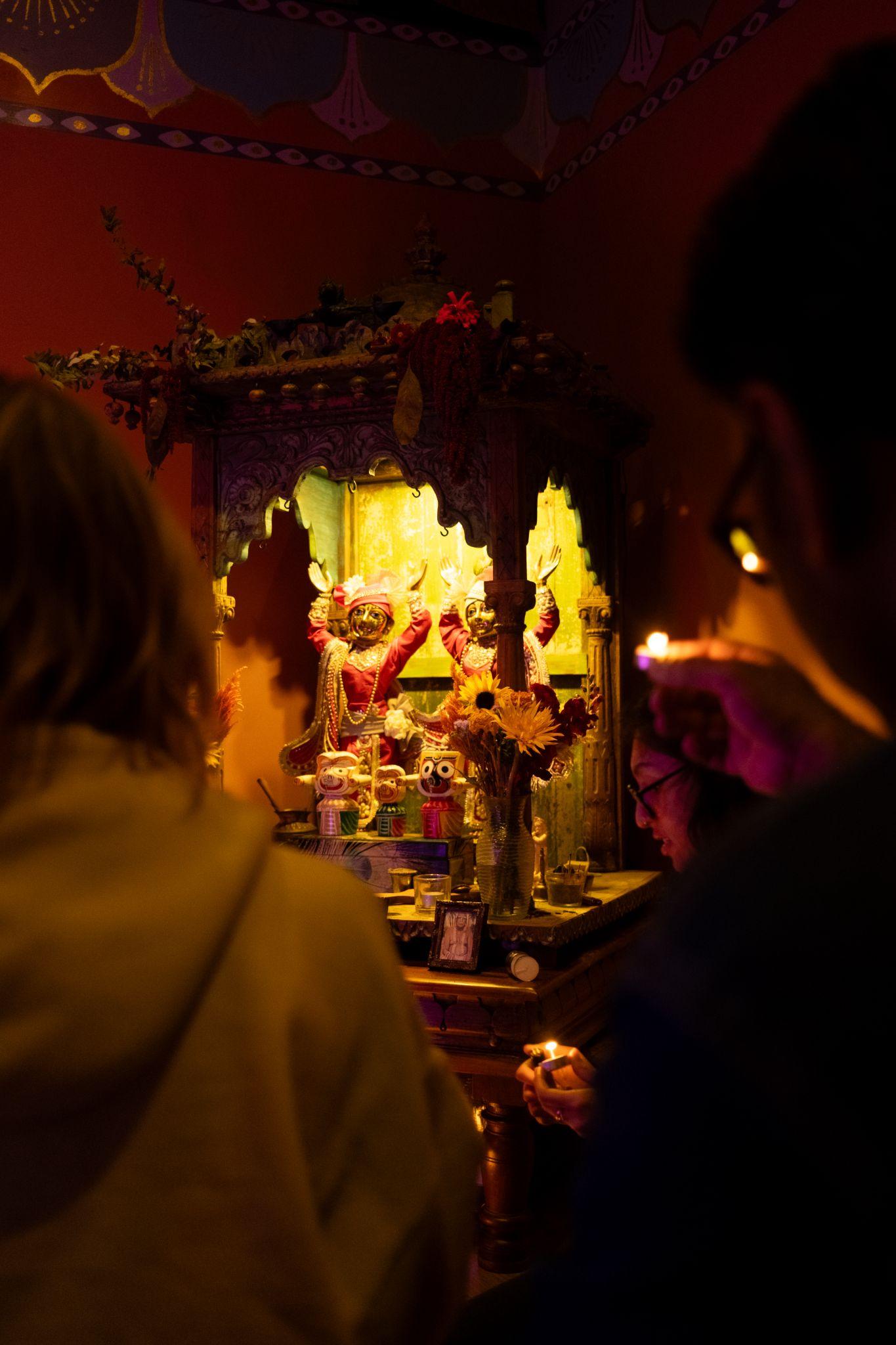
Devotional Indie Music often thrives in intimate settings—small gatherings where participants sit together, chant, and reflect. These environments foster satsaṅga (association with devotees), which is essential for spiritual growth.
In such spaces:
- The boundary between performer and listener dissolves
- Participation replaces observation
- The heart becomes the primary instrument
Soft lighting, minimal amplification, and shared intention transform ordinary rooms into sacred environments. These gatherings echo the traditional bhajana-kuṭīra—a simple place dedicated to devotional practice.
Sanskrit Mantra Meets Modern Lyricism
Bridging Ancient Wisdom and Contemporary Language
One of the distinguishing features of Devotional Indie Music is its integration of Sanskrit mantras with modern lyrical expression.
Sanskrit, known as the language of the gods (devavāṇī), carries intrinsic spiritual vibration. When combined with contemporary language, it becomes accessible without losing its transcendental essence.
For example:
- Mantra: “Hare Kṛṣṇa Hare Kṛṣṇa” invokes divine presence
- Modern lyrics: Express personal longing, surrender, and realization
This synthesis allows listeners unfamiliar with Vedic traditions to gradually enter into deeper spiritual understanding.
Vulnerability as a Path to Surrender
The Role of Emotional Honesty in Bhakti
In the path of bhakti, vulnerability is not weakness—it is strength. True surrender (śaraṇāgati) arises when the devotee acknowledges dependence on the Supreme.
Devotional Indie Music often explores themes such as:
- Letting go of control
- Facing inner struggles
- Trusting divine guidance
These themes resonate deeply in the modern world, where individuals seek meaning amidst uncertainty.
As stated in the Śrīmad-Bhāgavatam (11.14.15):
“My dear Uddhava, neither yoga, nor sāṅkhya, nor charity, nor study of the Vedas can please Me as much as pure devotional service.”
Thus, sincere emotion directed toward Kṛṣṇa becomes the highest offering.
Art as Outreach: A Natural Expansion of Bhakti
From Personal Offering to Collective Experience
Devotional Indie Music serves as a subtle yet powerful form of outreach (preaching or prachar). However, its effectiveness lies in its authenticity.
When music arises from genuine devotion:
- It naturally attracts others
- It transcends cultural boundaries
- It invites participation without force
This reflects the principle that bhakti spreads through saṅga (association), not imposition.
In this way, music becomes a bridge—connecting seekers to spiritual life without rigid structure.
Community and Collaboration in Bhakti Culture
The Importance of Devotee Association
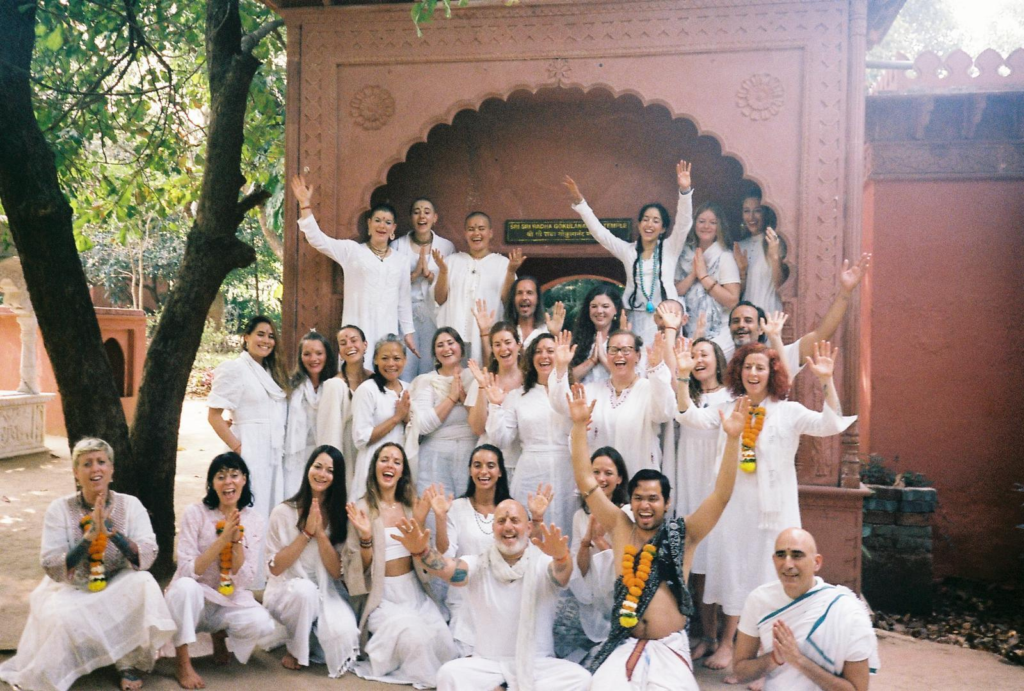
No spiritual journey is solitary. Devotional Indie Music is often supported by a community of practitioners who contribute:
- Musical accompaniment (mṛdaṅga, harmonium, kartālas)
- Technical support (sound, recording)
- Spiritual encouragement
This collaborative spirit reflects the principle of vaiṣṇava-sevā—serving the devotees, which is considered even higher than serving the Lord directly.
As taught by Śrī Caitanya Mahāprabhu:
tṛṇād api sunīcena taror iva sahiṣṇunā
“One should be humbler than a blade of grass and more tolerant than a tree.”
Such humility fosters cooperation and spiritual harmony.
The Role of Spontaneity in Devotional Practice
When Imperfection Becomes Perfection
In Devotional Indie Music, spontaneous moments often carry the deepest spiritual impact. A simple chant, a trembling voice, or an unplanned melody can become the most authentic expression of devotion.
This reflects the principle that bhakti is beyond mechanical execution. It is a living, breathing relationship.
Even a “mic check” chant, when offered sincerely, becomes sacred. This demonstrates that intention (bhāva) is more important than external arrangement.
From Identity to Offering
Redefining the Artist as a Servant
In material consciousness, identity is often tied to achievement and recognition. In bhakti, however, the true identity of the living being is dāsa—servant of Kṛṣṇa.
Devotional Indie Music reflects this transformation:
- The artist becomes an instrument (nimitta)
- The music becomes an offering (arpanam)
- The audience becomes participants in devotion
This shift aligns with the teaching of the Bhagavad-gītā (3.30):
“Dedicate all your works to Me, with mind fixed on the Self, free from desire and ego.”
The Future of Devotional Indie Music
A Growing Movement in Global Bhakti
As bhakti communities expand worldwide, Devotional Indie Music is likely to grow as a recognized expression of spiritual culture.
Future developments may include:
- Intimate concert series rooted in devotion
- Collaborative projects across cultures
- Increased accessibility through digital platforms
However, its success will depend on maintaining its essence—sincerity, humility, and devotion.
Without these, it risks becoming mere entertainment. With them, it remains a powerful medium of transformation.
Conclusion: Devotional Indie Music as Living Bhakti
In conclusion, Devotional Indie Music represents a beautiful convergence of ancient wisdom and modern expression. It embodies the timeless principles of bhakti while adapting to the needs of contemporary seekers.
Through simplicity, authenticity, and heartfelt offering, it reminds us that spiritual life is not confined to temples or rituals—it can flow through every aspect of our being, including art.
Ultimately, the goal is not musical perfection, but pure devotion (śuddha-bhakti). When sound becomes prayer, and music becomes meditation, the practitioner advances steadily on the path back to the lotus feet of Śrī Kṛṣṇa.

Deepen your Bhakti-yoga practice, harmonize relationships, and receive guided coaching — all at Vedavarsity.com