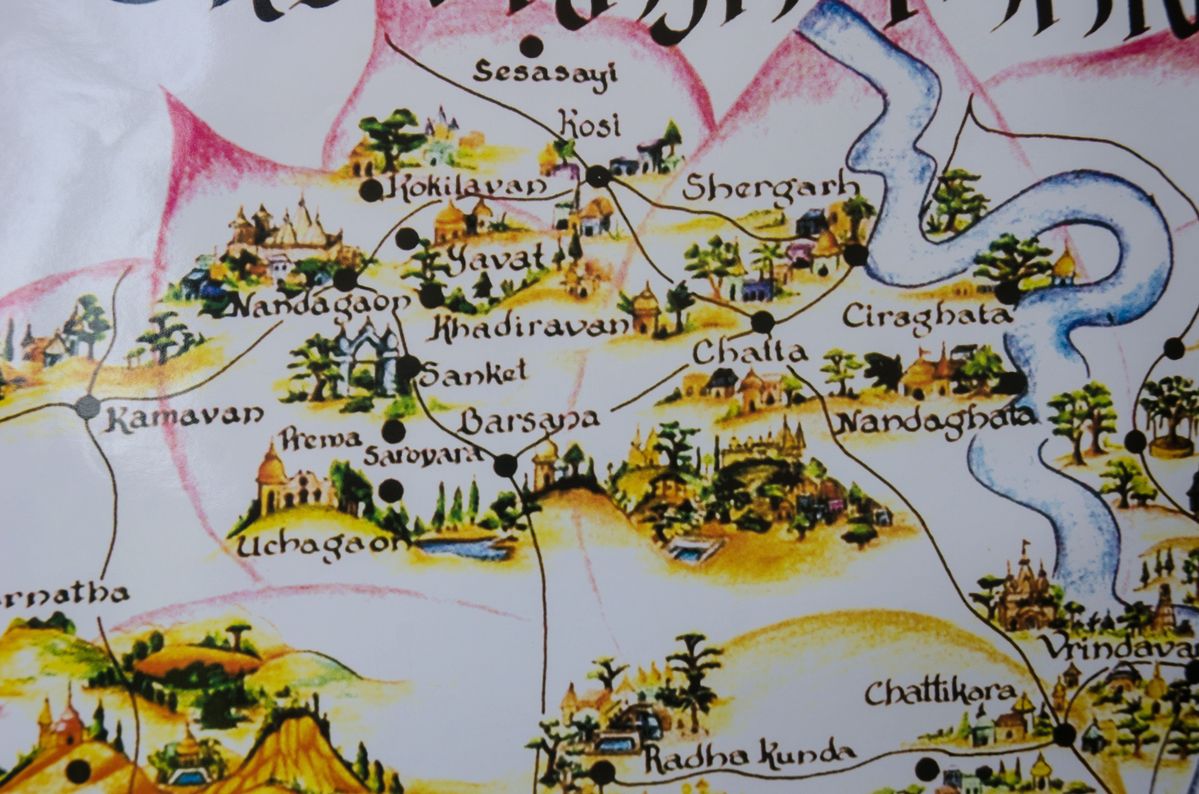
The region of Vraja Mandala is also known as Mathura Mandala and the same geographical area is also known as Vrindavana Dhama. In most of the Puranas the area of the dhama is generally referred to by its more ancient name as Mathura Mandala, although in the Garga Samhita we find both Vraja Mandala as well as Mathura Mandala being used. It was only after the pilgrimage to Vrindavana by Lord Chaitanya Mahaprabhu that the terms Vraja and Vraja Mandala became prominent, mainly due to the writings of the Gaudiya Goswamis, who used the term Vraja profusely in their literatures.
The word ‘Vraja’ which means ‘the place where the cows roam unhindered’ is a Sanskrit word which is most applicable to the holy land where Lord Krishna performed His cow-herding pastimes as a boy. The land of Vraja is often referred to in the local dialects of Vrajabasa (Bhojpuri) as ‘Brij’ or ‘Brijbhoomi’ and these terms have been in common use since the late 16th century when the excavation of the holy dhama began and the revival of its culture and traditions emerged after having been in neglect for almost fifty centuries.
According to the Padma Purana (Mathura-mahatmya), the transcendental land of Vraja Mandala should be visualized as being a thousand-petaled lotus flower with the city of Mathura situated on the central whorl of that lotus. A similar description is also found in the Brahma samhita. While describing the five presiding Deities of Vraja Mandala, the Adi-Varaha Purana says that Vraja Mandala may be seen as a four-petaled lotus; Keshavadeva presides over the central whorl of that lotus, Govindadeva presides over the northern petal, Varahadeva presides over the southern petal, Harideva presides over the western petal, and Vishranti presides over the eastern petal, (Sometimes it is said that Baladeva presides over the eastern petal, and elsewhere it says He presides over the southern petal).
The Puranas also say that the holy dhama of Vrindavana is a completely spiritual place and transcendental to the material atmosphere, therefore attempting to measure it by mundane material means is considered to be an offense. Nevertheless, the Vedic scriptures have presented the approximate dimensions of the holy dhama for the benefit of devotees who want to visit the holy places connected to Lord Krishna’s pastimes. The Garga Samhita says, “The land between Baharisad (Barhada) in the northeast, Yadupura (Batesar) in the south, Sonitpura (Sohna) in the west, which measures eighty-four kosas, has been called Mathura Mandala or Vraja by all learned persons.”
From Sonha to Batesara is eighty-four kosas which is equal to twenty-one yojanas or one hundred and sixty eight miles. This is the actual diameter of the holy dhama from north to south or east to west, thus creating a circular mandala with Mathura in the centre. Therefore the radius of Vraja Mandala from Mathura to its outer border in all directions is forty-two kosas or eighty-four miles. The Garga Samhita mentions Baharisad as one of the border reference points which many scholars believe is the town of Barhada which is located in Aligarh District of Uttar Pradesh State. Barhada is also known as Bara Kalan, but the town of Barhada is not located at the correct distance of eighty-four miles (forty-two kosas) from the centre of Vraja to be identified with Baharisad.
The second reference point is Yadupura, the city of the Yadus which was ruled by Maharaja Surasena, the father of Vasudeva (Krishna’s father). Yadupura is presently known as Batesara which lies to the south of the modern city of Agra. The ancient name of Batesara was Saukri-Vateshwara and it is the place from where the boar incarnation of Vishnu, Lord Varahadeva appeared. Saukri-vateshwara, which is located on the southern petal of the lotus of Vraja, is considered to be Lord Varahadeva’s eternal residence. The third reference point is Sonitpura which is presently called Sohna; it is a well known spa and beauty-spot situated in the Aravali Hills in Haryana State and famous for its hot springs.
The ancient name of Sonitpur was Yayavara and it was so named after a famous brahmana who had once resided there. The Padma Purana, (Yamuna-mahatmya) states, “Long ago in this beautiful place of the Apsaras (Sonitpur), there lived an ascetic brahmana named Yayavara. Becoming overwhelmed by sensual pleasures that brahmana offended Lord Indra and was thus cursed. After suffering a long time from the fire of Indra’s curse, in spite of performing severe austerities to get relief, he eventually got freed from his sin simply by touching a drop of water here. That brahmana then traveled east till he reached Saukara-puri where Lord Varahadeva had previously manifest Himself to rescue the earth when it had sunk in the ocean of universal devastation.”
The Bhakti-ratnakara while giving another reference to the area of Vraja Mandala mentions the place known as Yayavara (Sonitpur) when it says, “According to the scriptures, the boundary of Mathura Mandala extends from Yayavara to Saukari-vateshwara.” The Brahmanda Purana mentions that the borders of Vraja Mandala are also demarcated by various sacred forests and says that in the north of Vraja Mandala is Suryapatnavana, in the east is Hasyavana, in the west is Parvatavana, and in the south is Janhuvana. These four forests demarcate the greater border of the chaurai-kosa Vraja Mandala area as described in the Garga Samhita.
Deepen your Bhakti-yoga practice, harmonize relationships, and receive guided coaching — all at Vedavarsity.com