ŚRĪ HARIDĀSA DĀSA
(Srīdhāma Navadvīpa, Haribola-kuṭira)
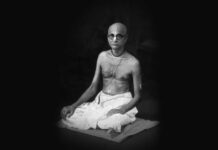
Śrī Haridāsa Dāsa, the illustrious author of Gauḍīya Vaiṣṇava Abhidhāna, was formerly known as Harendra Kumāra Cakravartī. He took birth in September 1898 in the village of Mahugrāma, within the Pheni subdivision of the Noākhali district (presently in Bangladesh). His father, Śrī Gaganacandra Tarkaratna, and his grandfather, Golakacandra Nyāyaratna, were both renowned scholars of the time. His younger brother, Manindra Kumāra Cakravartī, renounced worldly life at an early age and, upon accepting veśāśraya, became known as Mukunda Dāsa Bābājī. For fifteen years he resided at Haribola-kuṭira in Navadvīpa as a godbrother of Śrī Haridāsa Dāsa.
From his very boyhood, Harendra Kumāra displayed extraordinary intelligence and academic excellence, consistently excelling in all examinations. He completed his M.A. in Sanskrit (Vedānta-śākhā), standing first in order of merit and receiving a gold medal for his achievement. Prior to that time, he had received dīkṣā from the venerable Vaiṣṇava ācārya, Śrī Harimohana Śiromaṇi Prabhu.
To meet a financial obligation he had undertaken on behalf of his spiritual master, Haridāsa took up the profession of teaching at Īśvara Pāṭhaśālā in Kumilla. Having repaid the debt, he resigned from his post. During his brief pedagogical career, he became widely respected for both his profound scholarship and unimpeachable integrity. As a teacher, he was disciplined and precise, yet ever well-disposed and compassionate toward his students. His punctuality and sense of responsibility were exemplary, and by nature he possessed a heart overflowing with kindness.
In due course, he experienced a growing inner call toward renunciation. Yielding to that sacred impetus, he departed for Navadvīpa—and also spent time in Vṛndāvana—adopting the life of a selfless servant of the Lord. For a short period, he again accepted a teaching post at Kumilla College in Bangladesh.
Later, under the shelter of Śrī Giridhārī Haribola Sādhu, Harendra Kumāra accepted veśāśraya and received the spiritual name “Haridāsa Dāsa.” In Navadvīpa, he lived simply, sustaining himself through madhukarī—begging alms from door to door. His spiritual preceptor, Giridhārī Sādhu, was affectionately known as “Haribol Sādhu,” due to his ceaseless, exuberant chanting of the holy name “Haribol.” Haridāsa Dāsa resided with him at the Haribola-kuṭira, and from that time onward he would record “Giridhārī Haribole” as his father’s name.
With characteristic humility, Śrī Haridāsa scrupulously concealed his aristocratic background and academic laurels. When inquired about his past, he would simply reply, “That man is dead.” Such was his deep transcendental detachment. Śrī Haribol Sādhu departed from this world at Jagannātha Purī in 1944 A.D.
During his stay in Vṛndāvana, Śrī Haridāsa Dāsa resided at Govinda-kuṇḍa, engaged in rigorous seva-vrata—a vow of dedicated service. There he received the merciful instruction of Śrī Manohara Dāsa Bābājī to search out the lost or forgotten literatures of the Gauḍīya Vaiṣṇava tradition. Surrendering completely to this command, Haridāsa Dāsa dedicated his entire life to that sacred mission.
By the grace of Lord Caitanya Mahāprabhu, Śrī Haridāsa seems to have manifested extraordinary spiritual potency. Evidence of this is found in an incident described by Śrī Sureścandra Datta in his article published in the Bengali monthly magazine Śrī Śrī Sudarśana (Phālguna 1364 B.S. / Feb–Mar 1957 A.D.). A portion of that account is presented here:
“Once Śrī Haridāsa Dāsa, greatly despondent after long and fruitless efforts to locate the manuscript of Kṛṣṇa-līlā-stava composed by Śrī Sanātana Gosvāmī, sat weeping upon the bank of the Yamunā. With eyes full of tears he cried out, ‘O Prabhu Sanātana!’ Suddenly, he noticed a bundle of papers floating toward the shore. Curious, he approached and retrieved the bundle. Upon opening it, he discovered, amidst a few other manuscripts, the long-lost Kṛṣṇa-līlā-stava of Sanātana Gosvāmī. Overcome with spiritual joy, he held the manuscript to his heart, deeply inhaled in ecstasy, and gratefully accepted it as a divine gift.”
The literary contributions of Śrī Haridāsa Dāsa are vast and invaluable. Among his many works are the following:
Ārya-śatakam
Āścarya-rasa-prabandha
Ujjvalanīlamaṇi
Aiśvarya-kadambinī
Kāvya-kaustubha
Kṛṣṇa-janma-tithi-mahotsava-vidhi
Kṛṣṇa-virudāvali
Kṛṣṇāhnika-kaumudī
Gāyatrī-bhāṣya
Gītacandrodaya
Gopāla-tāpanī-ṭīkā
Gopāla-virudāvali
Gauracaritacintāmaṇi
Gaurāṅga-virudāvali
Camatkāra-candrikā
Caitanya-mata-maṣjūṣā
Chanda-kaustubha
Daśa-śloki-bhāṣyam
Dāna-keli-cintāmaṇi
Durlavasāraḥ
Nikuṣja-keli-virudāvali
Paddhati
Kṛṣṇa-bhakti-ratna-prakāśaḥ
Bhakti-sāra-pradarśinī
Mathurā-māhātmyaṁ
Mādhava-mahotsava
Yoga-sāra-stava-ṭīkā
Govinda-rati-maṣjarī
Rādhā-Kṛṣṇārcana-dīpikā
Kṛṣṇa-līlā-stava
Virudāvali-lakṣaṇam
Vṛndāvana-mahimāmṛtaṁ
Śyāmānanda-śatakam
Rasāmṛta-śeṣaḥ
Sādhana-dīpikā
Siddhānta-darpaṇa
Bhakti-rasāmṛta-sindhuḥ
Svatma-pramodinī
Gauḍīya-Vaiṣṇava-jīvanī
Deepen your Bhakti-yoga practice, harmonize relationships, and receive guided coaching — all at Vedavarsity.com