The Crest Jewel of Gauḍīya Philosophy
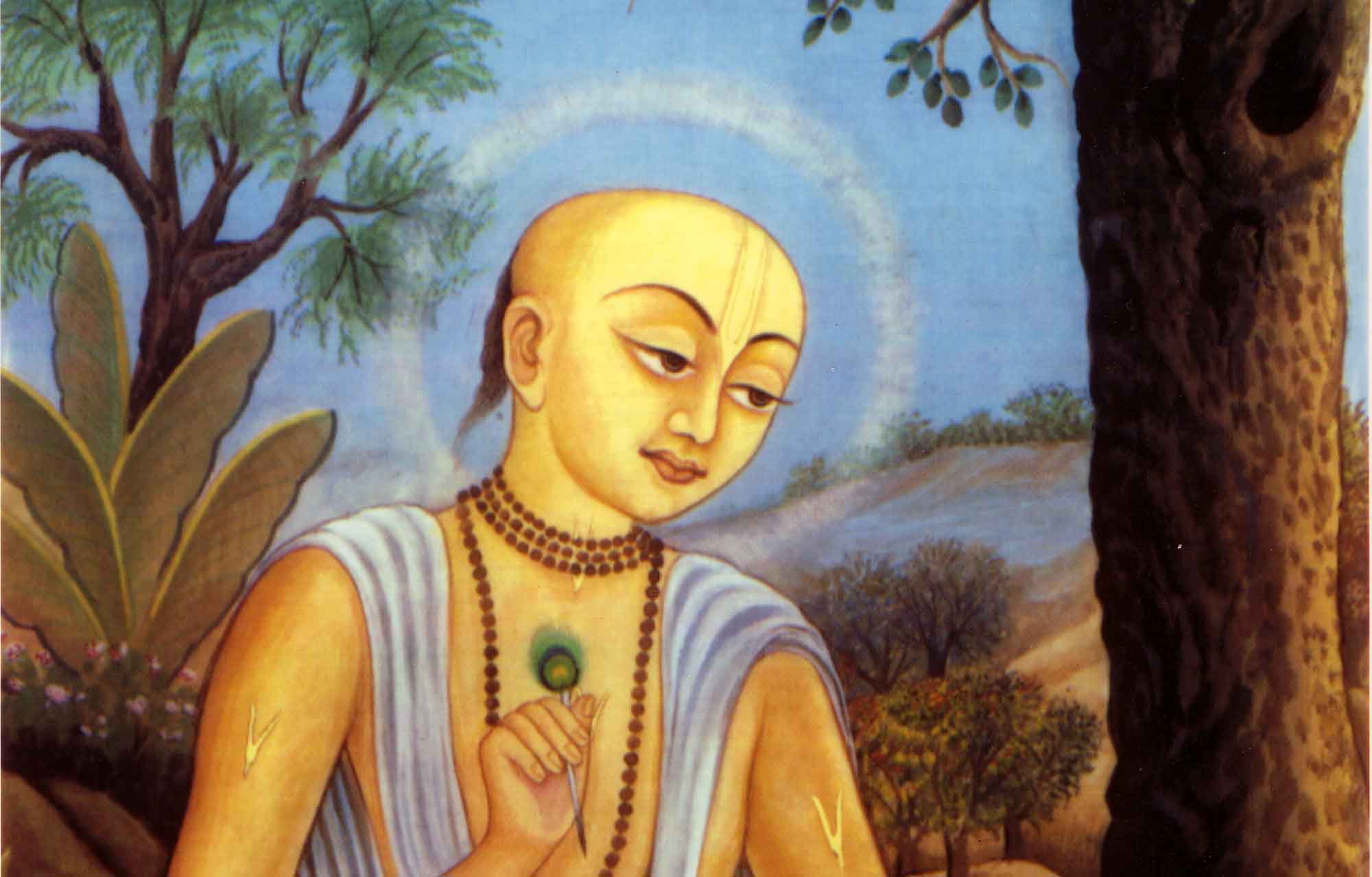
Śrīla Jīva Gosvāmī was the youngest of the Six Gosvāmīs of Vṛndāvana and the most erudite philosopher of the Gauḍīya Vaiṣṇava sampradāya. He was the nephew and foremost disciple of Śrīla Rūpa Gosvāmī and Śrīla Sanātana Gosvāmī, and after their disappearance he became the principal ācārya and guardian of Lord Caitanya Mahāprabhu’s philosophical conclusions.
Śrīla Prabhupāda has declared:
“Jīva Gosvāmī was the greatest scholar and philosopher in the world.”
Appearance and Family Lineage
Śrīla Jīva Gosvāmī appeared in the Śaka year 1455 (circa 1533 CE), on the twelfth day of the bright fortnight of the month of Bhādra. He appeared in a most exalted brāhmaṇa family whose lineage can be traced to Karnataka and later to Navahatta (modern Naihati) on the banks of the Gaṅgā.
His father was Śrī Vallabha Mallika, also known as Anupama, the younger brother of Śrī Rūpa and Śrī Sanātana Gosvāmīs. Anupama was a great devotee of Lord Rāmacandra and was personally renamed by Śrī Caitanya Mahāprabhu. Jīva Gosvāmī thus took birth in a family of pure Vaiṣṇavas fully dedicated to the mission of the Lord.
Childhood and Early Devotion
From early childhood, Śrī Jīva Gosvāmī exhibited extraordinary devotion and intelligence. Even while playing, his activities were connected with the pastimes of Lord Kṛṣṇa. He worshiped Śrī Śrī Rāma-Kṛṣṇa Deities with great care, offering bhoga and ārati with deep concentration.
He quickly mastered Sanskrit grammar, poetry, rhetoric, and logic under local paṇḍitas. Seeing his prodigious intellect and saintly character, his teachers predicted that he would become a great devotee and scholar. Later in life, he composed the Hari-nāmāmṛta-vyākaraṇa, a Sanskrit grammar in which all examples glorify the holy names of the Lord—demonstrating that even grammar may be fully engaged in devotional service.
Loss of His Father and Renunciation
When Śrī Jīva Gosvāmī was still very young, his father Anupama left this world while traveling on the banks of the Gaṅgā. This loss deeply affected Jīva Gosvāmī and awakened within him a strong sense of detachment from material life. At that time he had a dream in which Śrī Śrī Nitāi-Gaurāṅga appeared to him, dancing and blessing him with the dust of Their lotus feet. This vision strengthened his resolve to dedicate his life exclusively to devotional service.
Journey to Navadvīpa and Mercy of Nityānanda Prabhu
Desiring to see the birthplace of Śrī Caitanya Mahāprabhu, Jīva Gosvāmī traveled to Navadvīpa. There he met Śrī Nityānanda Prabhu, who affectionately placed His lotus feet upon Jīva’s head, bestowing upon him immense spiritual potency.
Nityānanda Prabhu personally took Jīva Gosvāmī on parikramā of the nine islands of Navadvīpa, revealing the places of Mahāprabhu’s pastimes. Thus, the tradition of Navadvīpa-dhāma parikramā began through Śrī Jīva Gosvāmī.
When Jīva Gosvāmī requested permission either to accompany Nityānanda Prabhu eternally or to go directly to Purī, Nityānanda Prabhu refused and instructed him instead to first go to Kāśī to study Vedānta. In this way, Jīva Gosvāmī was prepared to defend pure devotion against all opposing philosophies.
Studies in Kāśī
In Vārāṇasī, Śrī Jīva Gosvāmī studied Vedānta, Nyāya, and the six systems of philosophy under Śrī Madhusūdana Vācaspati, a disciple of Sarvabhauma Bhaṭṭācārya. From him, Jīva Gosvāmī learned the Vedāntic conclusions as taught by Śrī Caitanya Mahāprabhu Himself.
Thus Madhusūdana Vācaspati became Jīva Gosvāmī’s śikṣā-guru in Vedānta.
Life in Vṛndāvana
In 1535 CE, Śrī Jīva Gosvāmī arrived in Vṛndāvana and took shelter of his uncles Śrī Rūpa and Śrī Sanātana Gosvāmīs. He accepted dīkṣā from Śrī Rūpa Gosvāmī and quickly became his most trusted disciple, assisting him in editing Bhakti-rasāmṛta-sindhu and other works.
Jīva Gosvāmī also assisted Śrī Sanātana Gosvāmī in his Bhagavatam commentaries and later composed his own authoritative explanations, including Laghu-vaiṣṇava-toṣaṇī and Krama-sandarbha.
Humility and Discipline
Although unmatched in scholarship, Śrī Jīva Gosvāmī was deeply humble. On one occasion, after defeating Vallabha Bhaṭṭa in philosophical discussion to protect the honor of his guru, he was chastised by Śrī Rūpa Gosvāmī for excessive assertiveness. Accepting this instruction without protest, Jīva Gosvāmī left Vṛndāvana and lived in extreme austerity until he was forgiven and recalled. This incident reveals his complete submission to guru authority.
Literary Contributions
Śrīla Jīva Gosvāmī composed more than twenty-five authoritative works. His greatest contribution is the Ṣaṭ-sandarbha, which systematically establishes the philosophy of acintya-bhedābheda-tattva—the inconceivable simultaneous oneness and difference between the Lord and His energies.
The six Sandarbhas perfectly present:
Sambandha-jṣāna (relationship),
Abhidheya-jṣāna (devotional practice),
Prayojana-jṣāna (pure love of God).
These works conclusively establish Śrīmad-Bhāgavatam as the highest Vedic authority and Śrī Kṛṣṇa as the Supreme Personality of Godhead.
Establishment of the Radha-Dāmodara Temple
Śrī Jīva Gosvāmī established the Śrī Śrī Rādhā-Dāmodara Temple in Vṛndāvana and installed the Deity of Lord Dāmodara personally carved by Śrī Rūpa Gosvāmī. This temple later became the residence of His Divine Grace A.C. Bhaktivedanta Swami Prabhupāda, where he translated Śrīmad-Bhāgavatam and prepared to preach Kṛṣṇa consciousness throughout the world.
Teacher of Great Ācāryas
Śrī Jīva Gosvāmī instructed three of the most important preachers in Gauḍīya Vaiṣṇavism:
Śrīnivāsa Ācārya
Narottama dāsa Ṭhākura
Śyāmānanda Prabhu
He sent them to Bengal and Orissa with the original manuscripts of the Gosvāmīs, ensuring the preservation and expansion of Lord Caitanya’s mission.
Final Pastimes
Śrīla Jīva Gosvāmī disappeared from this world around 1596–1618 CE, having lived approximately eighty-five years. His samādhi is situated within the Rādhā-Dāmodara Temple courtyard in Vṛndāvana.
According to Gauḍīya Vaiṣṇava realization, Śrī Jīva Gosvāmī is the eternal associate Vilāsa Maṣjarī, serving Śrīmatī Rādhārāṇī in the spiritual world.
Conclusion
Śrīla Jīva Gosvāmī stands as the intellectual fortress of Gauḍīya Vaiṣṇavism, proving through scripture, logic, and devotion that pure bhakti to Śrī Kṛṣṇa is the supreme goal of life. His writings remain the philosophical backbone of Lord Caitanya Mahāprabhu’s movement and the greatest gift to the Vaiṣṇava world.
“My mission is to establish the glories of Śrīla Jīva Gosvāmī all over the world.”
— Śrīla Prabhupāda
Deepen your Bhakti-yoga practice, harmonize relationships, and receive guided coaching — all at Vedavarsity.com