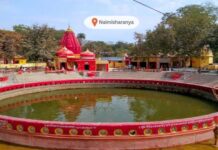




The Umananda Temple Guwahati stands as a unique and spiritually potent shrine dedicated to Lord Shiva, situated on a serene island in the mighty Brahmaputra River. This sacred temple, located atop Bhasmachala Hill, is deeply connected with ancient Vedic traditions and profound spiritual symbolism. The Umananda Temple Guwahati is not merely a place of worship, but a center of transcendental reflection, where devotees contemplate the nature of desire, renunciation, and divine realization.
Umananda Temple Guwahati: Location and Sacred Geography
The Umananda Temple is located in Guwahati, one of the most ancient and spiritually vibrant cities of India. The temple rests on Bhasmachala Hill, whose name literally means “the hill of ashes.”
Surrounded by the flowing waters of the Brahmaputra, the island provides a natural atmosphere of detachment (vairāgya), encouraging the mind to turn inward toward spiritual inquiry.
This sacred setting itself reflects a fundamental Vedic teaching: that spiritual realization often flourishes in simplicity and seclusion.
Mythological Significance of Bhasmachala Hill
The glory of the Umananda Temple Guwahati is rooted in a powerful episode from Vedic lore. It is here that Lord Shiva reduced Kamadeva to ashes when he attempted to disturb Shiva’s meditation.
In Sanskrit, this act signifies the burning of kāma (material desire), which binds the living entity (jīva) to the cycle of birth and death (saṁsāra).
Philosophical Insight
Desire is the root of material entanglement. When uncontrolled, it leads to illusion (māyā). Lord Shiva’s act of burning Kamadeva symbolizes the purification of consciousness.
Thus, the Umananda Temple Guwahati becomes a place where devotees meditate upon overcoming lower desires and awakening higher spiritual consciousness.
Connection with Tirukkurukkai and Veeratta Stalams
A similar pastime of Lord Shiva is commemorated in Tirukkurukkai, located in Tamil Nadu. This sacred site is one among the eight revered Veeratta Stalams, where Lord Shiva performed heroic divine acts (vīra-līlā).
Such parallel traditions across India highlight the universality of Vedic teachings and their deep-rooted cultural continuity.
Urvasi Island and Spiritual Symbolism
The island housing the Umananda Temple Guwahati is also known as Urvasi Island. It is associated with Urvashi, a celestial being known for her beauty and grace.
A sacred pond called Urvasi Kund is located here. According to tradition, Urvashi brought nectar for the pleasure of Goddess Kamakhya, one of the most revered forms of the Divine Mother.
Inner Meaning
The presence of Urvasi in this sacred geography reminds us that even celestial enjoyment is temporary. True fulfillment lies not in external pleasures, but in spiritual realization (ātma-jñāna).
Worship Practices at Umananda Temple Guwahati
Lord Shiva is worshipped here as Umananda or Bhayananda, signifying both benevolence and transcendental power.
Important Observances
Devotional activities at the Umananda Temple Guwahati are especially prominent on:
- Full moon days (Pūrṇimā), particularly Mondays
- The sacred festival of Maha Shivaratri, also known locally as Shiva Chaturdasi
On these occasions, devotees gather in large numbers to offer prayers, perform abhisheka (ritual bathing of the deity), and chant sacred mantras.
Spiritual Practice
Engaging in such devotional activities purifies the heart (citta-śuddhi) and gradually awakens devotion (bhakti) toward the Supreme.
Historical Background of Umananda Temple Guwahati
The Umananda Temple Guwahati has a rich historical lineage. It was originally constructed during the reign of Gadadhar Singha in the late 17th century.
The temple later suffered destruction due to a powerful earthquake. However, it was restored in the 20th century, preserving its sacred heritage and continuing its role as a center of devotion.
This continuity reflects the enduring faith of devotees and the timeless relevance of spiritual traditions.
Nearby Sacred Site: Sukreswara Temple
Another important Shiva temple in Guwahati is the Sukreswara Temple, located on Hastigiri Hill.
This temple is associated with the sage Shukracharya, who is believed to have worshipped Lord Shiva here.
Constructed by the Ahom ruler Pramatta Singha in the 18th century CE, it houses one of the largest Shiva Lingams in the region.
Philosophical Reflection: Beyond Material Understanding
The Umananda Temple Guwahati is not only a geographical location but also a philosophical landmark.
In Vedic understanding:
- The body is temporary (anitya)
- The soul is eternal (nitya)
- The goal of life is self-realization (ātma-sākṣātkāra)
By meditating on Lord Shiva’s pastimes, one is reminded of the necessity to transcend material desires and seek higher truth.
Conclusion: Umananda Temple Guwahati and Spiritual Awakening
The Umananda Temple Guwahati stands as a powerful symbol of spiritual transformation. Situated amidst the flowing waters of the Brahmaputra, it reminds us of the transient nature of material life and the eternal nature of the soul.
By reflecting on the pastime of Lord Shiva burning desire to ashes, one gains insight into the path of purification and devotion.
Ultimately, visiting or even contemplating the significance of the Umananda Temple Guwahati inspires one to rise above material attachments and progress toward spiritual realization.
Deepen your Bhakti-yoga practice, harmonize relationships, and receive guided coaching — all at Vedavarsity.com