


The Divinity of Śrī Caitanyadeva is not a matter of sentiment or sectarian belief; it is firmly established through śāstra (revealed scripture). The Divinity of Śrī Caitanyadeva is proclaimed in the Srimad Bhagavatam, affirmed in the Upaniṣads, and glorified in the Purāṇas and Mahābhārata. He is none other than Śrī Kṛṣṇa Himself, appearing in a golden form to deliver the fallen souls of Kali-yuga through nāma-saṅkīrtana (congregational chanting of the Holy Name).
The Divinity of Śrī Caitanyadeva in Śrīmad Bhāgavatam
In the Eleventh Canto of the Śrīmad Bhāgavatam (11.5.32), the sage Karabhājana Ṛṣi foretells the appearance of the Lord in Kali-yuga:
kṛṣṇa-varṇaṁ tviṣākṛṣṇaṁ sāṅgopāṅgāstra-pārṣadam
yajñaiḥ saṅkīrtana-prāyair yajanti hi su-medhasaḥ
This verse unmistakably establishes The Divinity of Śrī Caitanyadeva. Though Kṛṣṇa by identity (kṛṣṇa-varṇam), He appears with a non-blackish, golden complexion (tviṣā akṛṣṇam). His weapon (astra) is not a disc or bow, but the Holy Name itself.
Intelligent persons (su-medhasaḥ) worship Him through saṅkīrtana-yajña.
Thus, The Divinity of Śrī Caitanyadeva is not inferred—it is revealed.
Śrī Caitanyadeva: The Avatārī, Source of All Incarnations
The Bhāgavata further preserves two praṇāma-mantras (11.5.33–34), glorifying the Mahā-puruṣa who renounced opulence to deliver the fallen. These verses, originally describing Lord Rāmacandra, are also understood by Gauḍīya ācāryas to apply to Śrī Caitanyadeva, the origin of all incarnations.
He accepted sannyāsa, renouncing the company of Śrīmatī Viṣṇupriyā Devī, to distribute kṛṣṇa-prema—the highest treasure, unattainable even by Brahmā.
This unparalleled magnanimity confirms The Divinity of Śrī Caitanyadeva as Svayaṁ-Bhagavān.
Recognition by Great Authorities
The Divinity of Śrī Caitanyadeva was recognized by the erudite scholar Sārvabhauma Bhaṭṭācārya, who composed:
vairāgya-vidyā-nija-bhakti-yoga-śikṣārtham ekaḥ puruṣaḥ purāṇaḥ
śrī-kṛṣṇa-caitanya-śarīra-dhārī
“I surrender unto that ocean of mercy who has appeared as Śrī Kṛṣṇa Caitanya to teach renunciation and bhakti-yoga.”
These verses are preserved in the Caitanya-caritamrta (Madhya-līlā 6.254–255), further establishing The Divinity of Śrī Caitanyadeva.
The Symptoms of Kali-yuga: A Scriptural Diagnosis
In the Twelfth Canto of the Śrīmad Bhāgavatam, the characteristics of Kali-yuga are vividly described:
- Wealth determines status and justice.
- Marriage becomes a contractual formality.
- Leadership is seized by unqualified persons.
- Religious principles deteriorate.
- Famine, taxation, and social unrest increase.
These conditions are already visible, though over 427,000 years remain in Kali-yuga.
Thus, The Divinity of Śrī Caitanyadeva becomes especially significant, for He appears precisely to counteract these degradations.
The Great Hope in Kali-yuga
After listing Kali-yuga’s faults, Śukadeva Gosvāmī declares:
kaler doṣa-nidhe rājann asti hy eko mahān guṇaḥ
kīrtanād eva kṛṣṇasya mukta-saṅgaḥ paraṁ vrajet
(Śrīmad Bhāgavatam 12.3.51)
The single great quality of Kali-yuga is that liberation is attained simply by chanting Kṛṣṇa’s Name.
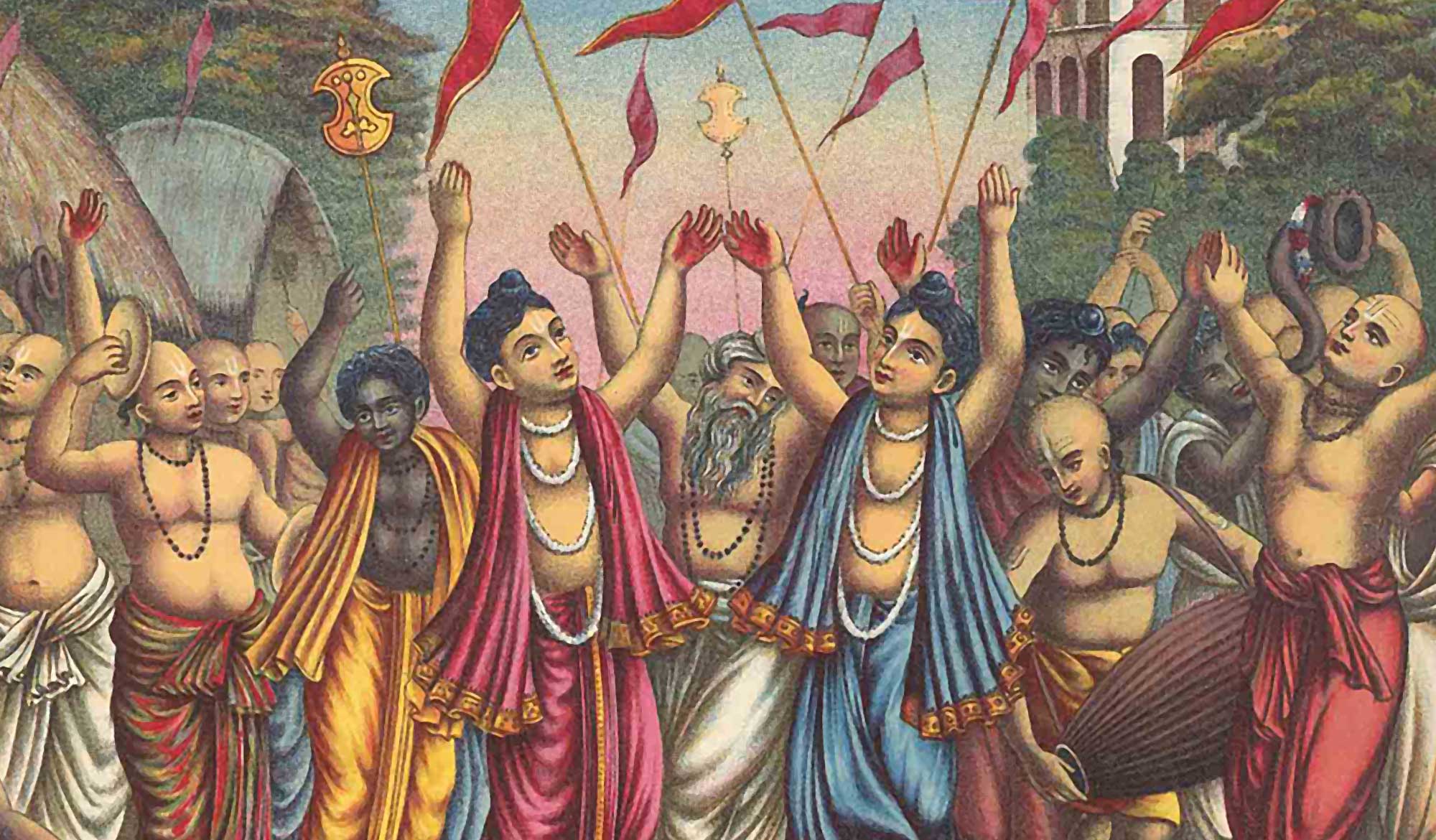
The Divinity of Śrī Caitanyadeva lies in His role as the inaugurator of this dharma for the age—hari-nāma-saṅkīrtana.
He did not introduce a new religion; He revived the eternal Bhāgavata-dharma.
Confirmation from Upaniṣads and Mahābhārata
The Muṇḍaka Upaniṣad (3.3) speaks of a golden-complexioned Lord:
rukma-varṇaṁ kartāram īśam puruṣaṁ brahma-yonim
When one beholds that effulgent Personality, he transcends piety and sin.
Similarly, the Mahābhārata (Dāna-parva 14.9) describes a golden Lord who accepts sannyāsa:
suvarṇa-varṇo hemāṅgo… sannyāsa-kṛc chamaḥ śāntaḥ
These prophecies further establish The Divinity of Śrī Caitanyadeva as the golden avatāra.
The Essence of His Teaching: Harer Nāma
Śrī Caitanyadeva emphatically proclaimed:
harer nāma harer nāma harer nāmaiva kevalam
kalau nāsty eva nāsty eva nāsty eva gatir anyathā
In Kali-yuga, there is no other way, no other way, no other way.
His teaching is simple yet profound:
- Chant the Holy Name.
- Associate with devotees.
- Hear Śrīmad Bhāgavatam.
- Serve without ulterior motive.
This is śuddha-bhakti—pure devotion free from karma (fruitive work) and jñāna (speculative knowledge).
Internal Mood: Rādhā-Bhāva
Although externally a sannyāsī, inwardly He relished the mood (bhāva) of Śrīmatī Rādhārāṇī—intense separation from Kṛṣṇa.
Thus, The Divinity of Śrī Caitanyadeva is unique. He is Kṛṣṇa seeking to understand Rādhā’s love.
This theological conclusion distinguishes Gauḍīya Vaiṣṇava siddhānta from other traditions.
The Founder of Kali-yuga Dharma
In previous ages:
- Satya-yuga: meditation (dhyāna)
- Tretā-yuga: sacrifice (yajña)
- Dvāpara-yuga: temple worship (arcana)
In Kali-yuga: hari-kīrtana
The Divinity of Śrī Caitanyadeva is revealed in His establishment of saṅkīrtana as the universal sacrifice.
Through this process, even the most fallen can attain prema (divine love).
Conclusion: The Supreme Personality Revealed
The Divinity of Śrī Caitanyadeva is unanimously affirmed by the Bhāgavatam, Upaniṣads, Mahābhārata, and Purāṇas. He is not a product of imagination, nor a sectarian deity, but Śrī Kṛṣṇa Himself appearing in golden hue.
In an age marked by hypocrisy, conflict, and spiritual ignorance, The Divinity of Śrī Caitanyadeva shines as the greatest hope.
By accepting His gift of nāma-saṅkīrtana, one transcends Kali’s influence and attains the supreme abode.
Therefore, let the heart, like a honeybee, become firmly absorbed in His lotus feet.
Śrī Kṛṣṇa Caitanya Mahāprabhu is the Absolute Truth.
And this is the final conclusion of all revealed scriptures.
Deepen your Bhakti-yoga practice, harmonize relationships, and receive guided coaching — all at Vedavarsity.com