The subject of Srila Prabhupada on Goswami Tulasidas often raises questions among devotees and students of Vedic literature. Goswami Tulasidas is one of the most revered devotional poets in the history of India, especially known for composing the famous Rama-carita-manasa, a poetic retelling of the pastimes of Lord Sri Ramacandra in the Hindi language.
Within the Vaishnava tradition, different sampradayas (disciplic successions) have produced many devotional scriptures that glorify the Supreme Personality of Godhead. The Gaudiya Vaishnava tradition, following the teachings of Srila A.C. Bhaktivedanta Swami Prabhupada, accepts all genuine Vaishnava sampradayas with respect while maintaining a clear understanding of philosophical conclusions (siddhanta).
In this article we examine the historical, philosophical, and devotional context of Srila Prabhupada on Goswami Tulasidas, including references from lectures, conversations, and letters.
About Goswami Tulasidas
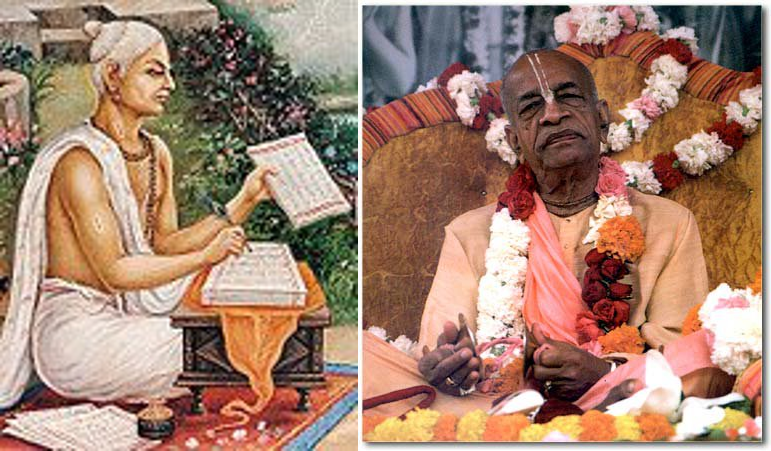
Tulasi dasaji was a Vaisnava belonging to the Ramananda sampradaya, a branch of the Sri sampradaya. All the four Vaisnava sampradayas are worthy of our respect. His name, Tulasi dasa, is a Vaisnava name and he wore the vertical (urddhva-pundra) Vaisnava tilaka. He also wore tulasi mala around his neck and was initiated into the Sri Rama mantra, which is a mantra for obtaining perfection. His guru was siddha Narahari (Nrsimha deva) dasa. His worshipful Deities were Sri Sita-Ramacandra who are incarnations of Sri Radha-Krsna. In his numerous books he often glorified Vrajendra-nandana Krsna. He explained the prominent glories of Sri Nama especially for the age of Kali. He translated the Sanskrit slokas of the Vedas, Upanisads, Puranas, Srimad-Bhagavatam, and especially the Ramayana, into Hindi poetical verse.
Teachings of Goswami Tulasidas
Goswami Tulasidasji has written of the importance of saranagati and accepted bhagavad-prema as the highest goal and object for the jivas. He accepted the nine forms of bhakti described in the Srimad-Bhagavatam. He accepted the jivas to be the separated parts-and-parcels of the Lord, as has been explained in the Gita and Srimad-Bhagavatam. He also accepted the doctrine of acintya bheda-abheda or, in other words, the simultaneous oneness and difference which exists between the omnipotent Lord and His potency (sakti-saktiman). He completely disregarded sayujya mukti and the other forms of liberation. Throughout his writings he refuted the theory of mayavada. Therefore, he has not expressed mayavada conclusions in any of his writings.
Authoritative Scriptures in the Vedic Tradition
Sriman Madhvacarya, In his commentary on a statement from the Skanda Purana he has written as follows (quoted in Gaudiya Kanthahra):
rg yajuh samatharvacca bharatam pancaratrakam
mula-ramayanan caiva sastram ityabhidiyate
yac canukulam etasya tac ca sastram prakirttitam
ato ‘nya grantha vistaro naiva sastram kuvartma tat
“The four Vedas — Rg, Yajur, Sama and Atharva — the Mahabharata, the original Ramayana and the Pancaratra are all authoritative and bona fide scriptures. Any scriptures which follow in support of them are all accepted as authoritative. All other scriptures apart from these are not accepted as authoritative.”
Srila Prabhupada’s Explanation of Revealed Scriptures
Srila A.C Bhaktivedanta Swami Prabhupada supports the very same conclusion as seen in the following quotes:
“According to Srila Rupa Goswami, any book which gives enlightenment in the matter of advancing in devotional service is considered to be revealed scripture. Srila Madhvacarya has also defined revealed scriptures as referring to books such as the Ramayana, Mahabharata, Puranas, Upanisads, Vedanta – – and any other literature written in pursuance of such revealed scriptures.” (NOD Chapter 12)
“Therefore we have to gather knowledge from the right source. Indeed, in reality we can get knowledge only from the Vedic sources. The four Vedas, with their supplementary Puranas, the Mahabharata, the Ramayana and their corollaries, which are known as smrtis, are all authorized sources of knowledge. If we are at all to gather knowledge, we must gather it from these sources without hesitation.” (CC Adi 5.14 — Purport)
“The Rg Veda, Yajur Veda, Sama Veda, Atharva Veda, Mahabharata, Pancaratra and the original Valmiki Ramayana are all Vedic literature. Any literature following the conclusive statements of this Vedic literature is also to be considered Vedic literature. That literature which does not conform to Vedic literature is simply misleading.” (CC Madhya 6.147 — Purport)
Conclusion of the Siddhanta
The conclusion is that all scriptures which give favourable support to these literatures are also accepted as bona fide and authoritative. Otherwise, all the books of Sri Ramanuja, Sri Rupa Goswami, Srila Jiva Goswami and Srila Kaviraja Goswami could not be accepted as authoritative.
Although the Tulasi Ramayana (Ramacarita-manasa) is accepted as a devotional scripture, Gaudiya Vaishnavas give special emphasis to Srimad-Bhagavatam and the works of the Goswamis because they present the most complete description of raganuga-bhakti and Krsna-bhakti-rasa.
Srila Prabhupada on Goswami Tulasidas
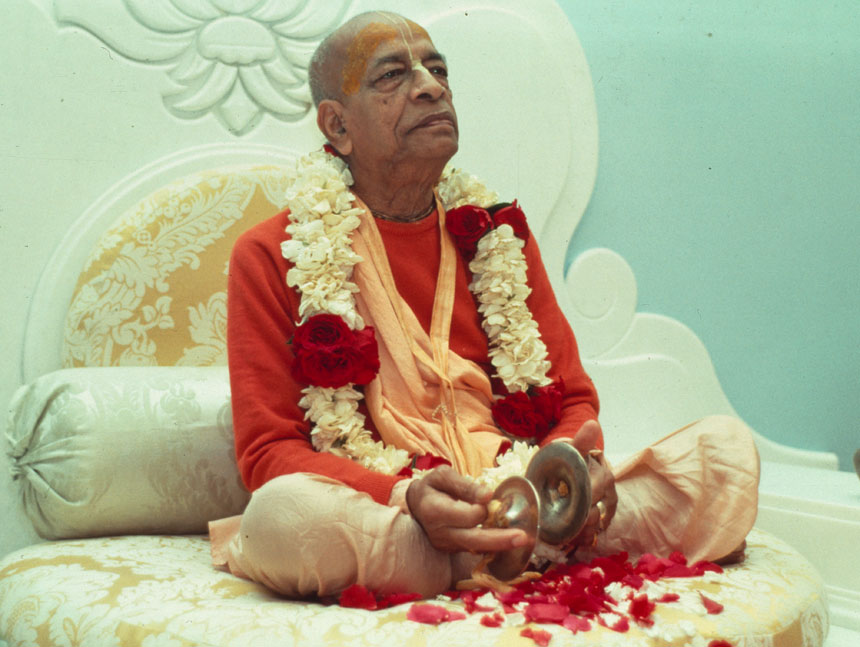
Below are the original references exactly as spoken by Srila Prabhupada, preserved without modification.
Conversation 1
“So he became a great devotee of Rama, Tulasi das. His book, Rama- caritamanasa. ‘Thinking always of Rama’, that is his book. It is very famous book, and that is the only important literature in the Hindi language, Rama- caritamanasa.”
(Room conversation with Brahmananda, April 12, 1969)
Conversation 2
“Devotee: Tulasi dasa said that he wanted to see Rama.
Prabhupada: Yes. That is devotee’s inclination. That we must have.”
(Room Conversation SB 6.1.14 Nov 10, 1970 Bombay, India)
Conversation 3
“And Tulasi dasa, he has also said… Tulasi dasa is big poet in Hindi language. He has written the Rama-carita-manasa. His opinion… Not only his opinion, that is the Vedic opinion…”
(Lecture SB 5.6.4 Nov 26, 1976 Vrindavana, India)
Conversation 4
“The Tulasi dasa’s Ramayana means Rama-carita. It is not Ramayana. Ramacarita- manasa. He was devotee of Lord Ramacandra…”
(Evening Darshana July 8, 1976 Washington DC)
Additional References
Besides the above quotes Thirteen times Srila Prabhupada has quoted Tulasi dasa’s writings as positive authority in his books or lectures in order to substantiate a preaching point he was making.
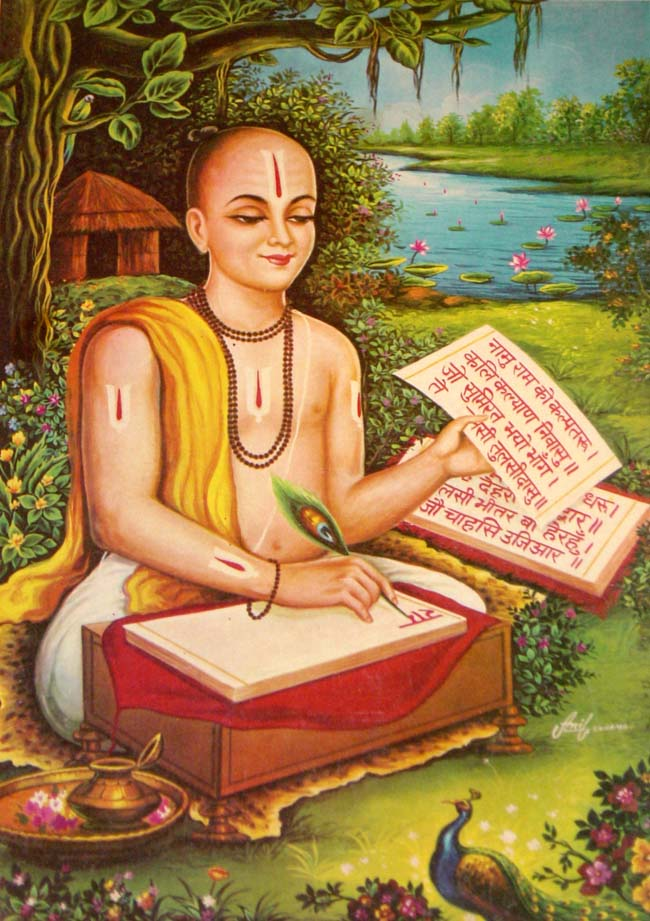
Ref 1: Radhastami, Srimati Radharani’s Appearance Day — Montreal, August 30, 1968 :
During a lecture in Montreal on Radhastami August 30 in 1968 Srila Prabhupada quoted Tulasi dasa and referred to him as a great devotee: “am aprameyam anagham nirvana-santi-pradam brahma-sambhu-phanindras tebhyo ‘nisam vedanta-vedyam vibhum sura-gurum maya-manusya-harim vande ‘ham karunakaram raghu-varam bhu-pala-cudamanim: This is a verse composed by a great devotee, Tulasi dasa. He was a devotee of Lord Ramacandra.” Note: ( Srila Prabhupada started this particular lecture with the above sloka of Gowami Tulasidas.)
Ref 2: Radhastami, Srimati Radharani’s Appearance Day — Montreal, August 30, 1968 :
“Our, this respectable Indian lady, she will begin Ramayana… This Tulasi, actually it is not Ramayana. It is called Rama-carita-manasa. Ramayana means Valmiki Ramayana, but people have taken it as Ramayana. Actually, Tulasi dasa has expressed his own feelings about his devotion to Lord Rama, and therefore he has named it Rama-carita-manasa, his mind full with service attitude for Lord Rama. That is the real meaning of this book. But people have misinterpreted; they are going on just it is Ramayana. And Ramayana, of course, anywhere where Rama’s activities are described, that is called Ramayana. That is another sense. But real Ramayana means the Ramayana composed by Valmiki Ramayana. Ramayana composed by Maharsi Valmiki. And this is… It is a popular notion that this is Ramayana, but actually this book is called Rama-carita-manasa. So some of the description of Rama are there, but not all the description. Rather there are many differences from the original Valmiki Ramayana. Anyway this is song of a devotee for his Lord Rama. In that sense, you can call it Ramayana, but this book is actually Rama- caritamanasa.”
Note: This quote does not actually say anything negative about Tulasi dasa or his Rama-carita-manasa. It simply points out that there is a difference between the Valmiki Ramayana and the Rama-caritamanasa. It should be noted, however, that this work was an expression of his mind “full with service attitude for Lord Rama”.
Ref 3: (Letter to Prof. Kotovsky, June 24, 1971)
“From your book Soviet Studies of India I understand that academician Mr. A. P. Baranrikov completed a great translation, working the matter of Tulsidas’s Ramayana into Russian. Srimad-Bhagavatam is the ripe, mature fruit of the Vedic knowledge, and Tulsidas’s Ramayana (Ramacharitmanasa) is but a partial representative of Srimad-Bhagavatam. The real Ramayana is Valmiki’s Ramayana. Tulsidas was a devotee of Lord Rama and he has given his thoughts in his book Ramayana. But the real original thoughts and ideas are in Srimad- Bhagavatam.”
Ref 4: (Room Conversation — April 19, 1977, Bombay)
Prabhupāda: And we may be rascal; we do not know who is father. The father Himself says, ahaṁ bīja-pradaḥ pitā: [Bg. 14.4] “Here.” We accept Kṛṣṇa. This is intelligence. The father is present. He says, ahaṁ bīja… The rascal is searching out: “There is no father.” So immediately who denies the existence of God, he is a rascal. He is to slapped only, with shoes. That is the only remedy. Anyone who denies the existence of God. He’s a rascal. He should be properly treated with shoes and beaten.
Girirāja: That’s true.
Prabhupāda: That’s all. Mūrkhasya lakuṭauṣadhi(?). When a person is fool number one, beat him. That’s all. Ḍhol gobara…(?) Tulasī dāsa has said, ḍhol gobara śūdra paśu nārī, ei saba śāsana ke adhikārī. Ḍhol, drum, you have to bring it to the tune by beating, “tung, tung.” Gobara. Gobara means fool person. Paśu, animal. Ḍhol, gobara, pa…, śūdra, and nārī, woman. They should be punished to bring them into order. Ei saba śāsana ke adhikārī. Otherwise they will spoil. A barking dog, you cannot pacify him, “My dear dog, don’t bark.” It will disturb him: “No!” Ḍhol gobara śūdra paśu nārī, ei saba śāsana ke… So anyone who is denying the existence of God, he is a rascal number one and beat him with shoes. Bas. He is being beaten with shoes by nature.
Ref 5: (21st August, 1973 London, Bhagavad-gita 2.15)
So our aim should be how to approach Visnu. Then we get the same power, same eternity, same blissfulness. Just like a motorcar is running at the speed of sixty miles, and if a cyclist someway or other catches the motorcar, he can also go at the speed of sixty miles. Sometimes boys do that. Similarly, you approach Krsna. You approach Visnu. You get all the powers because you become under protection. Protection of the… That… Tulasi dasa has said that in the ocean, the waves of the ocean, if you put one elephant very powerful, very strong, the elephant will be washed away by the waves. But a small fish, a teeny fish, it is swimming against the waves. They take pleasure. The fish, when the waves are coming this way, the fish go in that way. Now see. You put against the waves an elephant. It will be washed away. Why elephant? Any strong thing you give. Even big, big ships, oh, it will be washed away. But a small fish, it doesn’t care the waves; it goes against the waves. Why? It has taken the shelter. It has taken the shelter of the ocean. Similarly, all power belongs to Krsna. Yatra yogesvarah harih. But if anyone takes shelter of Krsna, he becomes as powerful as Krsna. This is the process.
Ref 6: (Morning Walk — February 2, 1977, Bhuvanesvara)
Prabhupāda: Who is cheating? They’re cheating. Just see. They are working hard; they are cheating. And they, by taxation getting money and living very comfortable, they are not cheating.
Gargamuni: They are greater cheaters.
Prabhupāda: Yes. This is Kali-yuga. dudha gali gali phire surā baitale vikāra dhanya kali yuga teri līlā duḥkha lāge haspar(?) Tulasī dāsa has said, “In the Kali-yuga, dudha, milk—no customer. And surā, wine-baitale vikāra.(?) It is sitting down in one place, and customers are going there: “Give me. Give me one after another, one after…” Surā, wine, is so impure that it should not be touched. That is selling in one place very comfortably. Dudha? Gali gali phire: “Will you take milk? Will you take milk?” Dudha gali gali phire surā baitale vikāra, dhanya kali-yuga teri līlā. Kali-yuga dhanya tomāra.(?) “Your pastime…” Duḥkha lāge haspar, “I am very sorry, but at the same time, I am laughing.” (laughs) “Although I am very sorry, but still, I am laughing.” This is Kali-yuga. dudha gali gali phire surā baitale vikāra dhanya kali-yuga teri līlā duḥkha lāge haspar(?) And in Vedic civilization, animal is being attempted to be killed—”Oh! Who are you?” “Kaliyuga.” “Get out!” This is rāja, king. And there is nobody to protest. So many animals are being killed. This is Kali-yuga. Why? “They are my subject. You cannot touch.” Kṛṣṇa is embracing gopīs and the calves also, not that He has selected only gopīs to be embraced. Sarva-yoniṣu kaunteya [Bg. 14.4]. “Anyone who loves Me… Loves or not, I am protecting.” Eko yo bahūnāṁ vidadhāti kāmān. He’s giving protection to everyone. And if he is a devotee, a special protection.
Ref 7: (Morning Walk — May 25, 1976, Honolulu)
Prabhupāda: Drop of water, the chemical composition is the same as big ocean. (airplane flyingoverhead) …feet, they say.
Devotee: About 35,000 feet up. Just under seven miles.
Prabhupāda: Wants to go against the current. That is their sporting. There is an example is given by Tulasī dāsa. Baijad gajarāja(?)(indistinct) A small fish, it will go against the current, and if you put one elephant, he cannot, he’ll be washed away. Why the fish, the small fish can go against the current and the elephant is washed out? Because that fish is under the shelter of the ocean; the elephant is foreigner. This is example. So one who takes shelter of the Supreme, he can do anything. Otherwise he’ll be washed away.
Hari-śauri: That’s a good example.
Prabhupāda: Oh, yes. Bhaijad gajarāja(?) (indistinct) Gajarāja means the king of elephants, he’ll be washed away. But a small fish will go against the current.
Hari-śauri: Is that from the Eighth Canto?
Prabhupāda: No. It is from Tulasī dāsa.
Hari-śauri: Oh. Like it says in Caitanya-caritāmṛta, if you have the mercy of Lord Caitanya, a big thing becomes easy, but if you don’t have His mercy, then a small thing becomes difficult.
Devotee: [break] …the universe was created five to ten billion years ago. Do we agree with their proposition, or…?
Prabhupāda: Hmm?
Ref 8: (Room Conversation — April 12, 1969, New York)
Gargamuni: He mentioned to me that he’s married and that he has a child in India. And he asked, “Oh, were you married?” And I said, “No. My wife was taken away.” And he came over and he hugged me. “Oh,” he said, “you are so lucky.” (laughter) He hugged me. He said, “Oh, you are so lucky.”
Prabhupāda: (chuckling) There is a Tulasī das poetry, din ka ḍākinī rat ka bhāginī gargara bhāginī cuṣe. Bhāginī. Tulasī das had very good, beautiful wife, and he was very much attached to her. So the system is that after the girl is staying with her husband… Because young girls, very minor age, they were married, say, ten years, nine years, twelve years. But they’re allowed to live with husband, say, after thirteen years or fourteen years, when she has attained puberty. So the system is six months father house and six months husband. In this way, going and coming. But when she is elderly she can remain continually with her …but in the beginning… Because after all, she is girl, so she cannot tolerate the separation from father and mother. So six months here, six months… So Tulasī das, as soon as the, his father-in-law will come to take his daughter, he won’t allow. He won’t allow.
Brahmānanda: Oh, he’s so attached.
Prabhupāda: Yes. “She’ll go later on. She’ll go.” So he went back. The father used to…, went back. In this way, several times. Then it was agreed that the girl would go there, father’s house, and the father took the girl in the morning, and in the evening Tulasī dāsa went there. (laughs) His wife chastised, “You are so rascal fool that I have come this morning and you have, evening you are here? You have so much attachment for the skin?” Just like husband and wife talking. That struck him very badly, and he immediately left that place and went to… Left home for good. Yes. And that was the initiation that he took up writing about Rāma. That is Tulasī dāsa’s life. Just being, I mean to say, hurt by the words of wife, that “I love her,”… Later on he understood, “Yes, she is right. So why should I be so much attached?” She uttered this (indistinct), “If you have got so much attachment for this skin and bone; if you had so much attachment for Rāma then your life would have been different.” So he took it seriously. “Why not attachment for Rāma?” So he became a great devotee of Rāma, Tulasī das. His book, Rāma-carita-mānasa. “Thinking always of Rāma,” that is his book. It is very famous book, and that is the only important literature in the Hindi language, Rāma-carita-mānasa. It is very popular in India. Village to village. Practically Gītā Press has flourished simply by selling the Rāma-carita-mānasa and Gītā. Gītā and Rāma carita-mānasa. Two books. Millions of books they print and sell, this Rāma-carita-mānasa and Bhagavad-gītā. So he has written that din ka dakini. In the daytime she is just like what is called, witches. Witch? Witch?
Brahmānanda: Witch, yes.
Prabhupāda: Ḍākinī. And rat ka bhāginī. At night she is tigress.
Ref 9: (Srimad-Bhägavatam 1.16.19 Los Angeles, July 9, 1974)
So that is the fact. And there is a version of Tulasi Däsa in Hindi. It is said sukse sabe hari bhaje, duhkhse saha hari bhaje, sukse bhaje khoya.(?) Or sukhase ara hari bhaje, tu duùkha hase hoya(?). It is very nice instruction. The instruction is that when one is distressed, everyone remembers God. Yes. Duhkhse saba hari bhaje. Saba means “all.” At that time… Just like in the last war, Second…, last war, when everything was
Ref 10: (SB 2.9.7 april 24,1972)
Similar statement is there by Tulasi däsa. He says—Tulasi däsa was a Hindi poet —that “The put, the son, and mut, the urine, they come through the same source.”That’s a fact. Put and mut. Put means son, and mut means urine. So when we beget son, the same genital; when we pass urine, the same genital. Son, he has… You…(?)Liquid. Tulasé däsa says—it is very nice—that “Put and mut, they are coming from the same source. So a put, if he is devotee of the Lord, then he is put. If he is not, then he is mut. Then he is mut.” If the son… After begetting son, if the son does not become devotee, then he is as good as mut. I pass urine. Mut son, he says, because he’s less than mut. Because mut, I pass urine. The obnoxious thing, that is gone away
Ref 11: Srimad-Bhagavatam 6.1.33 — San Francisco, July 18, 1975
Tulasī dāsa has said that to go against the current is very difficult. Even an elephant is washed away. But a small fish, because he has taken shelter of the ocean, he can go against the current. This is the… So if we take shelter of Kṛṣṇa, then even the current is against, we can go because… The same example: the fish has taken shelter of the ocean. Although very small animal, he can go against the…
Ref 12: Srimad-Bhagavatam 6.1.39 — San Francisco, July 20, 1975
Tulasī dāsa has classified, dhol guṇar śūdra paśu nārī, ihe sab sasan ke adhikārī.(?) So women will be sorry, but he has classified in that way. Anyway… So nobody is taking care of the Vedic literature. Therefore they do not know what is right, what is wrong.Dharma, dharma means right and wrong…..
Ref 13: SB 6.11.4 purport
A similar comparison was given by Tulasi däsa, who commented that a son and urine both come from the same channel. In other words, semen and urine both come from the genitals, but semen produces a child whereas urine produces nothing. Therefore if a child is neither a hero nor a devotee, he is not a son but urine.
Ref 14: Srimad-Bhagavatam 2.3.19 — Los Angeles, June 15, 1972
They also eat. They enjoy. As the camel is enjoying thorny twigs. His enjoyment, that is his enjoyment. Na khādanti na mehanti. Now, another enjoyment. Sex life, discharge. Na mehanti. Again it is described. These are very terse criticism. You see. A fact. Sex enjoyment means you discharge your semina. Your thing, not others. And it is said by medical science, some pounds of blood makes one drop of semina. That means, suppose you allow, if you allow somebody to take your blood, pounds of blood, would you like to do that? Unless it is… Nowadays, blood bank, there is going on. But anyone, if he wants to take your blood, you will protest. But our enjoyment is by giving our own blood. Tul… There is a Hindi poet, din ka ḍākinī, rāt ka bāghinī, palak palak rahe cuṣe duniyā sab bhora hoye, ghara ghara bāghinī pūje (?). It is actual for the materialistic person, that there is an animal, din ka ḍākinī, at, during daytime she is witch, and at night she is tigress. So din ka ḍākinī, rāt ka bāghinī, palak palak rahe cuṣe. The witches, they also, by their black art, they suck the blood of children. Do you know that? There are witches. You know? I am asking Svarūpa Dāmodara. The kamekha (?) witches, from the black art. The Pūtanā was like that. They suck the blood of children by some mantra. So din ka ḍākinī, rāt ka bāghinī. It is pointing out to one’s wife. During daytime she is ḍākinī, witches, and at night she is tigress. So Tulasī dāsa says that. . . Tulasī dāsa’s life is very interesting. Therefore he had very bad experience of his wife. Everyone. So bāghinī. Nobody keeps a tigress to suck one’s blood, but Tulasī dāsa says, duniyā sab bhora hoye. The whole world, being mad, they keep one tigress. Palak palak rahe cuṣe. In every moment, sucking blood. This criticism is for the materialistic person. Those who are spiritually advancing, this criticism does not apply. For materialistic person, this agent of sucking blood is their happiness, is their happiness.
Understanding the 1969 Letter
One often-quoted letter from 1969 contains criticism regarding the Ramacarita-manasa. However, when seen in the broader context of Srila Prabhupada on Goswami Tulasidas, it becomes clear that Srila Prabhupada was guiding new disciples to focus primarily on Bhagavad-gita As It Is, Srimad-Bhagavatam, and Teachings of Lord Caitanya.
At that time his disciples were spiritually new and had not yet studied the foundational scriptures. Therefore he did not want them distracted by secondary literature or uncertain translations.
Thus the purpose of the instruction was disciplic focus, not rejection of Tulasidas as a devotee.
Final Understanding
From the full body of statements, the balanced understanding of Srila Prabhupada on Goswami Tulasidas is clear:
- Tulasidas was a devotee of Lord Ramacandra.
- His Rama-carita-manasa is a devotional poetic work.
- The original Valmiki Ramayana is the primary Ramayana scripture.
- Gaudiya Vaishnavas especially emphasize Srimad-Bhagavatam and the writings of the Six Goswamis for the highest understanding of Krsna-bhakti.
Thus, with proper philosophical understanding (siddhanta), devotees can appreciate the devotional contribution of Tulasidas while remaining firmly situated in the teachings of the Gaudiya Vaishnava tradition.
Deepen your Bhakti-yoga practice, harmonize relationships, and receive guided coaching — all at Vedavarsity.com