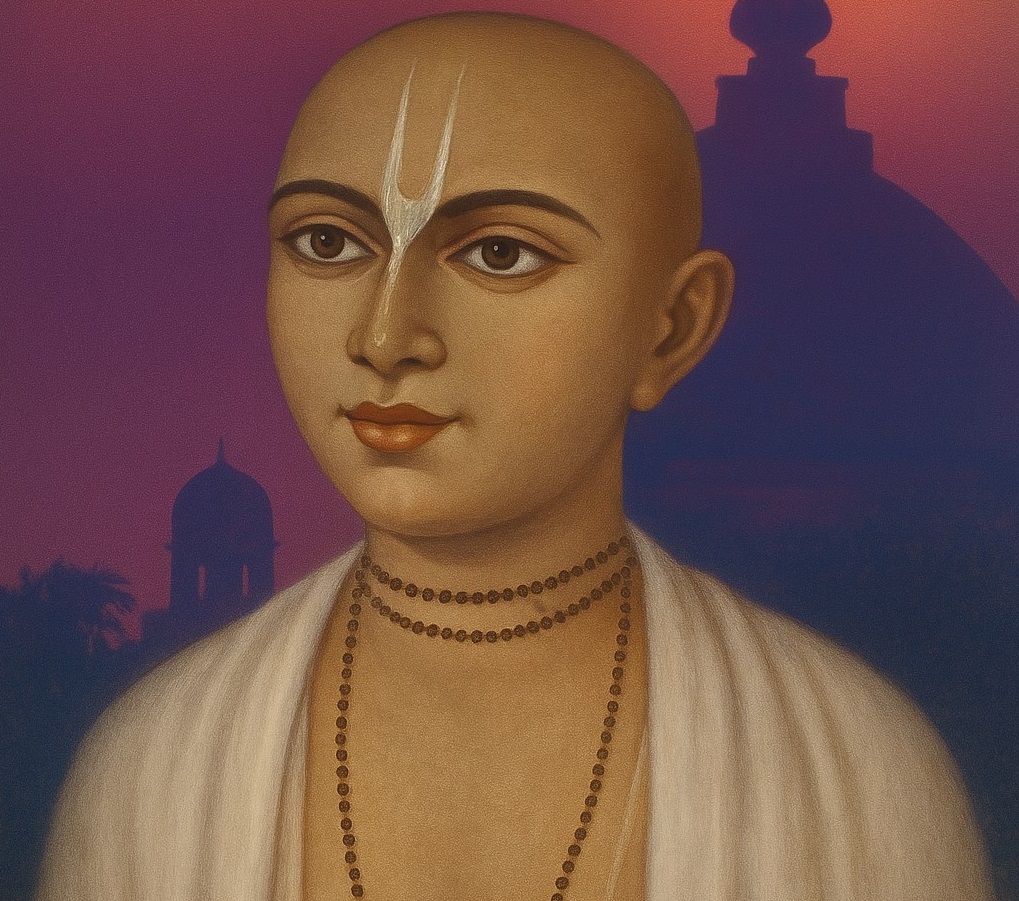
Lochana Dasa Thakura, a most exalted devotee of Lord Chaitanya Mahaprabhu, was born in the year 1523 in the village of Kograma, in the Katwa block of Burdwan district, near the banks of the Ajaya River. He was born in the Radheya clan of the physician caste (vaidya) to father Kamalakara Dasa and mother Sadananda. From his earliest childhood, Lochana Dasa displayed deep devotion to Lord Chaitanya and an intense attraction for Krishna-katha. He was educated under the care of his maternal grandfather and was naturally inclined toward devotional life.
At a very young age, Lochana Dasa was married according to the social customs of the time. His in-laws’ residence was in Amedpura Kakua. However, although he had accepted the married order, he was completely renounced and spent all his time in the association of devotees discussing the pastimes of Lord Krishna and Gauranga Mahaprabhu. Concerned about his indifference to material life, his in-laws approached his spiritual master, Narahari Sarakara Thakur, who instructed Lochana Dasa to reside in his in-laws’ home.
Upon arriving in the village, Lochana Dasa had forgotten the exact location of the house, for he had not visited it in many years. Seeing a young girl on the street, he addressed her respectfully as “Ma” (mother). To his astonishment, he discovered that this girl was, in fact, his wife. From that day onward, he always regarded his wife in the mood of a mother, maintaining full renunciation while offering his worship to the Guru and Lord Gauranga.
Lochana Dasa took initiation from Narahari Sarakara Thakur, the eminent associate of Mahaprabhu from Srikhanda. Under the guidance of his spiritual master, Lochana Dasa perfected the art of kirtana and was instructed to write the sacred biography of Lord Chaitanya. Obediently following this order, he composed the Chaitanya Mangala in 1537, in the Panchali style of Eastern Bengal. The Chaitanya Mangala is based upon Murari Gupta’s Chaitanya-charita and is considered one of the most auspicious literatures glorifying the pastimes of Lord Chaitanya Mahaprabhu.
The Chaitanya Mangala begins with Lochana Dasa’s humble obeisances to his guru:
“Narahari Das Thakur is the proprietor of my life, and out of the hope of attaining his lotus feet, I desire to sing the glories of Gauranga, even though I am the lowest of the low.” (CM Sutrakhanda 1.9)
Lochana Dasa also rendered devotional songs glorifying Lord Nityananda, describing Him as the embodiment of mercy and the distributor of the sankirtana movement. He sang that Lord Nityananda delivers the Holy Name to everyone, regardless of social status, and that those who fail to worship Him are indeed unfortunate. His songs highlight that the mercy of Lord Nityananda and Lord Gaurachandra is so vast that even birds, animals, and stones are moved by their divine qualities.
In addition to the Chaitanya Mangala, Lochana Dasa composed other devotional works, including Prarthana, Durlabha-sara, Dhamale, as well as Bengali verse translations of Ramananda’s Jagannath-vallabha-nataka and the Rasa-pancadhyaya. He was present at the disappearance festival of his spiritual master Narahari Sarakara Thakur, personally welcoming guests and offering them sandalwood and garlands.
Lochana Dasa Thakura’s life and writings exemplify the highest mood of devotional renunciation, unalloyed devotion to the Guru, and unwavering attachment to the service of Lord Chaitanya. By hearing his Chaitanya Mangala and other songs, one may awaken love of God and taste the sublime bliss of devotion.
Deepen your Bhakti-yoga practice, harmonize relationships, and receive guided coaching — all at Vedavarsity.com