


Saalagraam Divya Desam: The Sacred Himalayan Abode of Lord Vishnu
The Saalagraam Divya Desam stands as one of the most mysterious and spiritually profound among the 108 Divya Desams glorified in the Tamil hymns of the Āḻvārs. Situated in the sacred Himalayan region of Nepal, this holy site is deeply associated with the worship of Lord Viṣṇu in His eternal form as Śrī Mūrti.
Known for its connection with the sacred Śālagrāma-śilā (divine stones), Saalagraam Divya Desam represents a unique convergence of śāstra (scripture), bhakti (devotion), and prakṛti (nature).
Location and Sacred Geography of Saalagraam Divya Desam
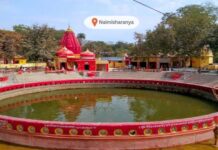
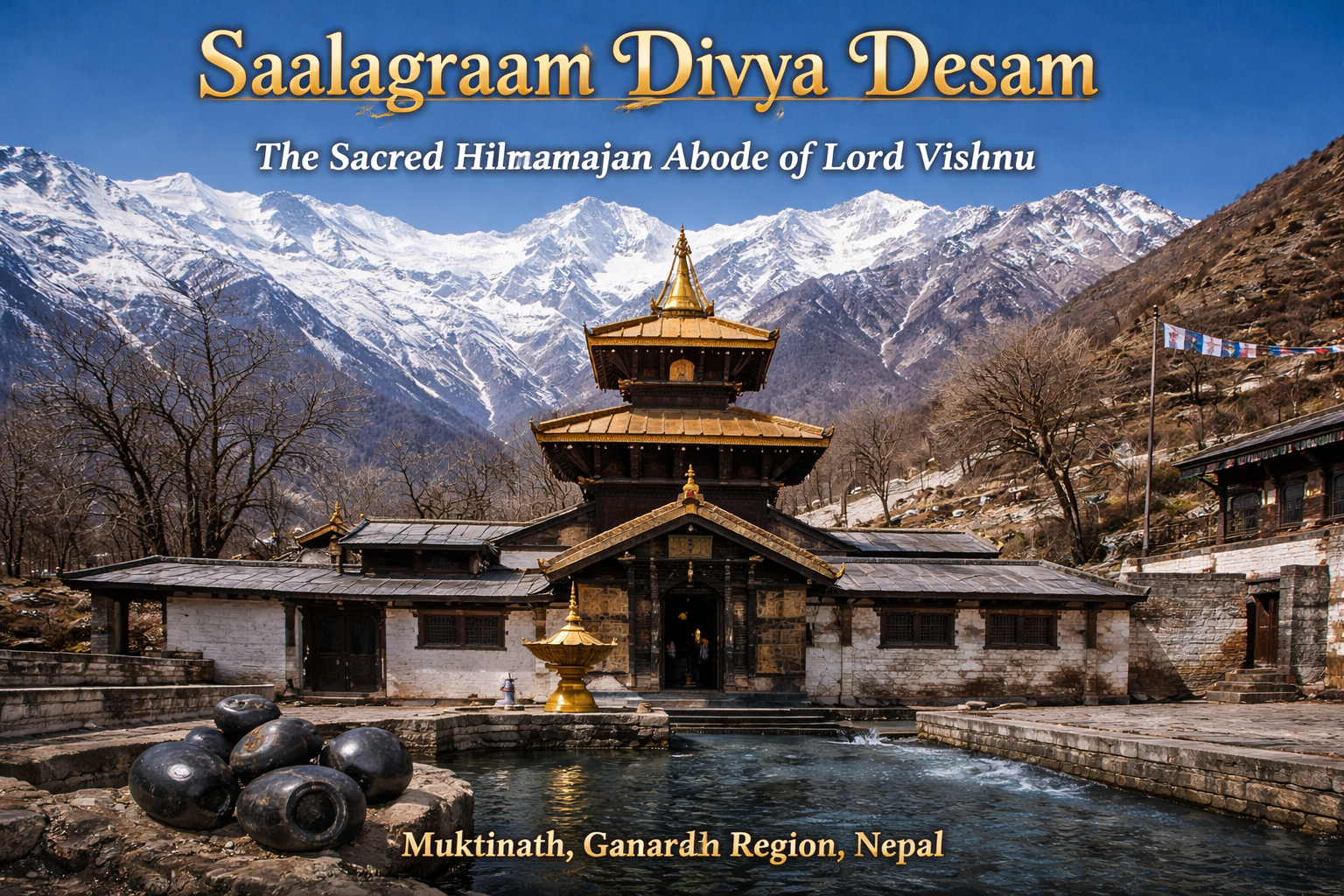
The Saalagraam Divya Desam is traditionally identified with the revered pilgrimage site of Muktinath Temple, located approximately 140 miles from Kathmandu.
Nestled in the snow-clad Himalayas, this sacred region lies near the banks of the holy Gandaki River, also known as Nārāyaṇī or Śālagrāmī. This river is spiritually significant because it is the divine source of the sacred Śālagrāma stones, which are worshipped as direct manifestations of Lord Viṣṇu.
Nearby lies Damodara Kuṇḍa, the origin point of the Gandaki River, further enhancing the sanctity of this region.
Saalagraam Divya Desam in the Divya Prabandham
The glory of Saalagraam Divya Desam is sung in the Nālāyira Divya Prabandham, the Tamil Vedic canon composed by the Āḻvārs.
Among them:
- Periyalvar glorifies Lord Kṛṣṇa as “Saalagramamudaiya Nambi”, emphasizing His presence in this sacred land.
- Tirumangai Alvar describes Saalagraam as the divine abode of Lord Rāma and declares that various forms of the Lord reside here.
These descriptions affirm the theological principle that the Supreme Lord, though appearing in different forms and places such as Mathurā, Dvārikā, and Ayodhyā, remains one and the same Puruṣottama (Supreme Person).
Deity and Temple Attributes
- Mūlavar (Presiding Deity): Śrī Mūrti (Lord Viṣṇu)
- Tāyār (Consort): Śrī Devī
- Theertham (Sacred Water): Chakra Theertham
- Vimanam: Kanaka Vimanam
The worship here is deeply connected with the arcā-avatāra principle, wherein the Lord mercifully manifests in a form accessible to devotees.
Spiritual Significance of Śālagrāma Stones
A distinctive feature of Saalagraam Divya Desam is the presence of Śālagrāma-śilās, naturally occurring sacred stones found in the Gandaki River.
In Vaiṣṇava theology:
- Śālagrāma is considered a self-manifested (svayam-vyakta) form of Lord Viṣṇu.
- Worship of Śālagrāma requires no formal consecration.
- It is said that even simple worship with devotion grants liberation (mokṣa).
These stones are revered in households and temples alike, representing the Lord’s nirguṇa yet saguna presence—beyond material qualities yet accessible through form.
Saalagraam and Muktinath: A Sacred Confluence
The identification of Saalagraam Divya Desam with Muktinath is widely accepted, though not universally agreed upon.
Two Main Perspectives:
- Muktinath Identification:
Many scholars and traditions accept Muktinath Temple as the Divya Desam, due to its scriptural and geographical alignment. - Gandaki River Banks:
Another school holds that Saalagraam refers to the sacred stretches of the Gandaki River itself, particularly en route to Muktinath.
This divergence reflects the transcendental nature of dhāma-tattva—the understanding that the Lord’s abode is not confined by mundane geography.
Connection to Śakti Peethas
Interestingly, Muktinath is also counted among the 51 Śakti Peethas, sacred to Divine Mother worship.
This reveals a profound Vedic synthesis:
- Viṣṇu worship (Vaiṣṇavism)
- Devī worship (Śāktism)
Such unity underscores the Vedic truth that all energies ultimately emanate from the Supreme Absolute Truth (Parabrahman).
Philosophical Insight: One Lord, Many Abodes
The Āḻvārs emphasize that the same Lord resides in multiple holy places:
- Mathurā
- Dvārikā
- Ayodhyā
- Vaikuṇṭha
Yet, He is fully present in Saalagraam Divya Desam.
This aligns with the principle of acintya-bhedābheda-tattva—the simultaneous oneness and difference of the Lord and His manifestations.
Thus, visiting Saalagraam is not merely a geographical journey but a spiritual realization.
Pilgrimage Experience and Devotional Mood
Pilgrimage to Saalagraam Divya Desam is not easy. The terrain is rugged, the climate extreme, and the journey demanding.
However, such austerity (tapasya) purifies the heart.
Devotees experience:
- Detachment from material comforts
- Deep meditation on the Lord
- Reverence for nature as divine energy
The Himalayas themselves are seen as a manifestation of the Lord’s majesty (aiśvarya).
Conclusion: Why Saalagraam Divya Desam is Unique
The Saalagraam Divya Desam is not just a temple—it is a living expression of divine presence in nature.
From the sacred waters of the Gandaki River to the self-manifested Śālagrāma stones, every aspect of this holy place proclaims the glory of Lord Viṣṇu.
Whether understood as Muktinath Temple or the broader Gandaki region, Saalagraam Divya Desam remains a timeless spiritual destination for sincere seekers.
Ultimately, the Lord resides not only in the Himalayas but also in the purified heart of the devotee who approaches Him with śraddhā (faith) and bhakti (devotion).
Deepen your Bhakti-yoga practice, harmonize relationships, and receive guided coaching — all at Vedavarsity.com