


By Kurma Dasa
Boiled Rice
In the following recipe, the rice is half-cooked in boiling water, and lemon juice is added to keep the rice grains separate. The rice is then baked in the oven. Butter and salt can be added. Serve hot, fluffy, boiled rice with vegetable dishes, dals, and soups.
• PREPARATION TIME: 5 minutes
• COOKING TIME: 25 – 30 minutes
• YIELD: Enough for 4 or 5 persons
• 1 1/2 cups (375 ml) basmati or other long-grain white rice
• 10 cups (2.5 litres) water
• 1 teaspoon (5 ml) fresh lemon juice
• 1 teaspoon (5 ml) salt (optional)
• 2 tablespoons (40 ml) butter (optional)
1. Preheat the oven to 150°C/300°F. Clean, wash, and drain the rice.
2. Boil the water in a heavy 5-litre/quart saucepan and add the lemon juice and the salt. Add the rice; return the water to a boil. Boil rapidly for 10 minutes, without stirring.
3. Drain the rice in a strainer. Transfer the rice to a casserole dish. Dot with half the butter. Spread it out and cover with a tight-fitting lid. Place the rice in the preheated oven and cook at 150°C/300°F for 15 – 20 minutes or until the rice is dry and tender. If you are using butter, add the remaining butter, gently toss, and serve immediately.
Sauteed Rice with Poppy Seeds
Sauteeing the rice in butter, ghee, or oil before adding the water allows all the rice grains to remain separate.
• PREPARATION TIME: 5 minutes
• COOKING TIME: 25 – 35 minutes
• YIELD: Enough for 3 or 4 persons
• 1 cup (250 ml) basmati or other long-grain white rice
• 2 cups (500 ml) water
• 3/4 teaspoon (3 ml) salt
• 1 teaspoon (5 ml) fresh lemon juice
• 6 teaspoons (30 ml) ghee or oil
• 1 1/2 teaspoons (7 ml) poppy seeds
1. Wash, drain, and dry the rice.
2. Boil the water, salt, and lemon juice in a 2-litre/quart saucepan over moderate heat. Keep it covered to avoid evaporation.
3. Heat the ghee or oil over moderately low heat in a 2-litre/quart saucepan. Saute the poppy seeds in the hot ghee until they become aromatic.
4. Add the boiling lemon juice and salt water, increase the heat to high, and allow the water to fully boil for a few seconds; then reduce the heat and allow the rice to gently simmer. Place a tight-fitting lid on the pan and cook without stirring or removing the lid for about 15 – 20 minutes or until the rice is tender, dry, and fluffy. Turn off the heat, allow the rice to steam another 5 minutes, and serve.
Thai Rice
Thai Jasmine rice is an aromatic long-grain rice from Thailand. Serve it as an accompaniment to Chinese or South East Asian savoury or vegetable dishes.
• PREPARATION TIME: 5 minutes
• COOKING TIME: 20 – 25 minutes
• YIELD: Enough for 3 or 4 persons
• 1 1/2 cups (375 ml) Thai rice
• 2 1/2 cups (625 ml) water
• salt (optional)
• 1 tablespoon (20 ml) ghee or oil
1. Wash, drain, and dry the rice.
2. Boil the water (and optional salt) in a 2-litre/quart saucepan over moderate heat.
3. Heat the ghee or oil over moderately low heat in a 2-litre/quart saucepan. Saute the rice for 1 minute.
4. Add the boiling water, raise the heat, and allow the water to boil again. Reduce the heat and allow the rice to gently simmer, covered with a tight-fitting lid. Cook the rice, without stirring, for 15 minutes. Remove the rice from the heat, leaving it covered for another 5 minutes before serving.
South Indian Yogurt Rice (Dahi Bhat)
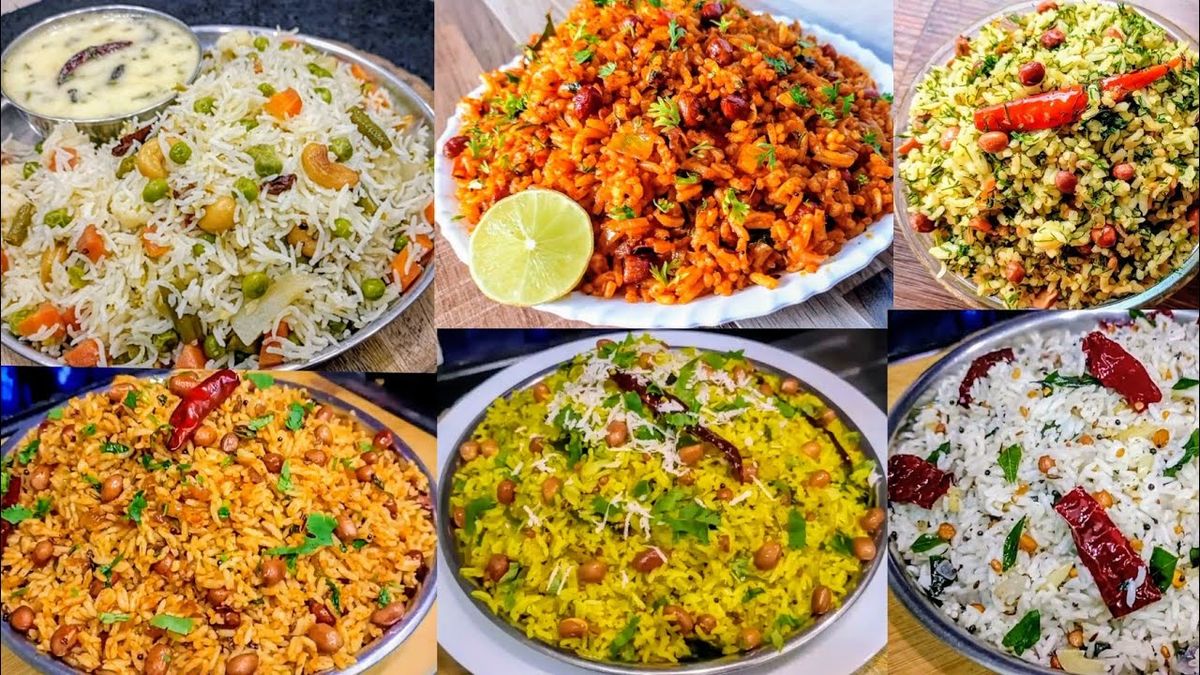
This delightful yogurt rice from South India features urad dal, mustard, chili, and ginger. Serve hot or cold as a refreshing accompaniment to a light lunch menu.
• PREPARATION TIME: 5 minutes
• COOKING TIME: 25 – 35 minutes
• YIELD: Enough for 4 or 5 persons
• 1 1/2 cups (375 ml) basmati or other long-grain white rice
• 2 3/4 cups (685 ml) water
• 1 teaspoon (5 ml) salt
• 2 tablespoons (40 ml) ghee or oil
• 1 teaspoon (5 ml) black mustard seeds
• 1 teaspoon (5 ml) split urad dal
• 1 tablespoon (20 ml) minced fresh ginger
• 2 fresh green chilies, seeded and minced
• 1 1/2 cups (375 ml) fresh yogurt
1. Wash, drain, and dry the rice.
2. Bring the water and salt to the boil in a covered 2-litre/quart saucepan over moderate heat.
3. Heat the ghee or oil over moderate heat in a 2-litre/quart saucepan. Saute the mustard seeds in the hot ghee until they crackle. Add the urad dal and fry until golden brown. Add the minced ginger and the chilies and saute for 1 minute. Add the rice and saute for 1 minute.
4. Pour in the boiling salted water and increase the heat to full. When the water boils, reduce the heat, allowing the rice to gently simmer. Place a tight-fitting lid on the pan and cook without stirring for 15 minutes or until the rice is tender and dry. Remove the rice from the heat and gently fold in the yogurt with a fork. Replace the lid, allowing the rice to absorb the yogurt. Serve immediately or allow the rice to cool and serve chilled.
Yellow Rice
The delightful yellow colour in this rice dish comes from turmeric, the powdered root of the plant Curcuma longa. Turmeric is an essential ingredient in Indian cooking, extensively used in beans, legumes, dals, and various vegetable dishes. It should always be used in moderation, lending a hint of yellow and a slightly warm flavour. Excessive use of turmeric results in an unpleasant bitter taste. Turmeric is a blood purifier and is used in Ayur Vedic medicine as a poultice. Purchase turmeric at any well-stocked supermarket or Asian grocer. Serve Yellow Rice with spinach-based vegetable dishes such as Spinach, Tomato, Eggplant, and Chickpea Stew; or Creamed Spinach with Curd Cheese, along with dal, and a salad.
• PREPARATION TIME: 5 minutes
• COOKING TIME: 30 – 35 minutes
• YIELD: Enough for 3 or 4 persons
• 1 cup (250 ml) basmati or other long-grain white rice
• 2 cups (500 ml) water
• 3/4 teaspoon (3 ml) salt
• 1/2 teaspoon (2 ml) turmeric
• 2 tablespoons (40 ml) ghee or oil
• 2 tablespoons (40 ml) chopped fresh coriander leaves
1. Wash, drain, and dry the rice.
2. Boil the water, salt, and turmeric in a 2-litre/quart saucepan over moderate heat.
3. Heat the ghee or oil over moderate heat in a 2-litre/quart saucepan. Saute the rice in the hot ghee for 1 minute.
4. Add the boiling turmeric and salt water and increase the heat to full. When the water boils, reduce the heat to low and allow the rice to gently simmer. Place a tight-fitting lid on the pan and cook without stirring for 15 – 20 minutes or until the rice is tender and dry. Remove the rice from the heat, leaving the lid on for another 5 minutes to allow the grains to firm. Fluff with a fork and serve hot, garnished with fresh coriander leaves
Rainbow Brown Rice
Compared with most white rice, brown rice is more chewy, with a delightful nutty, sweet flavour. It is also high in much-needed B-complex vitamins. It can be sauteed and cooked in the same way as white rice, the only difference being the length of time it takes to cook. Brown rice should cook for at least 45 – 55 minutes to become soft and flaky. Serve long-grain brown rice with a light vegetable dish accompanied by bread and salad.
• PREPARATION TIME: 10 minutes
• COOKING TIME: 1 hour
• YIELD: Enough for 6 – 8 persons
• 3 cups (750 ml) water
• 1 1/2 teaspoons (7 ml) salt
• 2 bay leaves
• 4 tablespoons (80 ml) ghee or oil
• 1 1/2 cups (375 ml) long-grain brown rice
• 1 teaspoon (5 ml) yellow asafoetida powder
• 1/2 teaspoon (2 ml) freshly ground black pepper
• 1 tablespoon (20 ml) minced fresh ginger
• 2 tablespoons (40 ml) each of the following: tiny cauliflower pieces, celery bits,
green peas, red peppers, carrot straws, cooked corn niblets, tomato pieces,
cooked chickpeas, roasted peanuts
• 3 tablespoons (60 ml) dry-roasted sesame seeds
• 3 tablespoons (60 ml) finely chopped parsley or coriander leaves
• lemon or lime twists for garnish
1. Bring the water, salt, and bay leaves slowly to a boil in a heavy 2-litre/quart saucepan over moderate heat.
2. Heat half the ghee or oil in a 2 litre/quart saucepan over moderately low heat. When hot, stir in the rice and saute for about 2 minutes. Pour in the boiling salted water. Stir, raise the heat, and bring the water to a full boil. Immediately reduce the heat to low, cover with a tight-fitting lid, and gently simmer, without stirring, for 45 – 55 minutes or until all the water has been absorbed and the rice is tender and flaky.
3. Remove the rice from the heat, leaving the lid on for another 5 minutes to allow the rice to become firm.
4. Heat the rest of the ghee or oil over moderate heat in a heavy pan or wok. Saute the asafoetida and blackpepper momentarily in the hot ghee. Add the minced ginger and saute for 1/2 minute. Stir-fry the cauliflower pieces, celery, peas, peppers, and carrot straws until tender. Add the cooked corn, tomato pieces, chickpeas, peanuts, sesame seeds, and parsley and combine well. Remove from the heat.
5. Fold together the cooked rice and vegetables and serve immediately, garnished with twists of lemon or lime.
South Indian Sweet-and-Sour Tamarind Rice
This is a well-known and favourite rice dish amongst the Iyengars of South India who are followers of the Ramanuja Sampradaya. The recipe is over 1000 years old and is traditionally called puliogre. The rasam powder called for in this recipe is home-made; however, shop-bought rasam powder can be substituted for the home-made variety.
• PREPARATION TIME: 15 minutes
• COOKING TIME: 25 – 30 minutes
• YIELD: Enough for 4 or 5 persons
• 1 1/2 cups (375 ml) basmati or other long-grain white rice
• 3 cups (750 ml) water
• 1 walnut-sized ball of seeded tamarind pulp
• 1/2 cup (125 ml) hot water
• 1/4 teaspoon (1 ml) cumin seeds
• 1/4 teaspoon (1 ml) whole black peppercorns
• 1/4 teaspoon (1 ml) fenugreek seeds
• 2 tablespoons (40 ml) raw sesame seeds
• 3 tablespoons (60 ml) dried coconut
• 2 teaspoons (10 ml) rasam powder
• 1 teaspoon (5 ml) salt
• 2 tablespoons (40 ml) brown sugar
• 2 tablespoons (40 ml) peanut oil
• 2 tablespoons (40 ml) raw peanut halves
• 1 teaspoon (5 ml) black mustard seeds
• 8 – 10 small curry leaves
1. Wash, drain, and dry the rice.
2. Boil the 3 cups (750 ml) of unsalted water in a heavy 3-litre/quart non-stick saucepan. Add the rice. Stir until the water returns to a boil; then reduce the heat to a simmer, put on a tight-fitting lid, and leave undisturbed for 15 or 20 minutes or until the rice is dry and tender. Remove the rice from the heat and set aside, covered.
3. Meanwhile, combine the ball of seeded tamarind pulp with the 1/2 cup (125 ml) of hot water, squeeze until well mixed, and leave to soak.
4. Dry-roast the cumin seeds, black peppercorns, fenugreek, and sesame seeds in a small, heavy pan over moderately low heat. Stir constantly for about 3 minutes until the sesame seeds become aromatic and the spices darken a few shales. Remove the seeds and spices from the pan, allow them to cool, and then grind them in a small coffee grinder or blender until they are powdered. Combine them with the dried coconut, mix well, and place them in a small bowl.
5. Strain the tamarind pulp through a sieve. Squeeze and scrape the underside of the sieve, collecting the juice and discarding the pulp. Combine the tamarind juice, rasam powder, salt, and sugar and simmer the mixture over moderate heat in a small saucepan until slightly thickened (about 3 – 5 minutes). Remove from the heat.
6. Pour the ground spices, seeds, and coconut mixture into the tamarind syrup and mix well.
7. Pour the peanut oil into the small pan in which you roasted the spices. Place over moderate heat. When the oil is hot, add the peanuts and stir-fry them until they are golden brown (about 2 minutes). Remove them with a slotted spoon and drain them on paper towels. Continue heating the remaining oil and add the mustard seeds and curry leaves. When the seeds crackle, pour the contents of the pan into the tamarind syrup and mix well.
8. When the rice is fully cooked, add the peanuts and spicy tamarind syrup and serve immediately.
Bengali Royal Rice (Pushpanna)
Pushpanna is the “queen of rice”. It contains pure saffron threads and a variety of nuts, dried fruit, vegetables, and spices. It is ideal served on special festive occasions and is worth the time and effort put into gathering the ingredients.
• PREPARATION TIME: 10 minutes
• COOKING TIME: 40 minutes
• YIELD: Enough for 6 – 8 persons
• 1 1/2 cups (375 ml) basmati or other long-grain white rice
• 1/2 teaspoon (2 ml) saffron threads
• 1 tablespoon (20 ml) hot milk
• 3 cups (750 ml) water
• 2 teaspoons (10 ml) salt
• 3 teaspoons (15 ml) nutmeg, freshly ground
• 1/4 cup (60 ml) ghee
• 1/4 cup (60 ml) cashew bits or halves
• 1/4 cup (60 ml) raw almond slivers
• 3 tablespoons (60 ml) raisins
• 1 teaspoon (5 ml) fennel seeds
• one 2.5 cm (1-inch) cinnamon stick
• 1 teaspoon (5 ml) cumin seeds
• 6 cardamom pods, bruised
• 6 whole cloves
• 1 teaspoon (5 ml) coarsely ground black pepper
• 1/2 teaspoon (2 ml) cayenne pepper
• 1/2 teaspoon (2 ml) yellow asafoetida powder
• 2 tablespoons (40 ml) shredded fresh coconut
• 1/4 cup (60 ml) cooked green peas
• 1/4 cup (60 ml) brown sugar
• home-made curd cheese (panir), made from 6 cups (1 1/2 litres) milk cut
into 0.5 cm (1/4-inch) cubes and deep-fried until golden brown
1. Wash, drain, and dry the rice.
2. Soak the saffron in the milk for 5 minutes.
3. Boil the water, salt, saffron milk, and nutmeg in a 2-litre/quart saucepan over moderate heat. Keep it covered to avoid evaporation.
4. Heat half the ghee or oil in a 4-litre/quart saucepan over moderate heat. Add the cashews and almonds, saute until golden brown, and then remove with a slotted spoon. Set aside. Stir-fry the raisins for a few seconds until they swell, remove them, and place them in a bowl with the cashews and almonds.
5. Add half the remaining ghee or oil to the pan, Saute the rice for 2 – 3 minutes over moderate heat; then add the boiling water. Stir raise the heat, and bring the water to a full boil. Immediately reduce the heat to low, cover with tight-fitting lid, and gently simmer, without stirring, for 15 – 20 minutes or until all the water has been absorbed and the rice is tender and flaky.
6. Remove the rice from the heat, leaving the lid on for another 5 minutes to allow the rice to become firm.
7. Place the remaining ghee in a heavy pan over moderate heat. Stir fry the fennel seeds, cinnamon stick, cumin seeds, cardamom pods, and whole cloves for 1 minute or until seeds are golden brown. Add the black pepper, cayenne pepper, asafoetida, and fresh coconut. Saute the coconut for 1 minute; then add the peas, sugar, deep-fried panir, nuts, and raisins. Remove from the heat.
8. Carefully combine the cooked rice with all the other ingredients. Serve on a warmed serving dish or on individual plates.
Rice with Green Peas and Almonds
This fancy rice dish is ideal for party catering or for a special lunch or dinner.
• PREPARATION TIME: 5 minutes
• COOKING TIME: 30 – 40 minutes
• YIELD: Enough for 4 or 5 persons
• 1 cup (250 ml) basmati or other long-grain white rice
• 3/4 teaspoon (3 ml) salt
• 4 green cardamom pods
• 2 cups (500 ml) water
• 1/4 teaspoon (1 ml) turmeric
• 3 tablespoons (60 ml) ghee or oil
• one 4 cm (1 1/2-inch) cinnamon stick
• 6 whole cloves
• 1/3 cup (85 ml) slivered or sliced raw almonds
• 1 cup (250 ml) fresh or frozen peas
1. Wash, drain, and dry the rice.
2. Lightly tap each cardamom pod to partially crush.
3. Bring the water, salt, and turmeric slowly to a boil in a 2-litre/quart saucepan over moderate heat.
4. Heat the ghee or oil in another 2-litre/quart saucepan over moderately low heat. Fry the cinnamon stick, cloves, bruised cardamom pods, and almonds in the hot ghee until the almonds turn pale golden brown.
5. Add the rice and saute for about 2 minutes or until the grains turn whitish. Pour in the boiling salted turmeric water and fresh peas (defrosted frozen peas should be added after the rice has been cooking for about 10 minutes). Stir, increase the heat to high, and bring the water to a full boil. Immediately reduce the heat to low, cover with a tight-fitting lid, and gently simmer, without stirring, for 15 – 20 minutes or until all the water is absorbed and the rice is tender and flaky. Serve hot.
Savoury Cantonese Fried Rice
Use long-grain rice in this tasty fried combination with sauteed vegetables, tofu, and seasonings. The rice should be boiled in water, drained, and chilled overnight before frying. The tofu required is the firm rather than the soft or “silken” variety. It is available from any Asian grocer.
• PREPARATION & COOKING TIME: 30 minutes
• YIELD: Enough for 6 – 8 persons
• 4 tablespoons (80 ml) Chinese sesame oil
• 1 teaspoon (5 ml) minced fresh ginger
• 1/2 teaspoon (2 ml) yellow asafoetida powder
• 1 small carrot, cut julienne style
• 1/4 cup (60 ml) finely slivered celery
• 1/4 cup (60 ml) finely diced cabbage
• 1/4 cup (60 ml) unpeeled cucumber pieces, cut match stick-size
• 2 tablespoons (40 ml) bamboo shoots, cut match stick-size
• 2 tablespoons (40 ml) diced red pepper
• 1/4 cup (60 ml) cooked green peas
• 1/4 cup (60 ml) mung bean shoots
• 1/4 cup (60 ml) crumbled firm tofu
• 3 tablespoons (60 ml) soy sauce
• 2 teaspoons (10 ml) Chinese chili oil
• 1 teaspoon (5 ml) salt
• 1/4 teaspoon (1 ml) black pepper
• 2 cups (500 ml) long-grain rice, cooked without salt and chilled overnight
1. Heat 1 tablespoon (20 ml) of Chinese sesame oil in a wok over moderate heat. Saute the minced ginger in the hot oil for one minute. Add the asafoetida, tossing it momentarily with the ginger. Increase the heat to full. Add the carrots, celery, and cabbage and saute for 2 or 3 minutes. Add the cucumber, bamboo shoots, red peppers, green peas, and bean shoots and saute for one minute; then add the tofu, soy sauce, chili oil, salt, and pepper. Saute for one minute.
2. Empty the contents of the wok into a bowl, cover with a lid, and rinse the wok.
3. Heat the wok until dry and hot and add the remaining sesame oil. Saute the chilled long-grain rice in the hot oil over full heat. Add the vegetables and serve immediately.
Lemon Rice
Lemon rice originates in South India and is flavoured with fresh lemon or lime juice, tasty urad dal, mustard seeds, and fresh coconut.
• PREPARATION TIME: 5 minutes
• COOKING TIME: 25 – 35 minutes
• YIELD: Enough for 4 persons
• 1 cup (250 ml) basmati or other long-grain white rice
• 2 cups (500 ml) water
• 1 teaspoon (5 ml) salt
• 1/2 teaspoon (2 ml) turmeric
• 3 tablespoons (60 ml) ghee or oil
• 1/2 cup (125 ml) raw cashew halves or bits
• 1 teaspoon (5 ml) black mustard seeds
• 1 1/2 teaspoons (7 ml) split urad dal
• 1/3 cup (85 ml) fresh lemon or lime juice
• 3 tablespoons (60 ml) coarsely chopped fresh coriander or parsley
• 1/4 cup (60 ml) shredded fresh or dried coconut
1. Wash, drain, and dry the rice.
2. Boil the water, salt, and turmeric in a 2-litre/quart saucepan over moderate heat.
3. Heat the ghee or oil over moderately low heat in another 2-litre/quart saucepan. Saute the raw cashew halves or bits in the hot ghee until they turn golden brown. Remove them with a slotted spoon and put them aside. Saute the mustard seeds and urad dal in the remaining hot oil until the mustard seeds crackle and the urad dal darkens to a rich golden brown.
4. Add the rice and saute for 1 or 2 minutes, or until the grains are evenly whitish in colour. Add the boiling salted turmeric water. Stir, raise the heat, and bring the water to a full boil. Immediately reduce the heat to low, cover with a tight-fitting lid and gently simmer, without stirring, for 15 – 20 minutes or until all the water has been absorbed and the rice is tender and flaky.
5. Remove the rice from the heat, leaving the lid on for another 5 minutes to allow the rice to firm
6. Before you serve the rice, add the cashew nuts, the lemon or lime juice, and the fresh herbs. Mix well and garnish each serving with coconut.
Baked Vegetable Rice (Biriyani)
Biriyani originates in the Moghul period of Indian history. This delightful and colourful vegetarian version, ideal as a festive dish, contains zucchini, lima beans, eggplant, red peppers, cashews, raisins, and spices.
• PREPARATION TIME: 5 minutes
• COOKING TIME: 25 – 35 minutes
• BAKING TIME: 30 minutes
• YIELD: Enough for 6 – 8 persons
• 2 cups (500 ml) basmati or other long-grain white rice
• 4 cups (1 litre) water
• 3 teaspoons (15 ml) salt
• 2 1/2 teaspoons (12 ml) turmeric
• 4 tablespoons (80 ml) ghee or oil
• 1/4 teaspoon (1 ml) cardamom seeds
• 1 1/2 teaspoons (7 ml) black mustard seeds
• 2 teaspoons (10 ml) poppy seeds
• 1/4 teaspoon (1 ml) cayenne pepper
• 1 teaspoon (5 ml) garam masala
• 1 teaspoon (5 ml) ground coriander
• 1 large eggplant peeled and diced into 1.25 cm (1/2-inch) cubes
• 6 ounces (170 g) melted butter
• 1 large zucchini diced into 1.25 cm (1/2-inch) cubes
• 1 large red pepper diced into 1.25 cm (1/2-inch) cubes
• 2 cups (500 ml) tomatoes, peeled and chopped
• 1 teaspoon (5 ml) sugar
• 1 cup (250 ml) cooked lima beans
• 2/3 cup (165 ml) slivered raw almonds
• 2/3 cup (165 ml) broken or halved raw cashews
• 2/3 cup (165 ml) raisins
1. Wash, drain, and dry the rice.
2. Boil the water, 1 1/2 teaspoons (7 ml) salt, and 1 1/2 teaspoons (7 ml) turmeric in a 4-litre/quart saucepan over moderate heat.
3. Heat half the ghee or oil in another 2-litre/quart saucepan over moderately-low heat. Saute the cardamom seeds and the rice in the hot ghee for 2 minutes or until the grains turn whitish. Add the boiling water. Stir, raise the heat, and bring the water to a full boil. Immediately reduce the heat to low, cover with a tight-fitting lid, and gently simmer, without stirring, for 15 – 20 minutes. Remove from the heat, allowing the grains to become firm.
4. Heat the remaining ghee or oil in a medium-sized pan or wok over moderately high heat. Saute the mustard seeds in the hot ghee and, when they crackle, add the poppy seeds, the cayenne, garam masala, coriander, eggplant pieces, and half the butter. Stir-fry the eggplant for about 3 minutes.
5. Add the zucchini, red pepper, tomato pieces, remaining salt, and sugar. Simmer the vegetables until just tender. Add the lima beans and remove from the heat.
6. Spoon half the rice into a large buttered oven-proof casserole dish and spread evenly. Spread the vegetable mixture on top.
7. Heat the remaining butter in a small pan over moderate heat. Saute the nuts in the hot butter until they turn pale golden brown. Add the raisins and stir-fry until they swell and the nuts are golden brown.
8. Combine this mixture with the remaining rice and spread on top of the vegetable layer. Place a lid on the casserole dish and bake in a preheated moderate oven 180°C/355F for 30 minutes. Serve hot.
Rice and Mung Bean Stew (Khichari)
Khichari is a nutritious stew featuring dal and rice. There are two main varieties thin (geeli khichari) and thick (sookha khichari). Whichever way you prepare khichari, it will soon become a delicious favourite. The following recipe is for the thicker variety. Khichari is an ideal breakfast food, wonderful when accompanied by yogurt and fresh hot Puffed Fried Breads (Pooris) or toast. Always serve khichari with a wedge of lemon or lime. Not only does this add a delightful nuance of flavour, but it lends nutritional advantage also: there are good sources of iron in the dal and vegetables in khichari, and the lemon juice, rich in vitamin C, helps your body absorb it. This recipe is mildly spiced. Adjust your own spicing as required.
• PREPARATION TIME: 5 minutes
• COOKING TIME: 30 – 40 minutes
• YIELD: Enough for 6 – 8 persons
• 1/3 cup (85 ml) split mung beans
• 1 cup (250 ml) basmati or other long-grain white rice
• 3 tablespoons (60 ml) ghee or oil
• 1/3 cup (85 ml) raw cashew pieces or halves
• 2 teaspoons (10 ml) cumin seeds
• 1 tablespoon (20 ml) fresh hot green chili, minced
• 2 tablespoons (40 ml) minced fresh ginger
• 1 teaspoon (5 ml) turmeric
• 1 teaspoon (5 ml) yellow asafoetida powder
• 1 small cauliflower (about 400 g, or 14 ounces) cut into small flowerets
• 5 – 6 cups (1 1/4 – 1 1/2 litres) water
• 1 1/2 teaspoons (7 ml) salt
• 1 tablespoon (20 ml) butter
• 2/3 cup (165 ml) cooked green peas
• 1 cup (250 ml) tomatoes, peeled and chopped
• 1/2 cup (125 ml) chopped fresh coriander leaves
1. Wash and drain the dal and rice.
2. Heat the ghee in a heavy 4-litre/quart non-stick saucepan over moderate heat. Fry the cashews in the hot ghee until they turn golden brown and remove them with a slotted spoon. Put them aside. Fry the cumin seeds in the ghee. When they turn golden brown add the chilies and ginger. Saute them for a few seconds; then add the turmeric and asafoetida. Add the cauliflower pieces and stirfry them for 1 minute. Finally, add the dal and rice, stirring with the spices and vegetables for 1 minute.
3. Add the water and bring to a full boil over high heat. Reduce the heat to low, partially cover, and slowly cook, stirring occasionally, for 30 – 40 minutes or until the dal and rice are soft. If the khichari dries out too much, add up to one cup (250 ml) warm water. Before removing the khichari from the heat, fold in the salt, butter, cooked green peas, chopped tomatoes, toasted cashews, and the chopped fresh coriander leaves, allowing them to warm for one minute. Serve hot.
Spanish Vegetable Rice (Paella)
This is a vegetarian version of the Spanish national dish. It’s colourful and delicious and flavoured with pure saffron thread. Paella is an ideal choice as a colourful addition to a special dinner or luncheon.
• PREPARATION & COOKING TIME: 40 minutes
• YIELD: Enough for 6 – 8 persons
• 2 cups (500 ml) basmati or other long-grain white rice
• 1/2 cup (125 ml) olive oil
• 1/2 teaspoon (2 ml) yellow asafoetida powder
• 1 large red pepper, pith removed, seeded and diced
• 2 1/2 cups (625 ml) Green Vegetable Stock or water
• 4 large tomatoes, peeled and chopped
• 1 cup (250 ml) cooked green beans, cut into 2 1/2 cm (1-inch ) sections
• 3/4 cup (185 ml) cooked fresh green peas or thawed frozen peas
• 1 stalk celery, chopped
• 18 black olives, halved and stoned
• 2 teaspoons (10 ml) salt
• 1 teaspoon ( 5 ml) freshly ground black pepper
• 1/2 teaspoon (2 ml, or about 1/4 g) crushed saffron threads dissolved in 2 teaspoons (10 ml) hot water
• 1/2 cup (125 ml) slivered almonds
1. Wash, drain, and dry the rice.
2. Heat the olive oil in a 4-litre/quart saucepan over moderate heat. When the oil is hot, add the asafoetida and red pepper, stirring for about 2 minutes. Add the rice and saute for about 3 minutes. Meanwhile, heat the vegetable stock until boiling.
3. Add the boiling stock to the rice and increase the heat to full. Add the tomatoes, green beans, peas, celery, olives, salt, pepper, and saffron water. When the liquid boils, reduce the heat to very low and simmer the rice, covered, for about 30 minutes or until it is tender. Do not remove the lid during the cooking process.
4. Remove the pan from the heat and turn the paella into a warmed serving dish. Garnish with almonds and serve hot.
Indonesian Coconut Rice
The delicate flavour of coconut pervades this simple rice dish. You will need 2 special ingredients: coconut milk (santan) and lime leaf. Both are available at Asian specialty stores. The coconut milk can be bought in cans. This recipe requires the liquid variety of coconut milk, not the creamed coconut pulp. The lime leaf can be obtained dried, in packets. The lime leaf can be substituted with a bay leaf.
• PREPARATION TIME: 20 minutes
• COOKING TIME: 20 minutes
• YIELD: Enough for 3 or 4 persons
• 1 cup (250 ml) basmati or other long-grain white rice
• 1 1/2 cups (375 ml) coconut milk (santan)
• 1/2 – 1 teaspoon (2 – 5 ml) salt
• 1 lime leaf (or bay leaf)
1. Wash the rice thoroughly in cold water. Soak it in cold water for 10 minutes, drain, and allow to air-dry for 10 minutes.
2. Boil the coconut milk (santan), salt, and lime leaf in a heavy-based 2-litre/quart saucepan. Add the rice. Reduce the heat to very low, allowing the rice to simmer slowly with a tight-fitting lid. After about 15 minutes, the liquid will have evaporated. Carefully stir the grains with a fork and replace the lid. After another 5 minutes, the rice will have completely steamed. Serve immediately.
Tomato Rice with Herbs
This simple combination of rice, boil in a 2-litre/quart saucepan over herbs, and tomato with an Italian flavour can also be used as an alternative stuffing for baked peppers.
• PREPARATION TIME: 5 minutes
• COOKING TIME: 25 – 35 minutes
• YIELD: Enough for 4 persons
• 1 cup (250 ml) basmati or other long-grain white rice
• 1 3/4 cups (435 ml) water
• 1 teaspoon (5 ml) salt
• 1 teaspoon (5 ml) paprika
• 1 tablespoon (20 ml) tomato paste
• 2 tablespoons (40 ml) fresh basil leaves, chopped fine
• 2 tablespoons (40 ml) olive oil
• 1/2 teaspoon (2 ml) yellow asafoetida powder
• 1 cup (250 ml) firm tomatoes, cut into 1 1/4 cm (1/2 – inch) cubes
• 2 tablespoons (40 ml) finely chopped fresh parsley
1. Wash, drain, and dry the rice.
2. Bring the water, salt, paprika, tomato paste, and basil slowly to a boil in a 2-litre/quart saucepan over moderate heat.
3. Heat the olive oil in a non-sticking 2-litre/quart saucepan over moderately low heat. Saute the asafoetida in the hot ghee. Add the rice and stir fry for about 2 minutes or until the rice grains turn whitish.
4. Pour in the boiling water. Stir, raise the heat to high, and bring the water to a full boil. Immediately reduce the heat to low, cover with a tight-fitting lid, and gently simmer, without stirring, for 15 – 20 minutes or until all the water has been absorbed and the rice is tender and flaky.
5. Remove the rice from the heat and allow it to steam for 5 minutes with the lid on. Finally, fold in the tomatoes and fresh parsley and serve immediately.
Deepen your Bhakti-yoga practice, harmonize relationships, and receive guided coaching — all at Vedavarsity.com