


By Srila Bhaktivinod Thakur
(1)
ebe āmi rasa-tantra saṅkṣepa varṇane
pravṛtta hainu, sabe śuna eka-mane
e tattva bujhite yāṅ’ra haibe śakati
sambhogādi rasa-gāne ha’be tāṅ’ra mati
Now I will begin to briefly explain the process of rasa. All of you please listen attentively. Those who have the ability to understand this principle will be attracted to songs concerning sambhoga-rasa etc.
(2)
akhaṇḍa rasera bhāva – ‘rāsa’ bali tāre
jīvera carama-lābha vedānta vicāre
sei rasa siddha-vastu vaikuṇṭhera prāṇa
yāhāra sādhane śiṣṭa jīva yatnavān
The sentiments of undivided mellows are called rāsa (that which leads to pastimes of rasa) which is considered by the Vedānta to be the ultimate attainment for a jīva.* That rasa is the most perfect thing, the very life of Vaikuṇṭha, and a diligent jīva is very attentive to its cultivation.
* Bhoga-mātra-sāmya-liṅgāccha – “There is only a similarity (between the jīva and Īśvara) in regards to enjoyment.” (Vedānta-sūtra 4.4.21)
(3)
‘vibhāva’ o ‘anubhāva’ āra ye ‘sañcārī’
ei bhāva-traya-vyakta pradhāna vihārī
sthāyī-bhāva svādyatva labhile ‘rasa’ haya
alaṅkāra-śāstre ei siddhānta niścaya
Vibhāva, anubhāva, and sañcārī – these three kinds of bhāva are primarily manifested by the Supreme Enjoyer. When they become relishable as sthāyī-bhāva (permanent emotions), they become rasa. This conclusion is certainly established in the alaṅkāra-śāstra (literature on poetics and aesthetics). *
* sthāyī-bhāvo vibhāvānubhāvaiḥ sañcāribhis tathā
svādyatvaṁ nīyamāno’sau rasa ity abhidhīyate
Sthāyī-bhāva, when enhanced with vibhāva, anubhāva and sañcari becomes relishable and is known as rasa. (Śrīla Sanātana Gosvāmī – Vaiṣṇava Toṣaṇī 10.43.17)
(4)
citta-tattva ātmāra sattā, ‘rati’ – tāṅ’ra dharma
rati tāi ‘sthāyī-bhāva, bujha tā’ra marma
ānukūlyātmikā jñapti lipsollāsamaya
ratira jānibe ei mūla paricaya
Cit-tattva (the principle of spiritual consciousness) is the very existence of the ātmā, and rati (attraction) is its inherent quality, hence rati is sthāyī-bhāva, and you should understand its significance. You should know that the primary characteristic of rati is the awareness of those favourable circumstances which are full of increased hankering.
(5)
ye bhāva viśeṣa-rūpe rasera āśraya
raty-āsvāda-hetu tā’ra ‘vibhāvākhyā’ haya
vibhāva dvividha – ‘ālambana’, ‘uddīpana’
tad abhāve ratira nā haya prabodhana
That bhāva which is the specific shelter of rasa is termed vibhāva because it is the cause of relishing rati. Vibhāva is of two kinds – ālambana (that which supports) and uddīpana (that which stimulates), without which, rati cannot be awakened.
(6)
viṣaya, āśraya – ālambana dvi-prakāra
āśraye ratira sthiti, viṣaye pracāra
bhakta āra kṛṣṇa – du’i ‘āśraya’, ‘viṣaya’
paraspara rati-kārye jānaha niścaya
Ālambana is of two types – viṣaya (the object of love) and āśraya (the subject in love). Rati is situated in the āśraya, and it is distributed to the viṣaya. Both the devotee and Kṛṣṇa are the āśraya and viṣaya respectively. Know for certain that they are mutually engaged in acts of love.
(7)
kṛṣṇa-kṛṣṇa-bhakta-guṇa-ceṣṭā – ‘uddīpana’
rati-kārye, baliyā jānaha bhakta-jana
ālambana-uddīpana-abhāva haile
nā haya ratira vyakti, – vijña-jane bale
Kṛṣṇa and the qualities and endeavours of His devotees are called uddīpana (stimuli). O devotees, you should know these to be the activities of rati. Those that are wise declare that in the absence of ālambana and uddīpana, rati does not express itself.
(8)
‘āṅgika’, ‘sāttvika’, – ‘anubhāva’ dvi-prakāra
nṛtya-gīta-luṇṭhanādi – ‘āṅgika’ vikāra
stambha, sveda, svarabhaṅga romāñca, pralaya
kampa, aśru, vaivarṇa – aṣṭa sāttvika niścaya
Anubhāva is of two types – āṅgika (physical expressions) and sāttvika (emotional expressions). Dancing, singing, rolling on the ground etc, are transformations of āṅgika. Paralysis, perspiration, faltering of the voice, horripilation, fainting, trembling, tears, and discolouration – these are the eight sāttvika-bhāvas.
(9)
‘vibhāva’ kāraṇa haya rati-prabodhane
‘anubhāva’ kārya tā’ra bale budha-gaṇe
nirvedādi tetriśaṭī bhāva ye ‘sañcārī’
ratira vyāpāre kabhu haya sahakārī
The wise say that vibhāva is the cause of the awakening of rati, and the activities of that are anubhāva (that which reveals spiritual emotions). The thirty-three types of emotions, such as detachment, are called sañcārī. In relation to rati, they sometimes act as auxiliary emotions. *
* kāraṇāny atha kāryāṇi sahakārīṇi yāni ca
tānyeva vyapadiśyante vibhāvādyākhyā rase
Causes, effects, and assisting factors, which bring about the experience of rasa, are referred to as vibhāvas and the like in the context of rasa. (Śrīla Sanātana Gosvāmī – Vaiṣṇava Toṣaṇī 10.43.17)
In this context, it is to be understood that the sthāyī-bhāva known as rati, itself transforms into rasa. Vibhāva is the cause, Anubhāva is its effect, and Sañcārī or vyabhicārī-bhāva are the assisting emotions. Once the essence of rasa-tattva is understood, one can then comprehend vraja-tattva.
(10)
āśraya-viṣaya-rūpa vibhāva-udaye
saṁbandha-nāmaka bhāva udibe hṛdaye
śānta, dāsya, sakhya, āra vātsalya, śṛṅgāra
e pañca sambandha-bhāve ratira vihāra
With the appearance of vibhāva in terms of the āśraya and the viṣaya, the emotion known as sambandha (relationship) arises in the heart. The bhāva found within the five relationships of śānta (neutrality), dāsya (servitude), sakhya (friendship), vātsalya (parental love), and śṛṅgāra (conjugal love) is the playground of rati.*
* śāntiḥ prītis tathā sakhyaṁ vātsalyaṁ priyatā ca saḥ
jñānādarasva-tulyatva-kṛpā-vallabha-bhāvataḥ
Peace, affection, friendship, parental love, and conjugal love arise from knowledge, respect, equality, compassion, and the state of being beloved. (Śrīla Sanātana Gosvāmī – Vaiṣṇava Toṣaṇī 10.43.17)
(11)
anubhāva-vibhāvādi sāmagrī-āśraye
saṁbandha-rūpiṇī rati bāḍe hṛdaye
prema, sneha, praṇayādi, mana, rāga āra
anurāga, mahābhāva, rūpa prāpti tāṅ’ra
Under the shelter of the ingredients of anubhāva, vibhāva etc, rati, which is the embodiment of all relationships, increases within the heart. Rati thus takes the form of prema (divine love), sneha (affection), praṇaya (deep affection), mana (pride), raga (attachment), as well as anurāga (deep attachment) and mahābhāva (supreme ecstasy).*
* ratiḥ-prema-tathā-snehaḥ praṇayo māna-rāgakau
anurāga-mahā-bhāvāvete bhāvakramā matāḥ
Rati, prema, sneha, praṇaya, māna, rāga, anurāga, and mahābhāva – these are considered the successive stages of bhāva. (Śrīla Sanātana Gosvāmī – Vaiṣṇava Toṣaṇī 10.43.17)
(12)
puṣṭa-rati śṛṅgārākhyā rasatā lābhile
vṛndāvane rāsa-līlā sahajaite mile
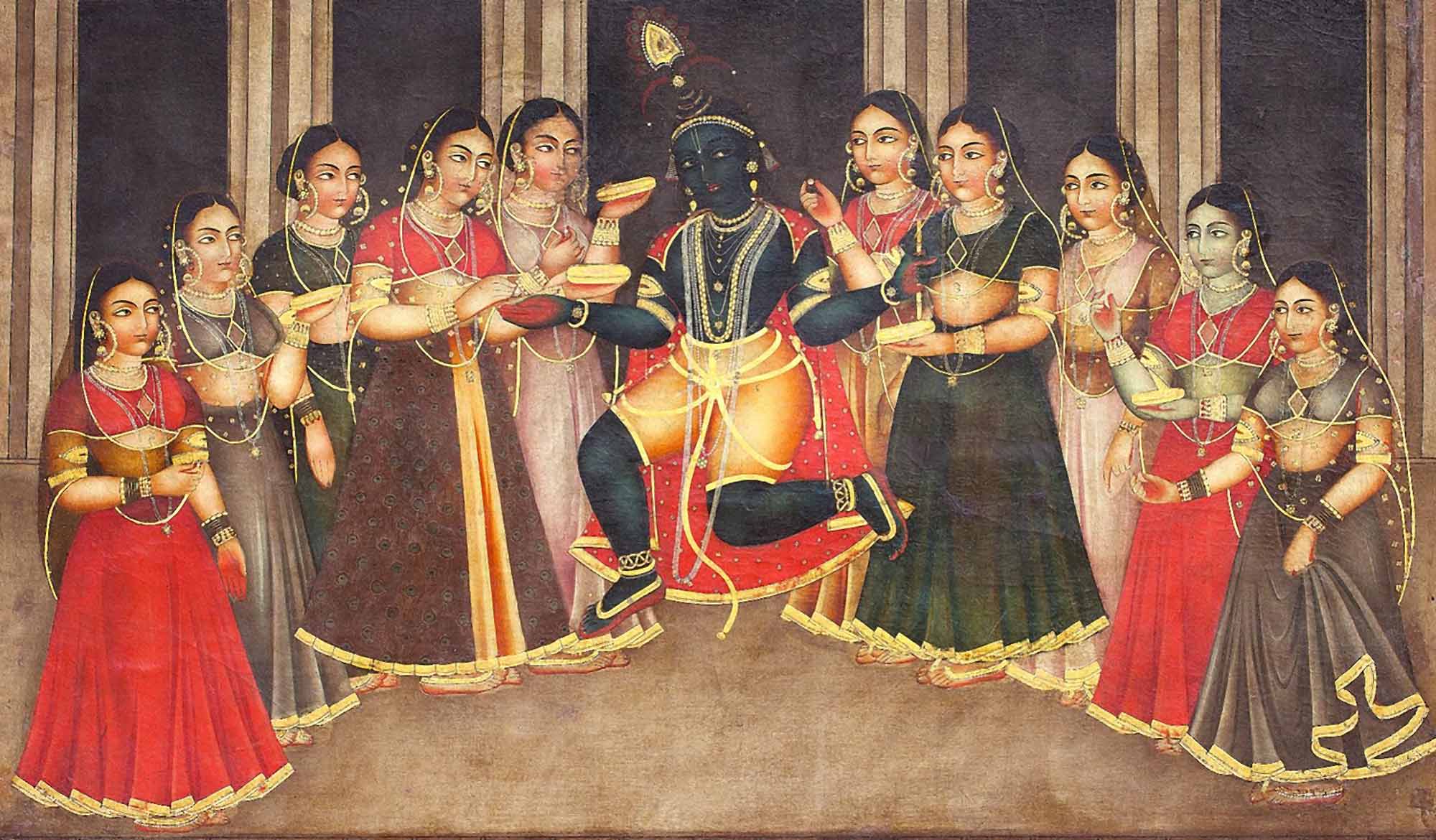
parabrahmānanda-rūpa kṛṣṇānanda-rasa
udiyā jīvera citta kare bhakti-vaśa
When one attains fully nourished rati, which is the rasa known as śṛṅgāra, one naturally experiences the rāsa-līlā in Vṛndāvana. The blissful rasa of Kṛṣṇa, who is the embodiment of supreme joy, arises in the jīva’s heart, and he becomes absorbed in bhakti.
(13)
karmānanda, yogānanda, brahmānanda yata
kṛṣṇānanda-sūrya-prati khadyotera mata
kṣaya ha’ye lupta haya rasera taraṅge
eka-mātra rasānanda nṛtya kare raṅge
The joys of karma, yoga, and Brahman are like glow-worms in comparison to the sun of the bliss of Kṛṣṇa.* They all dissolve and fade away into the waves of divine rasa. Then, only the bliss of rasa playfully dances.
* brahmānando bhaved eṣa cet parārdha-guṇī-kṛtaḥ
naiti bhakti-sukhāmbhodheḥ paramāṇu-tulām api
Even if the bliss of Brahman were multiplied by billions of times, it could not compare to even a single particle of the ocean of happiness found in bhakti. (Bhakti-rasāmṛta-sindhu 1.1.38)
(14)
ye ratira gati kṛṣṇe karinu vicāra
sei rati baddha-jīve jaḍīya vikāra
bhajiyā ātmāke karā kṛṣṇa-hate dūra
viṣaya-vilāse ceṣṭā dekhāya pracura
I have analysed the direction of that rati which is meant for Kṛṣṇa. In the bound jīvas it becomes materially perverted, and when that mutated rati is cultivated, the ātmā becomes far away from Kṛṣṇa, displaying great endeavour in trying to enjoy the objects of the senses.
(15)
jaḍa-gata ratira āśraya – duṣṭa mana
jaḍīya-rūpādi – tā’ra viṣaya sādhana
jaḍa-mohana bhāva – uddīpana tā’ra
jaḍa-gata-sambandhe bhāva-vikāra
The āśraya for material rati is the wicked mind. Physical forms etc. become the objects of one’s sādhana. Fascination with the mundane becomes one’s uddīpana, and through material sambandha, one’s emotions become perverted.
(16)
jaḍa-rati-viṣayaka-śāstra ei kṣaṇe
alaṅkāra-nāme pracalita sādhāraṇe
kāle lupta brahma-rati-vyākhyāna-kāraṇa
śrī-caitanya-avatāra māne sādhu-jana
At the moment, scriptures on mundane attachment under the name of alaṅkāra are in vogue amongst the common people.* As time goes on, the explanations concerning spiritual attachment are becoming lost – for this reason, sādhus recognise the avatāra of Śrī Caitanya.
* laghutvam atra yat prokta? tat tu prākṛta-nāyake
na kṛṣṇe rasa-niryāsa-svādārtham avatārini
(Ujjvala-Nīlamaṇi 1.21)
From this statement in Ujjvala-nīlamaṇi, it can be understood that the attachment related to a worldly hero is insignificant, and the descriptions in alaṅkāra-śāstra (mundane texts of poetic ornamentation) reflecting this type of attachment are nothing but despicable distortions. I have the intention to later publish a separate collection of alaṅkāra that reflect the independent and unique nature of spiritual rasa.
(17)
ūrdhva-gata rati hāye jīvera sva-dharma
adhogaṭa rati tā’ra patanera karma
svārūpya ubhaye sadā haibe lakṣita
ādarśera chāyā bimba jānaha niścita
Elevated attachment is the jīva’s true nature, and inferior attachment leads to actions that result in his decline. In both states, some similar appearance is always seen – know for certain that it is merely a shadow or a reflection of the ideal.
(18)
tathāpi ‘prākṛta’ eka, ‘aprākṛta’ āra
prākṛta-jīvera pakṣa tuccha, ghṛṇya, chāra
aprākṛta rati-tattva – jīvera maṅgala
śiva-śuka-nāradādi bhaktasya sambala
Nevertheless, one is prākṛta (mundane) and the other is aprākṛta (transcendental). For a mundane jīva, the former is insignificant, detestable, and as worthless as ash. The transcendental principle of divine attachment (rati-tattva), which is auspicious for the jīva, is the wealth of devotees such as Śiva, Śuka, Nārada etc.
(19)
yadi cāo nitya-rase karite praveśa
māyika viṣaye nāhi kara rāga-dveṣa
māyika phalita rati lakṣi’ brahma-rati
sandhāna karaha chāḍi’ śuṣka-jñāna-mati
If you wish to enter into eternal rasa, do not harbour attachment or aversion towards māyika objects. Observing the attachment that is produced from illusory things, seek out spiritual attachment and abandon dry intellectual knowledge.*
* anugrahāya bhaktānāṁ mānuṣaṁ deham āsthitaḥ
bhajate tādṛśīḥ krīḍaḥ yāḥ śrutvā tat-paro bhavet
In order to show mercy to His devotees, the Lord assumes a human-like form and performs pastimes that attract those who hear about them to become dedicated unto Him. (Śrīmad Bhāgavatam 10.33.36)
From this statement made by Śukadeva in the Rāsa-pañcādhyāya of the Śrīmad Bhāgavatam, it is to be understood that, by observing the mundane dealings of love influenced by māyā and knowing the truth of the highest love (parama-rati) in relation to both the finite consciousness (aṇu-caitanya) and the supreme consciousness (vibhu-caitanya), all jīvas should accept themselves to be in a state of bhāva as the maidservants of the gopīs. In doing so, they will embrace their eternal femininity and acknowledge Kṛṣṇa, the Supreme Male, as their one and only eternal husband.
(20)
satya satya janiyāchi ei tattva, bhāi
kṛṣṇa-bhakti vinā tava āra kichu nāi
kṛṣṇa-bhakti vinā yata vastu tuccha chāra
amaṅgala-dātā saba – anitya, asāra
O brother! I know for certain that this reality is true! Without kṛṣṇa-bhakti, there is nothing else for you. Without kṛṣṇa-bhakti, everything else is insignificant and worthless. They all bestow inauspiciousness and are temporary and insubstantial.
(21)
tomāke kuśala-karmā baliba takhana
nir-dvandve saṁsāra-yātrā kariyā yāpana
śrī-caitanya-rūpa gurudeva-padāśraye
bhajibe yugala-dhana vaikuṇṭha-nilaye
I will call you a man of wholesome conduct when you live your life in this world free from duality, taking shelter at the feet of Gurudeva, who is non-different from Śrī Caitanya, and worshiping that treasure which is the Divine Couple in the abode of Vaikuṇṭha.
(22)
jīvene-marane yabe ha’ye udāsīna
ha’be kṛṣṇa-rati-rasa-sāgarera mīna
karma-prati vīta-bhāva, dayā sarva-jīve
citte tava kṛṣṇa-bhakti saha upajibe
When you become indifferent to both life and death, you will become like a fish swimming in the ocean of mellows and divine attachment for Kṛṣṇa. Possessing a mood free from all distressing activities, and showing compassion to all jīvas, kṛṣṇa-bhakti will manifest within your heart along with these qualities.
(23)
nirākāra-sākārādi kutarka chāḍiyā
sarvatra heribe kṛṣṇe bhakti-rasa piyā
sarva-jīve sama-buddhi haibe yakhana
tomāke kuśala-karmā baliba takhana
Abandoning all useless arguments concerning form or formlessness, you will drink bhakti-rasa and see Kṛṣṇa everywhere. When you consider all jīvas to be equal, I will call you a man of wholesome conduct.
ya bhaktir–vraja-bhāva-tattva-viṣayā-cid-viśeṣodvodhinī
śrī caitanya-prabho prasāda-viditā mādhurya-sphūrtātmikā
māyā-jāla-vitāna-bhedanakāriṇī sāyujya-samārjanī
sā vaikuṇṭha-vilāsasvādana-mayī jāgartu naś cetasi
That Bhakti, who specifically reveals the cit potency, the principle of vraja-bhāva, and embodies mādhurya-rasa, is known only by the grace of Śrī Caitanya Mahāprabhu. She pierces through the expansive net of māyā and purifies the desire for merging into Brahman. May she who fully relishes the pastimes of Vaikuṇṭha awaken within my heart.
Deepen your Bhakti-yoga practice, harmonize relationships, and receive guided coaching — all at Vedavarsity.com