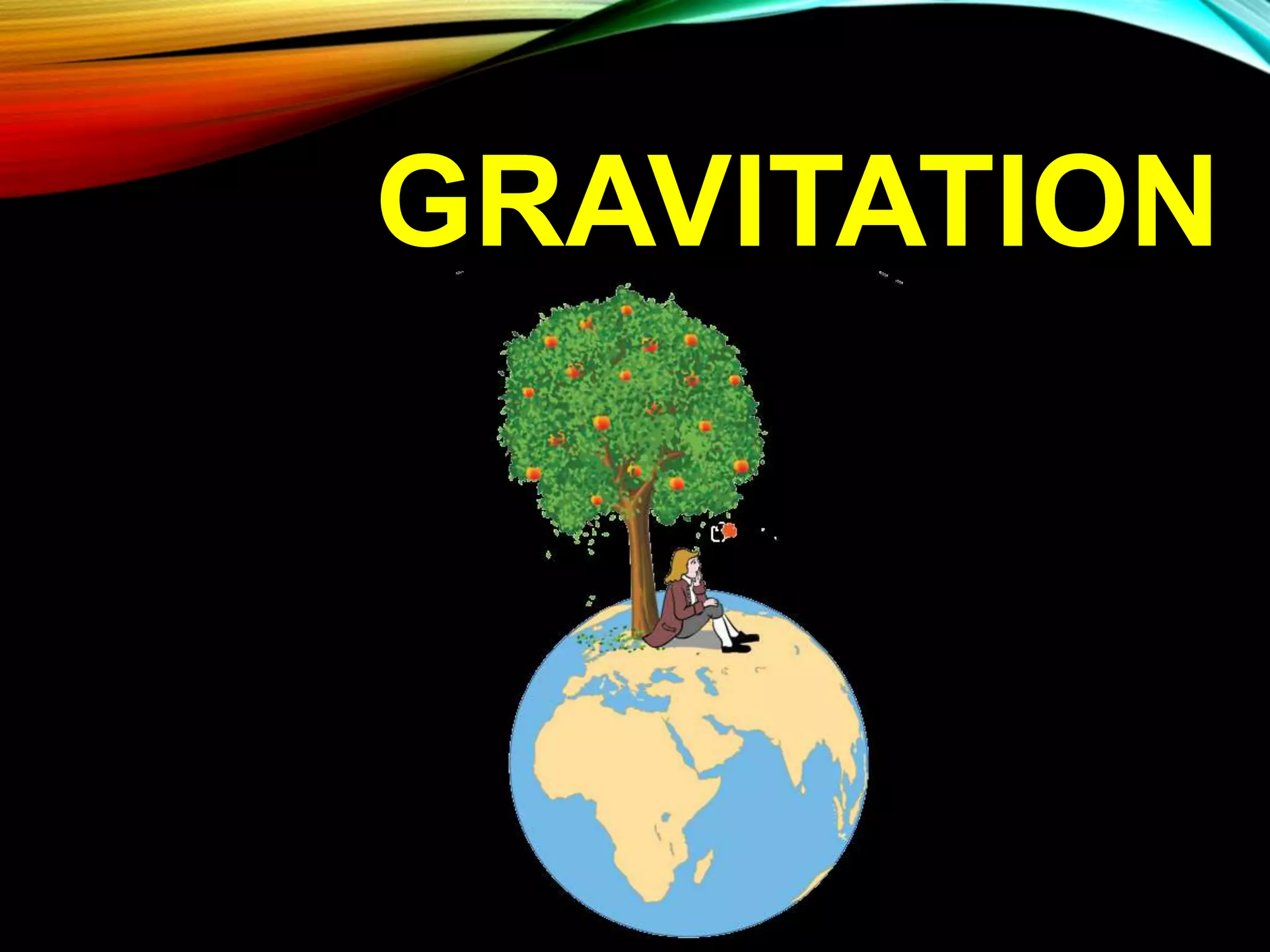
The Newtonian theory of gravitation will play an important role in any attempt to harmonize modern physics and Vedic cosmology. This theory provides a uniform explanation of planetary motion that is tied conceptually to the heliocentric theory of the solar system. Quantitatively, it is highly accurate, and it has been confirmed by the experience people have gathered by launching artificial satellites and other vehicles into outer space. Since it provides an explanation for many details of planetary motion, many people will argue that it must be giving a correct account of the fundamental causes underlying planetary motion.
However, even though this theory has been highly successful, it does have some shortcomings. These include the following:
(1) To this day, Newtonian theory cannot account for the long-term behavior of the outer planets, namely Uranus, Neptune, and Pluto. One way to account for this is to posit the existence of an additional planet (or planets) that is influencing these planets. However, such a planet is thus far unknown.
(2) The story is often told that the French astronomer Leverrier predicted the position of the then unknown planet Neptune by gravitational calculations based on the orbit of Uranus, and that Galle in Berlin pointed his telescope in the indicated direction and found the planet right where Leverrier said it would be. This created an international sensation at the time. In addition, John Adams of England independently made calculations giving nearly the same prediction as Leverrier. However, further analysis quietly showed that “the planet Neptune is not the planet to which geometrical analysis had directed the telescope, and that its discovery by Galle must be regarded as a happy accident” (PL, p. 125). The discovery of Pluto involves a similar story (DR).
The erroneous stories of the discovery of Neptune and Pluto by gravitational calculation are still being repeated in various books and articles. This shows that the literature of modern astronomy is not fully reliable.
(3) In the 1870’s Leverrier argued that discrepancies in the orbit of Mercury could be explained by the existence of a planet between Mercury and the sun. Such a planet was, in fact, repeatedly observed. It was called Vulcan, and Leverrier calculated an orbit for it, based on observations. Now, however, it is believed that this planet never existed and that the reported observations of it were all illusory. If this is so, then the derivation of an orbit from spurious observations suggests that considerable fudging was involved in Leverrier’s calculations. On the other hand, if a planet-sized object did travel in Leverrier’s orbit, then what became of it? (CR1, pp. 46-71)
(4) One of the most striking theoretical developments of 20th-century physics was Einstein’s general theory of relativity, which accounted for the anomaly in Mercury’s orbit. However, some have claimed that Newtonian theory can explain this if the sun’s shape is sufficiently oblate (CR1, p. 28). And others have pointed out that there is an anomaly in the orbit of Venus that cannot be accounted for if Einstein’s theory correctly accounts for the anomaly in Mercury’s orbit (CR1, pp. 132-33).
(5) During Nov. 11-12, 1940, over 200 observers cooperated in studying the transit of Mercury across the sun. The transit began 36 seconds late and lasted 18 seconds less than it should have, according to gravitational calculations (CR2, p. 27). Transits of Galilean satellites across Jupiter also have been repeatedly reported to occur minutes from their calculated times (CR2, p. 79).
(6) Theories of planet formation based on Newtonian dynamics require that all planets should rotate on their axes in the same direction in which they rotate around the sun (i.e., counterclockwise as seen from the north celestial pole). Recent radar measurements have shown that Venus revolves on its axis in a clockwise direction and always keeps one side facing the earth at times when Venus is closest to the earth. This is hard to explain, since tidal influences of the earth on Venus should be very weak. We should also note that pre-radar measurements showed that Venus rotates in a counterclockwise direction with a period of either 23 hours or 225 days. Recent measurements have also shown that the atmosphere of Venus has a clockwise rotation period of 5 days (CR2, pp. 302-4).
(7) The rings of the planet Saturn have many puzzling features, including the presence of many annular gaps. These are strange enough to provoke the following assessment:
At the very least, resonance theory cannot account for the thousands of gaps-there are not nearly enough resonances. Indeed, some astronomers ask whether resonances can really explain any gaps. Sweeper moons might plow out some gaps, but the Voyager photographs do not reveal these postulated satellites. More ominously for celestial mechanics, the complex, dynamic nature of the rings seems beyond the power of Newtonian dynamics to explain and may require a whole new theoretical structure [CR2, p. 282].
(8) In May of 1976 the Laser Geodynamic Satellite was placed in an accurately determined orbit at an altitude of about 3,700 miles. The satellite was found to lose altitude at roughly ten times the rate attributable to aerodynamic drag and other known forces (CR2, p. 13).
(9) Small discrepancies in the orbital motion of the moon have led some investigators to propose that the gravitational constant G is slowly changing (CR1, pp. 260-64, 688).
(10) A team of researchers in Greenland has recently reported evidence for a small, non-Newtonian component in the force of gravity, and similar results have been reported by other investigators. It is interesting to note that the Greenland team includes physicists dedicated to new quantum mechanical theories of gravitation that make non-Newtonian predictions (DS).
The gravitational discrepancies in this list mostly involve small effects, but we include them to show that existing theories of gravitation are approximate descriptions of nature rather than exact accounts of how nature works. These examples also show how illusion and wishful thinking can play a role in making scientific theories seem more perfect than they actually are.
The underlying causes of gravitation have been a topic of controversy in the science of physics for a very long time. Newton himself stressed that his theory was only a numerical description of observable effects, and he deliberately made no hypotheses about underlying causes. He spoke of gravitation as “action at a distance,” but the idea of a force acting mysteriously across empty space seemed abhorrent to Newton and other scientists, both in his day and the present. Thus the history of physics in the 18th and 19th centuries was marked by many attempts to explain gravitation through some kind of interaction of substances or particles moving through space. Unfortunately, all of these attempts were unsuccessful (RP, pp. 77-78).
In recent years Einstein’s general theory of relativity has explained gravity as a bending of four-dimensional space-time. However, this theory has not been accepted as final by physicists, and attempts are now being made to formulate a quantum mechanical theory of gravitation. Since quantum mechanics is now accepted by physicists as the basis for understanding all atomic phenomena, such a theory is required to provide a consistent foundation for modern physics. Thus far, however, physicists have encountered insurmountable difficulties in their efforts to construct a quantum theory of gravitation, and the nature of gravity remains an open question.
Śrīla Prabhupāda has pointed out that, according to the Vedic understanding, planets float in outer space by the manipulation of air (SB 5.23.3p). He has rejected the idea of gravitation, calling it an imaginary law, but he has also said that the visible effects produced by the real causes of planetary motion can be called gravitation if one so desires. Since the issue of gravitation is so important, we should make a few observations about these statements.
First, when the Vedic scriptures speak of the planets being carried by the wind, we might think they are naively assuming that our atmosphere extends all the way to the planets. However, we have seen in Section 4.d that outer space, or antarikṣa, is said in the Bhāgavatam to begin a short distance above the earth at the upper limit of the clouds and ordinary winds. Thus the pravaha wind, which carries the planets, is of a different character than the winds of this earth. (The Siddhānta-śiromaṇi lists seven different types of winds, including āvaha, or atmosphere, and pravaha. See Appendix 1.)
Second, we should note that the Vedic literature also states that the planetary systems are supported by the Ananta Śeṣa expansion of Lord Viṣṇu. This can be reconciled with the statement that the planets float by manipulation of air if we suppose that the action of Ananta Śeṣa is the fundamental cause of planetary motion and that the manipulations of air are secondary, or represent the material consequences of the action of Ananta Śeṣa. Similarly, one could view the phenomena described by gravitational theories as being consequences of these subtle manipulations of air.
Finally, there is the question of how a theory of gravitation should deal with the matter composing the invisible realms of the universe, including Bhū-maṇḍala. Here we confront our almost total lack of knowledge of the physics of higher-dimensional material domains.
Deepen your Bhakti-yoga practice, harmonize relationships, and receive guided coaching — all at Vedavarsity.com