


Gaṅgā-nagara Pastime: From Scholar to Ecstatic Devotee
The divine pastime of Gaṅgā-nagara reveals a profound transformation in the life of Nimāī Paṇḍita, who later became Śrī Caitanya Mahāprabhu. In this sacred place, the Lord displayed the transition from intellectual brilliance to pure devotional ecstasy (kṛṣṇa-prema), teaching the world that devotion surpasses even the highest scholarship.
Within the first 100 words, it becomes evident that the Gaṅgā-nagara pastime is not merely historical, but a timeless revelation of the ultimate purpose of education—to awaken love for Kṛṣṇa.
Gaṅgā-nagara: A Lost Yet Eternal Sacred Place
Today, Gaṅgā-nagara lies beneath the waters of the sacred Ganga River. Yet, its spiritual significance remains eternal.
It was here that the renowned scholar Gaṅgādāsa Paṇḍita conducted his Sanskrit school, where young Nimāī mastered grammar (vyākaraṇa) with extraordinary brilliance.
In Vedic culture, the guru (ācārya) plays a central role, and Gaṅgādāsa Paṇḍita was no ordinary teacher. In the pastimes of Kṛṣṇa, he is understood to be Sāndīpanī Muni, the revered spiritual master of the Lord.
Nimāī as the Supreme Scholar
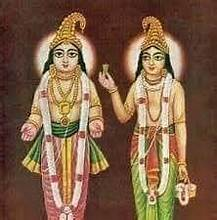
During His youth, Nimāī Paṇḍita became famous throughout Navadvīpa as an unparalleled scholar.
After completing His studies at Gaṅgā-nagara, He opened His own school at home and began teaching grammar to numerous students.
His teaching style was:
Logical and precise (nyāya-yukta)
Clear and engaging
Deeply rooted in scriptural understanding
Students flocked to Him, eager to learn.
Yet, this phase represented only the external aspect of His divine mission.
The Turning Point: Journey to Gayā
A dramatic transformation occurred when Nimāī Paṇḍita returned from Gaya.
There, He had received spiritual initiation and became immersed in kṛṣṇa-prema—pure love of God.
This marked a shift from:
Jṣāna (intellectual knowledge)
to
Bhakti (loving devotion)
Now, Nimāī was no longer interested in dry academic teaching.
Nimāī the Teacher Becomes Nimāī the Devotee
Upon His return, Nimāī abandoned His conventional teaching.
Instead of explaining grammar rules, He began to see every word and syllable as a manifestation of Kṛṣṇa.
A New Vision of Language
For Nimāī:
Each dhātu (verbal root) pointed to Kṛṣṇa
Each sūtra (aphorism) glorified the Supreme
Language itself became an instrument of devotion
This reflects the Vedic principle:
Sarvaṁ khalv idaṁ brahma — everything is spiritual when connected to the Supreme.
Intervention of Gaṅgādāsa Paṇḍita
When Nimāī’s students became confused and complained, Gaṅgādāsa Paṇḍita approached Him.
With compassion, he presented logical arguments urging Nimāī to resume teaching.
Out of respect for His teacher, Nimāī agreed.
However, His teaching had now completely transformed.
Teaching Through Bhakti
While teaching grammar at Gaṅgā-nagara, Nimāī revealed profound spiritual truths.
Before His astonished students, He would:
Explain grammar through Kṛṣṇa’s pastimes (līlā)
Enter states of deep ecstasy (bhāva)
Shed tears of divine love
His voice would choke, and He would declare:
“I can no longer teach grammar devoid of devotion to Kṛṣṇa.”
The Essence of True Education
This moment defines the core message of the Gaṅgā-nagara pastime:
Knowledge without devotion is incomplete.
True education culminates in remembrance and glorification of Kṛṣṇa.
The Rise of Kīrtana
Gradually, Nimāī abandoned formal teaching altogether.
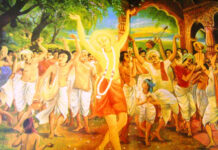
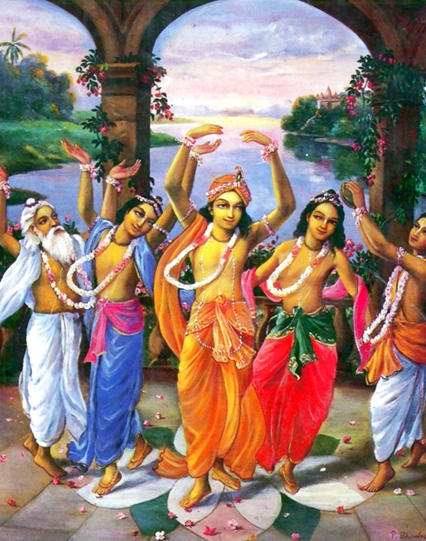
Instead, He engaged in kīrtana—the congregational chanting of the holy names:
Hare Kṛṣṇa Hare Kṛṣṇa
Kṛṣṇa Kṛṣṇa Hare Hare
His students, inspired by His devotion, also gave up their studies and joined Him.
Spiritual Significance
This marks the beginning of the saṅkīrtana movement, which would later spread across the world.
Kīrtana is described in scriptures as:
The most effective spiritual practice in Kali-yuga.
Philosophical Teachings of Gaṅgā-nagara
The Gaṅgā-nagara pastime offers deep philosophical insights:
- Supremacy of Bhakti Over Jṣāna
While knowledge (jṣāna) is valuable, it finds fulfillment only in devotion.
- Transformation Through Divine Love
Nimāī’s shift illustrates how kṛṣṇa-prema transforms the heart and consciousness.
- Guru-Disciple Relationship
Despite being the Supreme Lord, Nimāī honored His teacher, demonstrating ideal humility.
- Spiritualization of All Activities
Even grammar can become spiritual when connected to Kṛṣṇa.
Relevance in Modern Life
In today’s world, education is often pursued for material success.
The lesson of Gaṅgā-nagara reminds us:
Knowledge should lead to wisdom
Wisdom should lead to devotion
Devotion leads to true happiness
One may master countless subjects, but without spiritual realization, life remains incomplete.
By incorporating devotion into daily life—through chanting, study, and service—one can transform ordinary activities into spiritual practice.
Conclusion: The Eternal Message of Gaṅgā-nagara
The sacred pastime of Gaṅgā-nagara reveals the ultimate purpose of all knowledge—to awaken love for Kṛṣṇa.
Nimāī Paṇḍita’s transformation from a celebrated scholar to an ecstatic devotee teaches that intellectual brilliance is secondary to devotion.
Through His example, we learn that:
True education culminates in bhakti
The holy name is the essence of all knowledge
Love of God is life’s highest goal
Thus, the Gaṅgā-nagara pastime stands as a beacon for all seekers, guiding them from the complexities of intellect to the simplicity of divine love.
By following this path, one can experience the same spiritual ecstasy that Nimāī revealed on the sacred banks of the Gaṅgā.
Deepen your Bhakti-yoga practice, harmonize relationships, and receive guided coaching — all at Vedavarsity.com