


Introduction to Dvārakā-dhāma
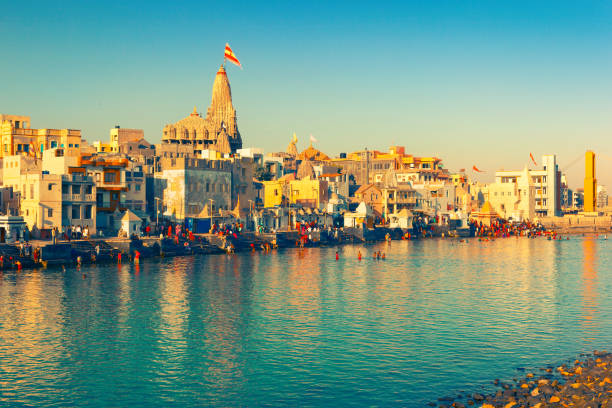
Dvārakā, counted amongst the four sacred Catur-dhāma pilgrimage sites and honored as one of the seven holy cities (Sapta-purī), has from time immemorial been worshiped by the devotees of the Supreme Personality of Godhead. Situated at the western extremity of the Gujarat peninsula, the renowned Dvārakā Temple, commonly called Jagat-mandir, is dedicated to Lord Śrī Kṛṣṇa, the Supreme Lord, the knower of all knowledge, and the most charming transcendental hero. This holy place stands as a gateway to spiritual realization, for it represents the eternal kingdom of Kṛṣṇa and combines ancient history with profound religious potency.
Historical and Scriptural Background
According to the authoritative Vedic literature, Lord Śrī Kṛṣṇa, after leaving Mathurā, established His capital city at Dvārakā and ruled there with great opulence and transcendental majesty. The city has been submerged many times and rebuilt, leaving behind traces of ancient culture and maritime remains that bear witness to its antiquity. It is traditionally accepted that the original temple at this site was constructed by Vajranābha, the grandson of Lord Kṛṣṇa, over the spot known as Hari-gṛha, the residence of the Lord during His manifest pastimes. Over the course of centuries, the temple has undergone various renovations, and its present majestic structure dates from around the sixteenth century, thus standing as evidence of the unbroken remembrance of Kṛṣṇa among His devotees.
Dvārakā Among the Seven Sacred Cities
Dvārakā is glorified as one of the Sapta-purī—cities especially blessed for spiritual advancement, along with Ayodhyā, Mathurā, Haridvāra, Kāśī (Vārāṇasī), Kāñcī, and Ujjain. These holy places are repeatedly mentioned in the Vedic literature as auspicious destinations for pilgrimage, for by visiting them one purifies the heart and becomes free from sinful reactions. Dvārakā specifically shines as the city personally established by Śrī Kṛṣṇa and thus is eternally associated with His divine presence. The city is therefore considered a spiritual bridge between the material world and the transcendental abode, for its atmosphere constantly reminds one of the Supreme Lord and His pastimes.
The Present Importance of Dvārakā Temple in the Practice of Bhakti
Even today Dvārakā Temple draws innumerable pilgrims who seek the mercy of the Lord. Because Kṛṣṇa enacted His pastimes here, one who visits this sacred temple with sincerity naturally feels devotion awaken within the heart. The atmosphere is especially conducive for remembering the teachings of the Lord, as spoken in the Bhagavad-gītā, wherein He instructs all living entities to follow the path of dharma and surrender unto Him. In this way the temple remains a place of enlightenment, where one may engage in hearing, chanting, and remembering the glories of Lord Kṛṣṇa.
Distinctive Rituals and Festivals
The worship at Dvārakā Temple is carried out with great reverence according to traditional standards. Early in the morning the Maṅgala-ārati is performed, awakening the Lord with devotional songs, offerings of flowers, and other articles of worship. In the evening the Śayana-ārati concludes the day’s service, when the Lord takes rest amidst the sound of sacred hymns and the waving of lamps. The temple becomes especially splendid during Janmāṣṭamī, the appearance day of Lord Kṛṣṇa. At midnight, when the Lord advented Himself in this world, the devotees hold elaborate functions, dramatic presentations of His divine activities, and generous distribution of prasāda. There is also the Tulābhāra ceremony, in which such items as grains, fruit, or precious substances are offered on a scale equal to the weight of the devotee, symbolizing surrender and gratitude for the Lord’s blessings.
Cultural and Architectural Features
The Dvārakā Temple is renowned for its lofty spire (śikhara), visible from a great distance, guiding pilgrims like a spiritual lighthouse. The external walls are ornamented with carvings depicting the various activities of Lord Kṛṣṇa, thus giving even casual visitors a glimpse into the transcendental character of the Supreme Lord. Within, the Deity of Dvārakādhīśa, the King of Dvārakā, is worshiped with opulent paraphernalia. Traditional craftsmanship, ancient design, and devotional symbolism combine to produce a structure that nourishes both the eyes and the heart, elevating one’s consciousness to Kṛṣṇa’s eternal pastimes.
Service to Society and Spiritual Culture
The temple is not merely a building made of stone; it is a center of spiritual culture. Surrounding communities are sustained by the constant flow of pilgrims. Markets, guides, artisans, and hospitality services gain their livelihood by supporting the pilgrims who come to see the Lord. The temple hosts numerous festivals and devotional gatherings, ensuring that the historical and spiritual heritage of Dvārakā is preserved and passed down to new generations. Thus the temple remains a living institution, influencing society through the principles of devotion, cooperation, and remembrance of the Supreme Personality of Godhead.
Environmental Care and Preservation
Because Dvārakā stands on the seacoast facing the Arabian Sea, there are natural challenges such as erosion and the effects of salt air. For this reason, preservation efforts continue to protect the ancient heritage. Responsible authorities seek to maintain cleanliness, regulate waste, and safeguard the surroundings so that future generations may also have the opportunity to benefit from coming to this sacred place. Such work is essential, for holy places are meant to be maintained in their original purity.
A Pilgrimage of Eternal Benefit
The pilgrim who approaches Dvārakā with devotion receives spiritual strength and inner purification. The temple, its worship, the chanting of the holy names, the scriptures spoken by learned priests, and the atmosphere saturated with remembrance of the Lord create a unique opportunity for spiritual advancement. Dvārakā remains eternally relevant, for the presence of Lord Kṛṣṇa is never diminished by the passing of time.
One who visits this holy dhāma with faith, performs devotional service, and hears the glories of the Supreme Lord certainly becomes blessed. Such sacred places of Kṛṣṇa Consciousness have existed from time immemorial and will continue to bestow spiritual benefit as long as men approach them in a humble mood, desiring to revive their forgotten relationship with the Supreme Personality of Godhead.
Deepen your Bhakti-yoga practice, harmonize relationships, and receive guided coaching — all at Vedavarsity.com