



A Contemporary Voice in the Service of Śrī Kṛṣṇa
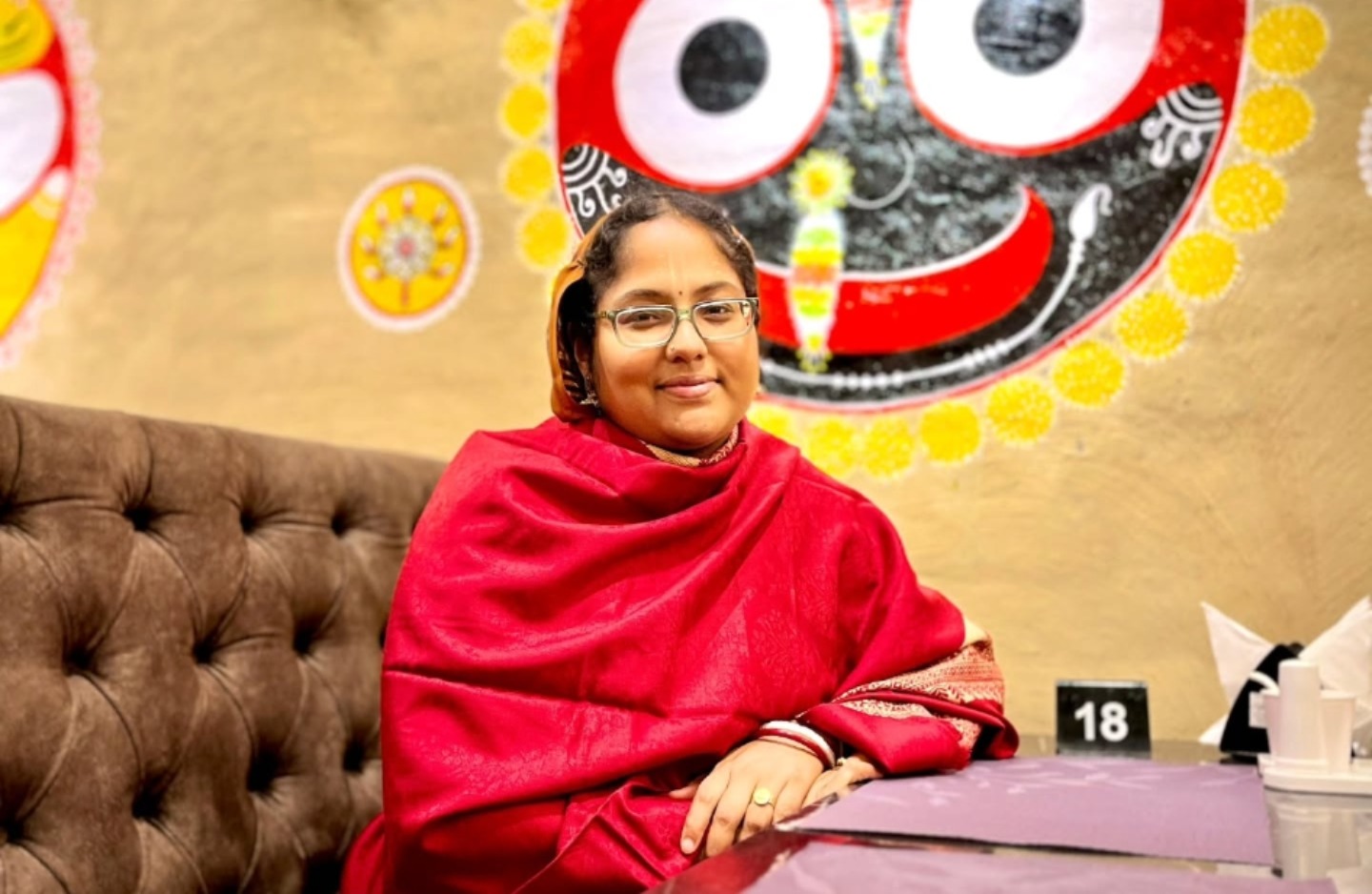
Haritā Mādhavī Devī Dāsī is a practitioner of Kṛṣṇa consciousness who employs rap music as a contemporary instrument for devotional outreach. Appearing publicly in traditional devotional attire, she presents mantra-infused compositions that communicate the essential teachings of bhakti-yoga through structured rhythm and measured poetry.
Residing in Śrīdhāma Māyāpur, her efforts reflect a developing initiative within ISKCON to connect with younger generations through culturally recognizable forms, while remaining firmly anchored in the principles of sādhana and śāstra.
When Rhythm Serves Remembrance
Clad in a simple sari, tilaka marking her forehead, she stands beneath the stage lights as the resonance of kartālas gradually subsides. A moment of stillness follows, the audience attentive. Then the beat begins. With restraint and clarity, her voice enters, carrying the holy name, philosophical reflection, and an earnest devotional appeal. For many observers, the contrast between form and sound is unexpected. For her, it is simply another means of calling out to Śrī Kṛṣṇa.
Formation Within a Devotional Household
Now based in Māyāpur, Haritā Mādhavī’s connection with Kṛṣṇa consciousness began in early life. Raised in a devotee family originally from Chennai in South India, she was introduced to bhakti in the late 1990s through her parents, both long-serving initiated disciples within ISKCON. Reflecting on her upbringing, she shared that by the mercy of her parents and her spiritual master, spirituality was never separate from daily life.
A significant influence came through her mother’s spiritual search while residing in the Middle East. Upon meeting His Holiness Jayapatākā Swāmī, her mother’s transformation was immediate. Within a short time, she adopted strict devotional practices and sought initiation. Witnessing this decisive faith left a deep impression, quietly shaping Haritā Mādhavī’s own inner trajectory.
Renewal Through Association in Youth
Like many raised within devotional environments, her adolescent years were marked by distraction and distance. Academic demands and social pressures gradually eclipsed the spiritual inheritance she had received. The change came during her university years in South India, through an encounter within an ISKCON youth association.
Hearing peers describe the concealment of their devotional practices deeply affected her. She recognized the fortune she possessed and the neglect with which she treated it. This realization marked a turning point. Within a year, she formally took shelter, receiving initiation in 2015 and later second initiation following the COVID period. Observing sincere spiritual happiness among contemporaries reaffirmed her commitment.
Encounter with Hip-Hop and Inner Deliberation
Alongside her devotional formation, another inclination developed. During her teenage years, Haritā Mādhavī became drawn to rap music, initially responding to its energy rather than its lyrical content. In college, she became known for hip-hop dance, an unexpected complement to her training in Bharatanāṭyam and Carnatic music.
Over time, the discord between musical form and lyrical message became apparent. Though attracted to the medium, she found its themes incompatible with her values. For years, this interest remained private. During the reflective period of the COVID pandemic, she recognized this creative impulse as an integral part of herself and began to consider its potential engagement in devotional service.

Harita Madhavi papping onstage at the 2026 Gita Mela in Mayapur.
From Experimentation to Public Offering
Encouraged by early examples of Kṛṣṇa-conscious rap during the pandemic and supported by friends in Melbourne while pursuing a Master’s degree in Biomedical Engineering at La Trobe University, she began tentative experimentation. The initial expressions were simple and unrefined, yet sincere.
A defining moment arrived when Australian artist Adrian Eagle invited her to perform during Melbourne’s Ratha-yātrā festival. Appearing on stage in a sari, she presented her offering with humility and resolve. The response, particularly from younger devotees, was enthusiastic, affirming the possibility of devotional expression without compromise.
Rap as an Extension of Bhakti-Yoga
Her method is intentional and grounded in the principles of bhakti-yoga—hearing, chanting, and remembrance of Kṛṣṇa. Mantras form the foundation of her compositions, followed by English verses crafted for accessibility and reflection. Emphasizing sincerity, she maintains careful reverence for the holy name and scriptural authority, underscoring that intention determines spiritual potency.
Devotional Identity and Sacred Representation
Her presentation consciously affirms devotional identity. In contrast to prevalent imagery within popular music culture, she appears as a Vaiṣṇavī, unaltered in dress or conduct. She maintains that spiritual identity need not be relinquished for expression, likening devotional attire to a uniform that clearly signifies one’s allegiance and purpose.
Challenges, Perseverance, and Gradual Acceptance
Responses to her work have varied. While Australian audiences expressed curiosity and encouragement, early performances in India were met with hesitation and critique. Even familial reservations arose. Sustained by confidence in her intention, she continued. Over time, broader exposure—particularly through recordings shared from Gītā Melā—helped audiences recognize the sincerity underlying the presentation.
Influence Upon the Younger Generation
Messages now arrive regularly from listeners and parents, many noting tangible inspiration. Youth report repeated listening and renewed interest in temple life. For Haritā Mādhavī, such outcomes fulfill the purpose of her service: to encourage engagement with the Bhagavad-gītā, chanting of the holy name, and sincere inquiry, trusting that Kṛṣṇa will guide the heart.
Continuing the Service
Looking forward, she regards this work as an opening rather than a culmination. Her themes consistently return to remembrance of Kṛṣṇa, the insufficiency of material promises, and the search for genuine love and identity. Recordings, collaborations, and invitations continue to develop, yet her focus remains unchanged: to offer a reminder that spiritual identity is eternal and to be rediscovered.
Within a genre often marked by distraction, Haritā Mādhavī Devī Dāsī’s voice resonates with clarity—not by departing from tradition, but by carrying its message forward through a new cadence.
Those interested in her devotional outreach or potential collaboration may find her work shared regularly on Instagram , where she offers performances, reflections, and updates connected to her service.
Deepen your Bhakti-yoga practice, harmonize relationships, and receive guided coaching — all at Vedavarsity.com