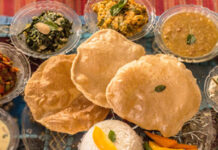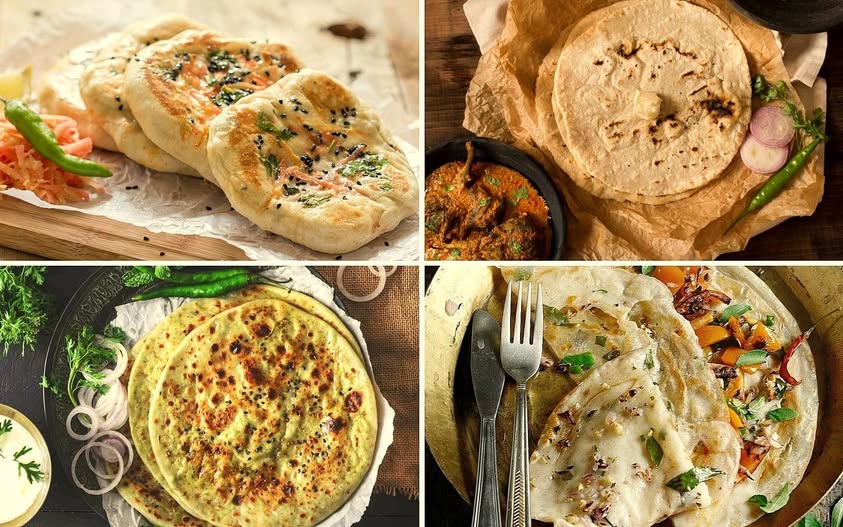
The Bhagavad-gītā states, ‘All living beings subsist on grains’. Breads provide sustaining and nutritious variety to our lives. Here are a few of the worlds most famous breads.
By Kurma Dasa
Wholemeal Bread
Breads are delicious, nutritious, and economical to make. They come in a myriad of forms the world over. Here’s a recipe for crusty wholemeal bread made especially well-textured with the addition of gluten flour. Obtain the gluten flour from any health food store or specialty grocer. Follow these tips when making bread: choose the correct flour; add the correct amount of yeast; knead the dough thoroughly; allow the bread to rise before baking, until doubled in bulk; cover the rising dough to prevent a skin forming; and always bake bread in a preheated oven at a high temperature. If you want a soft finish on your bread, rub or brush it with flour. For a crusty finish, brush with salted water. Brush with milk or cream to impart a shiny glaze, and brush with sugar syrup for a sweet glaze.
• PREPARATION TIME: 50 minutes
• DOUGH RISING TIME: 1 1/2 hours
• BAKING TIME: 45 minutes
• YIELD: 2 loaves
• 6 teaspoons (30 ml) fresh yeast
• 1 tablespoon (20 ml) brown sugar
• 2 1/2 cups (625 ml) warm water
• 1/2 cup (125 ml) gluten flour
• 2 teaspoons (10 ml) salt
• 6 cups (1 1/2 litres) wholemeal flour
• 1 tablespoon (20 ml) oil
• little milk
• sesame seeds
1. Combine the yeast, sugar, and warm water in a small bowl, crumbling the yeast and mixing it well. Leave this bowl undisturbed in a warm place for 10 minutes or until frothy.
2. Combine the gluten flour, salt, and half the wholemeal flour in a large bowl. Add the yeast and the oil. Mix with a wooden spoon until well combined. Let it stand, covered, for 30 minutes.
3. Stir the mixture. Add the flour to make a soft dough. Turn the dough out onto a floured board and knead it for 8 – 10 minutes or until smooth and elastic.
4. Wash and oil the mixing bowl. Roll the dough into a ball, coat it with oil, and place it in the bowl, covered. Let it rise in a warm spot for 1 hour or until it has doubled in size.
5. Punch down the dough with your fist and knead again lightly. Shape it into 2 loaves. Place the loaves into oiled loaf tins and cover them, placing them in a warm spot for another 30 minutes or until doubled in size. Meanwhile, preheat the oven to 200°C/390°F.
6. Brush the risen loaves with milk and sprinkle them with sesame seeds. Place them in the hot oven and cook for about 45 minutes or until golden, crisp, and hollow-sounding when tapped. Remove the tins from the oven and let stand for 10 minutes. Now you can carefully invert the bread tins and turn out the loaves, placing them on cooling racks. When the loaves are completely cool, slice and use as required.
Griddle-Baked Bread (Chapati)
Chapatis are one of India’s most popular breads. They are enjoyed especially in the northern and central regions of India. They are partially cooked on a hot griddle and finished over an open-heat source. Chapatis are made from a special wholemeal flour called atta, available from Indian grocers. If unavailable, substitute sifted wholemeal flour. You can spread melted butter or ghee on the chapatis after they are cooked. Chapatis are usually served at lunch or dinner and are great whether served with a 5-course dinner or just with a simple dal and salad.
• PREPARATION TIME: 5 – 10 minutes
• DOUGH RESTING TIME: 1/2 – 3 hours
• COOKING TIME: 25 – 35 minutes
• YIELD: 12 chapatis
• 2 cups (500 ml) sifted chapati flour
• 1/2 teaspoon (2 ml) salt (optional)
• water
• extra flour for dusting
• melted butter or ghee (optional, for spreading over chapatis after they’ve been cooked)
1. Combine the flour and salt in a mixing bowl. Add up to 2/3 cup (165 ml) of water, slowly pouring in just enough to form a soft kneadable dough. Turn the dough onto a clean working surface and knead for about 8 minutes or until silky-smooth. Cover with an overturned bowl and leave for 1/2 – 3 hours.
2. Knead the dough again for 1 minute. Divide the dough into 1 dozen portions. Roll them into smooth balls and cover with a damp cloth.
3. Preheat a griddle or non-stick heavy frying pan over moderately low heat for 3 – 4 minutes. Flatten a ball of dough, dredge it in flour, and carefully roll out the ball into a thin, perfectly even, smooth disk of dough about 15 cm (6 inches) in diameter.
4. Carefully pick up the chapati and slap it between your hands to remove the excess flour. Slip it onto the hot plate, avoiding any wrinkles. Cook for about 1 minute on the first side. The top of the chapati should start to show small bubbles. Turn the chapati over with tongs. Cook it until small brown spots appear on the underside (about minute).
5. If you are using gas, turn a second burner on high, pick up the chapati with your tongs, and hold it about 5 cm (2 inches) over the flame. It will swell into a puffy balloon. Continue to cook the chapati until it is speckled with black flecks. Place the cooked chapati in a bowl or basket, cover with a clean tea towel or cloth, and continue cooking the rest of the chapatis. When they’re all cooked and stacked, you might like to butter them. Serve chapatis hot for best results or cover and keep warm in a preheated warm oven for up to 1/2 hour.
Italian Fried Corn-Bread (Polenta)
Polenta is a yellow maize or cornmeal grown in northern Italy. Regarded there as a staple food, it can be used in many ways after it has been prepared as a rather thick porridge. Plain boiled polenta can be grilled, baked, or, as in this recipe, fried. Served with Tomato Relish and sprinkled with parmesan cheese, it makes a delicious side dish.
• PREPARATION & COOKING TIME: 40 minutes
• POLENTA STANDING TIME: 4 hours
• YIELD: Enough for 6 – 8 persons
• 8 cups (2 litres) water
• 2 teaspoons (10 ml) salt
• 3 1/2 cups (875 ml) cornmeal (polenta)
• 90 g (3 ounces) butter
• 3 tablespoons (60 ml) olive oil
1. Bring the water and salt to a boil in a 6-litre/quart saucepan over full heat. Gradually sprinkle the cornmeal over the water, stirring constantly with a wire whisk. Make sure that there are no lumps of cornmeal.
2. Reduce the heat to low. Continue to stir the polenta mixture until it is very thick (approximately 10 minutes).
3. Leave the polenta over low heat for about another 5 minutes, stirring occasionally. It will be ready to remove from the heat when a wooden spoon will stand upright in the centre of the mixture and not drop to the side of the pan.
4. Spoon the mixture into an oiled 28 cm x 18 cm (7-inch x 11-inch) dish. Smooth out the mixture and leave to cool at room temperature for at least 4 hours.
5. Carefully turn the slab of polenta out of the tin and cut it in half lengthways. Cut each half into seven slices crossways, each one 4 cm (1/2-inches wide.
6. Heat the butter and oil together in a heavy frying pan. When hot, add about 6 slabs of polenta to the frying pan and reduce the heat to low. Fry gently until the polenta is dark golden brown on each side. Place the polenta onto a serving dish and serve with Tomato Relish and parmesan cheese.
Rajasthani Spicy Dal-Stuffed Bread (Urad Dal Poori)
These spicy, fried breads called Urad Dal Pooris (and sometimes called Urad Dal Kachoris) are a popular roadside snack in Rajasthan. Uraddal can be obtained at any Indian grocer. Serve these tasty breads with hot Pumpkin and Potatoes Marwari Style, Date and Tamarind Sauce, or as a snack with a dab of fresh yogurt.
• DAL SOAKING TIME: 4 hours
• PREPARATION TIME: 45 minutes
• COOKING TIME: 30 minutes
• YIELD: About 20 dal pooris
• 1 cup (250 ml) urad dal
• 2 cups (500 ml) sifted chapati flour or half-wholemeal and half-unbleached plain flour
• 1/2 cup (125 ml) ghee or oil, warmed
• 3 teaspoons (10 ml) salt
• water
• 1 tablespoon (20 ml) coriander seeds
• 1 tablespoon (20 ml) fennel seeds
• 1 tablespoon (20 ml) cumin seeds
• 8 whole black peppercorns
• 4 large dried red chilies
• ghee for frying
1. Place the urad dal in a bowl, cover with cold water, and leave to soak for 4 hours. Drain, place in a blender or food processor with a sprinkle of cold water, and grind coarsely to a paste. Transfer to a small bowl.
2. In another bowl, combine the flour, 4 tablespoons (80 ml) of warm ghee, 2 teaspoons (10 ml) of salt, and enough water to make a stiff but smooth dough. Knead well and put aside, covered with a cloth, for 20 minutes.
3. Sprinkle the coriander seeds, cumin, fennel, black peppercorns, and chilies into a heavy pan and dry-roast them over moderate heat until they darken a few shades and become aromatic (a few minutes). Transfer them to a coffee grinder, or mortar and pestle, and grind them to a powder.
4. Heat 1 tablespoon (20 ml) of ghee or oil in a heavy pan over moderate heat. Add the dal paste and stir-fry it, stirring constantly over moderate heat until it starts to stick on the bottom. Remove from the heat, add the powdered spices and 1 teaspoon of the salt, and mix well. Transfer onto a plate or dish to cool.
5. Divide the dough into 20 portions. Roll each portion into a smooth ball. With a rolling pin on a slightly oiled surface, roll out each ball into a thick patty about 5 cm (2-inches) wide. Place 1 tablespoon (20 ml) of cooled filling in the centre of each one, gathering the edges of the dough back over to completely enclose the filling. Pinch the excess dough together and press it back into the centre of the patty. Flatten slightly; then with a rolling pin roll out seam side down (carefully avoiding puncturing the pastry) into a disk 5 – 7 1/2 cm (2 – 3 inches) wide.
6. When all the dal pooris are rolled, heat the ghee or oil in a pan or wok to 180°C/355°F and carefully slip in 3 or 4 dal pooris. They will immediately sink then rise to the surface. Press them down with a slotted spoon until they inflate. Fry them until lightly browned on one side (about 2 minutes) then turn them over and fry on the second side for another 1 or 2 minutes. Remove with a slotted spoon and drain on a triple-thickness of paper towels. Cook all dalpooris and serve hot.
Puffed Fried Bread (Poori)
Popular over all of India, pooris are ideal to cook for both small dinner, parties and festivals with hundreds of guests. On a number of occasions, I’ve cooked 500 or more pooris in a few hours for big feasts. Once you get the rhythm down, it’s effortless and rewarding. Pooris are traditionally made with straight wholemeal flour, but you can vary the ingredients. One-half wholemeal or atta, and one-half unbleached plain flour makes lighter pooris. If you’re expert at rolling, try using just plain flour for translucent, gossamer-thin pooris.
You can add yeast to your pooris for light, bread-like results, as in Yeasted Puffed Fried-Bread; you can add spices to your poori dough; you can sprinkle sugar on top of pooris for a sweet snack; or you can stuff them with various sweet and savoury fillings, as in Stuffed Puffed-Bread.
The dough for this poori recipe differs from chapati dough in that butter or ghee is rubbed into the flour and less water is added, to form a drier dough. No flour is used on the rolling surface.
Pooris are traditionally eaten hot, straight out of the ghee or oil, but cold pooris are great for picnics or snacks when travelling. Serve pooris with practically any menu at any time.
• PREPARATION TIME: 15 minutes
• DOUGH RESTING TIME: 1/2 – 3 hours
• COOKING TIME: 15 minutes
• YIELD: 16 medium-sized pooris
• 2 cups (500 ml) sifted chapati flour or half-wholemeal and half-unbleached plain flour
• 1/2 teaspoon (2 ml) salt
• 2 tablespoons (40 ml) melted butter or ghee
• 2/3 cup (165 ml) warm water, or as needed
• ghee or oil for deep-frying
1. Combine the flour and salt in a mixing bowl. Rub in the butter or ghee until the mixture resembles a coarse meal. Add up to 2/3 cup (65 ml) of water, slowly pouring in just enough to form a medium-soft kneadable dough. Turn the dough onto a clean working surface and knead for 5 – 8 minutes or until silky smooth. Cover with an overturned bowl and leave for 1/2 – 3 hours.
2. Knead the dough again for 1 minute. Divide the dough into 16 portions, roll them into smooth balls, and cover them with a damp cloth.
3. Preheat the ghee or oil in a wok or deep pan over low heat. Meanwhile, with a rolling pin roll all your balls of dough into smooth disks about 11 1/2 – 12 1/2 cm (4 1/2 -inches) wide. Increase the ghee or oil temperature until it reaches about 185°C/365°F. Lift up a rolled poori and slip it into the hot oil, making sure it doesn’t fold over. It will sink to the bottom then immediately rise to the surface. Hold it under the surface with a slotted spoon until it puffs up into a balloon. After a few seconds, when it is browned to a light-golden colour, turn it over and cook the other side to an even golden colour. Lift out the poori with the slotted spoon and carefully drain it in a large colander. Repeat for all the pooris. Serve immediately, if possible, or leave in a preheated, slightly warm oven for up to 2 hours.
Savoury Wholemeal Pancakes (Dosa)
Each country of the world has many varieties of pancakes, and India is no exception. Each region has its favourite versions. Dosas are a favourite in South India. Whereas traditional dosas are quite large, this recipe presents smaller pancakes to fit a household pan. And whereas traditional dosas are prepared from varieties of dal and rice combinations, these are prepared from basically just chapati flour, spices, and fresh herbs. Serve these slightly crisp pancakes with Tomato Chutney, Coconut Chutney, or plain yogurt.
• PREPARATION TIME: 25 minutes
• BATTER RESTING TIME: 15 minutes
• COOKING TIME: About 45 – 60 minutes
• YIELD: About 1 dozen dosas
• 2 cups (500 ml) sifted chapati flour or wholemeal flour
• 1 teaspoon (5 ml) yellow asafoetida powder
• 1 1/2 teaspoons (7 ml) salt
• 1/4 teaspoon (1 ml) baking powder
• 3 hot green chilies, finely chopped
• 1 tablespoon (20 ml) finely chopped fresh coriander leaves
• melted ghee or oil
1. Combine the flour, asafoetida, salt, and baking powder in a large bowl and mix well. Add enough cold water to form a smooth, pouring consistency batter. Fold in the chilies and chopped coriander leaves. Transfer the batter to a pouring jug or large measuring cup with a spout and set aside for 15 minutes before cooking.
2. Brush a 20 cm (8-inch) cast-iron frying pan with a film of melted ghee or oil and warm it over moderate heat. When hot, pour in about 1/4 cup
(60 ml) of the batter, or enough to cover the base of the pan, and immediately tilt it to spread the batter into a thin 20 cm (8-inch) pancake. Drizzling a little ghee or oil around the edges of the dosa cook until the edges brown and the bottom turns golden brown in patches (about 3 minutes). Flip the dosa over, sprinkle with more oil, and cook it for another 1 1/2 – 2 minutes. Slide the cooked dosa onto a clean plate and serve it either flat or folded in half. Make all the dosas in the same way, stirring the batter occasion ally. Serve hot.
Stuffed Pan-Fried (Paratha)
This is a delicious Singapore version of the famous Indian stuffed bread, paratha. These flaky, soft breads are pan-fried slowly with ghee or oil until golden brown. They’re great served at any time with a chutney or sauce.
• PREPARATION TIME: 20 minutes
• COOKING TIME: Approximately 40 minutes
• YIELD: 10 parathas
For filling:
• 2 tablespoons (40 ml) peanut or safflower oil
• 1/2 teaspoon (2 ml) yellow asafoetida powder
• 2 cups (500 ml) grated cabbage
• 1/2 cups (375 ml) carrots, peeled and grated
• 1 cup (250 ml) mung bean shoots
• 1 teaspoon (5 ml) soy sauce
• 1/2 teaspoon (2 ml) sugar
• 1/2 teaspoon (2 ml) salt
• 1/2 teaspoon (2 ml) cornflour
• ghee or oil to cook parathas
For pastry:
• 1 tablespoon (20 ml) peanut or safflower oil
• 1/2 teaspoon (2 ml) salt
• 2 cups (500 ml) plain flour
1. To prepare the filling: heat the oil in a wok or large pan over moderate heat. When hot, add the asafoetida and fry momentarily. Increase the heat to full, add the vegetables, and stir-fry briskly for 4 – 5 minutes. Add soy sauce, salt, and sugar, stir-frying for another minute. Mix a little liquid from the wok (or water if the vegetables are dry) with the cornflour and pour this thickening paste into the vegetables. Saute for another 1/2 minute. Set aside to cool.
2. To make the pastry: mix the oil and salt with the plain flour and rub in the oil until the mixture resembles a coarse meal. Add enough cold water (a little over 1/2 cup [125 ml]) to form a soft dough. Knead well for about 5 minutes. Divide into 10 balls.
3. On a lightly floured surface, roll out each ball with a rolling pin into paper-thin disks 25 cm (10-inches) wide.
4. Divide the filling into 10 portions. Place 1 portion of filling in the centre of each disk of pastry, spreading it out about 5 cm (2-inches) wide.
5. Fold in each side so the filling is completely covered, the pastry overlaps in the centre, and you end up with a square paratha. To seal, use water to moisten the areas where the pastry overlaps. Roll gently to seal and flatten.
6. Place one or two parathas on a griddle, hot plate, or heavy frying pan brushed with ghee or oil over moderate heat. Turn occasionally until the paratha displays golden-brown marbled spots on the surface of both sides (about 3 – 4 minutes). Repeat with all parathas, brushing them with ghee or oil when required. Serve hot.
Middle Eastern Round Bread (Pita)
No Middle Eastern meal is complete without these traditional slightly leavened, round, soft breads. Sometimes called Khobz, or pocket breads, they are becoming increasingly popular in the west. Try baking them yourself.
Distinct from traditional breads, these breads rise only once and are then baked at a very high temperature for a short time. During the process the dough separates to form the pouch or hollow, enabling the bread to be later split in half and stuffed. Traditionally, this bread is made with strong white flour, but if you wish you can substitute wholemeal flour or a softer white flour (you might then need to adjust baking time). Pita breads can be served with a traditional Middle Eastern meal, filled with your favourite salad along with Falafel, or used as a base for Asparagus and Pinenut Pizza.
• PREPARATION TIME: 1 hour
• BAKING TIME: 5 minutes per batch
• YIELD: 24 small pitas or 12 large pitas
• 3 teaspoons (15 ml) dried yeast
• 1 1/2 cups plus 5 tablespoons (475 ml) warm water
• 1/2 teaspoon (2 ml) brown sugar
• 6 cups (1 1/2 litres) strong white flour
• 2 teaspoons (10 ml) salt
• extra flour for kneading and dusting
1. Combine the yeast, warm water, and sugar in a large bowl. Stir thoroughly to dissolve the yeast.
2. Stir in the flour and salt and knead for about 5 minutes to form a smooth dough, sprinkling on a little extra flour if required.
3. Shape the dough into a cylinder. Divide the dough into 24 portions for small pitas or into 12 for large pitas. Shape each portion into a smooth ball. Place the balls on a floured surface and cover them with a cloth.
4. Carefully form a ball into a smooth, crease-free disk and roll out on a floured board with a rolling pin to form a 0.5 cm (1/4-inch) thick bread. Repeat until all the breads are rolled. Small breads should be about 12.5 cm (5 inches) in diameter, and large ones about 20 cm (8-inches).
5. Preheat the oven to 240°C/465°F. Place the loaves on a floured bench top in a draught-free area, covered with clean, dry tea towels. Do not allow the breads to dry out. The breads should rise for 30 – 45 minutes.
6. Place 1 large or 4 small pitas on an ungreased baking sheet and bake on the bottom of the hot oven for 3 – 4 minutes. When cooked, the bottoms should be golden and the tops cream coloured. Remove and wrap the pitas in dry tea towels. Repeat until all the breads are done.
Note: Take care not to leave the oven door open between batches, and don’t allow the breads to go crisp or brittle. They should be soft and flexible when they come out of the oven. If you’re not going to use the breads straight away, allow them to cool and store them in plastic bags until required.
Mozzarella and Tomato Pizza
This is a crisp-based pizza holding a filling of herb-flavoured tomatoes, with a topping of sliced black olives, peppers, and golden, melting mozzarella cheese. To save time, prepare the filling whilst the dough is rising.
• PREPARATION TIME: 20 minutes
• DOUGH RISING TIME: 30 minutes
• ROLLING AND TOPPING TIME: 10 minutes
• BAKING TIME: 15 – 20 minutes
• YIELD: One 25 cm (10-inch) pizza
Base
• 3 teaspoons (15 ml) fresh yeast
• 1/2 teaspoon (2 ml) sugar
• 1/2 cup (125 ml) lukewarm water
• 1 1/2 cups (375 ml) plain flour
• 1/4 teaspoon (1 ml) salt
• 2 tablespoons (40 ml) olive oil
Filling
• 2 teaspoons (10 ml) olive oil
• 1/4 teaspoon (1 ml) yellow asafoetida powder
• one 400 g (14-ounce) can whole Italian tomatoes, chopped and undrained,
or 1 1/2 cups (375 ml) fresh tomato puree
• 1 tablespoon (20 ml) tomato paste
• 1/2 teaspoon (2 ml) dried oregano
• 1/2 teaspoon (2 ml) dried basil
• 1 teaspoon (5 ml) sugar
• 1 teaspoon (5 ml) salt
• 1/4 teaspoon (1 ml) freshly ground black pepper
Topping
• 125 g (4 1/2 ounces) grated mozzarella cheese
• 2 tablespoons (40 ml) grated parmesan cheese
• 1 cup (250 ml) thin strips of eggplant, deep-fried until dark golden-brown, then salted
• 1 small red pepper, diced
• 60 g (2 ounces) black olives, pitted and halved
1. Cream the yeast with the sugar in a bowl, add lukewarm water, and let it stand for 10 minutes or until bubbles appear on the surface. Sift the flour and salt into a bowl, make a well in the centre, and add the oil and yeast mixture. Mix to a firm dough.
2. Turn the dough onto a floured surface and knead it for 10 minutes or until the dough is smooth and elastic. Place it in a lightly oiled bowl, cover, and leave in a warm place for 30 minutes or until the dough has doubled in size.
3. Knock the dough down with your fist and knead into a small ball. Flatten out the dough with a rolling pin and roll it into a circular sheet of pastry that will just fit in a 25 cm (10-inch) pizza pan. Place the dough carefully in the pan.
4. Meanwhile make your filling: heat the olive oil in a large frying pan over moderate heat. When hot, add the asafoetida and saute momentarily. Add the undrained canned tomatoes or tomato puree, tomato paste, oregano, basil, sugar, salt, and pepper. Bring the sauce to a boil; then reduce the heat and, stirring occasionally, simmer uncovered for 10 – 15 minutes or until the sauce is thick and smooth. Allow the filling to cool somewhat.
5. Spread the cooled filling over the pizza base, leaving a little border uncovered. Combine half the grated mozzarella cheese with the parmesan and sprinkle it over the tomato filling. Top with the eggplant strips, chopped peppers, and olives. Sprinkle on the remaining cheese and bake in a pre-heated hot oven 220°C/430°F for 15 – 20 minutes or until the crust is golden brown.
Stuffed Puffed-Bread (Stuffed Poori)
These tasty treats have been a great favourite at the Hare Krishna Sunday Feasts for decades. Fried puffed-breads (pooris) are stuffed with layers of potato, beans, yogurt, crunchy chickpea pearls, sweet-and-sour tamarind sauce, and finally a sprinkle of hot and sweet spices. Irresistible!
• PREPARATION & COOKING TIME: 1 1/2 hours
• YIELD: 16 stuffed pooris
POORIS
• 1 cup (250 ml) unbleached plain flour
• 1 cup (250 ml) chapati flour or wholemeal flour
• 1/2 teaspoon (2 ml) salt
• 2 tablespoons (40 ml) ghee or oil
• 2/3 cup (165 ml) warm water, or as needed
• ghee or oil for deep-frying
POTATO FILLING
• 2 medium potatoes, cut into 0.5 cm (1/4-inch) cubes
• 1/4 teaspoon (1 ml) salt
MUNG BEAN FILLING
• 1/4 cup (60 ml) whole green mung beans, raw
• 4 cups (1 litre) water
• 1/4 teaspoon (1 ml) salt
TAMARINF SAUCE
• 1 tablespoon (20 ml) tamarind concentrate
• 1 tablespoon (20 ml) water
• 2 tablespoons (40 ml) brown sugar
• pinch salt
• 1/4 teaspoon (1 ml) cayenne pepper
CHICKPEA FLOUR BATTER PEARLS
• 1/4 cup (60 ml) chickpea flour
• 1/4 teaspoon (1 ml) salt
• 1/4 teaspoon (1 ml) cayenne pepper
• 1/4 teaspoon (1 ml) ground cumin water
• ghee or oil for deep frying
OTHER INGREDIENTS
• 1 1/4 cups (310 ml) yogurt
• 1/2 teaspoon (2 ml) garam masala
• ghee or oil for deep-frying
1. Prepare pooris Set them aside.
2. Boil the potato cubes in slightly salted water in a small saucepan, until soft. Drain and set aside.
3. Boil the mung beans in 4 cups (1 litre) unsalted water until they are soft but not broken up. Drain, toss with salt, and set aside.
4. Combine all the ingredients for the tamarind sauce in a bowl. Whisk until smooth. Set aside.
5. Heat a small quantity of ghee or oil (about 2 1/2 cm, or 1-inch) in a small pan or wok. Mix all the dry ingredients for the chickpea-flour-batter pearls in a bowl. Pour in sufficient cold water to form a thick batter. When the oil reaches 180°C/355°F, pour some of the batter through the holes of a colander into the hot oil. Fry the little pearls of batter for a few minutes or until they are golden brown and crisp, remove them with a slotted spoon, and set them aside. Repeat until all the batter is used.
6. To assemble the stuffed pooris: place all the pooris on a tray with the pooris’ thick side down. Puncture a small hole in the top of each poori. Drop in a few pieces of potato, followed by a small spoon of soft mung beans. On top of that, spoon a good sized spoon of yogurt; sprinkle in some chickpea pearls, a spoon of tamarind sauce, and finally a sprinkle of garam masala. Serve immediately.
Mexican Oatmeal Corn and Cheese Bread
This is an unusual but tasty bread which requires minimum fuss in preparation. It is best baked in a well-oiled 23 cm (9-inch) cast-iron frying pan, enabling it to be “pan-fried” in the oven. Serve Mexican Oatmeal Corn and Cheese Bread warm, as a cold snack or as part of a summer luncheon or buffet with a light tomato sauce and a fresh salad.
• PREPARATION TIME: 5 minutes
• BATTER STANDING TIME: At least 30 minutes
• BAKING TIME: 20 – 30 minutes
• YIELD: Enough for 6 persons
• 3/4 cup (185 ml) oatmeal
• 1/4 cup (60 ml) yellow cornmeal (polenta)
• 1 1/2 teaspoons (7 ml) baking powder
• 1/2 teaspoon (2 ml) bicarbonate of soda
• 1/2 teaspoon (2 ml) salt
• 1 cup (250 ml) cultured buttermilk or sour milk
• 1 teaspoon (5 ml) lemon juice
• 1 1/2 cups (375 ml) grated tasty cheese (not parmesan)
• 2 tablespoons (40 ml) finely chopped fresh parsley or coriander
• 2 tablespoons (40 ml) oil
1. Combine the oatmeal, cornmeal, baking powder, bicarbonate of soda, salt, and buttermilk in a bowl. Mix well and set aside to stand for at least 30 minutes.
2. Add the remaining ingredients (except the oil) and combine the mixture well.
3. Heat 1 tablespoon (20 ml) of the oil in a heavy, pre-oiled, cast-iron frying pan or cake tin and spoon in the bread batter, spreading it evenly. Drizzle the remaining oil over the batter and bake it in a preheated hot oven 200°C/390°F for 20 – 30 minutes or until golden brown on top.
4. Whilst the bread is still warm, slice into 6 pieces. Serve warm or at room temperature.
Bagels
These famous doughnut-shaped rolls are a distinctive part of Jewish cuisine. They are first cooked in water, then baked, giving the bagel its characteristic hard, glazed crust.
• PREPARATION TIME: 30 minutes
• DOUGH RISING TIME: 1 hour 10 minutes
• BOILING TIME: 10 minutes
• BAKING TIME: About 30 minutes
• YIELD: 18 bagels
• 2 cups (500 ml) warm water
• 2 teaspoons (10 ml) dry yeast
• 1 teaspoon (5 ml) brown sugar
• 1/4 cup (60 ml) olive oil
• 5 cups (1 1/4 litres) plain baking flour
• 1 tablespoon (20 ml) salt
• 4 litres/quarts water for boiling
• 2 tablespoons (40 ml) brown sugar
• 2 tablespoons (40 ml) milk for glazing
• poppy seeds for decoration
1. Mix 3/4 cup (185 ml) water, yeast, and 1 teaspoon (5 ml) brown sugar in a bowl and let sit covered in a warm place for 10 minutes or until bubbles appear.
2. Add this mixture, along with the oil and the rest of the water, to the f lour and salt in a large mixing bowl. Mix well to a stiff dough and knead for 10 minutes on a lightly floured board.
3. Let the dough rise for 1 hour or until doubled in size in a warm, undisturbed place. Punch the dough with your fist and knead for a few minutes.
4. Divide the dough into 18 portions; then with your hands roll each one into a rope shape, approximately 15 cm (6-inches) long. Moisten the ends and overlap them, squeezing them together to seal, forming rings. Allow all the bagels to stand in a warm place for 10 minutes on an oiled tray.
5. Bring the water to a rolling boil in a large pan. Add the 2 tablespoons (40 ml) of brown sugar and drop 5 or 6 of the bagels into the water. Allow the bagels to boil for 3 minutes, turning once, not allowing them to overlap.
6. With a slotted spoon, remove the bagels from the water and place them onto an oiled oven tray. When all bagels have been boiled and placed on trays, brush them with milk and sprinkle poppy seeds on them. Finally, bake in a hot oven 230°C/450°F until the bagels are golden brown. Serve hot or cold.
Yeasted, Puffed Fried-Bread (Khamiri Poori)
Here’s another delicious variety of Indian bread. Yeasted pooris traditionally contain a home-made yeast mixture called Khamir made by natural fermentation. I have adapted the recipe using fresh yeast. These lovely pooris taste and smell like hot baked bread and are great served at tea time. Serve with either a sweet or savoury accompaniment.
• PREPARATION TIME: 25 minutes
• DOUGH RISING TIME: 1 hour, 10 minutes
• COOKING TIME: 1/2 hour
• YIELD: 16 medium pooris
• 3 teaspoons (15 ml) fresh yeast
• 3 teaspoons (15 ml) sugar
• 3/4 cup (185 ml) warm water, or as required
• 1 cup (250 ml) plain flour
• 1 cup (250 ml) sifted chapati flour or fine wholemeal flour
• 1 teaspoon (5 ml) salt
• 2 tablespoons (40 ml) ghee or butter
• ghee or oil for frying
1. Combine the yeast, sugar, and a little warm water in a bowl. Cover and leave the mixture in a warm place for 10 minutes or until it becomes frothy.
2. Sift the flours together and combine with the salt in a mixing bowl. Rub in the butter or ghee until the mixture resembles a coarse meal. Add the yeast mixture and gradually pour in the rest of the warm water to form a firm, kneadable dough. Turn the dough onto a clean working surface and knead it for about minutes or until silky-smooth. Rub a little ghee or butter on the dough and place it in an oiled bowl. Cover with a cloth and leave in a warm spot for at least 1 hour or until it doubles in size.
3. Punch down the risen dough with your fist and knead again for 1 minute. Divide the dough into 16 portions and roll them into smooth balls. Press the balls into little patties and with a rolling pin roll each patty into a disk 11 1/2 – 12 1/2 cm (4 1/2 – 5 inches). Place the disks carefully on oiled baking trays and leave them in a warm spot to rise again.
4. Heat the ghee or oil over moderate heat until it reaches about 185°C/365°F. Lift up a rolled poori and slip it into the hot oil, making sure it doesn’t fold over. It will sink to the bottom then immediately bob up to the surface. Hold it under the surface with a slotted spoon until it puffs up into a balloon. After a few seconds, when it is browned to a light golden colour, turn it over and cook the other side to an even golden colour. Lift out the poori with a slotted spoon and carefully drain it on paper towels. Repeat for all the pooris. Serve them immediately, if possible, or leave in a preheated, slightly warm oven for up to 2 hours.
Fruity Bran Muffins
Muffins are light and quick to prepare. These little breads are baked in special deep, round muffin tins and served hot for breakfast. This recipe comes from Govinda’s Bakery in Los Angeles. Mix the ingredients swiftly, as overmixing will produce tough, coarse muffins.
• PREPARATION TIME: 10 minutes
• BAKING TIME: 20 minutes
• YIELD: 6 muffins
• 1/2 cup (125 ml) raw sugar
• 1 1/2 cups (375 ml) wholemeal flour
• 1 cup (250 ml) mixed dried fruit
• 2 cups (500 ml) bran at least
• 1 cup (250 ml) cold milk
• 1 tablespoon (20 ml) melted butter
• 1 tablespoon (20 ml) golden syrup (or dark corn syrup)
• 1 tablespoon (20 ml) water
• 1 1/2 teaspoons (7 ml) baking powder
1. Combine the sugar, flour, fruit, and bran in a bowl and set aside.
2. Reserve 1 tablespoon (20 ml) milk. Combine the rest of the milk with the melted butter in a small bowl. Add the golden syrup, combine, and add to the bran mixture.
3. Heat the water and the reserved milk in a small saucepan. When hot, add the baking soda. When the mixture froths, pour it into the bran mixture. Mix in quickly and thoroughly. The mixture should be fairly moist. (Some additional milk may be required.)
4. Spoon into a greased muffin tray and bake at 180°C/355°F for 20 minutes or until the muffins are golden brown. Serve hot.
Soft Bread rolls
Sprinkled with poppy seeds before baking for an extra taste dimension, these are an excellent all-purpose bread roll. Try serving them with Tomato Soup or cut them and fill with Gopal’s Famous Vegie-Nut Burgers topped with your choice of salads and sauce
• PREPARATION TIME: 20 minutes
• DOUGH RISING TIME: 1 hour 10 minutes
• BAKING TIME: 15 – 20 minutes
• YIELD: 12 large bread rolls
• 6 cups (1 1/2 litres) plain flour
• 2 teaspoons (10 ml) salt
• 3 teaspoons (15 ml) fresh yeast
• 1 teaspoon (5 ml) brown sugar
• 1 cup (250 ml) warm water
• 3 teaspoons (15 ml) oil
• 1 cup (250 ml) warm milk
• milk and poppy seeds for glazing
1. Sift the flour with the salt into a mixing bowl.
2. Combine the fresh yeast and brown sugar with the warm water and leave in a warm, undisturbed place for 10 minutes or until frothy.
3. Add the oil and frothy yeast mixture to the sifted flour. Mix and add sufficient warm milk to produce a soft dough. Turn out onto a floured board and knead for 10 minutes or until the dough is soft and pliable.
4. Place the dough in an oiled bowl, rub the dough with oil, cover, and leave in a warm spot for 1 hour or until the dough has doubled in size.
5. Punch down the dough, knead lightly, and form into a long cylinder. Cut into 12 pieces and shape them into rounds. Place them carefully onto floured baking sheets, leaving enough room for expansion. Cover them loosely with plastic wrap and place in a warm spot for another 15 – 20 minutes or until they have again doubled in size. Meanwhile, preheat the oven to 230°C/450°F.
6. Brush the rolls lightly with milk, sprinkle with poppy seeds, and place them in the preheated oven. Bake for 15 to 20 minutes or until golden brown and hollow-sounding when tapped. Place on a cooling rack and allow to cool before serving.
Corn Flat-Bread (Tortilla)
Tortillas are the national bread of Mexico. They are thin and round and made from a white cornmeal called masa. Tortillas are cooked on a griddle without browning, so they are quite soft and may be eaten as they are or fried briefly in oil to crisp them. Masa is hard to get outside of Mexico, so I have suggested polenta mixed with fine wholemeal flour as a substitute. Tortillas may be used as a plate or scoop for other foods, such as Tacos, or rolled and stuffed, as in Enchiladas.
• PREPARATION & COOKING TIME: 30 minutes
• YIELD: 8 tortillas
• 1/4 cup (60 ml) cornmeal (polenta)
• 1/4 cup (60 ml) cold water
• 1/2 cup (125 ml) boiling water
• 1/2 teaspoon (2 ml) salt
• 1 tablespoon (20 ml) oil
• 1 cup (250 ml) fine wholemeal flour
1. Combine the cornmeal and cold water in a bowl.
2. Stir the cornmeal mixture into the boiling salted water in a saucepan over full heat. Stir until the mixture is thick, drawing away from the sides of the pan.
3. Remove the thickened mixture from the heat and place it in a bowl.
4. Add the oil and mix thoroughly. Stir in the wholemeal flour to make a soft dough and knead on a lightly floured board until smooth (about 10 minutes), adding more flour if necessary.
5. Divide the dough into 8 equal portions and shape them into balls. Flatten the balls and roll them out to 0.125 cm (1/16-inch) thickness.
6. Heat an un-oiled, heavy cast iron pan over moderate heat and, one at a time, bake the tortillas, flipping them over several times until they are lightly golden on both sides. Cool. Serve as suggested above.
Crispy Dal Wafers (Pappadams)
Crispy dal-wafers (pappadams or paparh) are often served as part of a full Indian dinner menu, usually at the beginning or as a closing item. They can be deep-fried or toasted over a flame. Although they are technically not breads, they are eaten like breads. They’re also great for party snacks. Raw pappadams can be purchased at any Asian grocer shop, and come, plain or spiced, in all sizes.
• COOKING TIME: A few seconds per wafer if deep-fried; a few minutes if toasted over a flame.
To deep-fry
• 1. Heat ghee or oil in a wok or large frying pan over moderately high heat. When hot 185°C/365°F, gently slip in a pappadam. It will immediately sizzle and expand. When it crinkles on the edges, turn it over with tongs and after 2 – 3 seconds remove it and place it on paper towels or in a colander to drain. Serve hot or cold.
To toast over a flame
• 1. Place a raw pappadam on a cake rack and hold it about 5 cm (2-inches) above a heat source set on high. Move the wafer around, until the whole surface is lightened in colour, expanded, and flecked with brown. Turn it over and cook the other side. Remove and stack. Serve hot or cold. Dry-roasted pappadams are great for persons on a low-fat diet.
Asparagus and Pinenut Pizza
These pizzas are quick and easy because they’re made not with the traditional yeasted pizza dough but with Middle Eastern breads. If you prefer, try making your own Pita breads. The recipe for Middle Eastern Round bread (Pita) yields delicious pizza bases. Topped with home-made pinenut sauce, asparagus, and melting mozzarella cheese, they’re sure to please.
• PREPARATION & COOKING TIME: 30 – 40 minutes
• YIELD: Four 13 cm (5-inch) pizzas or two 25 cm (10-inch) pizzas
• 1/4 cup (60 ml) grated parmesan cheese
• 250 g (about 9 ounces) grated mozzarella cheese
• 1 tablespoon (20 ml) olive oil
• 1 tablespoon (20 ml) pinenuts
• 1 tablespoon (20 ml) olive oil, extra.
• 1 cup (40 ml) fresh basil leaves, packed
• 1/4 teaspoon (1 ml) yellow asafoetida powder
• 1 teaspoon (5 ml) salt
• 2 tablespoons (40 ml) grated parmesan cheese
• 1 bunch asparagus (250 grams, or about 9 ounces)
• 2 large or 4 small Middle Eastern breads
• 1 small red pepper, chopped
1. Heat 1 tablespoon (20 ml) of olive oil in a small saucepan over moderate heat. When hot, stir in the pinenuts and saute them until they’re lightly browned. Remove them undrained from the pan and empty them into a blender or food processor along with the extra oil, the basil leaves, asafoetida, salt, and 2 tablespoons (40 ml of parmesan cheese. Process until smooth.
2. Cut the asparagus into 2.5 cm (1-inch) lengths and boil or steam until tender. Drain, rinse under cold water, and drain again.
3. Spread the breads with the pinenut sauce and top with asparagus, diced pepper, and cheeses. Place the pizzas on oven trays and bake in moderate 180°C/355°F oven until the pizzas are golden brown.
Deepen your Bhakti-yoga practice, harmonize relationships, and receive guided coaching — all at Vedavarsity.com