


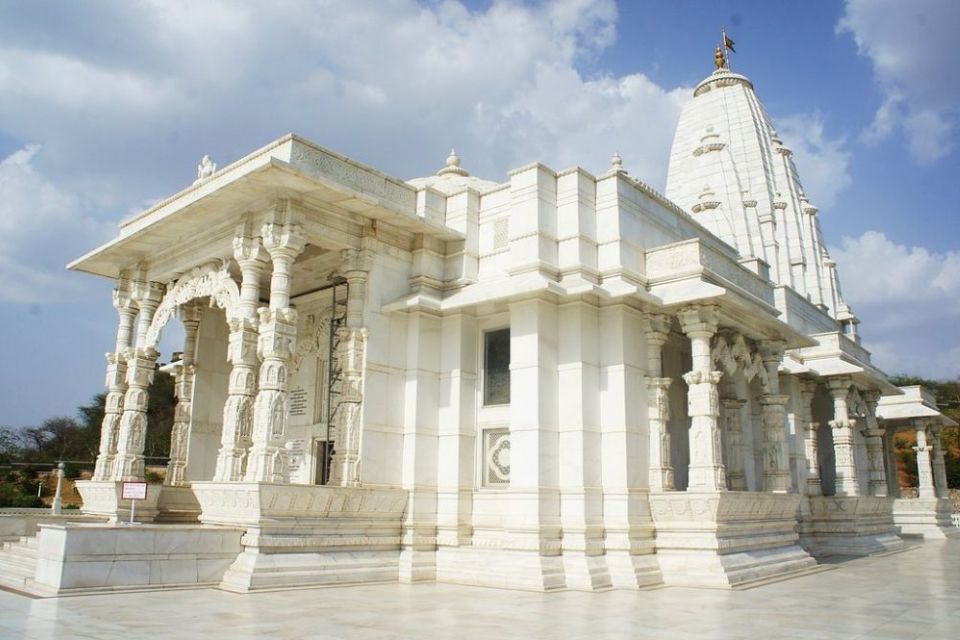
The Birla Mandir Hyderabad is one of the most prominent spiritual landmarks in the city of Hyderabad. Situated atop a hill and constructed entirely of white marble, this temple stands as a shining symbol of devotion to Lord Venkateswara, a revered incarnation of Lord Vishnu.
Consecrated in 1976, the Birla Mandir Hyderabad was built by the Birla family, well-known industrialists who have constructed several temples across India as acts of religious service. The temple rises majestically above the city skyline, offering devotees not only a place of worship but also a serene environment for contemplation and prayer.
In the Vedic tradition, temples serve as sacred centers where devotees can engage in bhakti—loving devotional service to the Supreme Personality of Godhead. The Birla Mandir Hyderabad continues this timeless tradition by offering daily worship and spiritual inspiration to thousands of visitors.
Historical Background of Birla Mandir Hyderabad
The Birla Mandir Hyderabad represents a modern chapter in India’s long tradition of temple construction.
The temple was built by the Birla family, a prominent industrial dynasty known for supporting religious and cultural projects throughout India. Their efforts have resulted in several magnificent temples dedicated to various forms of Lord Vishnu and Lord Shiva.
The construction of the Birla Mandir Hyderabad was completed in 1976, marking the establishment of a major devotional center in the city.
Although relatively modern compared to ancient temples, the spiritual purpose of the temple remains the same as described in Vedic scriptures: to provide a sacred place where devotees can remember and glorify the Supreme Lord.
The Presiding Deity of Birla Mandir Hyderabad
The principal deity worshiped in the Birla Mandir Hyderabad is Lord Venkateswara, a celebrated form of Lord Vishnu.
In Vaishnava theology, Lord Venkateswara is worshiped as the merciful protector of devotees in the age of Kali. He is widely associated with the famous temple of Tirumala in Andhra Pradesh.
The granite deity installed in the Birla Mandir Hyderabad is approximately 11 feet tall, standing in a majestic posture that reflects divine authority and compassion.
Above the deity is a beautifully carved lotus canopy, symbolizing purity and transcendence. In Vedic symbolism, the lotus represents spiritual awakening because it rises above muddy waters yet remains untouched by impurity.
Thus, the deity inspires devotees to cultivate spiritual consciousness while living within the material world.
Architectural Features of Birla Mandir Hyderabad
The Birla Mandir Hyderabad is admired not only for its spiritual atmosphere but also for its remarkable architecture.
Unlike many temples that follow a single architectural style, this temple incorporates elements from different regional traditions of Indian temple design.
A Blend of Architectural Traditions
The temple presents a harmonious mixture of South Indian and Orissan architectural styles.
Visitors entering the temple first encounter a Rajagopuram, a monumental gateway tower built in the South Indian style. Such towers traditionally mark the entrance to sacred temple complexes and symbolize the transition from the material world to a sacred spiritual space.
The main shrine of Lord Venkateswara is crowned by the Jagadananda Vimanam, which reflects architectural influences from Odisha.
Meanwhile, the towers over the shrines of the divine consorts follow the Dravidian style typical of South Indian temple architecture.
The Brass Flagstaff
Another notable feature of the Birla Mandir Hyderabad is the 42-foot brass flagstaff (dhvaja-stambha).
In traditional temple architecture, the flagstaff represents the presence of the Supreme Lord and serves as a symbolic announcement of the temple’s sacred purpose.
Devotees often offer prayers near the flagstaff before entering the main sanctum.
Marble Sculptures and Artistic Carvings
One of the most impressive aspects of the Birla Mandir Hyderabad is its extensive marble craftsmanship.
The temple walls and halls contain numerous carved panels depicting scenes from Indian mythology and sacred literature.
The Mukha Mandapam
The mukha mandapam (entrance hall) contains detailed marble carvings illustrating stories from the Vedas and Purāṇas.
These carvings serve both decorative and educational purposes. In ancient times, temple art was used to communicate spiritual teachings to devotees through visual narratives.
Thus, the sculptures in the Birla Mandir Hyderabad reflect the timeless tradition of conveying philosophical truths through sacred art.
Other Shrines Within Birla Mandir Hyderabad
While Lord Venkateswara is the principal deity of the Birla Mandir Hyderabad, the temple complex also includes shrines dedicated to His divine consorts.
Shrine of Padmavathi
Goddess Padmavathi is worshiped as the consort of Lord Venkateswara and represents the divine energy (Lakshmi-tattva) of the Lord.
Devotees approach her seeking blessings of prosperity, compassion, and spiritual well-being.
Shrine of Andal
Another shrine within the Birla Mandir Hyderabad is dedicated to Andal, the great Vaishnava saint and poetess.
Andal is revered for her intense devotion to Lord Vishnu and her poetic compositions praising the Supreme Lord. Her presence within the temple emphasizes the importance of devotional love in the Vaishnava tradition.
Worship Practices in Birla Mandir Hyderabad
Although the Birla Mandir Hyderabad is a modern temple, the worship conducted here strictly follows ancient scriptural guidelines.
Pancharatra Agama Tradition
The temple rituals are performed according to the Pancharatra Agama, one of the principal Vaishnava systems of temple worship.
The Agamas are sacred texts that describe detailed procedures for deity worship, temple construction, and devotional practices.
According to the Pancharatra tradition, the Supreme Lord manifests in the deity form (arca-avatāra) to accept the loving service of devotees.
Daily worship in the Birla Mandir Hyderabad includes offerings of flowers, incense, lamps, food preparations, and sacred chanting.
Such practices help devotees develop remembrance of the Lord and cultivate humility and devotion.
Spiritual Atmosphere and Night Illumination
One of the unique visual features of the Birla Mandir Hyderabad is its beautiful night illumination.
The temple is floodlit after sunset, causing the white marble structure to glow magnificently against the night sky. This illumination enhances the temple’s beauty and allows visitors to appreciate its architectural elegance even after dark.
The hilltop location of the Birla Mandir Hyderabad also provides panoramic views of the city, creating an atmosphere conducive to peaceful reflection and prayer.
For many visitors, the experience of standing atop the hill and gazing upon the illuminated temple evokes a deep sense of spiritual serenity.
Cultural and Spiritual Importance
The Birla Mandir Hyderabad plays an important role in the spiritual life of the city.
Thousands of devotees visit the temple every year to seek blessings, participate in festivals, and engage in devotional activities.
Although modern in origin, the temple faithfully preserves the ancient principles of bhakti-yoga, the path of loving service to the Supreme Lord.
Such temples help maintain the continuity of Vedic culture by providing spaces where spiritual teachings can be practiced and experienced.
Conclusion: The Spiritual Glory of Birla Mandir Hyderabad
The Birla Mandir Hyderabad stands as a beautiful synthesis of devotion, architecture, and spiritual tradition.
From its majestic marble construction to its sacred worship of Lord Venkateswara, the temple continues to inspire devotees and visitors alike.
More importantly, the Birla Mandir Hyderabad reminds us of the eternal message of the Vedic scriptures: that the Supreme Lord is accessible to all who approach Him with sincere devotion.
By offering prayers, chanting the holy names, and remembering the Lord’s divine qualities, devotees can gradually awaken their spiritual consciousness.
Thus, the Birla Mandir Hyderabad remains not merely a landmark of the city but a sacred place where the eternal practice of devotion continues to flourish.
Deepen your Bhakti-yoga practice, harmonize relationships, and receive guided coaching — all at Vedavarsity.com