Overview
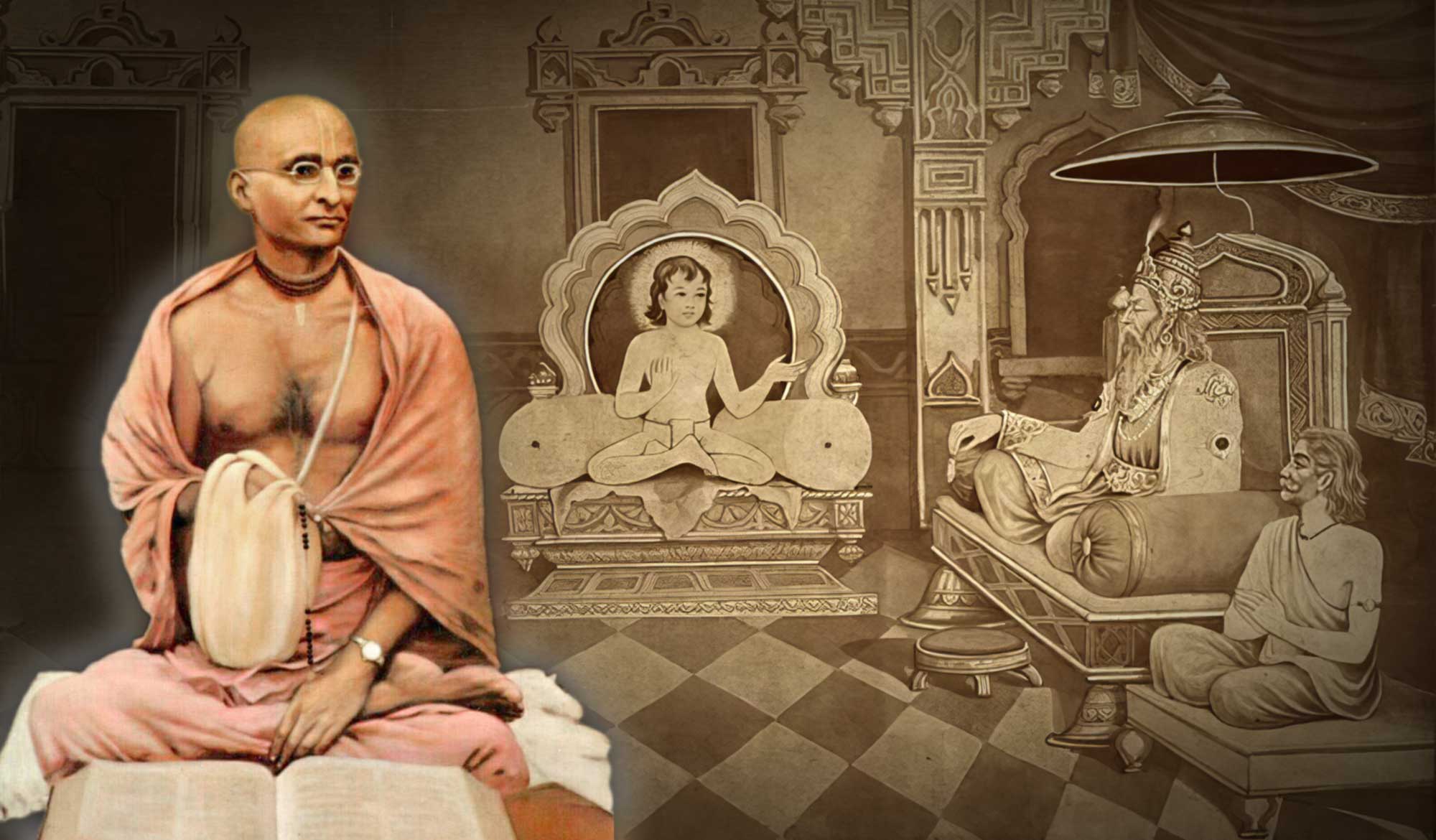
Sajjana – Nirdoṣa (A Devotee is Without Fault) was written by Śrīla Bhaktisiddhānta Sarasvatī Ṭhākura Prabhupāda and published in Sajjana Toṣaṇī, Vol. 20, Issue 6 in 1917. Sarasvatī Ṭhākura discusses twelve faults mentioned in the Mahābhārata and how it is imperative to avoid finding fault with a pure Vaiṣṇava.
Articles in This Series:
In Śrī Mahābhārata, Sanat-sujāta* (1) says:
krodha kāmau lobha mohau vidhitsākṛpāsuye māna-śokau spṛhā ca
īrṣā jugupsā ca manuṣya-doṣā varjyāḥ sadā dvādaśaite narānām
Anger, lust, greed, delusion, selfishness, cruelty, envy, vanity, grief, desire, jealousy, and hatred, are the faults of men. These twelve faults should always be given up by people. (Sanata-Sujātiya 2.16)
Humans should give up all these twelve faults:
Anger – due to the obstruction of desire, one becomes abusive, physically violent, or causes mental anxiety.
Lust – Desiring the association of women.
Greed – Anxiety about money and expenditure.
Delusion – Being devoid of the intelligence of knowing what should be done and what should not be done.
Selfishness – Even after successive gains, one remains unsatisfied and desires more.
Cruelty – Possessing a lack of compassion.
Envy – Finding fault with the virtues of others.
Vanity – Admiring one’s own intelligence.
Grief – Mental agony due to the destruction of one’s self interests.
Desire – A fondness for various kinds of enjoyment.
Jealousy – Jealousy of the success and prosperity of others.
Hatred – Slandering others.
These twelve kinds of faults can lead to the total destruction of any individual. When these twelve combine together, the result is so disastrous for a person that it is beyond description. Devotees do not harbour any of these twelve kinds of human faults.
Apart from the aforementioned twelve faults, there are eighteen more faults in an uncontrolled person. Sanat-sujāta states that there are twenty-four more faults, including eighteen kinds of faults leading to delusion, and six kinds of faults related to lack of renunciation *(2) A Vaiṣṇava sādhu is free from all these faults.
The māyāvādī is an offender to the lotus feet of Hari, and he is the instigator of those who are adverse to the service of Kṛṣṇa. All his faults do not affect the devotee.
An unintelligent pseudo-devotee, who does not intrinsically identify as a Vaiṣṇava, falls into various kinds of faults. Unable to comprehend the inherent wretchedness within himself, and perceiving wretchedness in the pure character of a devotee, he becomes an offender at the feet of Vaiṣṇavas. The attempts of the kaniṣṭha to imitate the bhāgavata devotees creates obstacles to progress in their position (adhikāra). Hearing the intense statements of Vṛndāvana Dāsa Ṭhākura directed towards those who are envious of the devotees, they perceive a lack of humility in them. If one considers those who endeavour to avoid the sinful character of the sahajiyās, or those who reveal one’s lack of understanding in subjects related to the nadīyā-nāgarīs, to be lacking in humility, it will result in no gain beyond one’s own loss.*(3) The conclusions of those with komala-śraddhā (weak faith) are inaccurate and one-sided. Taking an axe to their own legs, they consider their well-wishers to be their enemy, and by probing for flaws in those that follow the path of virtue, they manifest their own lack of humility.
Understanding the inherent nature of humility, devotees do not closely associate with the ignorant in order to try and gain prestige. This is because they are devoid of faults. Instead of encouraging the māyāvādī from Bengal with sweet words and soft statements, Śrī Dāmodara Svārūpa left aside deceitful humility and desired his auspiciousness. *(4) For the welfare of Śrī Vallabha Bhaṭṭa, and to rescue Śrī Kāla Kṛṣṇa Dāsa from the Bhaṭṭathārīs, the Teacher of the supreme truth of tṛṇādapi sunīca has not committed any fault. On the other hand, people with komala-śraddhā and inexperience, being unable to see the intrinsic nature of tṛṇādapi sunīca in a pure Vaiṣṇava, intend to criticise him, considering him to be an enemy. If they conclude that a Vaiṣṇava lacks humility then their komala-śraddhā will be tainted by these faults.
If a devotee is understood to be faultless, then his truthfulness, his genuine modest nature and his humility will be perceived. When there is good fortune, the defects of those who are innocent will diminish and they can become faultless like the devotees.
TRANSLATOR’S NOTES:
(1) Sanat-sujāta is another name for Sanat Kumāra, one of the Catuḥsana. In the Udyoga-parva of the Mahābhārata, Vidura invokes him to answer the questions of Dhṛtarāṣṭra concerning the ātmā. This section of the Mahābhārata is called the Sanat-sujātīya, and was given prominence by Ādi Śaṅkarācārya, who wrote a commentary on it.
(2) The eighteen faults leading to delusion are – 1) Showing ill-will towards others. 2) Creating problems for noble acts. 3) Minimising others. 4) Speaking lies. 5) Being tempted by sense-objects. 6) Lack of contentment. 7) Over-dependence on others. 8) Telling someone their defects to their face. 9) Finding the faults of others in order to gossip. 10) Wasting one’s wealth. 11) Quarreling. 12) Lamenting over past sorrows. 13) Ignorance. 14) Disrespecting those who are honourable. 15) Committing forbidden activities. 16) Harming others. 17) Failure to attain perfection in dharma. 18) Inability to tolerate duality such as heat and cold etc.
The six faults related to lack of renunciation are – 1) Being overly attached when one becomes prosperous. 2) Attachment to materialistic rituals. 3) Attachment to material possessions. 4) Grieving when one’s actions fail. 5) Attachment to family members 6) Not giving donations to those who are worthy recipients.
(3) Nadīyā-nāgarī is another name for the gaurāṅga-nāgarīs, a sect of pseudo Vaiṣṇavas who erroneously believe that Mahāprabhu was a nāgara (an enjoyer of women) and sported with the women of Nadīyā in His youth.
(4) This incident refers to Svarūpa Dāmodara’s chastisement of the Bengali scholar found in Caitanya-caritāmṛta, Antya-līlā, Chapter 5.
Deepen your Bhakti-yoga practice, harmonize relationships, and receive guided coaching — all at Vedavarsity.com