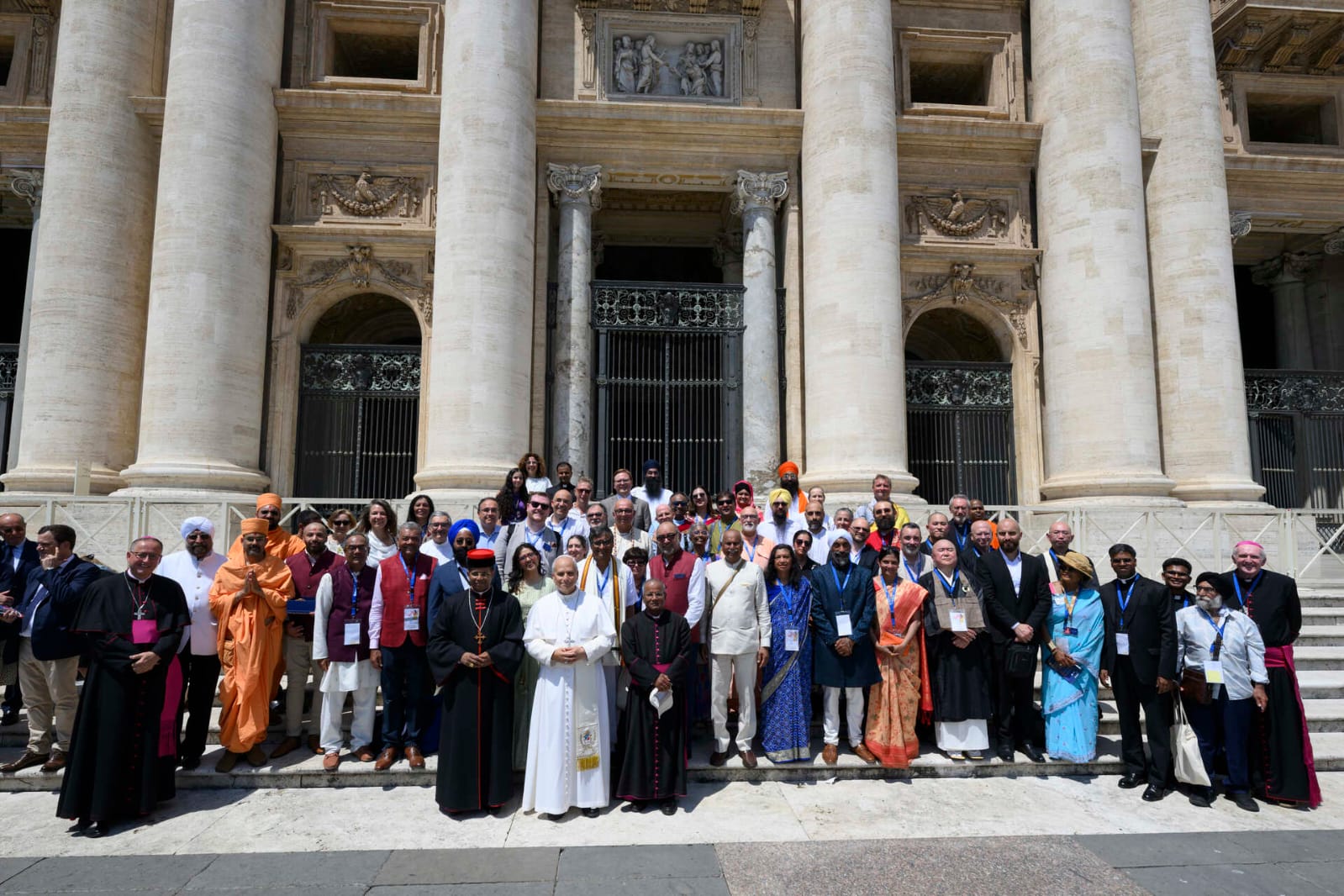
The ISKCON Vatican Interreligious Gathering marked another significant step in fostering mutual understanding among the world’s religious communities. On June 23–24, 2026, representatives from Hindu, Buddhist, Christian, Jain, and Sikh traditions assembled at the Pontifical University of Saint Thomas Aquinas (Angelicum) in Rome for the Second Conference on Dharmic Traditions and Christianity in Europe.
The conference demonstrated that while religious traditions maintain their unique theological identities, they can work together in promoting peace, compassion, moral responsibility, and the welfare of humanity. From the Vedic perspective, genuine dialogue flourishes when it is rooted in respect, humility, and an honest desire to understand others without compromising one’s own spiritual convictions.
ISKCON Vatican Interreligious Gathering Brings Together Global Faith Leaders
The conference was organized under the theme:
“Buddhists, Christians, Hindus, Jains, and Sikhs in Europe: Building Fraternity through Dialogue and Collaboration.”
It was promoted by the Dicastery for Interreligious Dialogue of the Holy See in cooperation with several respected religious organizations, including:
- Council of European Bishops’ Conferences (CCEE)
- European Buddhist Union
- Focolare Movement
- Hindu Forum of Europe
- Institute of Jainology
- Institute for Interreligious Relations (Angelicum)
- Sikhi Sewa Society
- World Council of Churches
The gathering reflected an increasing global recognition that meaningful cooperation among faith traditions contributes positively to society while preserving each tradition’s spiritual heritage.
ISKCON Represents the Vaishnava Tradition
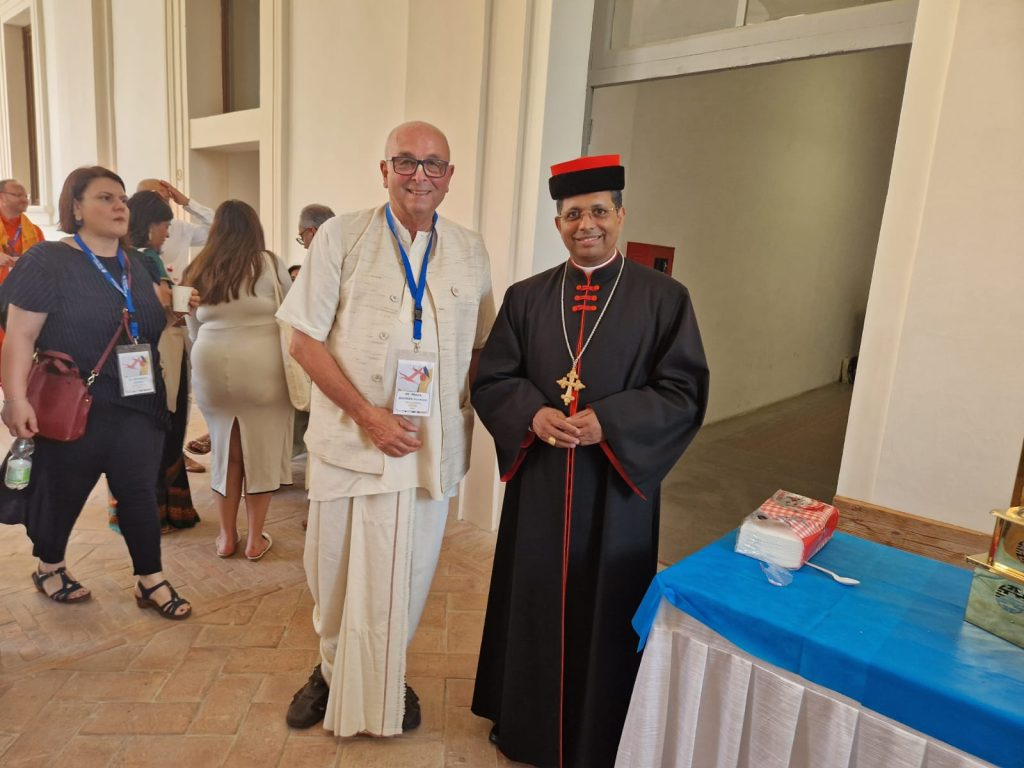
Representing the International Society for Krishna Consciousness (ISKCON) was Parabhakti Dasa, who participated in discussions as part of the Hindu delegation.
His participation highlighted ISKCON’s continuing contribution to international interfaith engagement through the timeless teachings of Sanātana-dharma, the eternal spiritual science presented in the Bhagavad-gītā and Śrīmad-Bhāgavatam.
Founded by His Divine Grace A.C. Bhaktivedanta Swami Prabhupāda, ISKCON has consistently encouraged respectful dialogue while faithfully presenting the philosophy of bhakti-yoga as a practical path toward spiritual realization.
Srila Prabhupāda often explained that genuine religion awakens love of God and compassion toward all living beings. Such principles naturally create opportunities for cooperation among sincere spiritual practitioners.
Distinguished Leadership from the Vatican
The conference was hosted by Cardinal George Jacob Koovakad, Prefect of the Dicastery for Interreligious Dialogue and the Holy See’s principal representative for interfaith relations.
He was joined by Monsignor Santiago, who oversees the Dicastery’s engagement with Indian and Asian religious traditions.
The broad coalition of organizers illustrated a growing commitment among religious institutions to encourage constructive dialogue that benefits society while respecting theological diversity.
Scholars and Spiritual Leaders Exchange Perspectives
One of the distinctive features of the conference was the balance between academic scholarship and practical spiritual experience.
Leading sociologists, researchers, and scholars examined the changing religious landscape of Europe, addressing subjects such as:
- Religious pluralism
- Social cohesion
- Cultural diversity
- Challenges to peaceful coexistence
- Opportunities for interfaith cooperation
Alongside these presentations, spiritual leaders shared practical experiences from their own communities, offering valuable insights into how faith traditions contribute to ethical living, family values, community service, and spiritual education.
This combination of scholarly analysis and lived experience enriched the discussions and provided practical direction for future collaboration.
Building Fraternity Through Dialogue
Throughout the conference, participants repeatedly emphasized that fraternity is not merely an ideal but a responsibility.
Modern societies increasingly face challenges including:
- Social polarization
- Cultural fragmentation
- Declining trust
- Moral uncertainty
- Isolation and conflict
The delegates affirmed that religious communities have an important role in helping restore mutual respect, compassion, and shared responsibility.
From the Vedic viewpoint, every living being is an eternal soul (ātmā), part and parcel of the Supreme Lord. When this spiritual understanding becomes the foundation of human relationships, genuine respect naturally develops beyond external differences of nationality, culture, or religion.
As Lord Krishna teaches in the Bhagavad-gītā, a wise person sees all living beings with equal vision. Such spiritual vision becomes the basis for authentic fraternity.
Remaining Faithful While Respecting Others
An important conclusion reached during the conference was that authentic interreligious dialogue does not require abandoning one’s own beliefs.
Rather, participants agreed that meaningful dialogue becomes possible when individuals remain firmly rooted in their own spiritual traditions while approaching others with humility and openness.
This principle closely reflects the teachings of the Vaishnava ācāryas.
Srila Prabhupāda encouraged presenting Krishna consciousness with clarity, compassion, and philosophical confidence, while maintaining respectful dealings with people from all backgrounds.
Respect does not require compromising truth. Instead, genuine dialogue allows sincere seekers to exchange wisdom while remaining faithful to their own spiritual paths.
Audience with Pope Leo XIV
A particularly memorable moment occurred on the second day when conference delegates attended the traditional Wednesday General Audience with Pope Leo XIV in St. Peter’s Square.
For many participants, gathering together after two days of dialogue symbolized the practical expression of the conference’s central message.
Leaders from different faith traditions stood together in one of Christianity’s most sacred places, demonstrating that mutual respect and peaceful coexistence are both possible and necessary in today’s world.
ISKCON’s Growing Contribution to Global Dialogue
Over the decades, ISKCON has expanded beyond its role as a spiritual movement dedicated to devotional practice.
Today, it actively contributes to:
- Interfaith dialogue
- Academic discussions
- Humanitarian service
- Cultural education
- Food relief programs
- Environmental awareness
- Youth development
The participation of ISKCON in this Vatican conference reflects the increasing recognition of the Vaishnava tradition as an important contributor to discussions on ethics, spirituality, peace, and social harmony.
The teachings of bhakti emphasize that real transformation begins within the heart. When individuals cultivate humility, compassion, self-discipline, and devotion to God, these qualities naturally extend into society through service and cooperation.
A Shared Commitment to Peace
At the conclusion of the conference, participants reaffirmed their collective commitment to promoting dialogue, fraternity, and collaboration throughout Europe.
Rather than viewing religious diversity as a source of division, the gathering encouraged communities to recognize shared ethical values while appreciating genuine theological differences.
Such cooperation does not erase distinctions but encourages peaceful coexistence built upon mutual respect and responsible engagement.
In Vedic understanding, dharma is ultimately meant to elevate human consciousness toward service to the Supreme and compassion toward all living beings. Whenever sincere efforts encourage peace, understanding, and spiritual growth, they contribute positively to society.
Conclusion
The ISKCON Vatican Interreligious Gathering in Rome stands as an encouraging example of respectful engagement among diverse faith communities. By participating alongside representatives of Buddhism, Christianity, Jainism, Sikhism, and other Hindu traditions, ISKCON reaffirmed the universal values of compassion, humility, service, and God-conscious living.
Inspired by the teachings of His Divine Grace A.C. Bhaktivedanta Swami Prabhupāda, ISKCON continues to present the timeless wisdom of Sanātana-dharma while building bridges of understanding across cultures and religions.
As the Bhagavad-gītā teaches, genuine peace begins with spiritual understanding. When individuals recognize the divine presence within every living being and act according to dharma, fraternity becomes more than an aspiration—it becomes a natural expression of higher consciousness.
library.vedavarsity.com || www.vedavarsity.com
Deepen your Bhakti-yoga practice, harmonize relationships, and receive guided coaching — all at Vedavarsity.com