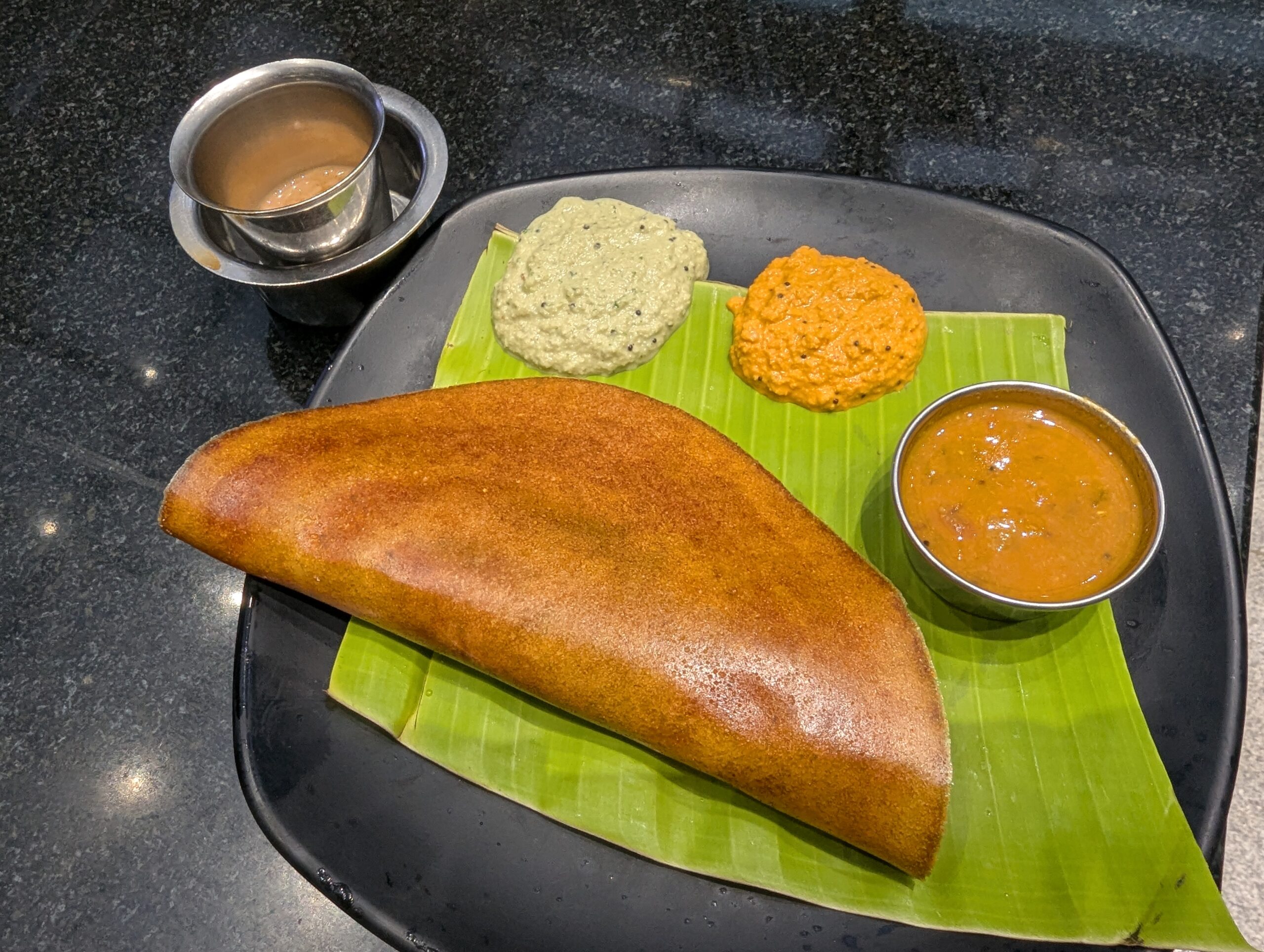
The Masala Dosa Recipe is one of the most celebrated preparations in South Indian cuisine. Known for its thin, crisp texture and savory potato filling, masala dosa has become a favorite throughout India and increasingly around the world.
Traditionally served fresh and hot, this preparation combines fermented rice and urad dal batter with a carefully seasoned potato masala. Coconut chutney and sambar are commonly served alongside, creating a balanced and satisfying meal.
Beyond its culinary appeal, masala dosa reflects a timeless principle found in traditional Vedic cooking: simple ingredients, when prepared with patience, skill, and care, can produce extraordinary results. The fermentation process, careful cooking, and balanced spices all contribute to a preparation that has remained popular for generations.
What Is Masala Dosa?
Masala dosa is a thin fermented pancake made primarily from rice and urad dal (black gram). Unlike plain dosa, masala dosa includes a savory filling of spiced potatoes seasoned with ginger, coconut, mustard seeds, cumin, turmeric, and fresh coriander.
The dish is known for its contrast of textures:
- Crisp golden exterior
- Soft and flavorful potato filling
- Fresh accompaniments such as chutney and salad
Because it contains grains, legumes, vegetables, and spices, masala dosa is often enjoyed as a complete meal rather than merely a snack.
Why the Masala Dosa Recipe Is Unique
Several features distinguish this traditional preparation:
Fermented Batter
The fermentation process develops flavor, improves texture, and contributes to the dosa’s characteristic crispness.
Balanced Ingredients
Rice provides structure, while urad dal contributes softness and binding qualities.
Aromatic Spice Blend
The potato filling gains depth from cumin seeds, mustard seeds, ginger, turmeric, fresh chilies, and coriander.
Traditional Serving Style
Masala dosa is traditionally accompanied by coconut chutney, sambar, and fresh salad, creating a complete South Indian meal.
Masala Dosa Recipe
Preparation Details
Preparation Time: 30 minutes
Standing Time: 1–2 hours or overnight
Cooking Time: Approximately 5 minutes per dosa
Ingredients
For the Dosa Batter
- 1 cup (175 g) short-grained white rice, washed
- ½ cup (100 g) urad dal, sorted and washed
- 1 fresh chili, chopped
- ½ teaspoon brown sugar
- ½ teaspoon salt
For the Potato Filling
- 10 medium-sized potatoes
- 4 tablespoons grated coconut
- 3 teaspoons grated fresh ginger
- 1 fresh chili, chopped
- 4 tablespoons ghee
- 2 teaspoons cumin seeds
- 2 teaspoons black mustard seeds
- 1½ teaspoons turmeric
- 2 tablespoons chopped coriander leaves
- Remaining 2 teaspoons salt
Additional Ingredients
- Ghee or vegetable oil for greasing the griddle
- 2 tablespoons butter for toasting filled dosas
How to Prepare the Dosa Batter
Step 1: Soak the Rice and Dal
Place the rice and urad dal in separate bowls.
Cover each with water and soak overnight.
Step 2: Prepare Smooth Batters
Wash and drain the soaked rice and dal separately.
Blend each ingredient separately using enough water to create smooth batters.
Step 3: Combine and Ferment
Transfer both batters into a large bowl.
Add:
- One chopped chili
- Brown sugar
- ½ teaspoon salt
Beat thoroughly until well combined.
Cover the bowl and place it in a warm location for one to two hours. If possible, allow it to ferment overnight for improved flavor and texture.
The finished batter should have a smooth pouring consistency.
How to Cook the Dosas
Step 1: Prepare the Griddle
Lightly grease a griddle or tava with approximately ½ teaspoon of ghee or vegetable oil.
Heat over medium temperature.
To test readiness, sprinkle a few drops of water onto the surface. If they bounce and sputter, the griddle is ready.
Step 2: Spread the Batter
Pour approximately four tablespoons of batter onto the center of the griddle.
Using the back of a spoon, spread the batter outward in a circular motion.
The dosa should be approximately 8 inches (20 cm) in diameter.
One of the defining skills in dosa preparation is spreading the batter thinly before the heat causes it to set.
Step 3: Cook Until Crisp
Cook for 2 to 3 minutes until the underside becomes golden-brown.
Turn once and cook the second side briefly.
The first side generally browns more evenly than the second.
Continue preparing dosas until all batter has been used.
Stack the finished dosas on a plate to keep them warm and moist while preparing the filling.
Preparing the Potato Masala Filling
Step 1: Cook the Potatoes
Boil the potatoes until soft.
Peel and mash them coarsely using a fork or potato masher.
Step 2: Make the Masala Paste
Grind together:
- Grated coconut
- Remaining chopped chili
- Fresh ginger
- A few drops of water
Blend until a smooth paste forms.
Step 3: Temper the Spices
Heat the ghee in a medium saucepan.
Add:
- Cumin seeds
- Black mustard seeds
Allow the mustard seeds to begin sputtering.
Add the prepared masala paste and cook for approximately one minute.
Step 4: Finish the Filling
Add turmeric immediately followed by:
- Mashed potatoes
- Chopped coriander leaves
- Remaining salt
Stir-fry for approximately five minutes.
Remove from heat and set aside.
Assembling the Masala Dosa
Divide the potato filling into portions corresponding to the number of dosas prepared.
Place one portion in the center of each dosa.
Fold the dosa in half over the filling.
Lightly grease a frying pan with butter.
Toast both sides of each filled dosa until heated through and lightly crisp.
Serve immediately.
Traditional Serving Suggestions
Masala dosa is traditionally served with:
Coconut Chutney
Fresh coconut chutney provides cooling contrast to the warm spices.
Sambar
This lentil-based vegetable preparation is a staple accompaniment throughout South India.
Fresh Tomato Salad
Fresh vegetables contribute balance and freshness to the meal.
Together, these preparations form a complete and satisfying South Indian dining experience.
The Significance of Patience in Traditional Cooking
One of the notable aspects of the Masala Dosa Recipe is the importance of patience. The soaking, grinding, fermenting, and careful cooking processes cannot be rushed without affecting the final result.
This reflects a broader principle recognized throughout Vedic culture: worthwhile results often arise from disciplined effort applied over time. Just as actions produce corresponding results according to the law of karma, careful attention in cooking naturally produces superior outcomes.
Food prepared thoughtfully not only nourishes the body but also encourages gratitude and mindfulness.
Nutritional Benefits
Masala dosa offers a balanced combination of nutrients:
- Complex carbohydrates from rice
- Protein from urad dal
- Fiber from potatoes and spices
- Essential minerals and micronutrients
- Natural flavors from fresh ingredients
When served with chutney and sambar, the meal becomes even more nutritionally complete.
Conclusion
This traditional Masala Dosa Recipe remains one of the finest examples of South Indian culinary heritage. Its crisp fermented pancake, aromatic potato filling, and classic accompaniments create a meal that is both satisfying and memorable.
More than a popular food, masala dosa demonstrates how patience, skill, and simple ingredients can work together to produce exceptional results. Prepared with care and gratitude, it serves as a reminder that even ordinary daily activities can be elevated when performed with attention and higher purpose
Deepen your Bhakti-yoga practice, harmonize relationships, and receive guided coaching — all at Vedavarsity.com