


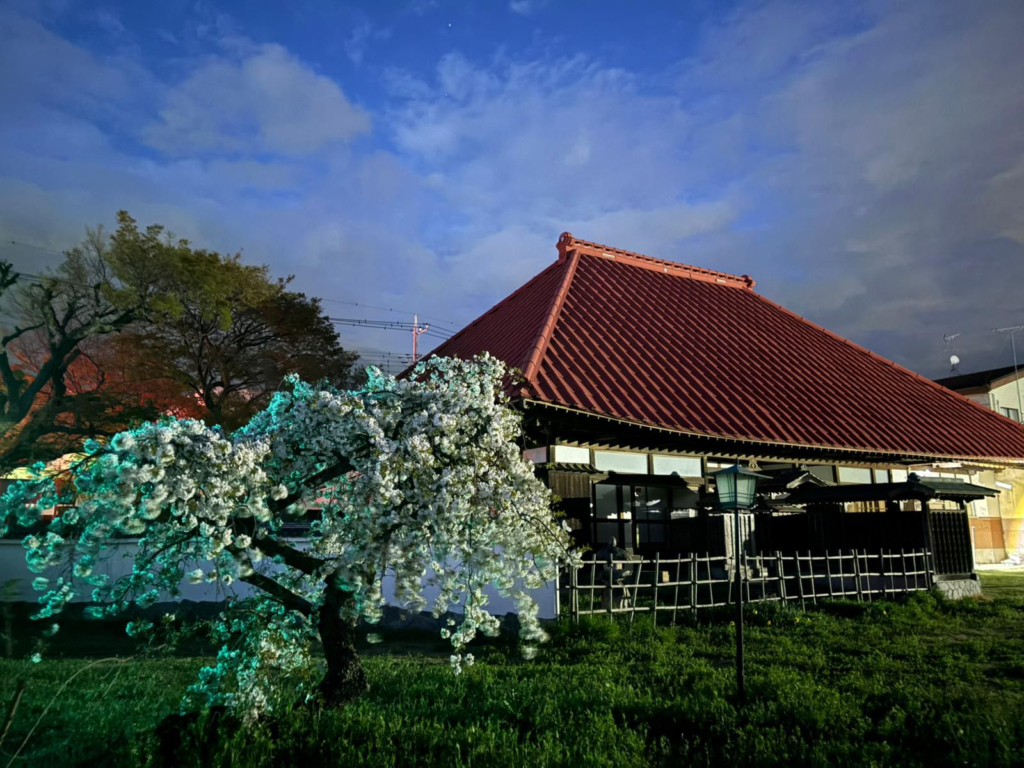
The newly established ISKCON Tsukuba Center in Japan marks a significant step in the continued growth of Krishna consciousness outreach throughout the country. Operating from a preserved 180-year-old samurai house in Tsukuba, the project combines traditional Japanese culture with the timeless teachings of bhakti-yoga in a thoughtful and natural way.
The center was formally inaugurated earlier this year during the visit of Kavichandra Swami. Led by the grihastha couple Sudama Das and Ujjvala Gopi Devi Dasi, together with their son Bhagavat-Marg, the initiative reflects years of sincere community engagement, cultural outreach, and gradual relationship-building.
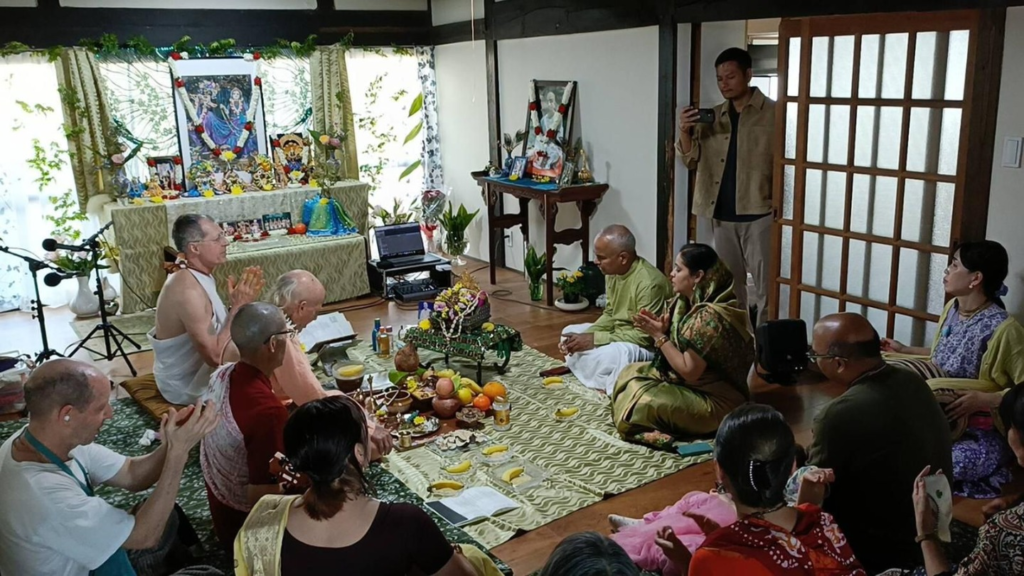
Situated in one of Japan’s leading scientific and educational regions, the ISKCON Tsukuba Center now serves as a place for kirtan, Bhagavad-gita discussions, vegetarian cooking programs, yoga gatherings, and spiritual dialogue.
ISKCON Tsukuba Center and the Growth of Preaching in Japan
Sudama Das first arrived in Japan in 2001 and has spent more than two decades assisting ISKCON preaching efforts while simultaneously working in the semiconductor industry. Over time, small devotional gatherings in Yokohama gradually developed into broader outreach programs.
“Our first Janmashtami celebration in Yokohama in 2018 encouraged us to think more seriously about long-term preaching,” Sudama explained.
Eventually, Tsukuba became the natural location for expansion. Known internationally for its universities, laboratories, and scientific institutions, the city attracts researchers, students, and professionals from many countries.
According to Sudama Das, Tsukuba presents a unique environment for spiritual outreach because many residents approach religion and philosophy analytically and thoughtfully.
“People here tend to examine spiritual ideas carefully,” he said. “That requires patience, honesty, and genuine relationships.”
Rather than immediately emphasizing formal religious presentation, the family focused first on human connection and trust. They participated in neighborhood associations, attended local gatherings, and invited guests into their home for prasadam and discussion.
This gradual approach reflects an important Vedic principle: meaningful transformation often develops through sincere association rather than forceful persuasion.
Building Relationships Through Culture and Hospitality
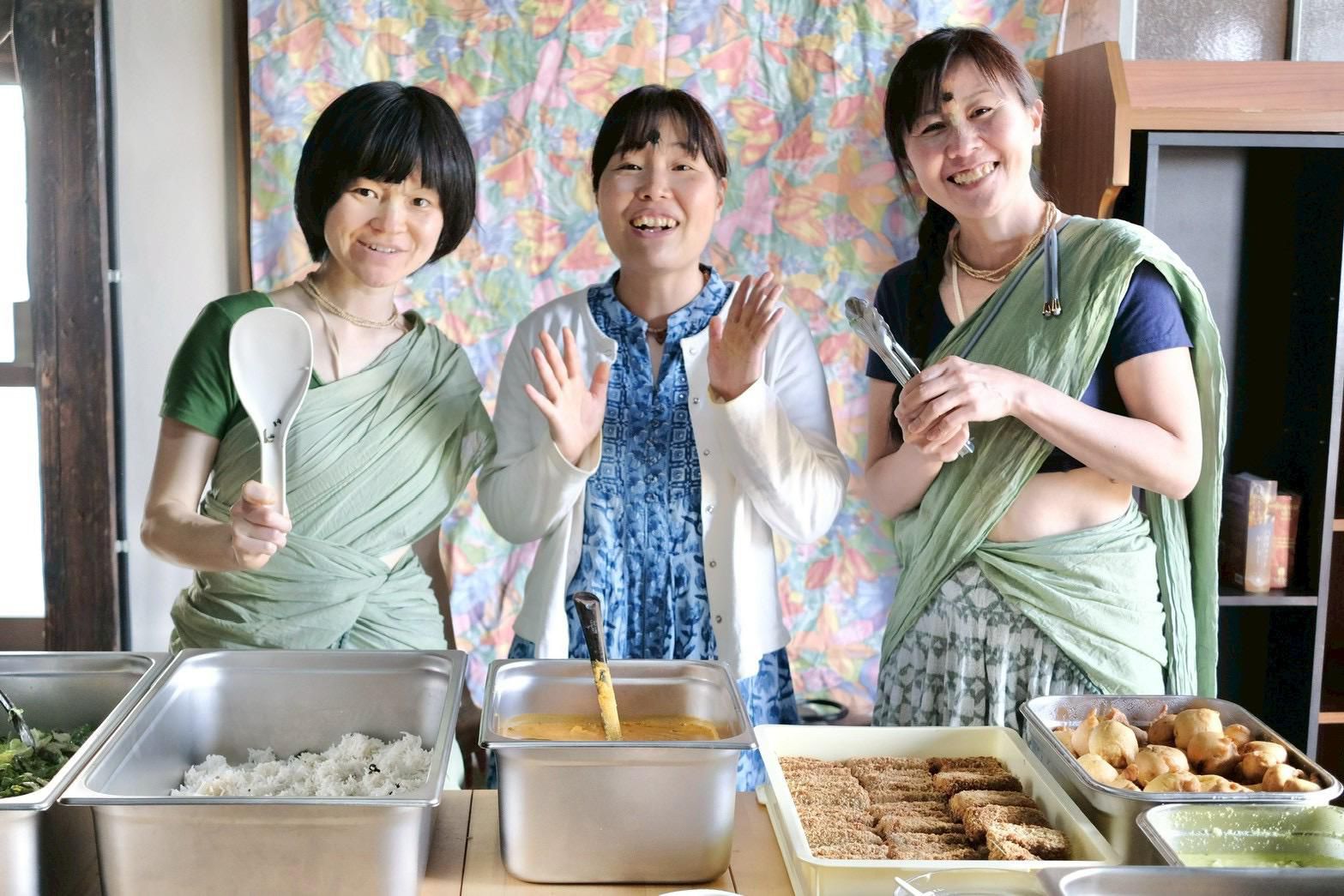
Vegetarian cooking and cultural exchange created natural connections
For Ujjvala Gopi Devi Dasi, cooking became one of the most effective forms of outreach.
“Japanese people deeply appreciate hospitality and food culture,” she explained. “Many first became interested through vegetarian cooking, Ayurveda, yoga, and cultural programs.”
These activities later expanded into collaborations with wellness groups and local community spaces.
Language also played a significant role in establishing trust. Following encouragement from Kavichandra Swami after marriage, Ujjvala Gopi dedicated herself to learning Japanese more deeply.
“That helped me communicate naturally and openly with people,” she said.
The family observed that many participants were not actively seeking organized religion. Instead, they were searching for peace, meaningful relationships, healthier lifestyles, and spaces for reflection—especially following the isolation experienced during the COVID-19 pandemic.
“Some gradually became vegetarian,” Ujjvala Gopi noted. “Others began chanting Hare Krishna. Some simply appreciated having a peaceful place to visit.”
Their son Bhagavat-Marg, currently studying medicine in Dublin after growing up in Japan, observed a particular sincerity among Japanese practitioners and guests.
“When Japanese people accept something meaningful, they often pursue it steadily and carefully,” he said. “I frequently saw that quality in devotional service and kirtan.”
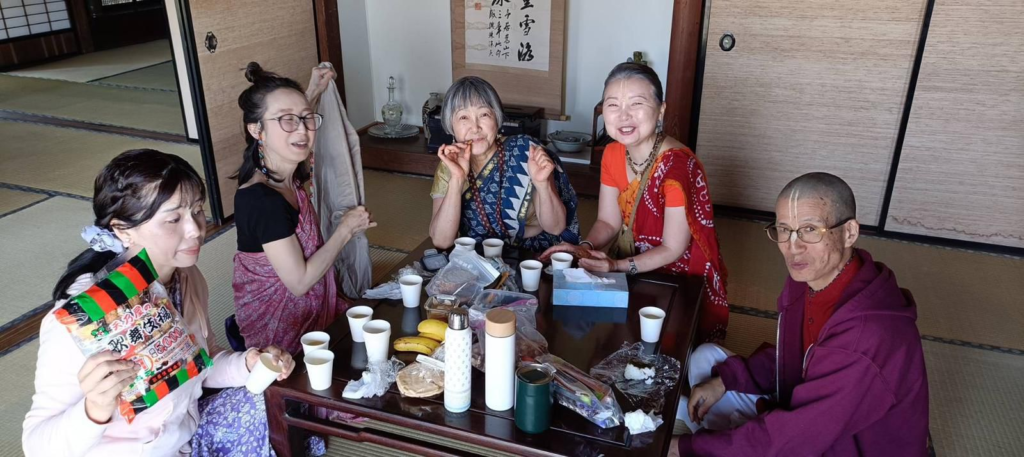
Discovering the Historic Samurai House
A traditional Japanese environment for devotional life
As outreach expanded, the family increasingly recognized the need for a permanent gathering place. Renting public halls became difficult during and after the pandemic years.
At the same time, Sudama Das carried a personal aspiration: to establish Krishna consciousness within a traditional Japanese setting rather than a modern institutional structure.
“I often wondered how Krishna consciousness would appear when practiced naturally inside a traditional Japanese home,” he reflected.
After months of searching, Ujjvala Gopi discovered a newly listed property located only minutes from their residence. The house, estimated to be approximately 180 years old, originally belonged to a samurai family and still preserved many traditional architectural features.
Tatami rooms, sliding doors, wooden halls, gardens, and historical interiors remained intact.
“When we first entered the property, we immediately felt something special,” Sudama recalled.
To help finance the purchase responsibly, the family sold their own home and relocated to a smaller nearby residence.
“We wanted the project to develop without creating unnecessary financial burden,” Sudama explained.
Their sacrifice reflects a traditional understanding of dharma, or responsible duty performed with long-term vision and spiritual purpose.
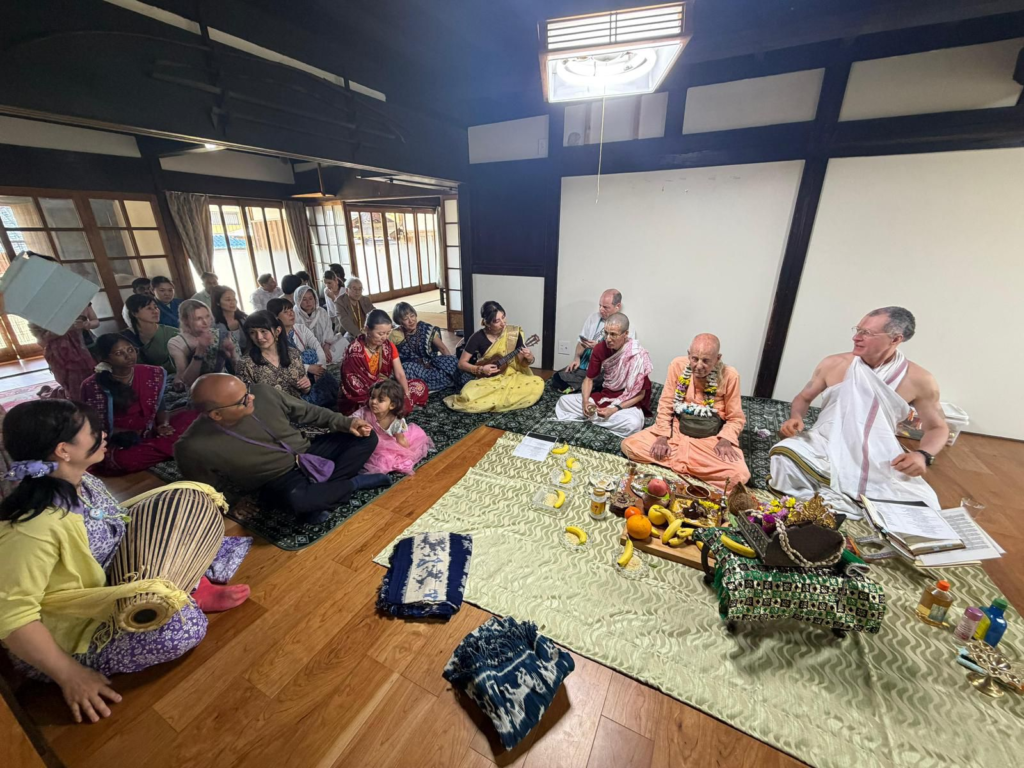
Preserving Japanese Identity Within Krishna Consciousness
One of the defining principles of the ISKCON Tsukuba Center has been preserving the cultural identity of the samurai house itself.
According to Sudama Das, Kavichandra Swami specifically instructed the family not to significantly alter the property.
“Maharaj told us, ‘Don’t change even a pin,’” Sudama said.
The purpose was clear: Japanese visitors should immediately feel familiarity and cultural connection upon entering the space.
Rather than presenting Krishna consciousness as foreign or culturally separate, the project seeks harmony between traditional Japanese aesthetics and devotional practice.
This approach aligns with the broader Vedic understanding that spiritual truth is universal and can naturally be expressed through different cultures when centered upon sincere devotion.
Today, the sound of mridanga and kartals echoes through wooden corridors once occupied by samurai families generations ago. Guests gather beneath preserved maple trees and traditional gardens for kirtan, prasadam, and philosophical discussions.
“When people hear kirtan here, it feels natural to them,” Sudama observed. “The environment itself helps create that feeling.”
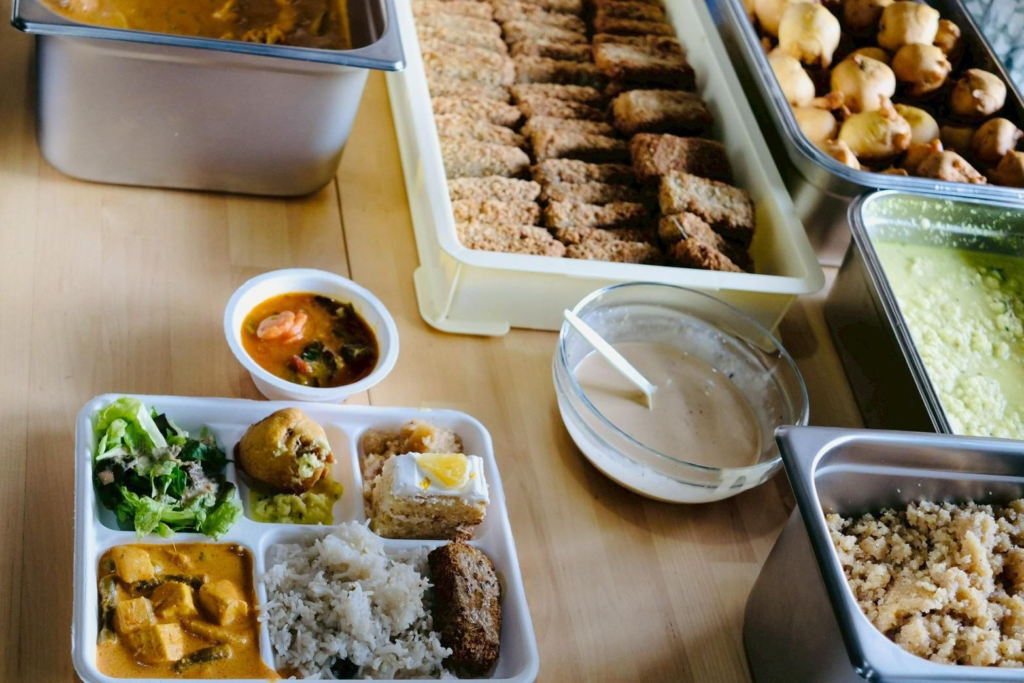
Future Vision for the ISKCON Tsukuba Center
Although still in its early stages, the ISKCON Tsukuba Center aims to gradually expand its role as a spiritual and cultural gathering place for both Japanese residents and the international community.
Future plans include:
- Regular kirtan gatherings
- Bhagavad-gita study programs
- Yoga and meditation retreats
- Youth outreach initiatives
- Vegetarian cooking seminars
- Cultural exchange events
Sudama Das also emphasized the importance of developing future Japanese leadership within ISKCON.
“Kavichandra Maharaj consistently encourages the cultivation of Japanese devotees who can guide and strengthen the Yatra themselves,” he said.
The project is therefore not focused on rapid institutional growth, but on developing stable relationships and authentic spiritual culture over time.
Conclusion
The establishment of the ISKCON Tsukuba Center inside a preserved samurai house represents more than the opening of another preaching facility. It reflects a thoughtful effort to harmonize timeless spiritual wisdom with local culture, community life, and sincere human connection.
In a modern world often marked by speed, isolation, and anxiety, the quiet atmosphere of this traditional Japanese residence offers something increasingly rare: a place for reflection, sacred sound, and meaningful association.
Through gradual outreach, respectful cultural integration, and devotional service, the project demonstrates how Krishna consciousness can naturally flourish within diverse societies without losing philosophical depth or spiritual authenticity.
As taught in the Bhagavad-gita, genuine spiritual life develops steadily through sincere association, disciplined practice, and purified consciousness. The unfolding work at the ISKCON Tsukuba Center appears to embody that principle in a uniquely Japanese setting.
library.vedavarsity.com || www.vedavarsity.com
Deepen your Bhakti-yoga practice, harmonize relationships, and receive guided coaching — all at Vedavarsity.com