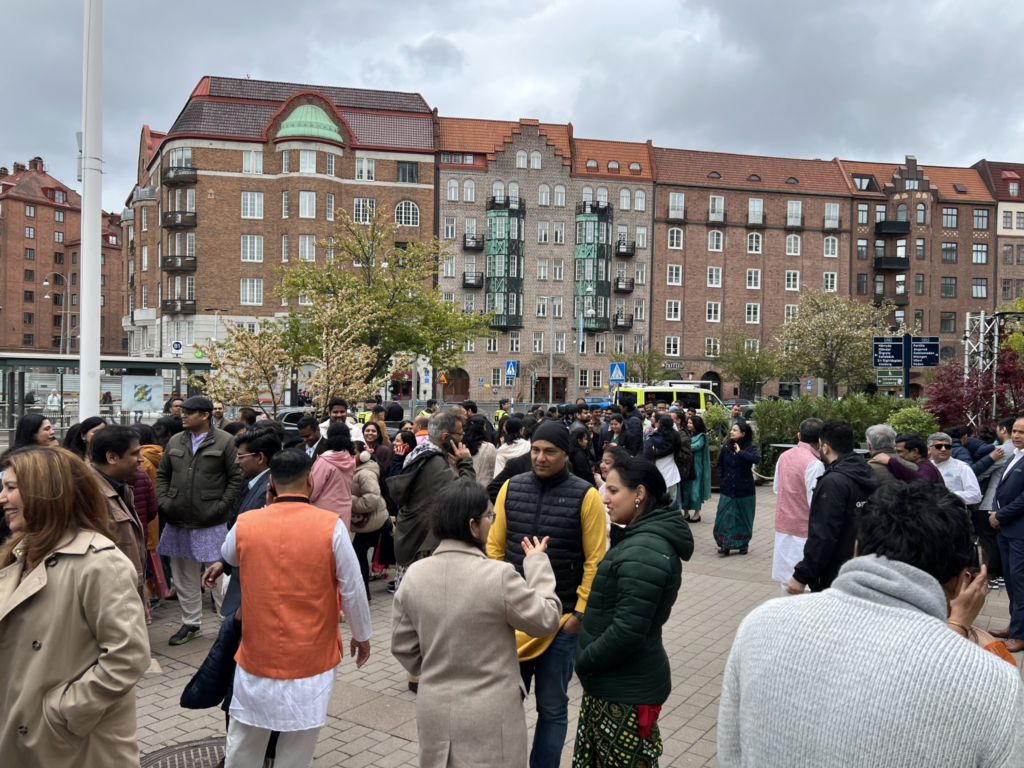
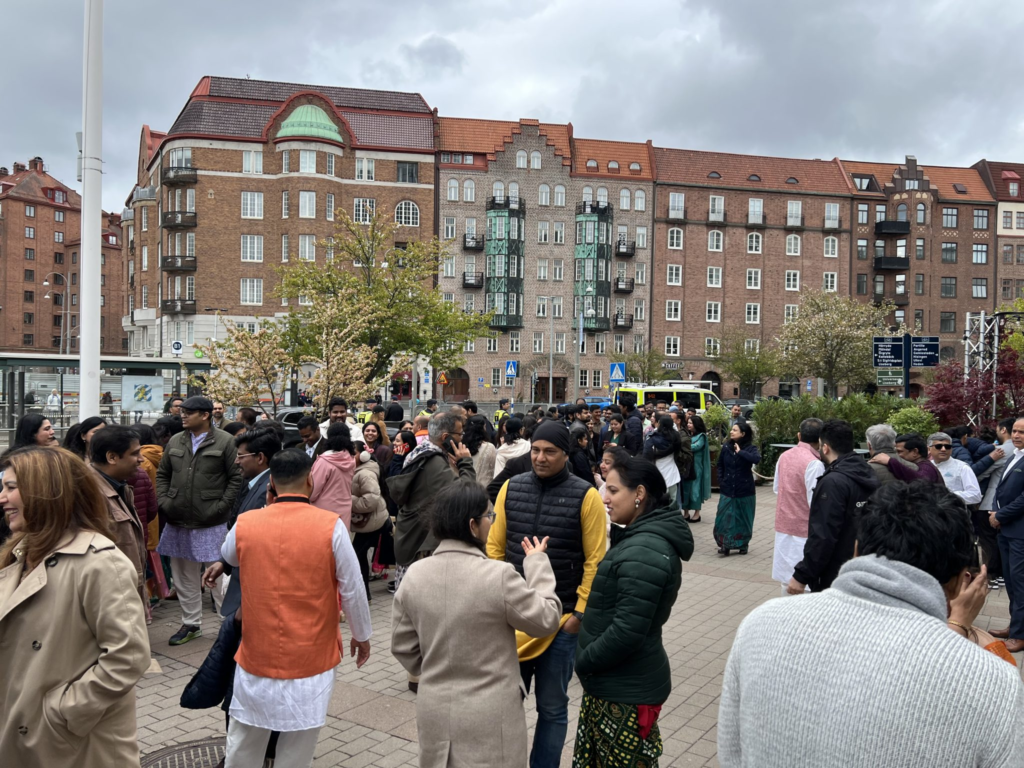
Prime Minister Narendra Modi was warmly welcomed by members of the Indian diaspora and devotees of International Society for Krishna Consciousness during an official gathering hosted by the Indian Embassy at Gothia Towers in Gothenburg on May 17, 2026.
The event took place during Modi’s official visit to Sweden, where discussions centered on strengthening bilateral cooperation in trade, innovation, sustainability, and the green transition. The gathering reflected not only diplomatic engagement between nations but also the cultural continuity maintained by Indians living abroad.
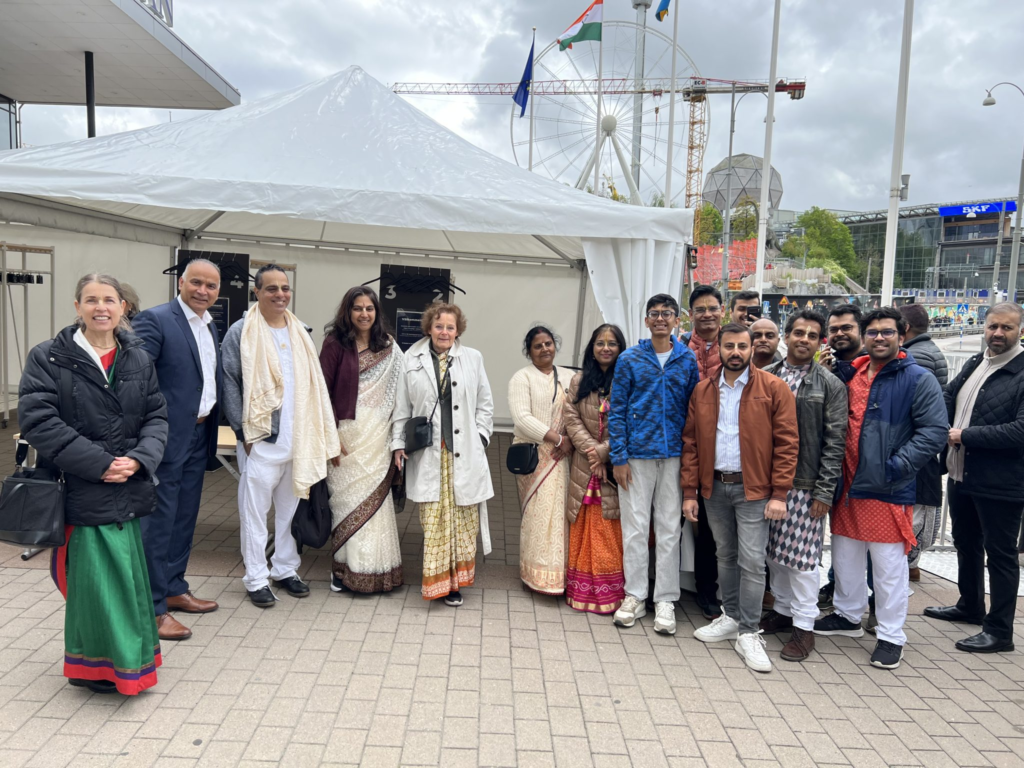
The occasion became especially meaningful for devotees of ISKCON Sweden, who had the opportunity to personally greet the Indian Prime Minister with the traditional invocation, “Hare Krishna.”
ISKCON Sweden Welcomes PM Modi With Devotional Culture
As part of the reception program, guests presented various expressions of Indian culture, including traditional dance, ārati (ceremonial worship), and devotional music. These presentations highlighted the enduring spiritual heritage of India and its continued relevance in international society.
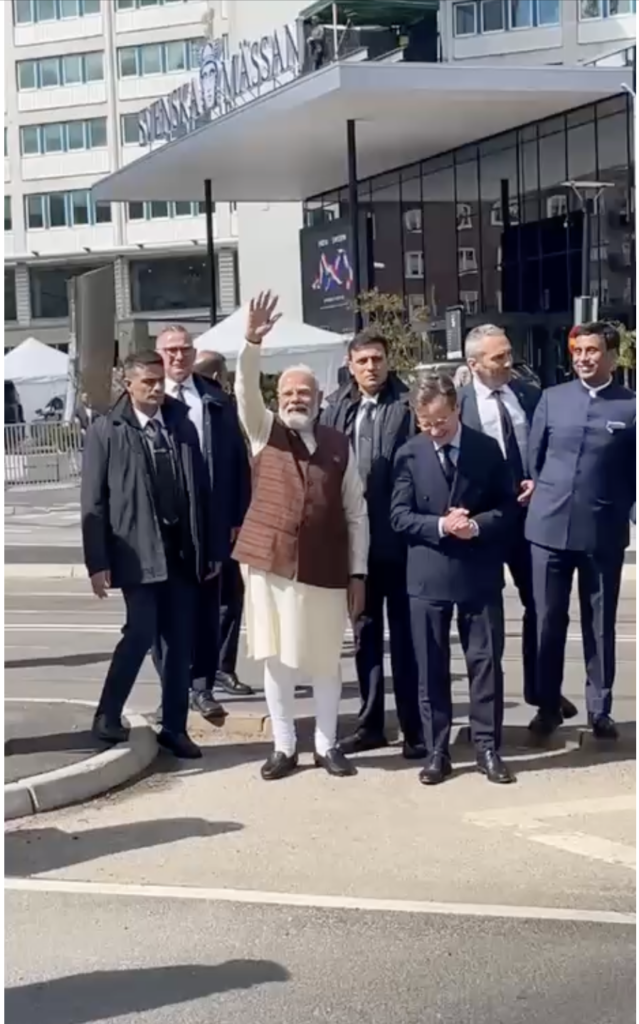
When Prime Minister Modi approached the ISKCON devotees, he responded warmly to their greeting of “Hare Krishna” and shook hands with them. The exchange was simple yet significant, demonstrating mutual respect between representatives of spiritual culture and public leadership.
The phrase “Hare Krishna,” widely recognized across the world, originates from the mahā-mantra described in Vedic literature as a transcendental sound vibration meant to awaken spiritual consciousness. ISKCON, founded by A. C. Bhaktivedanta Swami Prabhupada in 1966, has carried this message to countries across the globe through congregational chanting, philosophical education, and devotional service.
Modi’s Sweden Visit Focused on Cooperation and Innovation
Prime Minister Modi’s visit to Sweden emphasized deeper cooperation between the two nations in areas of economic growth, technological innovation, green energy, and sustainable development.
Sweden has long been recognized for its advancements in environmental responsibility and innovation-driven industries. India, meanwhile, continues to expand its international partnerships as part of its broader economic and diplomatic strategy.
Meetings during the visit focused on strengthening these mutual interests while encouraging long-term collaboration between Indian and Swedish institutions. Such international engagements demonstrate how nations increasingly recognize the importance of cooperation in addressing global challenges.
From a Vedic perspective, responsible leadership involves acting for collective welfare rather than narrow self-interest. The principle of dharma, or righteous duty, teaches that leadership should promote harmony, stability, and genuine prosperity for society.
Indian Diaspora Preserves Cultural Identity Abroad
The participation of the Indian diaspora at the Gothenburg event reflected the continuing connection many Indians abroad maintain with their cultural and spiritual roots.
Across Europe and other parts of the world, Indian communities frequently organize cultural programs, festivals, and spiritual gatherings that preserve traditional practices while contributing positively to local societies. ISKCON centers have often played a central role in this effort by providing spaces for devotional practice, vegetarian food distribution, scriptural discussion, and community engagement.
In modern society, where identity is often shaped primarily by temporary social and economic conditions, spiritual traditions remind individuals of a deeper understanding of the self. Vedic teachings explain that the living being is not merely the physical body but the eternal ātmā, or spiritual soul. Such understanding naturally encourages respect, discipline, and cooperation among people.
The warm interaction between Modi and the devotees reflected this broader cultural continuity that extends beyond national boundaries.
ANI Interviews ISKCON Representative
According to reports from Asian News International (ANI), Kamala Priya Devi Dasi represented ISKCON Sweden during the welcome ceremony and interacted with media representatives regarding the occasion.
Her participation highlighted the active presence of ISKCON communities in Scandinavia and their continued efforts to share devotional culture through public outreach and spiritual education.
Over the decades, ISKCON has established temples, cultural centers, and educational initiatives throughout Europe. These institutions aim to present the teachings of Bhagavad-gītā and other Vedic texts in a practical and accessible manner for contemporary audiences.
Rather than functioning merely as cultural organizations, ISKCON communities emphasize spiritual practice centered on chanting the holy names of God, studying sacred literature, and living a life guided by discipline and compassion.
Spiritual Culture and Public Life
The interaction between political leadership and spiritual communities at public events often reflects an important social principle: human society flourishes when material progress is accompanied by moral and spiritual understanding.
Economic growth and technological advancement can improve external conditions, but lasting peace and satisfaction depend upon inner character and higher purpose. Vedic wisdom therefore emphasizes balance—recognizing material development while remembering humanity’s spiritual foundation.
In Bhagavad-gītā, leadership rooted in responsibility and self-discipline is presented as beneficial for society as a whole. When public life remains connected to ethical and spiritual values, cooperation becomes more meaningful and sustainable.
The Gothenburg reception offered a small yet visible example of how cultural identity, spirituality, and diplomacy can coexist harmoniously in international settings.
Conclusion
The event in Gothenburg, where ISKCON Sweden welcomes PM Modi during his official visit, reflected both diplomatic goodwill and the enduring presence of India’s spiritual culture abroad.
As Prime Minister Narendra Modi engaged with members of the Indian diaspora and ISKCON devotees, the occasion demonstrated how devotional traditions continue to unite people across national and cultural boundaries. The respectful exchange between public leadership and spiritual communities also underscored a timeless principle found in Vedic teachings: genuine progress becomes complete when material advancement is guided by higher values and spiritual understanding.
In a rapidly changing world, such moments quietly remind society that beneath political, economic, and cultural identities, all human beings seek harmony, meaning, and connection with a higher purpose.
library.vedavarsity.com || www.vedavarsity.com
Deepen your Bhakti-yoga practice, harmonize relationships, and receive guided coaching — all at Vedavarsity.com