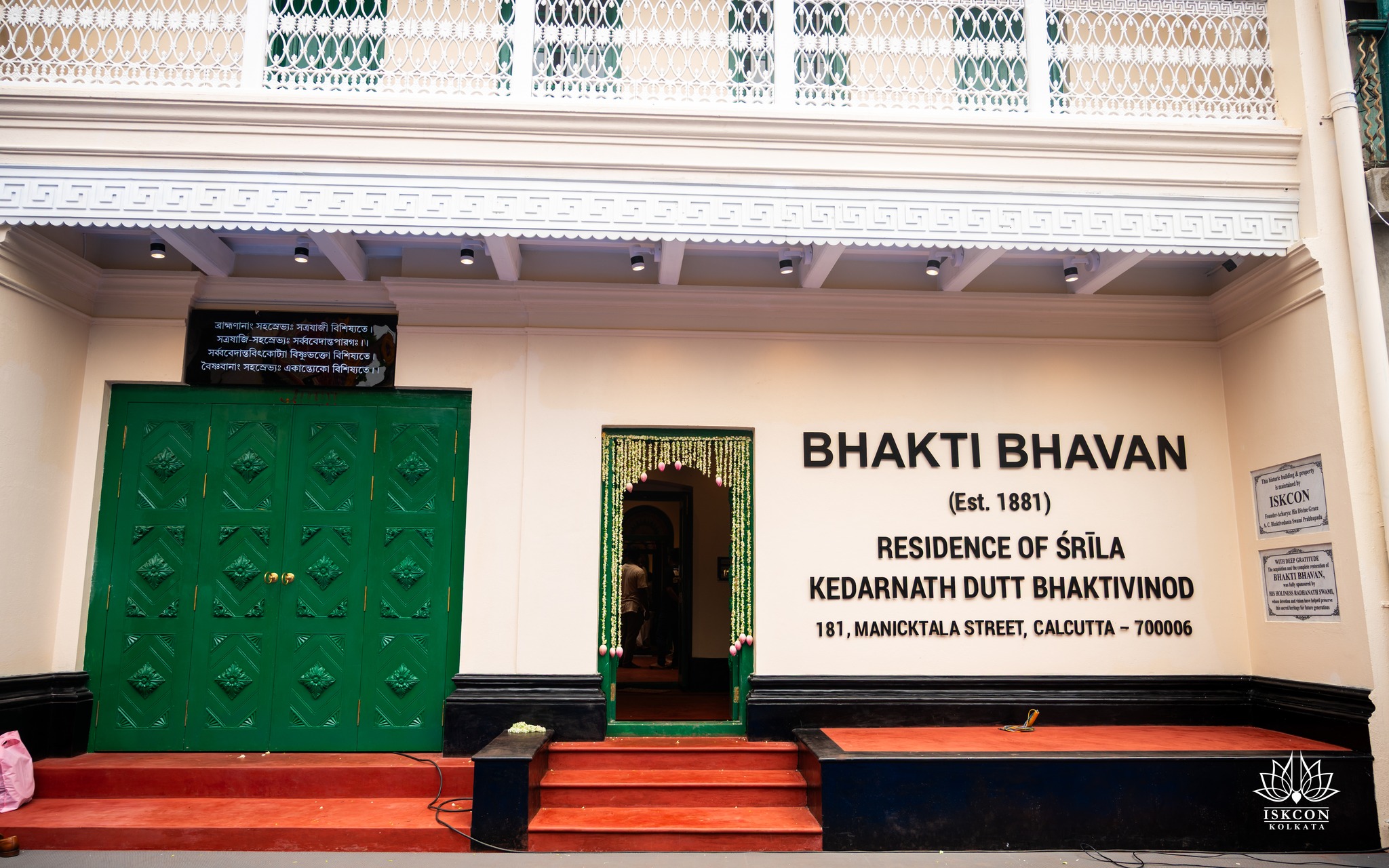
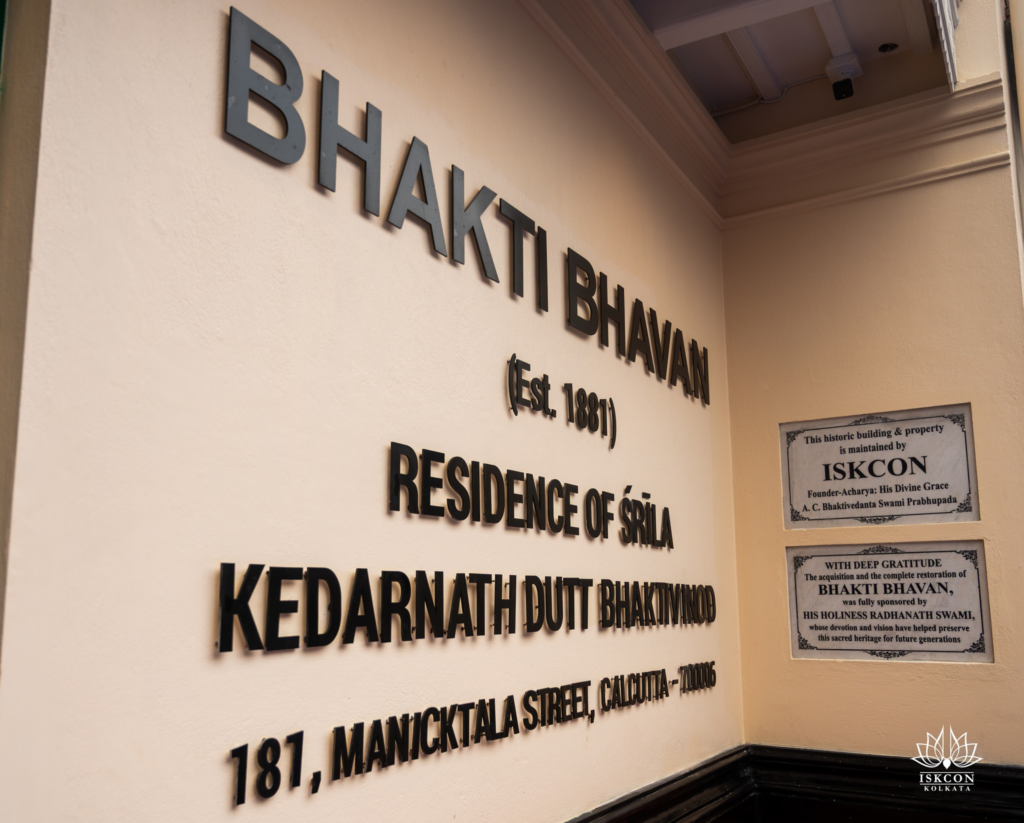
After more than a decade of effort and numerous challenges, Bhakti Bhavan Kolkata, the ancestral residence of Srila Bhaktivinod Thakur, has been restored and opened as a heritage pilgrimage site. Located at 181 Ramesh Dutta Street, this sacred place now stands as a testimony to the revival of Gaudiya Vaishnavism and the enduring power of spiritual dedication.
The restoration, completed in just thirteen months, reflects not only architectural commitment but also a deeper alignment with dharma—the duty to preserve spiritual knowledge for future generations.
The Spiritual Importance of Bhakti Bhavan Kolkata
Bhakti Bhavan Kolkata is not merely a historical structure; it is a center of spiritual renaissance. Srila Bhaktivinod Thakur, a pioneering acharya in the Gaudiya Vaishnava tradition, resided here for over three decades after acquiring the property in 1881.
From this very house, he revitalized the teachings of Sri Chaitanya Mahaprabhu at a time when they were fading from public consciousness. His efforts demonstrate how one individual, aligned with divine purpose, can influence the course of spiritual history.
A significant milestone occurred here in 1889, when he established the first printing press of the Gaudiya sampradaya, named Chaitanya Yantra. Through this press, he authored and distributed numerous spiritual works, including sending his book Sri Chaitanya Mahaprabhu: His Life and Precepts to institutions worldwide in 1896.
This act reflects karma in its highest sense—action performed for the upliftment of humanity.
A House That Hosted a Spiritual and Intellectual Revival
Bhakti Bhavan Kolkata also served as a meeting ground for leading intellectuals of the time. Distinguished personalities such as Rabindranath Tagore and Ishwar Chandra Vidyasagar visited this residence.
Thus, the house functioned as both a family home and a hub of philosophical dialogue, bridging spiritual wisdom with contemporary thought.
It was within these walls that many of Bhaktivinod Thakur’s writings were composed, particularly in a reading room that has now been carefully preserved.
Connection to the Parampara: Four Acharyas Under One Roof
One of the most remarkable aspects of Bhakti Bhavan Kolkata is its connection to four foundational acharyas in the disciplic succession (parampara):
- Jagannath Das Babaji
- Bhaktivinod Thakur
- Gaura Kishora Das Babaji
- Bhaktisiddhanta Sarasvati Thakur
Jagannath Das Babaji would regularly stay at this residence while traveling. He even gifted the sacred Giridhari Shila to Bhaktivinod Thakur here, further sanctifying the site.
Such continuity of spiritual lineage reflects the Vedic principle that transcendental knowledge is preserved through disciplic succession, not invention.
Rescue from Demolition: A Timely Intervention
Despite its historical and spiritual significance, Bhakti Bhavan Kolkata once faced the threat of demolition. The property had passed through generations and eventually came under government custody.
A critical turning point came when a proposal emerged to sell the land to developers. At that moment, intervention by dedicated devotees and spiritual leaders ensured its preservation.
A major contribution came through the support of Radhanath Swami, who funded the restoration project. Legal hurdles were also overcome swiftly, allowing ISKCON to secure possession of the property.
This episode highlights how preservation of dharma often requires both spiritual conviction and practical action.
Restoration: Blending Tradition with Modern Science
The restoration of Bhakti Bhavan Kolkata was carried out with careful attention to authenticity. Instead of relying on contractors, a small team worked directly with laborers.
They used traditional lime-and-surkhi plaster techniques—consistent with the original 19th-century construction—while reinforcing the structure internally with modern technology.
This balanced approach reflects a broader philosophical principle: preserving essence while adapting form.
Sacred Artifacts and Living History
Today, visitors to Bhakti Bhavan Kolkata can witness an extraordinary collection of preserved items belonging to Srila Bhaktivinod Thakur, including:
- His ivory pen and personal diary
- Japa mala and kanthi mala
- A chair used by him and his wife
- A silver medal from his youth
- Grains from the 1882 griha pravesh ceremony
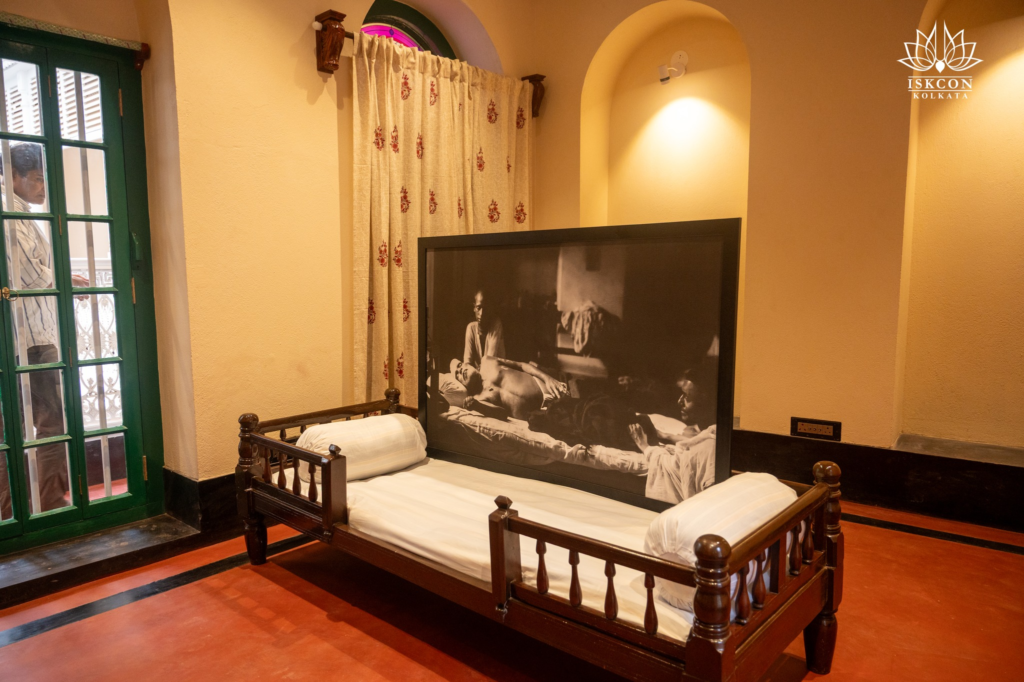
Among the most remarkable exhibits is the only known photograph of Jagannath Das Babaji, taken at this residence.
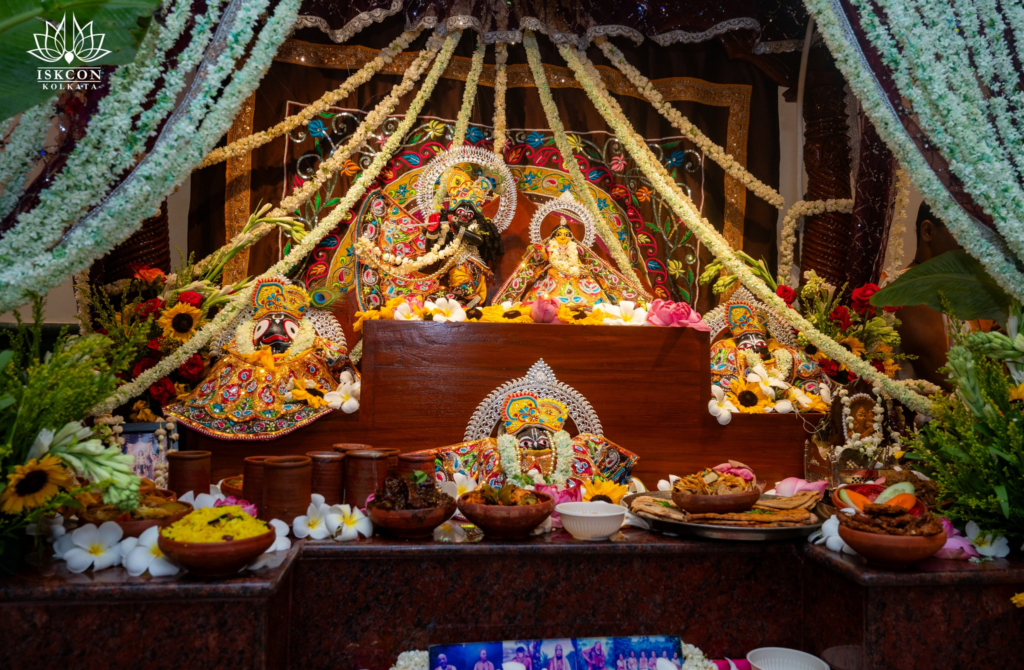
Additionally, sacred objects such as the Kurma Shila and Giridhari Shila are preserved and worshipped, along with Sri Madhav, the personal deity of Bhaktivinod Thakur.
These artifacts serve as tangible reminders that spiritual life is not abstract—it is lived, practiced, and preserved through devotion.
Rediscoveries During Excavation
During restoration, significant discoveries were made beneath the structure. The original printing press site was uncovered after clearing accumulated debris and overgrowth.
Manuscripts, financial records, and personal items were found carefully preserved, offering valuable insights into the disciplined and organized life of Bhaktivinod Thakur.
Such discoveries reinforce the understanding that sincere spiritual practitioners engage fully with both material and spiritual responsibilities.
Bhakti Bhavan Kolkata as a Modern Pilgrimage Site
Today, Bhakti Bhavan Kolkata stands not only as a heritage building but as a living pilgrimage destination for followers of Gaudiya Vaishnavism.
The presence of sacred relics, historical continuity, and devotional atmosphere allows visitors to experience a connection that transcends time.
In Vedic understanding, places associated with great souls (mahatmas) retain spiritual potency. Visiting such places can inspire inner reflection and strengthen one’s alignment with higher purpose.
Conclusion: A Living Legacy of Devotion
The restoration of Bhakti Bhavan Kolkata represents more than architectural preservation—it is a revival of spiritual memory and cultural responsibility.
Srila Bhaktivinod Thakur’s life demonstrates that true success lies not in material accumulation, but in service to divine truth. His home now stands as a reminder that the self (ātma) is eternal, and actions performed in devotion leave lasting impact beyond physical existence.
For seekers and scholars alike, Bhakti Bhavan Kolkata offers a rare opportunity to witness how spiritual dedication, guided by dharma, can shape history and illuminate the path for generations to come.
In a world of constant change, such places quietly affirm that divine purpose continues to guide human endeavor.
library.vedavarsity.com || www.vedavarsity.com
Deepen your Bhakti-yoga practice, harmonize relationships, and receive guided coaching — all at Vedavarsity.com