How divine motherhood shapes devotion, resilience, and righteous living
The Vedic literatures present many profound examples of Spiritually Empowered Mothers who embody strength, devotion, and unwavering faith in the Supreme Lord. These exalted personalities, such as Queen Suniti, Srimati Kunti Devi, and Mother Sita, are not merely historical figures but living ideals of motherhood rooted in dharma (righteous duty) and bhakti (devotion).
In an age where parenting is often guided by uncertainty, the lives of these Spiritually Empowered Mothers provide clarity and direction. Their examples demonstrate how inner strength, spiritual understanding, and surrender to divine will can guide both mothers and children through life’s complexities.
The Role of Spiritually Empowered Mothers in Vedic Culture
Motherhood in Vedic tradition is not limited to biological care. It is a sacred responsibility that includes guiding children toward spiritual realization. A mother becomes the first teacher, shaping the consciousness of the child.
Spiritually Empowered Mothers understand that the child is not merely a physical body but an eternal soul (ātma). Therefore, their duty extends beyond material well-being to nurturing spiritual awareness. Through their example, they establish values such as humility, resilience, devotion, and adherence to dharma.
Despite facing hardships, these mothers remained steady in their duty. Their lives illustrate that true empowerment arises not from external circumstances but from inner connection with the Supreme.
Queen Suniti: Guiding Through Compassion and Spiritual Wisdom
The example of Queen Suniti, found in the Srimad Bhagavatam, reveals the depth of a mother’s role in times of distress. When her young son Dhruva was insulted and neglected by his stepmother and ignored by his father, he approached his mother in great pain.
Although deeply affected herself, Queen Suniti responded with composure and clarity. She acknowledged her inability to materially rectify the situation, yet she did not allow despair to dominate her response. Instead, she directed Dhruva toward the Supreme Lord.
She explained that the Lord is bhṛtya-vatsala—one who is especially kind to His devotees. Her instruction was simple yet profound: seek shelter of the Lord, whose compassion surpasses that of countless mothers.
Practical Insight
This example teaches that Spiritually Empowered Mothers do not deny emotions but guide them constructively. They listen with empathy, acknowledge limitations, and direct their children toward higher shelter.
In situations where solutions are beyond human capacity, turning toward divine guidance becomes the most practical and powerful course of action. Such guidance builds resilience and spiritual dependence in children.
Srimati Kunti Devi: Strength in Adversity and Dependence on the Lord
Another powerful example among Spiritually Empowered Mothers is Srimati Kunti Devi from the Mahabharata. As the mother of the Pandavas, she endured immense hardship—political conspiracies, exile, repeated threats to life, and the loss of her husband.
Despite these adversities, Kunti Devi remained firmly devoted to the Supreme Lord. She consistently turned to Him in every situation, recognizing His protection as the ultimate shelter.
One of her most remarkable prayers expresses a deep spiritual realization. She prayed for calamities to occur again, not out of despair, but because such moments brought her closer to the Lord’s presence. For her, difficulties were not obstacles but opportunities for divine remembrance.
Practical Insight
This perspective reveals a higher understanding of karma and divine arrangement. While suffering is often seen negatively, it can serve as a catalyst for spiritual growth when approached with the right consciousness.
Spiritually Empowered Mothers like Kunti Devi teach that dependence on the Lord is not a sign of weakness but of wisdom. By cultivating such faith, mothers can guide their children to remain steady even in uncertainty.
Mother Sita: Chastity, Strength, and Unwavering Devotion
Mother Sita, from the Ramayana, represents the ideal of purity, dedication, and inner strength. Born into royalty, she willingly embraced a life of austerity to accompany her husband, Lord Rama, during his exile.
Her life was marked by severe trials, including abduction by Ravana and later abandonment due to public criticism. Yet, throughout these hardships, she remained unwavering in her devotion and dignity.
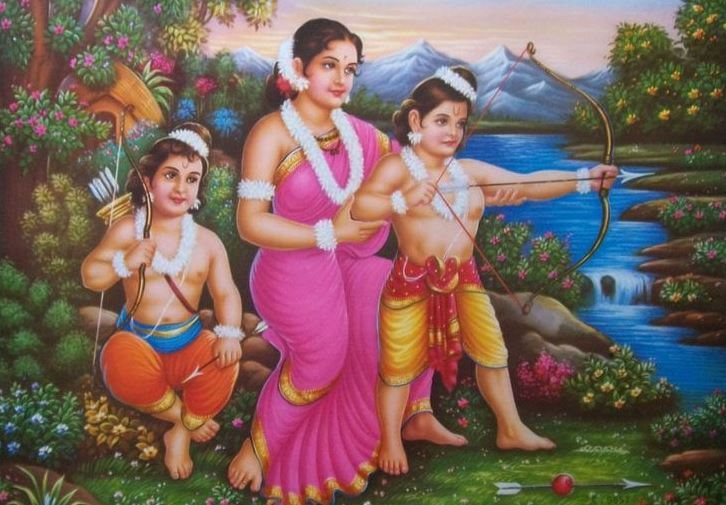
Even in captivity, she resisted all temptations offered by Ravana, maintaining her chastity and faith. Later, when left in the forest, she accepted her situation without resentment and took shelter in the hermitage of sage Valmiki, where she raised her sons with wisdom and grace.
Practical Insight
Mother Sita’s life demonstrates that true strength lies in character and conviction. Spiritually Empowered Mothers maintain their values regardless of external conditions.
Her respect for her husband and her commitment to raising her children without bitterness provide a profound lesson. By upholding dignity and devotion, she ensured that her children grew with respect and spiritual understanding.
Dharma, Devotion, and the Raising of Children
The lives of these Spiritually Empowered Mothers highlight a common principle: raising children is not merely about protection and provision, but about guiding them toward dharma and devotion.
Children learn not only from instruction but from observation. When mothers demonstrate faith, patience, and integrity, these qualities naturally influence the child’s development.
In Vedic understanding, actions performed in alignment with dharma create lasting impressions (samskaras). These impressions shape character and determine future actions. Thus, the role of a mother becomes central in shaping both the present and future of society.
Applying These Lessons in Modern Life
In contemporary times, mothers often face challenges such as lack of support, emotional stress, and uncertainty in decision-making. The examples of Spiritually Empowered Mothers remain deeply relevant.
Practical applications include:
- Listening to children with empathy and patience
- Acknowledging limitations without losing hope
- Encouraging spiritual practices such as prayer or reflection
- Maintaining respect and harmony within the family
- Seeking guidance through sacred teachings
Even in difficult circumstances—whether financial, emotional, or social—these principles provide stability and clarity.
A subtle reflection arises: when one aligns personal effort with higher guidance, even adversity can become a pathway to deeper strength.
Conclusion: The Enduring Legacy of Spiritually Empowered Mothers
The lives of Queen Suniti, Srimati Kunti Devi, and Mother Sita reveal that true empowerment lies in devotion, wisdom, and steadfast adherence to dharma. These Spiritually Empowered Mothers did not avoid hardship, but transformed it through their consciousness and faith.
Their examples continue to guide generations, reminding us that the strength of a mother is not measured by circumstances, but by her ability to remain anchored in truth and devotion.
By reflecting on their lives and seeking to imbibe their qualities, one can cultivate the inner strength necessary to navigate life with clarity and purpose. In doing so, both mother and child progress not only materially, but toward lasting spiritual fulfillment.
Deepen your Bhakti-yoga practice, harmonize relationships, and receive guided coaching — all at Vedavarsity.com