




A sacred day symbolizing inexhaustible fortune, devotion, and spiritual awakening
Akshaya Tritiya is regarded as one of the most auspicious days in the Vedic calendar, traditionally observed on the third lunar day (Tritiya) of the bright fortnight (Shukla Paksha) in the month of Vaishakha. The term Akshaya in Sanskrit means “that which never diminishes”—signifying inexhaustible prosperity, enduring happiness, and spiritual merit. On this day, actions performed with sincerity are believed to yield lasting results, both materially and spiritually.
More than a cultural observance, Akshaya Tritiya reflects a deeper Vedic understanding of life, where right action (dharma) aligned with divine consciousness brings lasting fulfillment.
The Meaning and Spiritual Significance of Akshaya Tritiya
The essence of Akshaya Tritiya lies in its name. “Akshaya” denotes that which is eternal and imperishable, while “Tritiya” refers to the third lunar day. Together, the term conveys a time when positive actions generate enduring benefits.
In Vedic thought, not all results are equal. Actions performed in alignment with dharma—righteous duty—produce results that uplift the individual beyond temporary gains. Akshaya Tritiya is thus considered a spiritually potent day when such actions multiply in value.
From a philosophical standpoint, this aligns with the law of karma (action and consequence). When one acts with purity of intention, especially in remembrance of the Supreme, the results transcend material limitations and contribute to inner growth.
The Story of Sudama and Lord Krishna
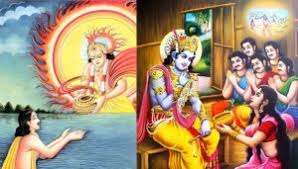
One of the most cherished narratives associated with Akshaya Tritiya is the meeting between Sudama, a poor brahmana, and his childhood friend, Lord Krishna.
Sudama lived in extreme poverty but remained deeply devoted and content. At the request of his wife, he decided to visit Krishna in Dwaraka. Though hesitant, he carried a humble offering of chipped rice (poha), tied in a small cloth.
When Sudama arrived, Krishna received him with great affection and respect, personally welcoming him despite being a king. Krishna accepted the simple offering with joy, valuing the devotion behind it rather than its material worth.
Sudama, overwhelmed by humility, did not ask Krishna for any assistance. Yet, upon returning home, he found his hut transformed into a palace, and his life filled with abundance.
Deeper Insight
This episode illustrates a central Vedic principle: the Supreme reciprocates according to the sincerity of one’s devotion. Sudama’s offering was materially insignificant but spiritually complete. His consciousness was fixed not on gaining wealth but on serving and remembering the Lord.
Even after receiving immense prosperity, Sudama remained detached and continued his devotion. This demonstrates that true success lies not in acquiring wealth, but in maintaining spiritual awareness despite material circumstances.
Akshaya Tritiya and the Principle of Dharma
Akshaya Tritiya is often associated with new beginnings—starting businesses, making investments, or purchasing gold. While these practices are culturally accepted, the deeper significance lies in beginning actions rooted in dharma.
Dharma refers to one’s duty aligned with universal principles of righteousness. When actions are performed in harmony with dharma, they lead to stability, clarity, and long-term well-being.
On Akshaya Tritiya, individuals are encouraged to:
- Engage in charity (daan)
- Perform acts of kindness
- Begin spiritually uplifting practices
- Offer prayers with sincerity
Such actions create impressions (samskaras) that shape one’s character and future outcomes. When guided by higher understanding, even simple acts can yield profound and lasting effects.
Prosperity: Material vs Spiritual Understanding
The theme of prosperity on Akshaya Tritiya is often interpreted materially. However, Vedic knowledge distinguishes between temporary wealth and lasting fulfillment.
Material prosperity—wealth, property, possessions—is subject to change. It is temporary and dependent on external conditions. Spiritual prosperity, on the other hand, refers to qualities such as wisdom, contentment, devotion, and self-realization.
Sudama’s story highlights this distinction. Although he received material wealth, his true richness lay in his unwavering devotion. His consciousness remained fixed on the Supreme, which is the ultimate goal of human life.
In this context, Akshaya Tritiya becomes an opportunity to reflect on what kind of prosperity one seeks. Actions performed on this day should ideally contribute to both material stability and spiritual elevation.
The Nature of the Self and Eternal Gains
According to Vedic teachings, the self (ātma) is eternal, distinct from the temporary body. While the body undergoes change, the soul remains constant.
This understanding shifts the perspective on success and achievement. Actions that benefit only the body have limited duration, whereas actions that nourish the soul yield enduring results.
Akshaya Tritiya emphasizes this principle. By engaging in spiritually aligned activities, one accumulates merit that accompanies the soul beyond this lifetime.
Thus, the “inexhaustible” nature of this day is not merely about material gain, but about the lasting impact of conscious, dharmic action.
Observing Akshaya Tritiya in Modern Times
In contemporary society, Akshaya Tritiya is widely celebrated through rituals, purchases, and social gatherings. While these practices have their place, their true value lies in the consciousness behind them.
To observe Akshaya Tritiya meaningfully:
- Begin the day with prayer or meditation
- Reflect on one’s duties and responsibilities
- Offer gratitude for what one has
- Perform acts of charity without expectation
- Engage in spiritual study or remembrance
Even small efforts, when performed with sincerity, align one with higher principles and yield lasting benefit.
Conclusion: The Higher Purpose of Akshaya Tritiya
Akshaya Tritiya stands as a reminder that true prosperity is not measured merely by accumulation, but by alignment with eternal principles. It is a day that encourages individuals to act with clarity, sincerity, and devotion.
While material success may come and go, actions rooted in dharma and guided by spiritual understanding create results that do not diminish. In this way, Akshaya Tritiya offers not just an opportunity for new beginnings, but a chance to realign one’s life with higher purpose.
In the broader view, one may reflect that all enduring gain arises when human effort harmonizes with divine order.

Deepen your Bhakti-yoga practice, harmonize relationships, and receive guided coaching — all at Vedavarsity.com