Śrīvāsa-aṅgana: The Birthplace of Saṅkīrtana Rāsa
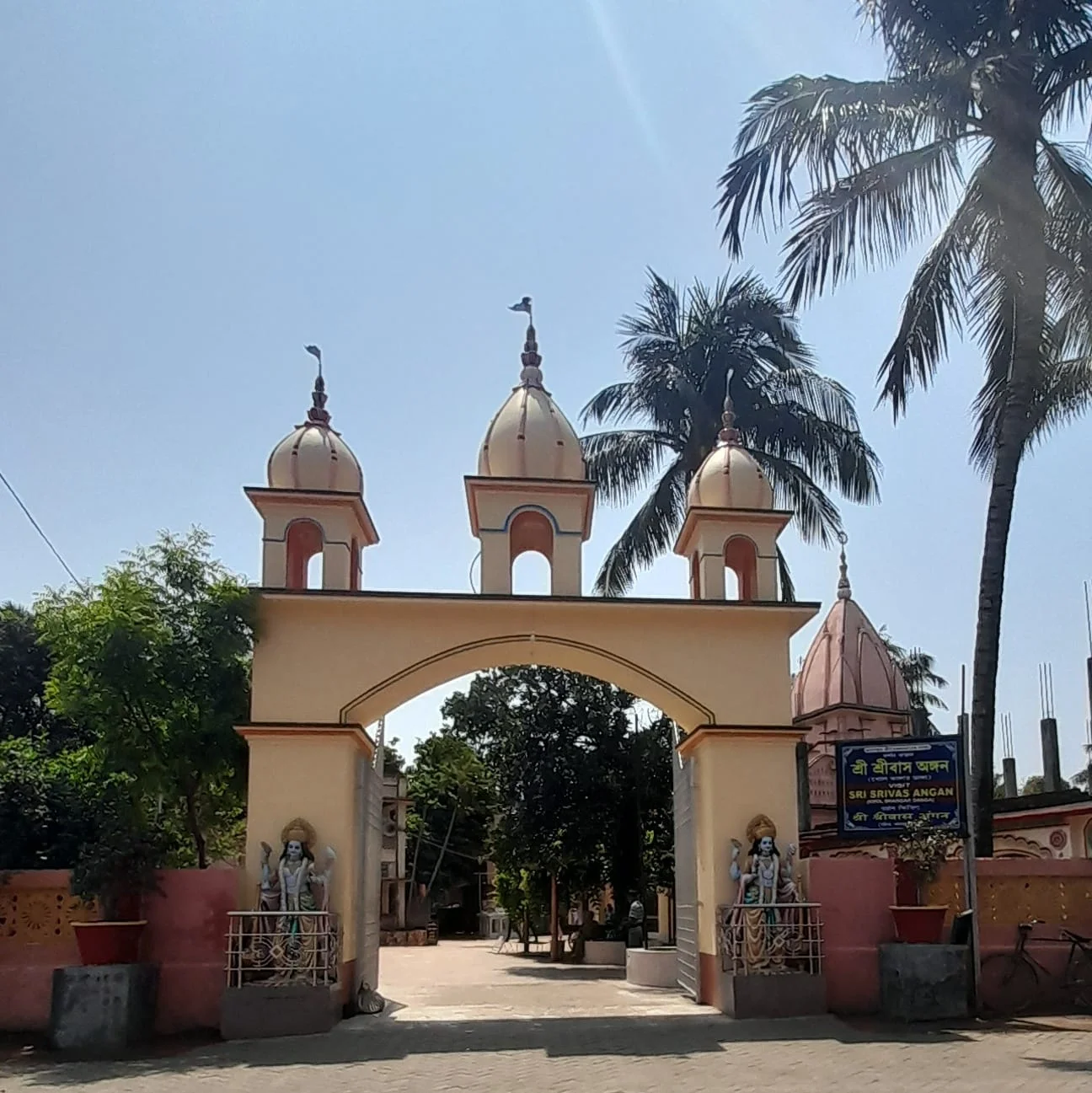
The sacred Śrīvāsa-aṅgana stands as one of the most important sites in the pastimes of Śrī Caitanya Mahāprabhu. It is here that the Lord inaugurated the congregational chanting of the holy names (harināma-saṅkīrtana), establishing the yuga-dharma (religion for the age of Kali). The pastime of Śrīvāsa-aṅgana reveals both divine ecstasy and fearless devotion in the face of opposition.
Located near the Yogapīṭha in Navadvīpa, this courtyard belonged to Śrīvāsa Paṇḍita, one of the Lord’s intimate associates. This place is eternally remembered as the heart of Mahāprabhu’s saṅkīrtana movement.
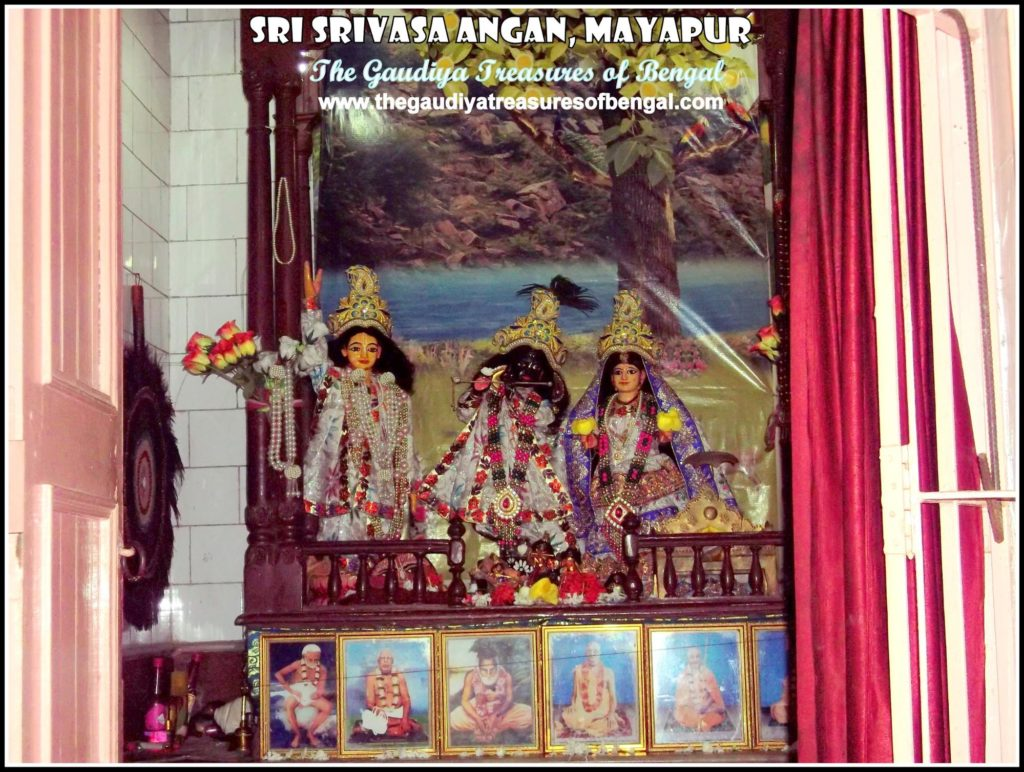
Śrīvāsa-aṅgana: The Sacred Courtyard of Devotion
At Śrīvāsa-aṅgana, Mahāprabhu would gather with His most intimate devotees and perform ecstatic kīrtana throughout the night.
Among the participants were:
Śrīvāsa Paṇḍita and his brothers
Haridāsa Ṭhākura and other exalted devotees
Residents of Navadvīpa attracted by divine sound vibrations
With the rhythmic beating of mṛdaṅgas (drums) and the ringing of karatālas (cymbals), the atmosphere became surcharged with transcendental bliss (ānanda).
Saṅkīrtana-Rāsa
This place is known as the site of saṅkīrtana-rāsa, where Mahāprabhu manifested divine ecstatic dancing and chanting, similar to Kṛṣṇa’s rāsa-līlā in Vṛndāvana.
Thus, Śrīvāsa-aṅgana is not merely a historical location—it is a spiritual gateway to experiencing divine love.
Opposition from Atheistic Society
Despite the purity of these activities, not everyone appreciated the kīrtanas.
Certain atheistic and envious individuals complained about the loud chanting. They approached the local ruler, Chand Kazi.
The Kazi, influenced by these complaints, issued a strict आदेश:
No loud chanting of the holy names
No public kīrtana
Violators would be punished and socially ostracized
Fear Versus Faith
Such restrictions created fear among the general population. Yet, for the devotees of Mahāprabhu, devotion could not be suppressed.
They continued their kīrtanas at Śrīvāsa-aṅgana with unwavering determination.
Khola-bhāṅgāra-ḍāṅgā: The Breaking of the Mṛdaṅga
Enraged by the continued chanting, Chand Kazi personally came to Śrīvāsa-aṅgana.
In an act of aggression, he smashed a mṛdaṅga (clay drum), attempting to silence the kīrtana.
Because of this घटना, the place became known as Khola-bhāṅgāra-ḍāṅgā, meaning:
“The place where the mṛdaṅga was broken.”
Symbolic Meaning
The breaking of the mṛdaṅga represents:
The attempt of material authority to suppress spiritual expression
The conflict between धर्म (dharma) and अधर्म (adharma)
The resilience of devotion against opposition
Mahāprabhu’s Fearless Response
Upon hearing of this घटना, Śrī Caitanya Mahāprabhu did not remain silent.
Instead, He organized a massive saṅkīrtana procession.
Thousands of devotees gathered with:
Torches lighting the night
Loud chanting of the holy names
Mṛdaṅgas and karatālas resounding everywhere
This historic procession marched toward the residence of Chand Kazi.
Establishment of Religious Freedom
Mahāprabhu’s action was not merely emotional—it was deeply philosophical and compassionate.
He established:
The right to chant the holy names
The supremacy of spiritual practice over oppressive authority
Harmony between communities through dialogue
Eventually, Chand Kazi was transformed and assured that no one would obstruct kīrtana again.
Theological Significance of Śrīvāsa-aṅgana
The Śrīvāsa-aṅgana pastime carries deep spiritual meaning:
- Yuga-Dharma: Harināma Saṅkīrtana
In Kali-yuga, the prescribed spiritual practice is:
Chanting of the holy names of Kṛṣṇa
Mahāprabhu demonstrated this at Śrīvāsa-aṅgana.
- Power of Collective Devotion
Saṅkīrtana (congregational chanting) multiplies spiritual potency.
It purifies:
The heart (citta)
The environment
Society at large
- Devotion Beyond Fear
The devotees’ refusal to stop kīrtana shows:
True bhakti is fearless (abhaya).
Even in the face of threat, they remained fixed in devotion.
- Transformation Through Mercy
Even an विरोधी like Chand Kazi was transformed by Mahāprabhu’s compassion.
This reflects the principle:
No one is beyond redemption.
Relevance in the Modern World
Today, the message of Śrīvāsa-aṅgana is more relevant than ever.
In a world filled with distraction, conflict, and तनाव:
The chanting of the holy name brings peace
Collective spirituality fosters unity
Devotion transcends all social barriers
Even in difficult circumstances, one can practice:
Japa (personal chanting)
Kīrtana (group chanting)
Hearing and glorifying Kṛṣṇa
How to Apply the Teachings
Inspired by Śrīvāsa-aṅgana, one can:
Daily Practice
Chant the Hare Kṛṣṇa mahā-mantra
Read sacred texts
Associate with devotees
Cultivate Fearlessness
Stand firm in spiritual values
Avoid compromise in devotion
Share the Holy Name
Encourage others to chant
Participate in kīrtana gatherings
Conclusion: The Eternal Glory of Śrīvāsa-aṅgana
The divine pastime of Śrīvāsa-aṅgana reveals the unstoppable power of devotion. Despite opposition, the holy name continued to resound, establishing the foundation of the global saṅkīrtana movement.
From the breaking of the mṛdaṅga at Khola-bhāṅgāra-ḍāṅgā to the triumphant kīrtana led by Śrī Caitanya Mahāprabhu, this place teaches us that:
Devotion cannot be suppressed
The holy name is all-powerful
Love of Kṛṣṇa is the ultimate धर्म
By remembering and meditating on Śrīvāsa-aṅgana, one becomes inspired to embrace the path of bhakti with courage, joy, and unwavering faith.
Thus, Śrīvāsa-aṅgana eternally stands as the birthplace of saṅkīrtana and the heart of divine love in Navadvīpa dhāma.
Deepen your Bhakti-yoga practice, harmonize relationships, and receive guided coaching — all at Vedavarsity.com