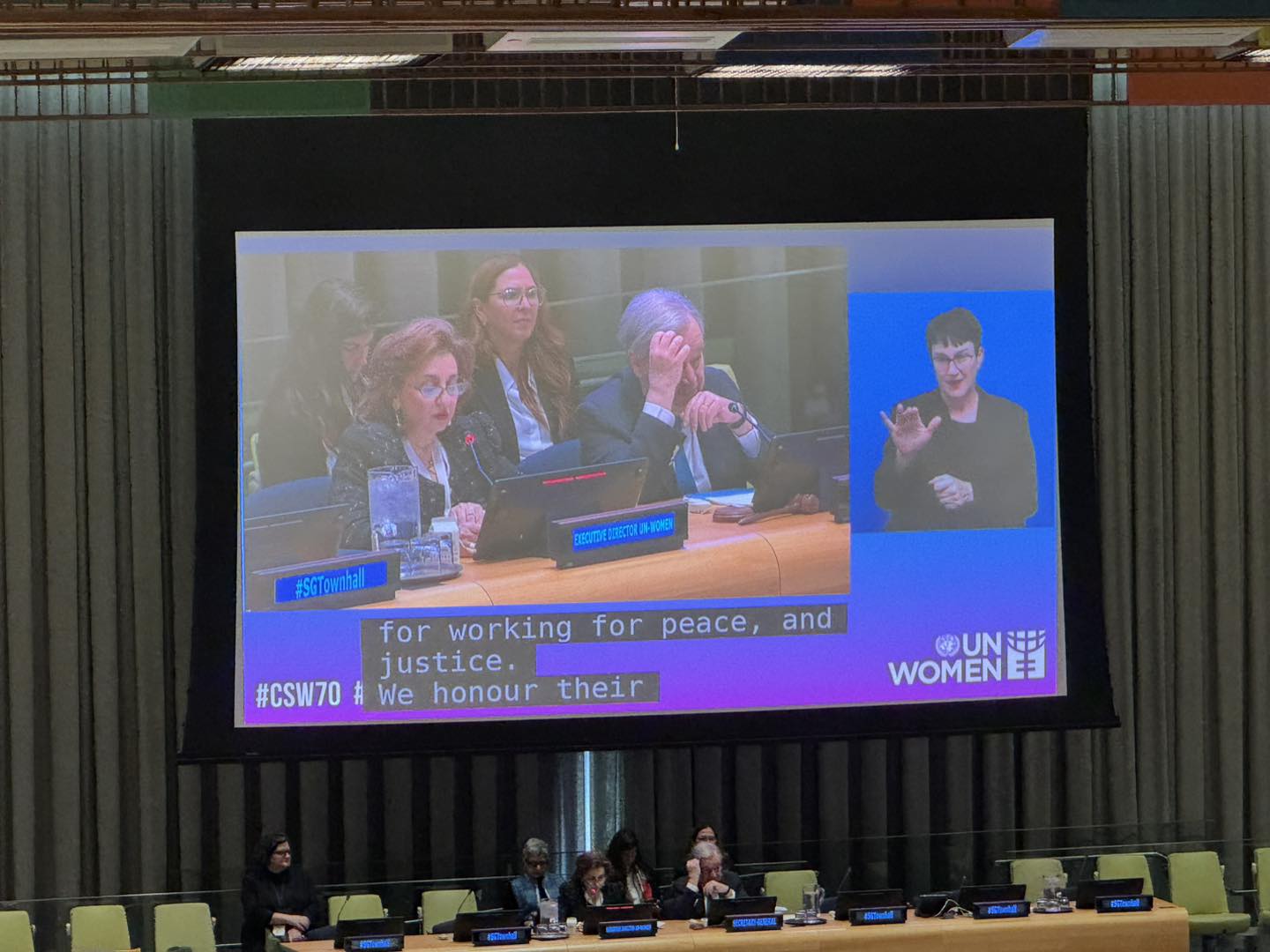
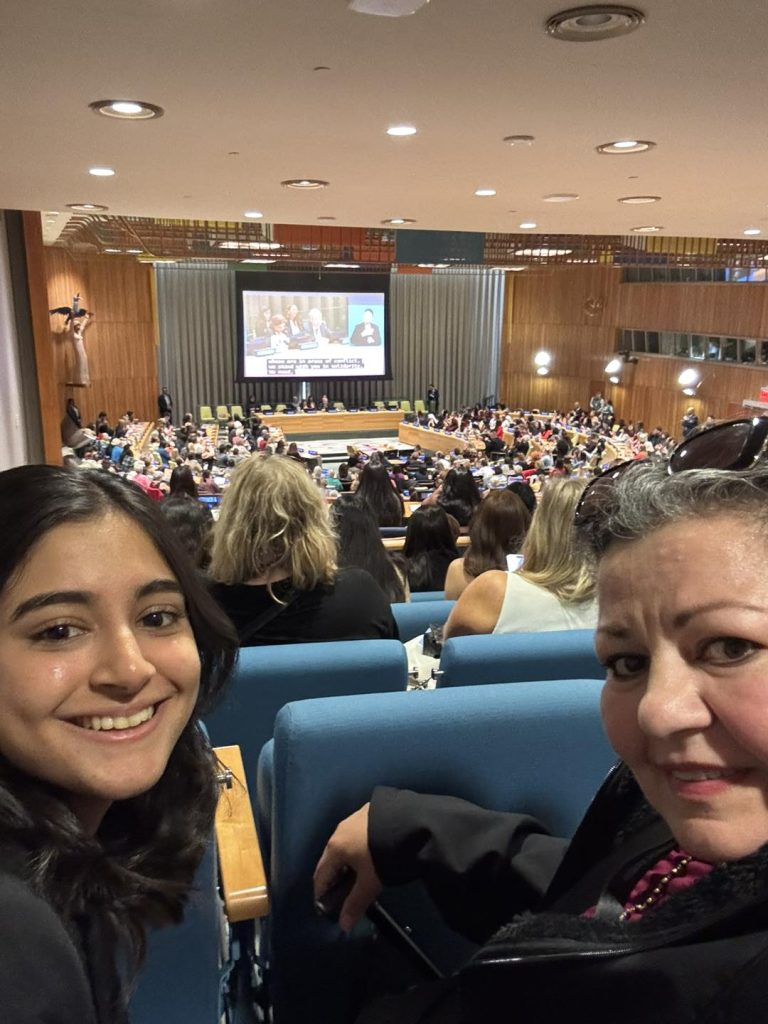
The participation of the Vaishnavi Ministry at UN CSW70 represents a meaningful moment where spiritual wisdom from the Bhakti-yoga tradition enters global discussions on women’s wellbeing and empowerment. The North America Vaishnavi Ministry joined the United Nations Commission on the Status of Women (CSW70) held from March 9–20 at the United Nations Headquarters in New York City.
This international gathering brings together government representatives, policymakers, researchers, and civil society leaders to evaluate progress toward gender equality and to discuss initiatives that can uplift women and girls worldwide. By attending this global forum, the Vaishnavi Ministry contributes a spiritual perspective rooted in the teachings of Bhakti-yoga, where devotion to the Supreme Lord is considered the highest purpose of life.
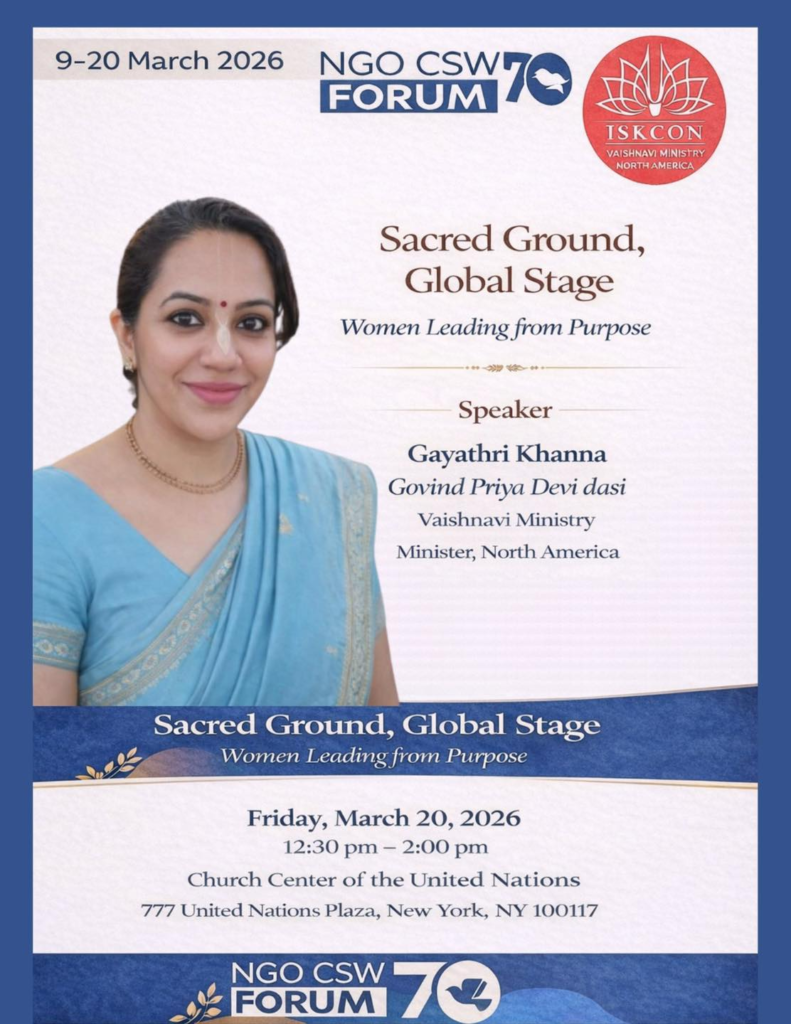
Representatives such as Govind Priya Devi Dasi, Syama Mohini Devi Dasi, and Ila Hatwal attended the conference in person, sharing devotional insights and participating in discussions that explore dignity, leadership, and protection for women in society.
Understanding the Significance of Vaishnavi Ministry at UN CSW70
The Vaishnavi Ministry at UN CSW70 demonstrates how spiritual traditions can play an important role in shaping social conversations about justice, compassion, and equality.
The Commission on the Status of Women is the principal international body dedicated to advancing women’s rights and empowerment. Each year, delegates from across the world gather to evaluate progress, share experiences, and design policies that improve the lives of women.
From a Bhakti perspective, the dignity of women is not merely a social matter but a spiritual principle. The Vedic scriptures repeatedly emphasize that societies prosper when women are respected and protected.
In the Bhagavad-gītā, the Supreme Lord explains that spiritual realization is available to all souls regardless of gender, birth, or social position. This understanding establishes a philosophical foundation for spiritual equality.
Therefore, the presence of the Vaishnavi Ministry at the United Nations offers an opportunity to present ancient wisdom in modern discussions on leadership, safety, and social harmony.
A Faith-Based Contribution to Global Women’s Leadership
During the NGO/CSW Forum parallel event, representatives of the ministry presented the Bhakti tradition’s perspective on women’s leadership and wellbeing.
In Vedic culture, leadership is not defined merely by power or authority but by qualities such as dayā (compassion), kṣamā (forgiveness), and sevā (selfless service). These spiritual virtues form the foundation of true leadership.
Women have historically played a central role in maintaining spiritual culture. From mothers guiding children in devotional life to saintly personalities who inspired entire communities, their influence has shaped the moral and spiritual strength of society.
By participating in this global forum, the Vaishnavi Ministry seeks to highlight how these timeless principles can support modern initiatives for education, protection, and leadership development among women.
Rukmini Devi Dasi’s Message to the UN Forum
A powerful moment during the forum was the video message delivered by Rukmini Devi Dasi. Her presentation opened the Ministry’s participation and set the tone for its spiritual contribution.
Speaking from the Bhakti-yoga tradition, she reflected on how spiritual culture reveres the divine feminine, particularly through the worship of Śrīmatī Rādhārāṇī, the eternal consort of Lord Krishna.
In the devotional tradition, Śrī Rādhā represents the highest expression of divine love and devotion. Her worship signifies that the feminine principle is not merely respected but celebrated as the embodiment of pure devotion.
Yet Rukmini Devi Dasi pointed out a paradox in modern society: although spiritual traditions glorify the divine feminine, women’s voices and leadership are sometimes overlooked or marginalized.
Her message emphasized that genuine spiritual culture must honor both the philosophical teachings and the practical dignity of women.
Compassion as the True Power of Women
During her address, Rukmini Devi Dasi highlighted that the true strength of women lies in compassion and spiritual integrity.
Drawing inspiration from global leaders and saints, she explained that transformative leadership arises not from domination but from love guided by wisdom.
This principle resonates with Bhakti philosophy, which teaches that prema, or divine love, is the highest spiritual achievement.
Women have historically served as the “holders of community,” nurturing families and sustaining cultural values. When women are respected and empowered, the entire social structure becomes stable and harmonious.
However, when women are dishonored or neglected, the consequences extend beyond individuals, affecting families, communities, and even the natural environment.
Spiritual Lessons from Vedic Tradition
The teachings of the Vedic scriptures provide many examples of spiritually empowered women.
One such example is Queen Kuntī, whose prayers in the Śrīmad-Bhāgavatam reveal deep philosophical insight and unwavering devotion to Lord Krishna.
Despite facing extraordinary hardships, Queen Kunti remained steadfast in her faith and gratitude to the Supreme Lord. Her prayers demonstrate humility, wisdom, and surrender—qualities that define true spiritual leadership.
Rukmini Devi Dasi concluded her message by encouraging leaders to follow this example of humility and devotion. She reminded listeners that righteous causes must be guided by compassion rather than anger.
Just as the sacred river Ganges flows steadily to purify the world, devotional service should move forward with patience, humility, and determination.
Strengthening Global Partnerships
Participation in the Vaishnavi Ministry at UN CSW70 also provides opportunities to collaborate with international organizations and leaders working toward similar goals.
These partnerships help develop programs that support:
- Education for women and girls
- Protection and wellbeing initiatives
- Leadership training in spiritual communities
- Research and policy collaboration
Through dialogue with policymakers, NGOs, and global scholars, the ministry gains valuable insights into research and frameworks that can strengthen its services.
Such collaboration allows spiritual communities to integrate practical strategies while maintaining their philosophical foundations.
Continuing the Legacy of Devotional Service
The activities of the Vaishnavi Ministry reflect the broader vision of the Bhakti tradition—to bring spiritual wisdom into all aspects of life.
Śrīla Prabhupāda, the founder of the worldwide Hare Krishna movement, emphasized that spiritual knowledge should benefit the entire human society.
He encouraged women to actively participate in devotional service, education, and leadership within the spiritual community.
Today, initiatives such as the Bond of Love interview series continue to document the experiences of Vaishnavis who interacted personally with Śrīla Prabhupāda. These narratives reveal how his guidance empowered many women to contribute meaningfully to the mission of spreading Krishna consciousness.
Such historical reflections inspire new generations of devotees to continue serving with dedication and humility.
Conclusion: The Global Impact of Vaishnavi Ministry at UN CSW70
The participation of the Vaishnavi Ministry at UN CSW70 represents a meaningful bridge between spiritual tradition and global dialogue.
By bringing the wisdom of Bhakti-yoga to an international forum, the ministry highlights the timeless principle that genuine empowerment arises from spiritual understanding, compassion, and service.
In a world searching for solutions to social challenges, the teachings of devotion remind humanity that true transformation begins within the heart.
When leadership is guided by humility, love, and spiritual wisdom, societies can move toward harmony, justice, and wellbeing for all.
The Vaishnavi Ministry at UN CSW70 therefore stands not only as a participation in a global conference but also as a reminder that spiritual values have an essential role in shaping a more compassionate and balanced world.
Deepen your Bhakti-yoga practice, harmonize relationships, and receive guided coaching — all at Vedavarsity.com